Artwork
Rosemary No. 1
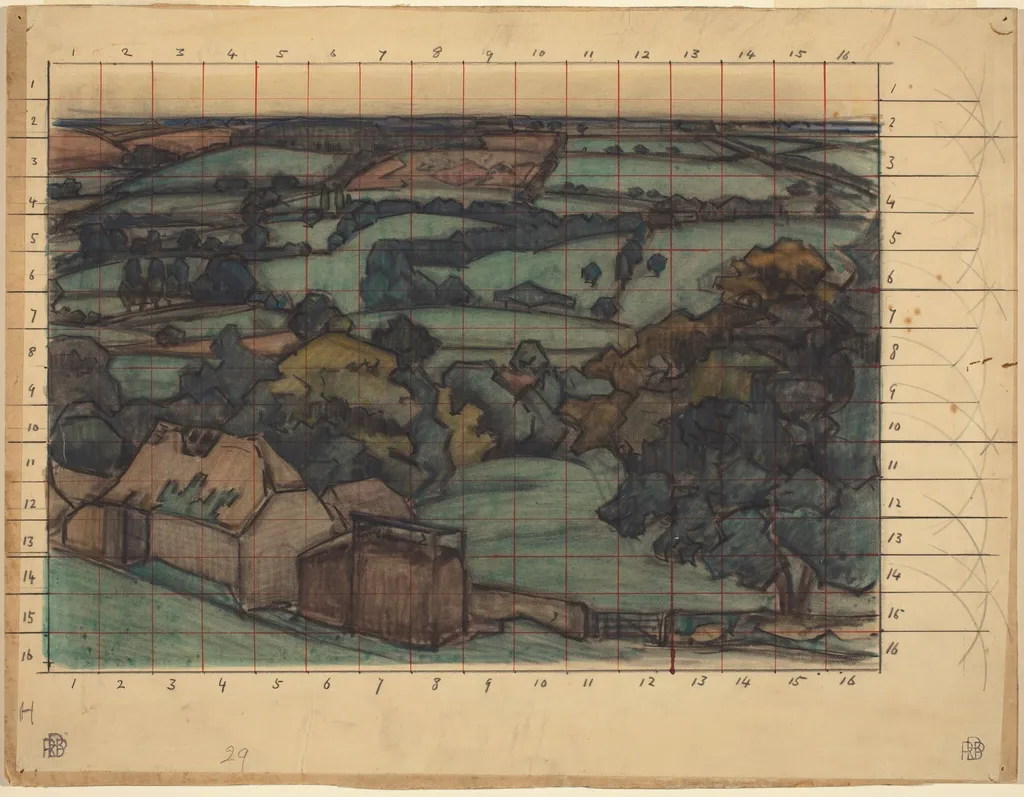
Rosemary No. 1 is a chalk drawing by Robert Polhill Bevan. It is held in the collection of the National Gallery of Art.
About this work
Overview
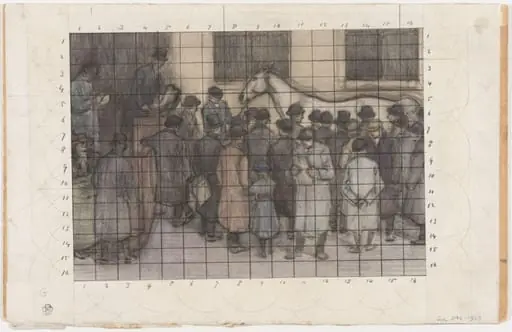
Robert Polhill Bevan’s Rosemary No. 1, executed around 1915, is a modestly sized drawing on wove paper mounted on board. The work combines watercolor washes with black chalk, graphite, and a faint red‑ink grid, suggesting a preparatory stage for further development or transfer.
Subject & Meaning
The composition presents a quiet rural scene: a few low structures punctuate a landscape of trees and open ground. The limited palette of muted greens and earth tones, deepened by shadowed areas, conveys a restrained, observational tone rather than a narrative.
Technique & Style
Bevan applies transparent watercolor layers, reinforced by linear accents of black chalk and graphite that define forms and edges. A subtle graphite border frames the image, while a red‑ink grid overlays the surface, likely serving as a reference for scaling or copying the drawing elsewhere.
History & Provenance
Created in the midst of World War I, the piece reflects Bevan’s ongoing interest in British countryside subjects. Its precise provenance prior to museum acquisition is not widely documented, but it remains an example of his early 20th‑century drawing practice.
Context
During the 1910s Bevan was experimenting with water‑based media, integrating drawing and painting techniques. The inclusion of a transfer grid aligns with contemporary practices among artists who prepared works for larger formats or prints.
Artist & collection


![A Lonely Farm [Hawkridge], by Robert Polhill Bevan](https://artifactworldgallery.com/img/robert-polhill-bevan--a-lonely-farm-hawkridge--6b5607c9f673bdc2-w320.webp)
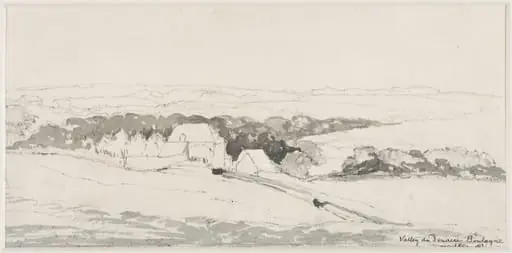 Valley du Denacre, Boulogne
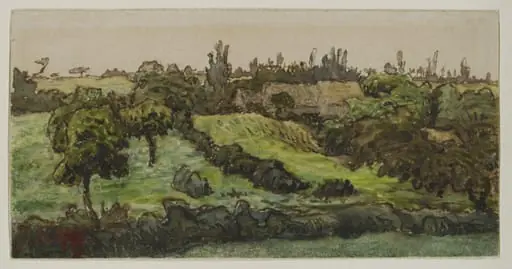 Landscape with farm buildings
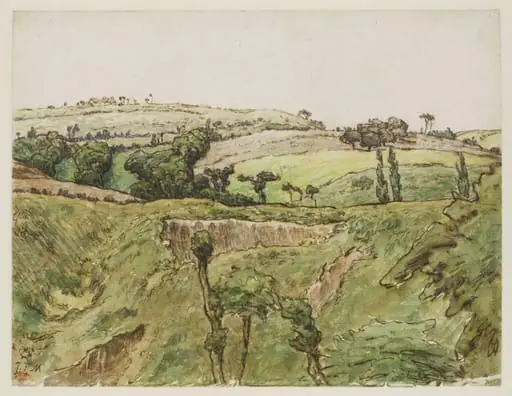 A hilly landscape with trees
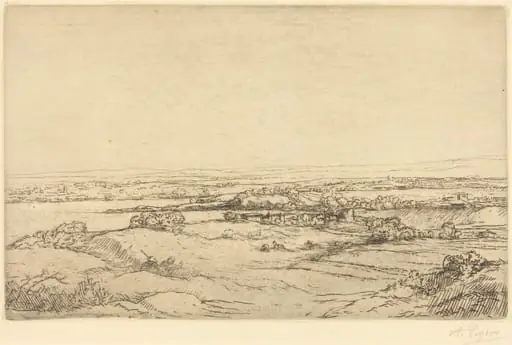 Plain near a Lake (La plaine pres du lac)
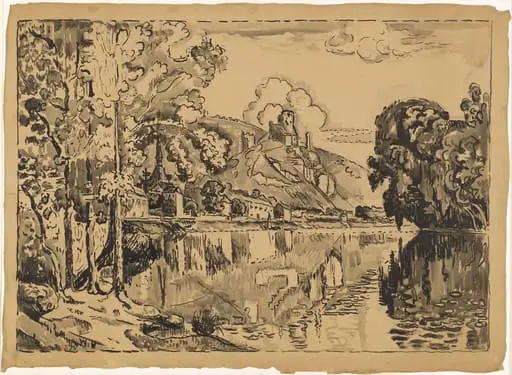 Les Andelys on a Summer Morning
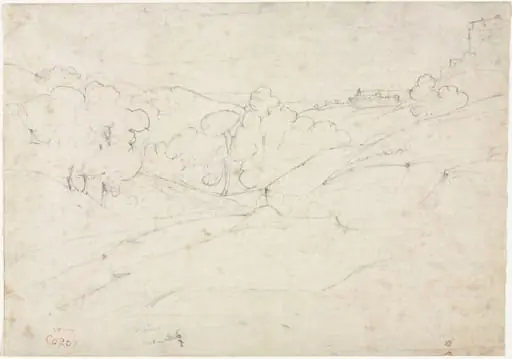 View of Marino (recto)
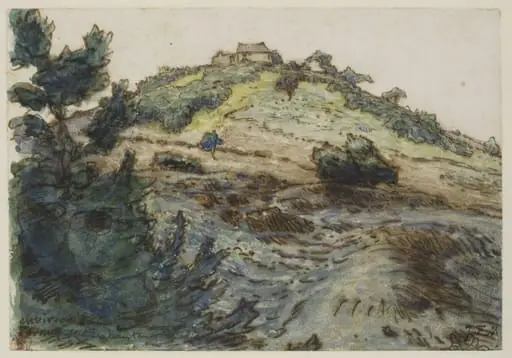 The farm on the hill
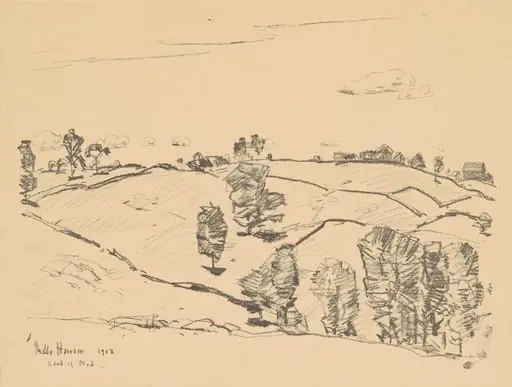 Stone Fences, Land of Nod
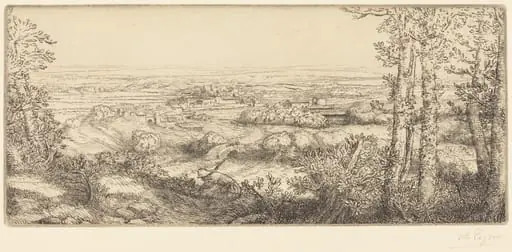 Valley in Bourgogne (Une vallee en Bourgogne)
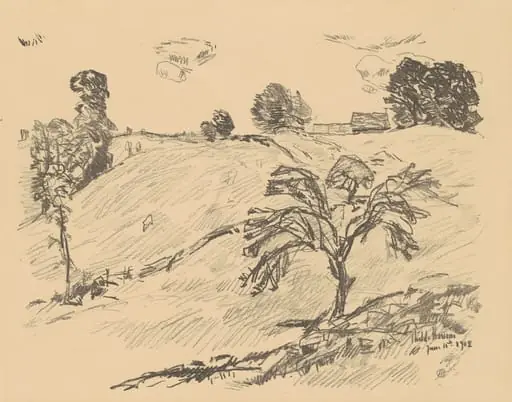 The Land of Nod
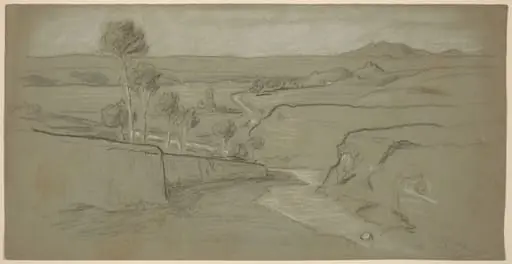 Roman Landscape
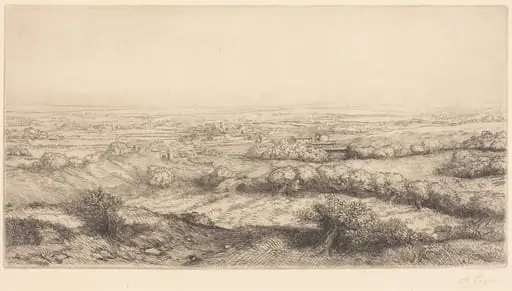 Valley in Bourgogne (Une vallee en Bourgogne)