Artwork
Oliver Cromwell
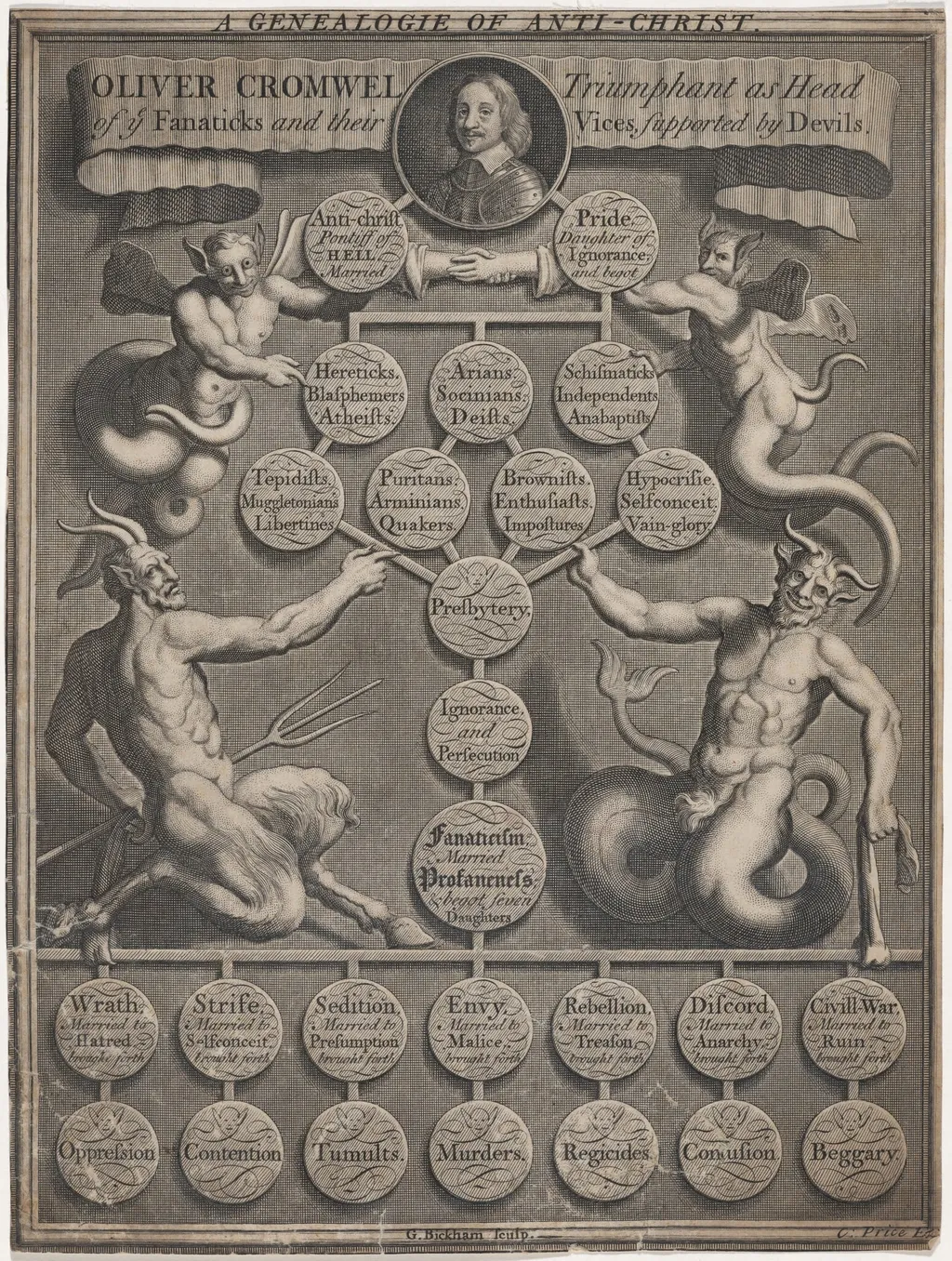
Oliver Cromwell is an ink print by the Baroque artist George Bickham. It dates from 1726 and is held in the collection of the National Gallery of Art.
About this work
Overview
An engraving from 1726 by George Bickham, this print presents a symbolic genealogy attributing the turmoil of the English Civil War to Oliver Cromwell.
An engraving from 1726 by George Bickham, this print presents a symbolic genealogy attributing the turmoil of the English Civil War to Oliver Cromwell. Rather than depicting biological descent, it constructs a visual allegory in which Cromwell stands at the apex of a tree whose branches bear the names of moral and political vices. The composition functions as a polemical genealogy, mapping societal decay onto a single figure through structured imagery.
Subject & Meaning
Cromwell is portrayed as the origin of a lineage of destructive forces: Pride, Ignorance, and Fanaticism grow as leaves from his image, while at the root lie outcomes like Murder, Rebellion, and Civil War. Winged figures support the tree’s structure, suggesting divine or supernatural sanction of this moral narrative. The work does not chronicle history but condemns Cromwell as the source of national suffering, framing him as the progenitor of chaos through symbolic association.
Technique & Style
Executed in fine-line engraving, the print employs dense, precise detailing to layer meaning across its vertical structure. Figures and inscriptions are arranged hierarchically, guiding the viewer’s eye from Cromwell’s portrait downward through increasingly dire consequences. The use of circular frames for names evokes heraldic or genealogical traditions, repurposed here for moral indictment rather than lineage. The style reflects late Baroque allegorical conventions common in political satire of the period.
History & Provenance
Created in 1726, during a period of renewed monarchical legitimacy under the Hanoverians, the print reflects post-Restoration efforts to discredit the republican interregnum. It likely circulated among royalist circles as propaganda, reinforcing the narrative that Cromwell’s rule had been an aberration. Its survival in institutional collections suggests it was preserved as a historical artifact of political rhetoric rather than as a widely distributed broadside.
Context
In early 18th-century Britain, public memory of the Civil War and Cromwell’s rule remained contentious. This engraving emerged amid efforts to consolidate a stable national identity under the Crown, requiring the vilification of republican leaders. Similar imagery appeared in pamphlets and prints, using allegory to simplify complex history into moral binaries. The tree motif, drawn from medieval and Renaissance emblem books, was a familiar vehicle for conveying inherited sin or corruption.
Legacy
The engraving stands as a representative example of how visual symbolism was deployed to shape historical perception. Though not historically accurate, its structure influenced later political caricatures and the use of genealogical metaphors in propaganda. It remains a key artifact for understanding how post-revolutionary Britain negotiated its turbulent past through imagery that prioritized moral condemnation over factual nuance.
Artist & collection

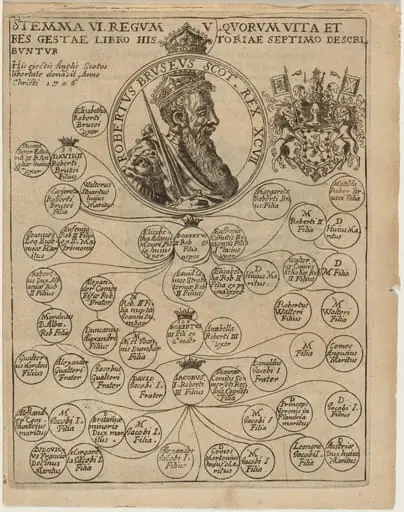 Robert de Bruce VIII, King of Scotland
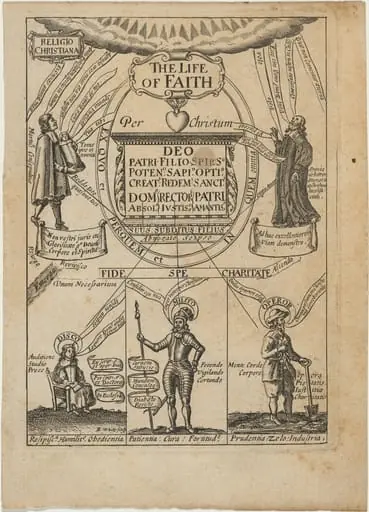 Title Page to The Life of Faith by Richard Baxter
 Niche in the Form of a Cartouche
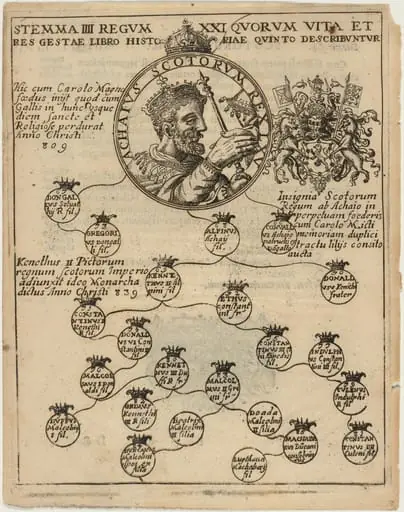 Achaius of Scotland, with Geneology
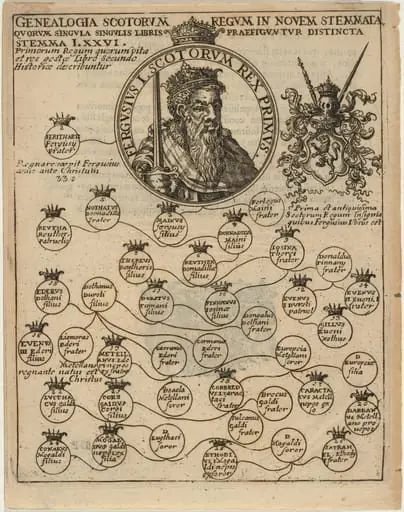 Fergus I of Scotland With Geneology
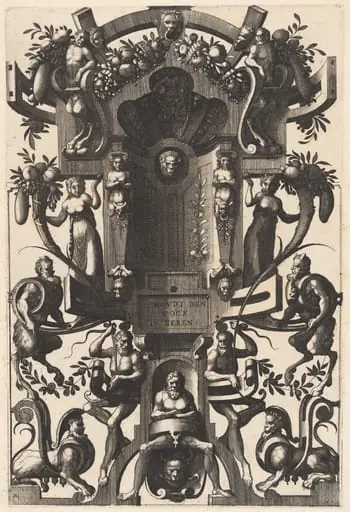 Grotesque with Strapwork in the Form of a Cartouche
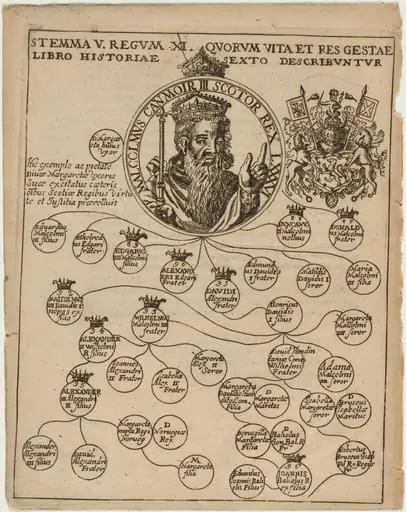 Malcolm III with Geneology
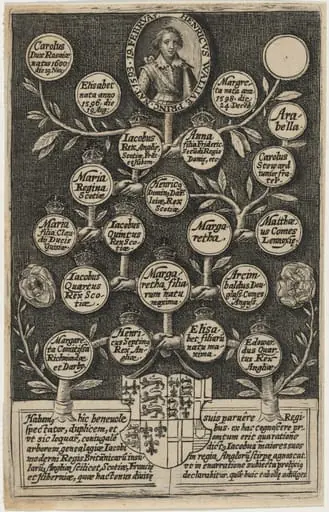 Henry Frederick, Prince of Wales
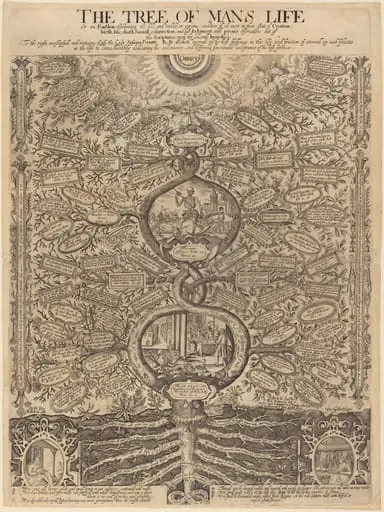 The Tree of Man's Life
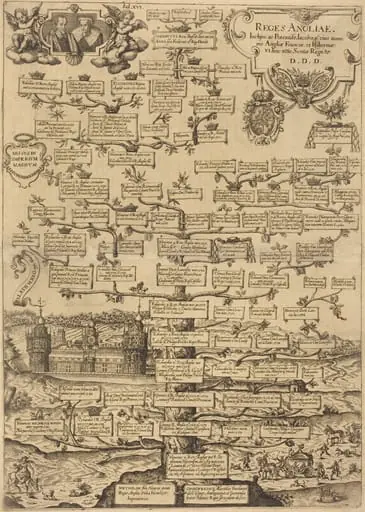 Reges Anglia
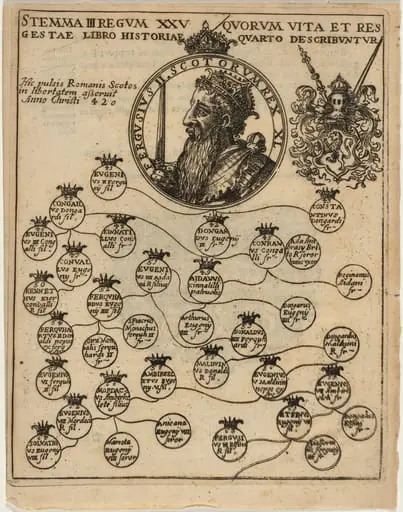 Fergus II of Scotland with Geneology
 James II of Scotland with Geneology of the Stuarts