Artwork
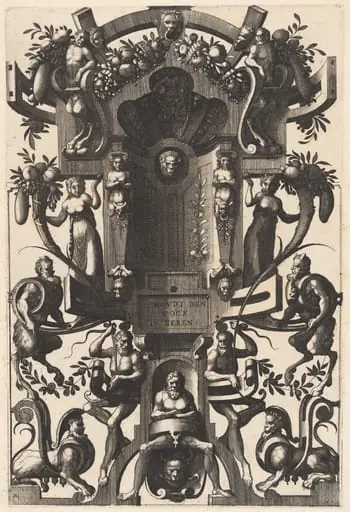
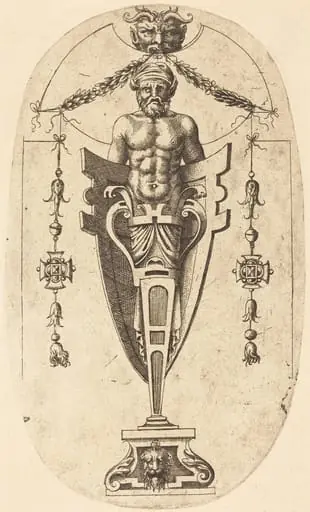
Niche in the Form of a Cartouche
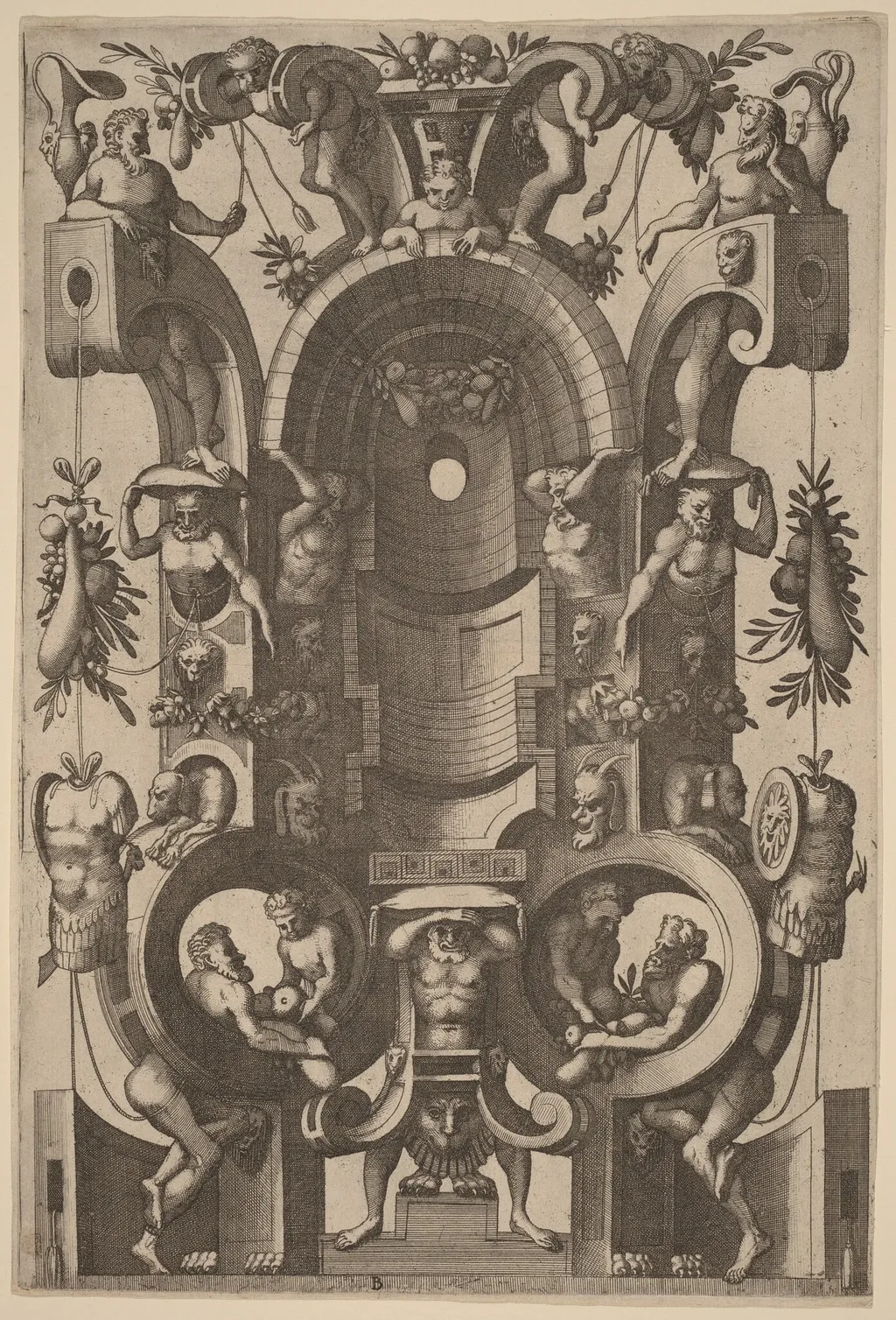
Niche in the Form of a Cartouche is an ink print by the Renaissance artist Johannes van Doetechum the Elder. It dates from 1556 and is held in the collection of the National Gallery of Art.
About this work
Overview
Niche in the Form of a Cartouche is a 1556 print created by Dutch engraver-cartographer Johannes van Doetecum the Elder using etching and engraving techniques. This work showcases his ability to merge decorative and functional elements.
Subject & Meaning
The print features a central half-circle niche containing a seated statue, surrounded by a moon, figures, and symbolic elements like musical instruments, fruit, and vases. The composition blends architectural and fantastical elements, with twisting arches, columns, and human forms.
Technique & Style
Van Doetecum employed etching and engraving to achieve a busy yet balanced scene. Characteristic line work generates depth and movement, while figures appear to integrate seamlessly into the background, blurring the line between subject and setting.
History & Provenance
Created in 1556, this print reflects van Doetecum's collaborative style, often working with his brother Lucas and sons. His career spanned from Deventer to Haarlem (from 1578), with notable contributions to genre scenes and cartography.
Context
This work sits within the broader context of 16th-century Dutch printmaking, where artists like van Doetecum and Pieter Bruegel the Elder (whose works van Doetecum often etched) explored the interplay of realism and fantasy.
Legacy
Niche in the Form of a Cartouche exemplifies the technical prowess and imaginative composition of van Doetecum's prints, influencing the development of Dutch etching and engraving traditions.
Artist & collection

Artist
Johannes van Doetechum the Elder
Joannes van Doetecum the Elder (1530 – 1605) was a Dutch engraver-cartographer known for his etched works after genre scenes by Pieter Bruegel the Elder and maps of various cities in the Netherlands.

 Grotesque with Strapwork in the Form of a Cartouche
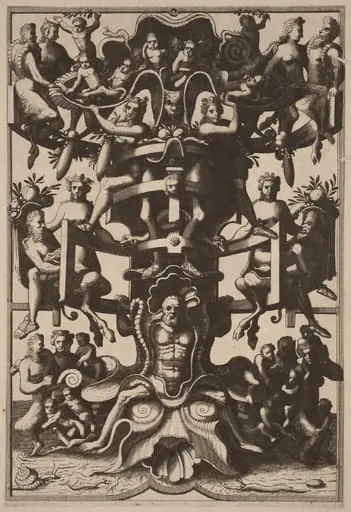 Man Sitting on an Auricular Mask, Supporting a Strapwork Frame on his Shoulders
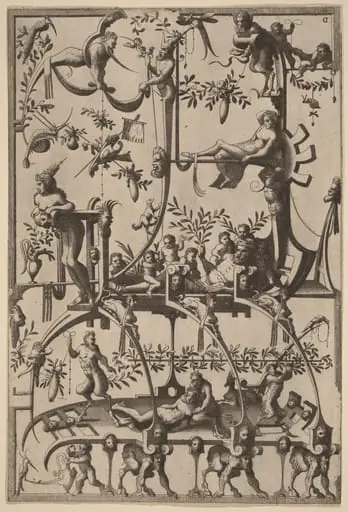 Surface Decoration, Grotesque with Strapwork
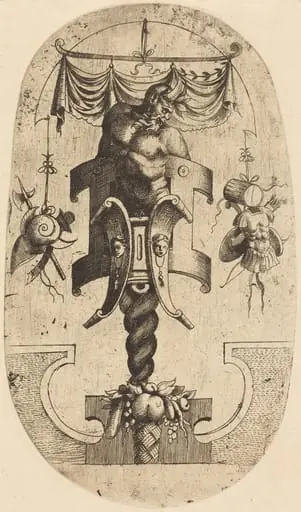 Satyr Bending Towards the Right
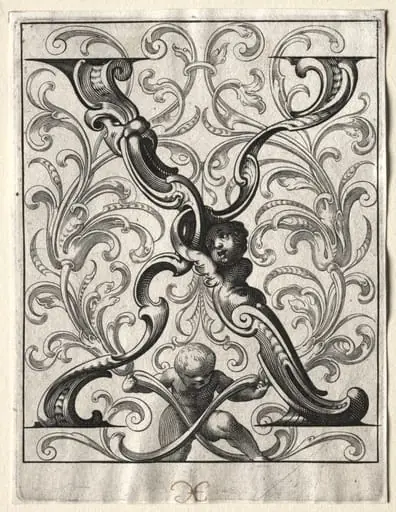 New ABC Booklet: X
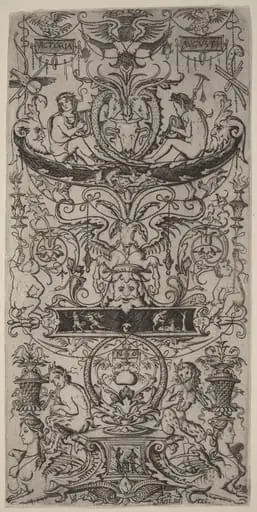 Ornament Panel: Victoria Augusta
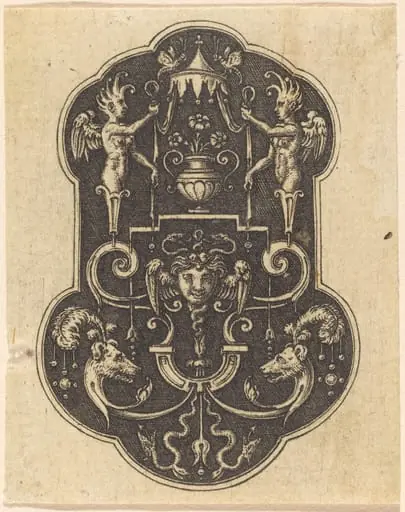 Head of Medusa
 Satyr with Twisted Legs
 Ornamental Panel Inscribed "Victoria Augusta"
 Ascending Ornament
 Ornament with Flower and Eight Wild Folk
 Man in a Niche