Artwork
J'ai tort, mon cher Valère, et t'en demande excuse
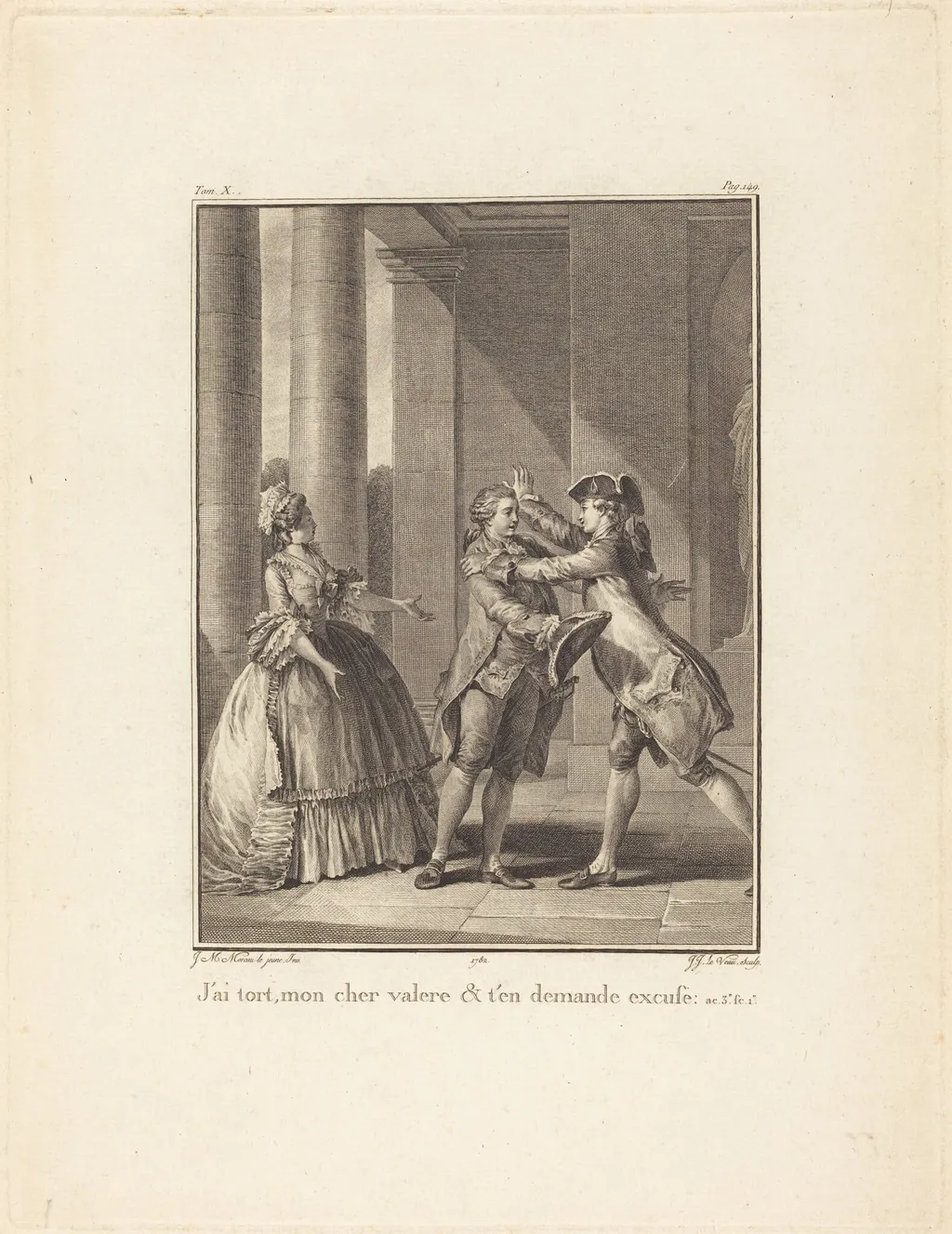
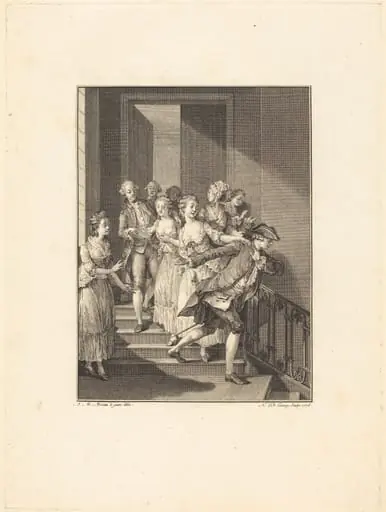
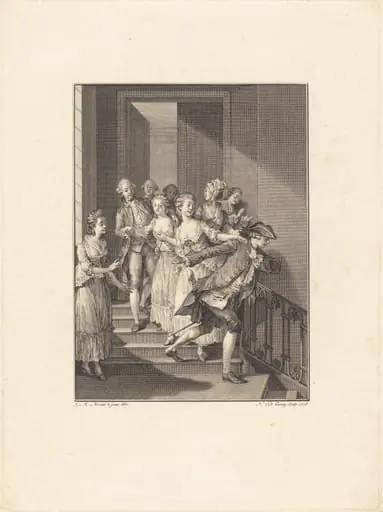
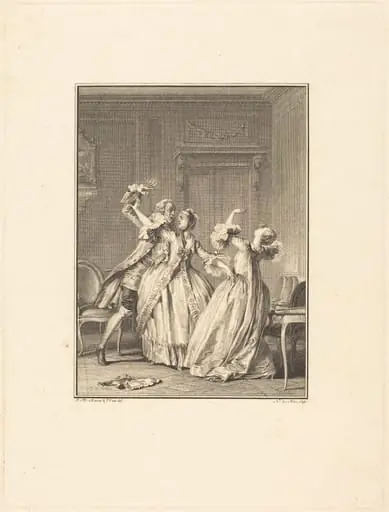
J'ai tort, mon cher Valère, et t'en demande excuse is an ink print by the Romanticist artist Jean Jacques Le Veau. It dates from 1782 and is held in the collection of the National Gallery of Art. Jean‑Jacques Le Veau’s print *J’ai tort, mon cher Valère, et t’en demande excuse* was executed in 1782 as an engraving on paper.
About this work
Overview
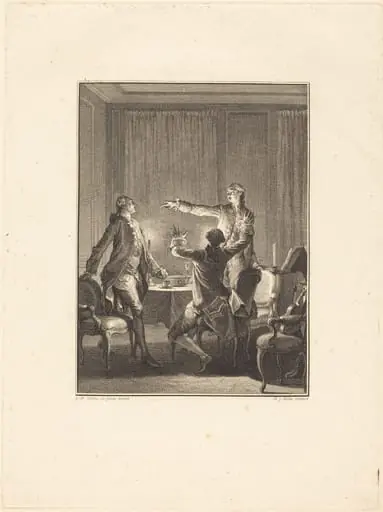
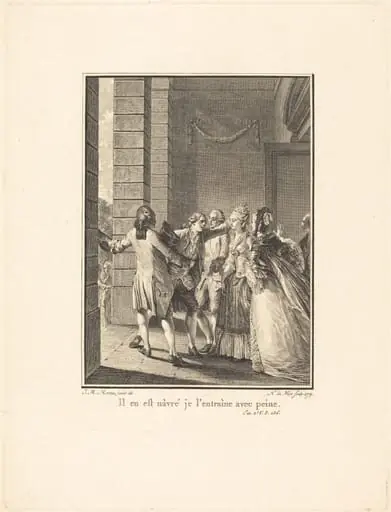
Jean‑Jacques Le Veau’s print *J’ai tort, mon cher Valère, et t’en demande excuse* was executed in 1782 as an engraving on paper. Rendered in monochrome, the composition depicts an interior scene framed by tall columns and a curtained backdrop, populated by three figures whose gestures suggest a moment of conflict and reconciliation.
Subject & Meaning
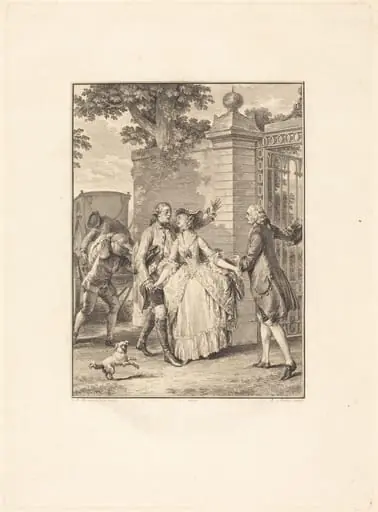
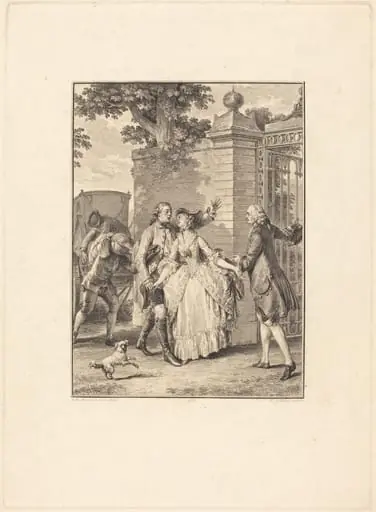
The central narrative shows a woman in a flowing, ruffled gown observing two men. One man is in the act of removing the other’s hat, while the second reaches out, apparently to halt the gesture. The inscription at the bottom—an apology addressed to “Valère”—implies a domestic dispute resolved through contrition, reflecting the genre’s interest in everyday emotional exchanges.
Technique & Style
Le Veau employed fine, incised lines characteristic of eighteenth‑century engraving, using cross‑hatching to model volume and convey movement. The contrast between the crisp delineation of the figures and the softer, less detailed background creates spatial depth, while the linear economy captures the fleeting tension of the scene without reliance on colour.
History & Provenance
Created in the late eighteenth century, the work belongs to a period when French printmakers frequently illustrated literary or theatrical subjects. Though specific ownership records are scarce, the piece has been catalogued in several collections of French engravings, confirming its attribution to Le Veau and its circulation among connoisseurs of the era.
Artist & collection