Artwork
La confiance des belles âmes
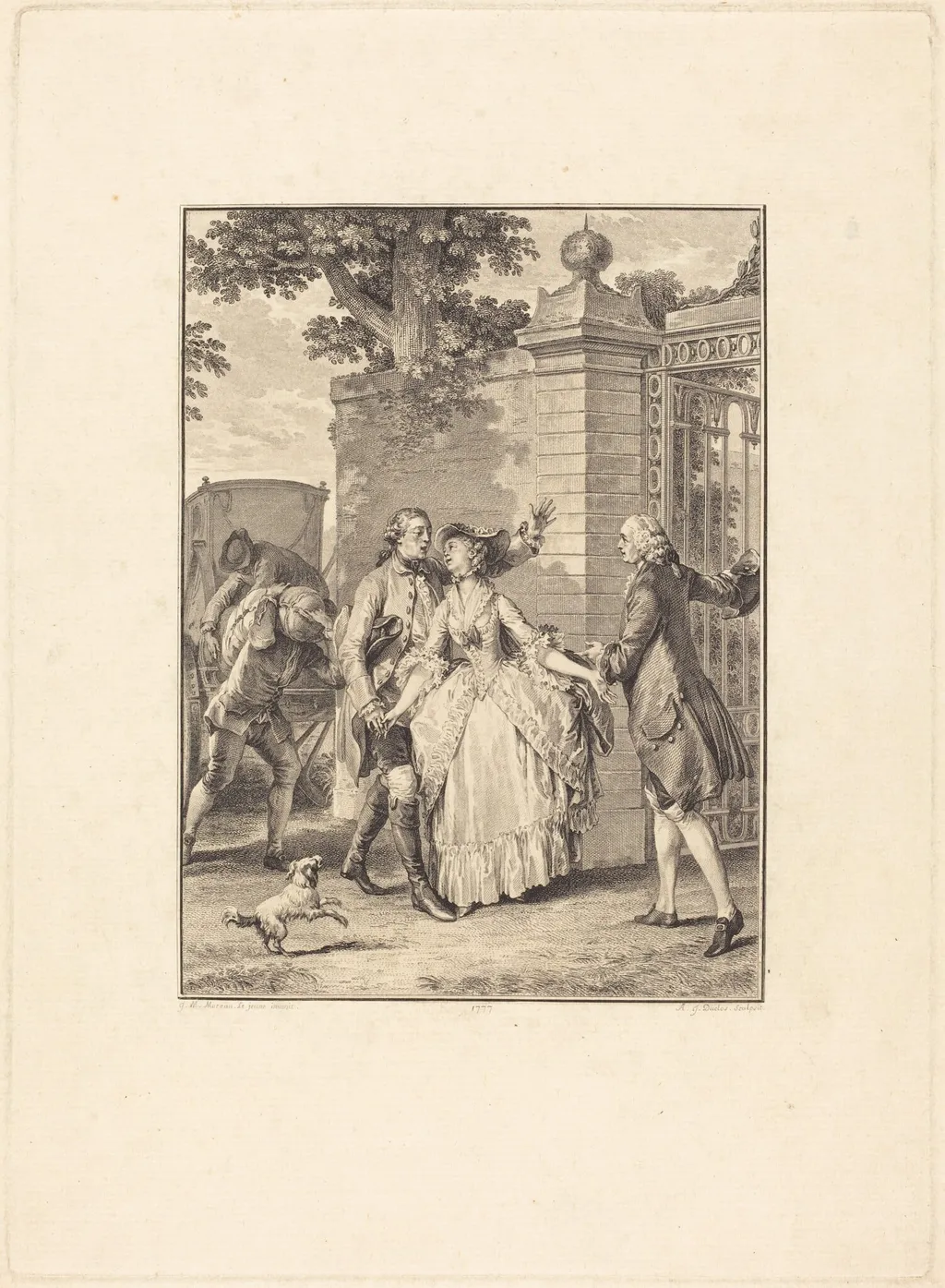
La confiance des belles âmes is an ink print by the Romanticist artist Antoine-Jean Duclos. It dates from 1777 and is held in the collection of the National Gallery of Art.
About this work
Overview
La confiance des belles âmes is an 1777 print by Antoine-Jean Duclos, executed in etching and engraving. It presents a quiet, staged moment between two figures in aristocratic dress, framed by a monumental stone structure with a gated arch. The composition balances stillness and subtle motion, with a dog darting ahead and a distant figure receding, suggesting narrative beyond the frame.
Subject & Meaning
The title, translating to 'The Trust of Noble Souls,' implies a bond of moral or emotional sincerity between the figures.
The title, translating to 'The Trust of Noble Souls,' implies a bond of moral or emotional sincerity between the figures. The woman’s grip on the man’s arm and their aligned posture convey mutual reliance, while the closed gate and looming wall may symbolize societal barriers or inner restraint. The retreating figure introduces a sense of separation, deepening the theme of private connection amid isolation.
Technique & Style
Duclos employs fine, controlled lines typical of late 18th-century engraving to render textures in fabric, stone, and foliage. Delicate cross-hatching builds tonal depth, particularly in the shadowed arch and garments, while the contrast between light-drenched figures and darkened architecture heightens spatial tension. The precision avoids overt drama, favoring restrained realism over theatricality.
History & Provenance
Created in 1777, the print likely circulated among collectors of French graphic art during the Ancien Régime. Though no early ownership records are widely documented, its technical quality suggests it was produced for an educated, bourgeois audience interested in moral allegory and refined draftsmanship, common in pre-Revolutionary print culture.
Context
While often associated with Romanticism in modern readings, the work predates the movement’s full emergence. Its emotional restraint and classical composition align more closely with late Rococo and early Neoclassical sensibilities, reflecting a transitional moment in French art where personal virtue and social decorum were visually intertwined.
Legacy
The print remains a modest but well-crafted example of French reproductive engraving from the late 1700s. It is preserved in institutional collections as a representative of period printmaking techniques and moralizing imagery, though it has not significantly influenced later artistic developments beyond its technical lineage.
Artist & collection


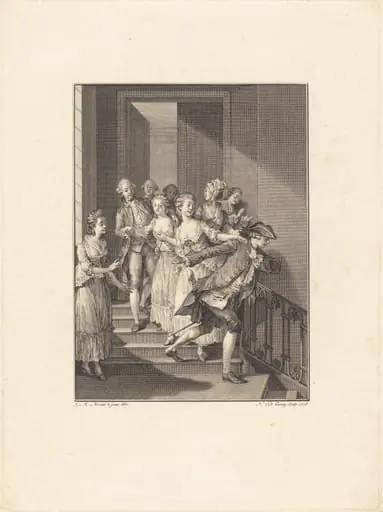 Saint-Preux sort de chez des femmes du monde
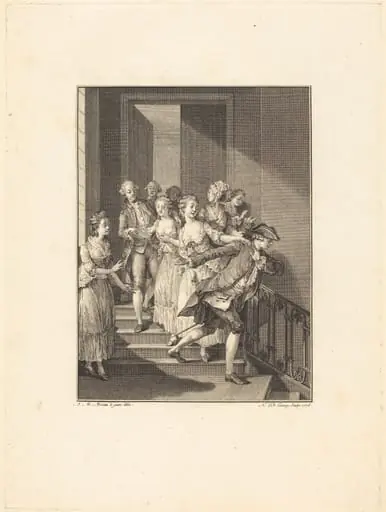 Saint-Preux sort de chez des femmes du monde
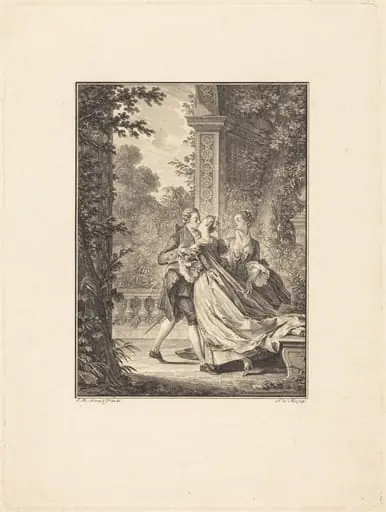 Sans rien comprendre à ce mystere
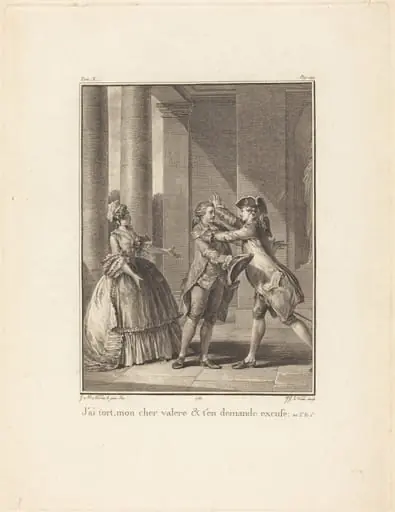 J'ai tort, mon cher Valère, et t'en demande excuse
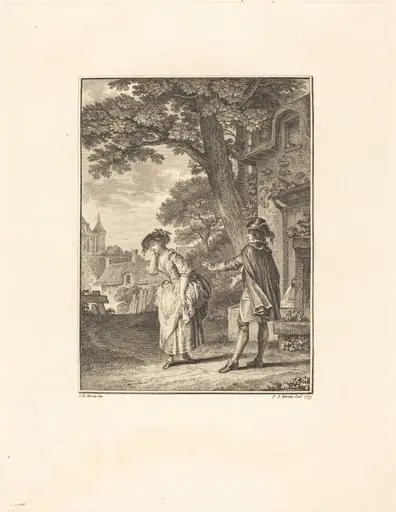 Le Devin du Village (Colette Weeping)
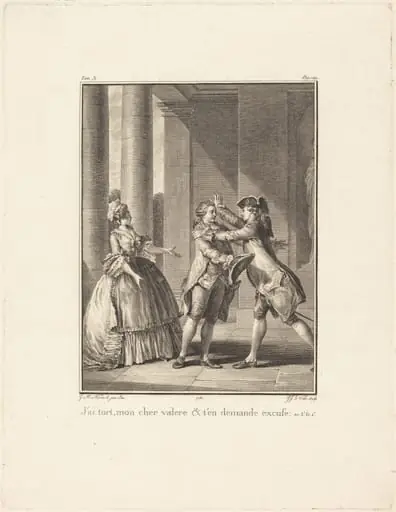 J'ai tort, mon cher Valère, et t'en demande excuse
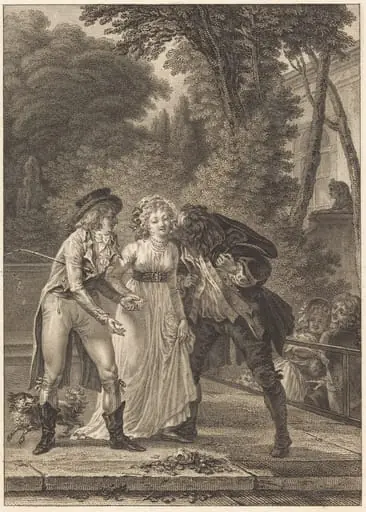 Le baiser rendu: Le baiser rendu
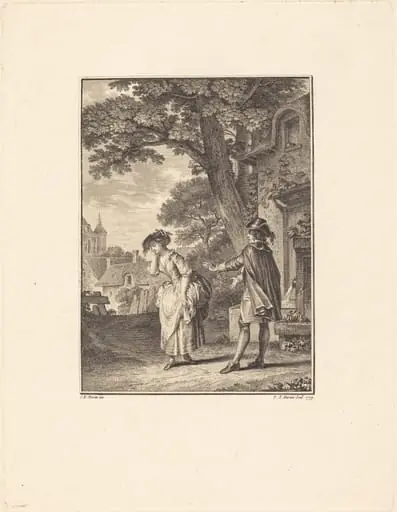 Le Devin du Village (Colette Weeping)
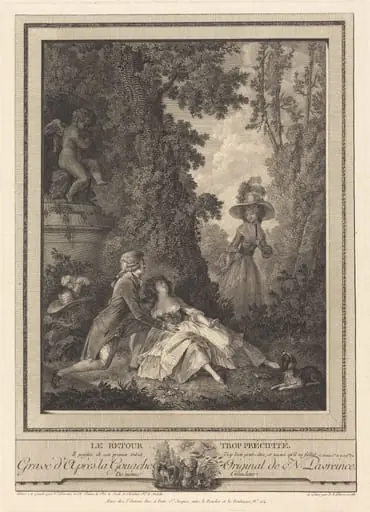 Le retour trop precipite
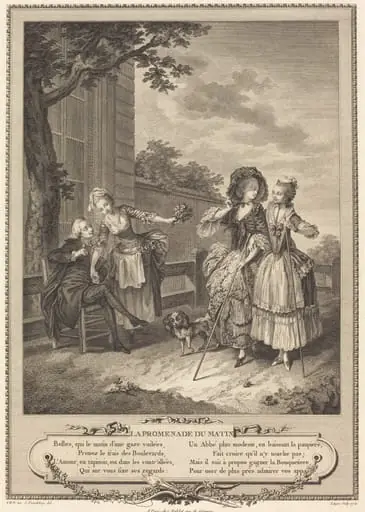 La promenade du matin
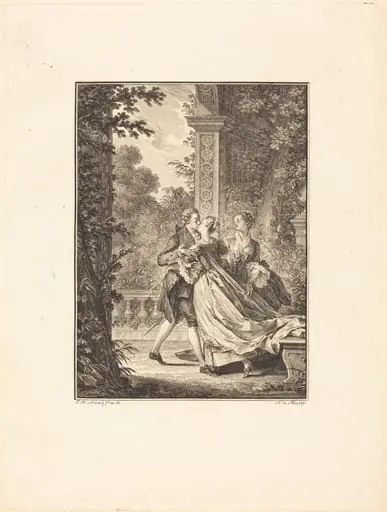 Sans rien comprendre à ce mystère