Artwork
Ruins of the House of Septimius Severus on the Palatine (Rovine della casa di S.S. sul Palatino )
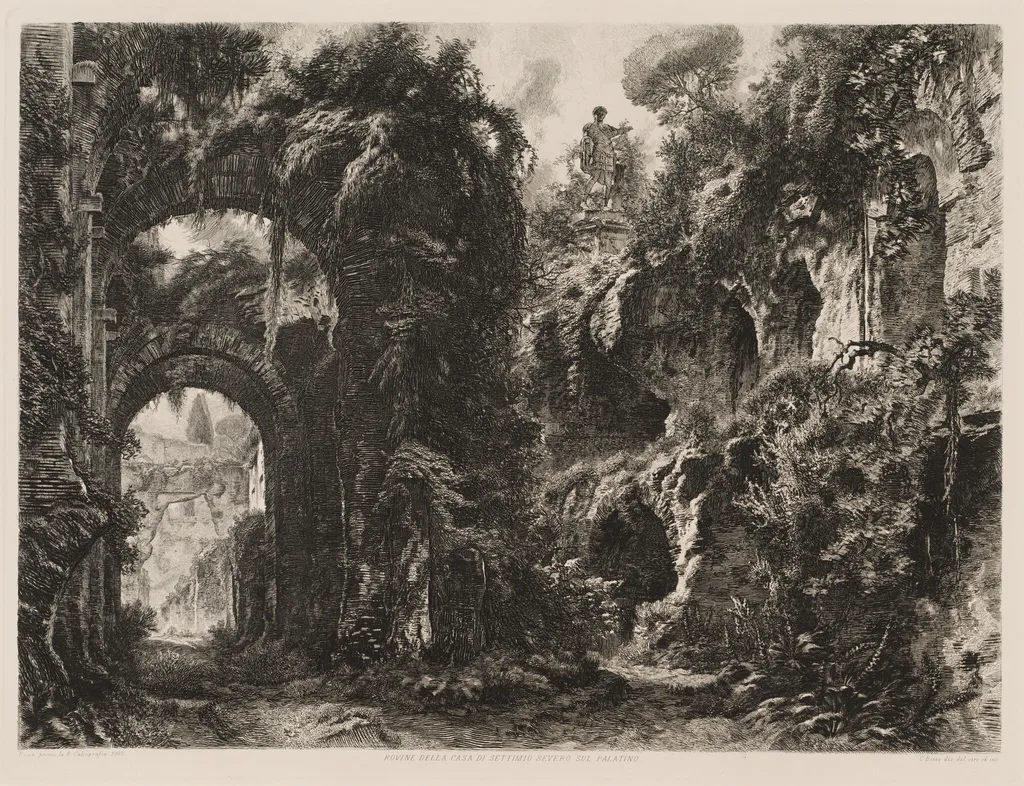
Ruins of the House of Septimius Severus on the Palatine (Rovine della casa di S.S. sul Palatino ) is an ink print by Cesare Biseo. It dates from 1900 and is held in the collection of the National Gallery of Art.
About this work
Overview
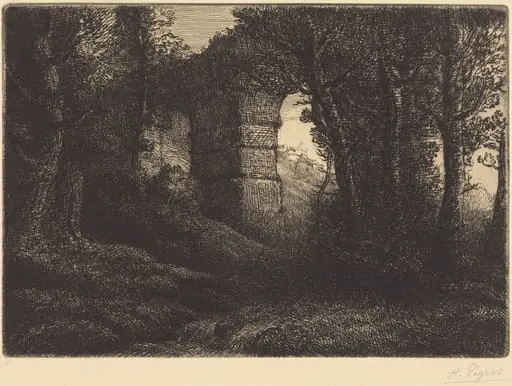
Cesare Biseo's 1900 etching, Ruins of the House of Septimius Severus on the Palatine, depicts the remnants of an ancient Roman dwelling, set amidst a lush, overgrown landscape on the Palatine Hill.
Subject & Meaning
The print captures the juxtaposition of ancient architectural remnants – including a distant statue on a pedestal, crumbling walls, and arches – with the encroaching natural world, highlighting the passage of time and the reclamation of historical sites by nature.
Technique & Style
Biseo employed fine etching lines to convey contrasting textures: the rough, weathered stone of the ruins and the dense foliage of the surrounding trees and vines, creating a sense of depth and atmospheric shading.
History & Provenance
Created in 1900, the etching's provenance and exhibition history are not detailed here, though its subject matter reflects late 19th- and early 20th-century European interests in antiquity and the romanticization of ruins.
Context
The work reflects a broader artistic and cultural fascination with Rome's ancient past during the late 19th and early 20th centuries, often exploring themes of decline, preservation, and the relationship between nature and human legacy.
Legacy
While specific influences or direct artistic lineage of Biseo's etching are not highlighted, it contributes to a body of late Romantic and early 20th-century art engaging with classical antiquity, potentially influencing subsequent depictions of ruins in various media.
Artist & collection


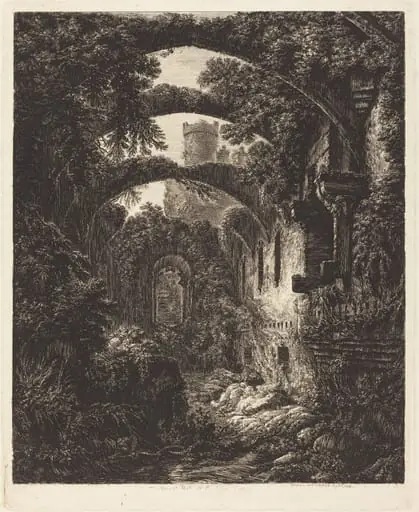 The Great Hall at Conway Castle
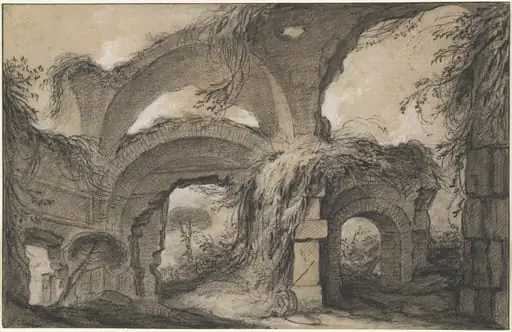 Arches of the Larger Baths at Hadrian's Villa
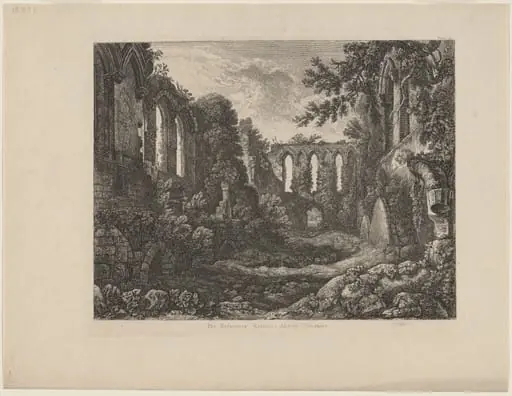 The Refectory, Rievaulx Abbey, Yorkshire
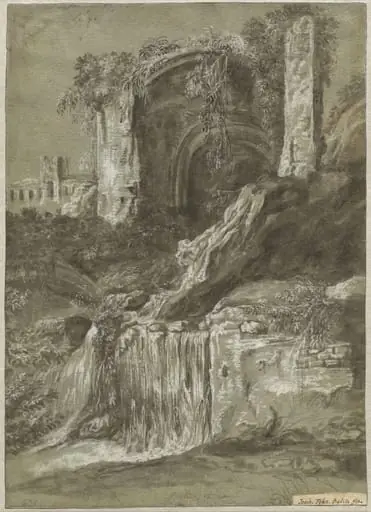 A Waterfall with Ruins (verso)
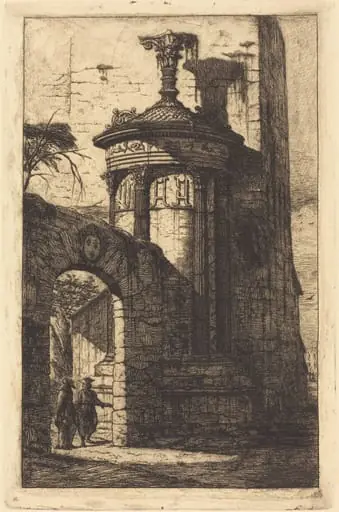 Entrée du Couvent des Capucins français à Athenes (Entrance to the French Capuchin Convent at Athens)
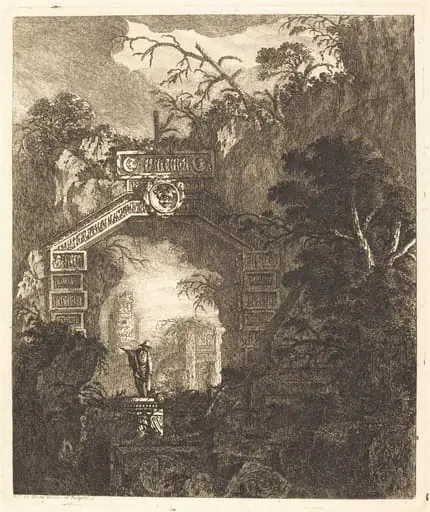 Figure Standing under a Stone Arch
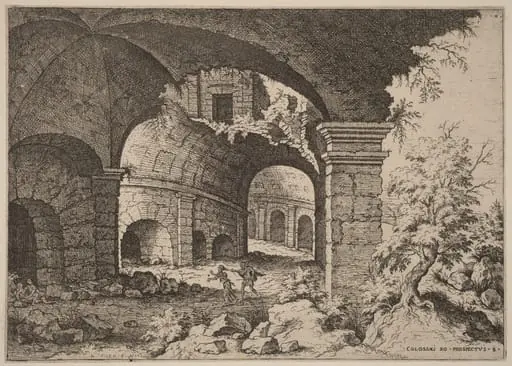 Eighth View of the Colosseum
 The Old Palace at Tivoli
 Ruins of the Palais Gallien in Bordeaux
 The Muleteers' Inn
 Saint-Pierre Stream near Pierrefond (Ruisseaude Saint-Pierre, pres Pierrefond)
 Ruins of an Ancient Aqueduct (Ruine d'un ancien aqueduc)