Artwork
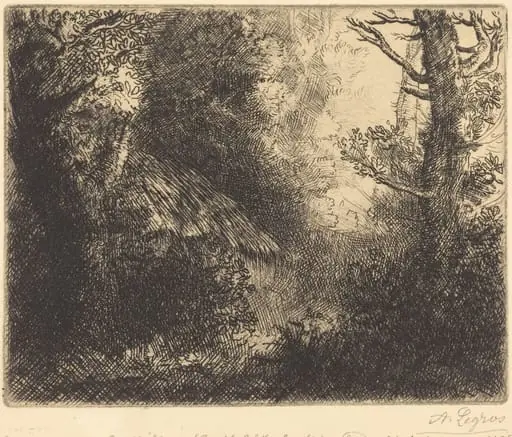
Saint-Pierre Stream near Pierrefond (Ruisseaude Saint-Pierre, pres Pierrefond)
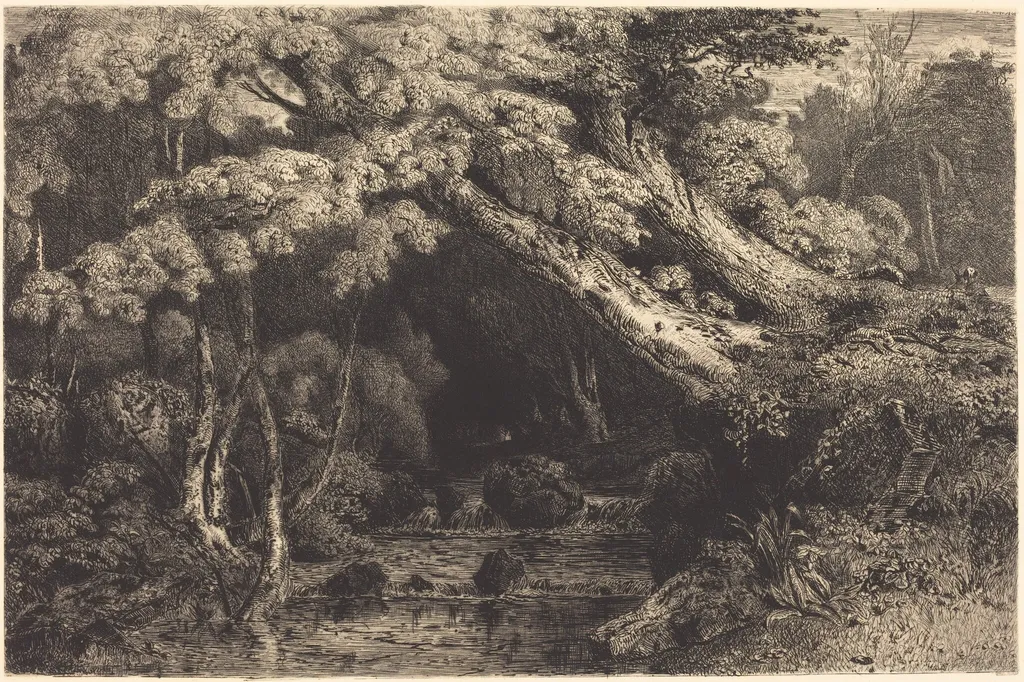
Saint-Pierre Stream near Pierrefond (Ruisseaude Saint-Pierre, pres Pierrefond) is an ink print by the Romanticist artist Paul Huet. It dates from 1842 and is held in the collection of the National Gallery of Art.
About this work
Overview
The work belongs to a series of landscape prints Huet produced during his travels in France, capturing quiet, unidealized natural settings.
Created in 1842, this etching by Paul Huet depicts a secluded forest stream near Pierrefond. The work belongs to a series of landscape prints Huet produced during his travels in France, capturing quiet, unidealized natural settings. Unlike painted scenes, the image is formed through incised lines on a metal plate, allowing for fine, controlled textures that emphasize the weight and density of the environment.
Subject & Meaning
The scene centers on a narrow stream winding through a dense, overgrown woodland. No figures or signs of human presence appear; the focus is entirely on the wild, untamed vegetation. The oppressive thickness of the trees and the absence of bright light suggest a contemplative mood, evoking solitude and the quiet persistence of nature beyond human intervention.
Technique & Style
Huet employed etching to render the scene with intricate, linear detail. Fine, scratchy strokes build up the texture of bark, foliage, and water, creating a sense of depth through tone rather than color. The dark, smudged areas result from heavy ink retention in the etched lines, while the minimal light is suggested by sparse, delicate marks—showcasing the medium’s capacity for atmospheric nuance.
History & Provenance
The print was made during a period when Huet was actively exploring the French countryside, documenting landscapes outside urban centers. It was likely produced for private collectors interested in topographical and Romantic-era naturalism. No public record of its early ownership exists, but it aligns with the growing 19th-century interest in print-based landscape studies.
Context
In the 1840s, French artists increasingly turned to intimate, unidealized nature as a subject, moving away from grand historical or mythological themes. Huet’s etchings contributed to this shift, reflecting a broader cultural fascination with the emotional resonance of wild places. His work resonated with contemporaries like Corot and the Barbizon painters, who sought truth in natural observation.
Legacy
This etching exemplifies Huet’s role in elevating printmaking as a serious medium for landscape expression. Though less widely known than his paintings, his etchings influenced later generations of printmakers who valued directness and texture over polish. The work remains a quiet testament to the aesthetic value of unadorned natural scenes in 19th-century French art.
Artist & collection


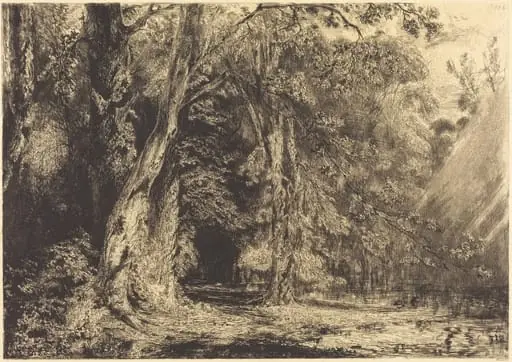 Flooding in the Forest of the Ile Séguin
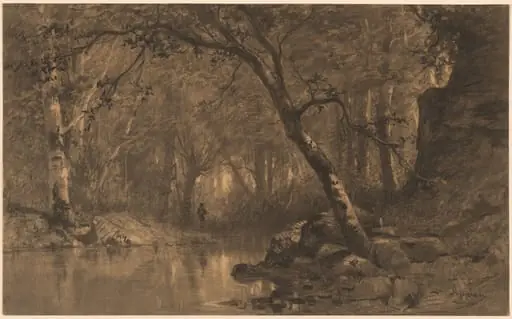 A Woodland River with a Fisherman
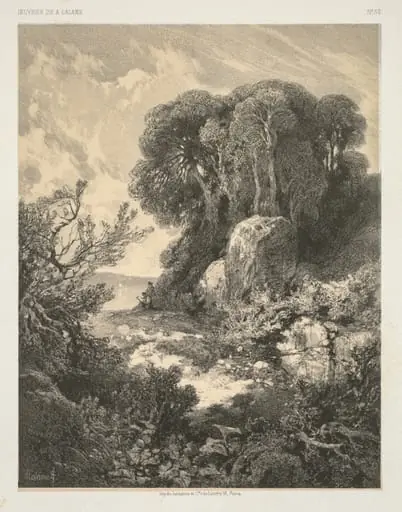 Oeuvres de A. Calame: No. 52
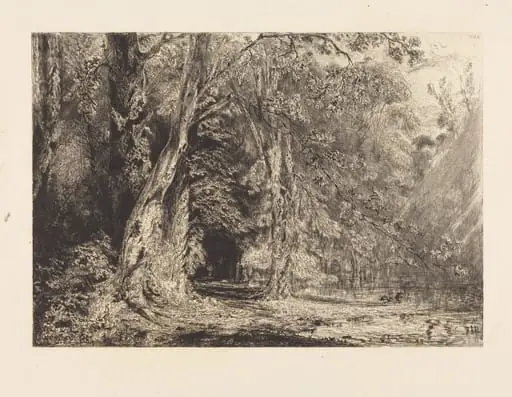 Flooding in the Forest of the Ile Séguin
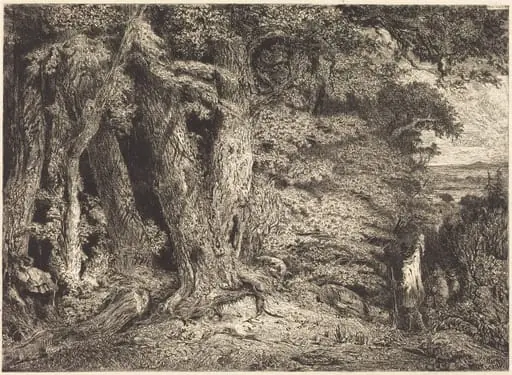 Entrance to the Forest
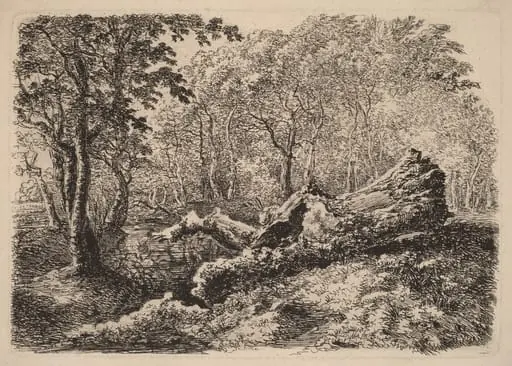 Mouldering Tree Trunk
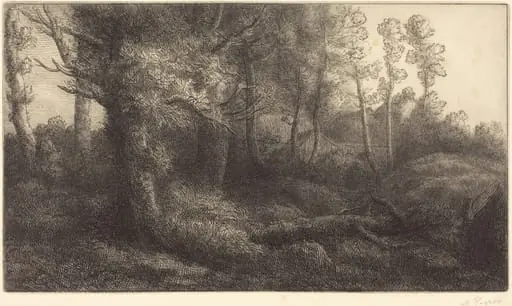 In the Forest (Lisiere de foret)
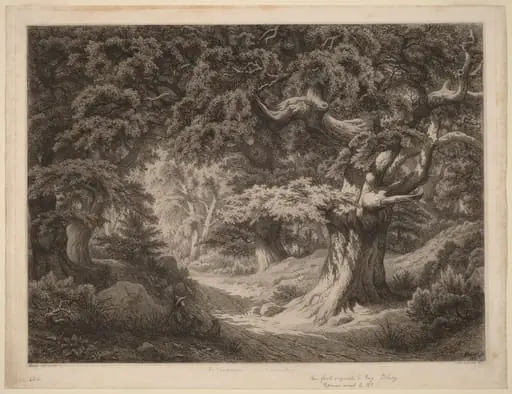 Le Charlemagne (forêt de fontainebleau)
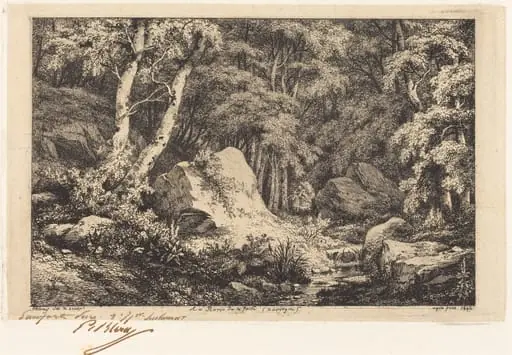 Au ravin de la faille, Auvergne (The Ravine at Auvergne)
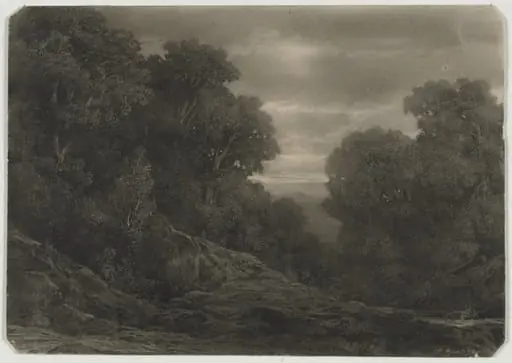 Landscape with Trees
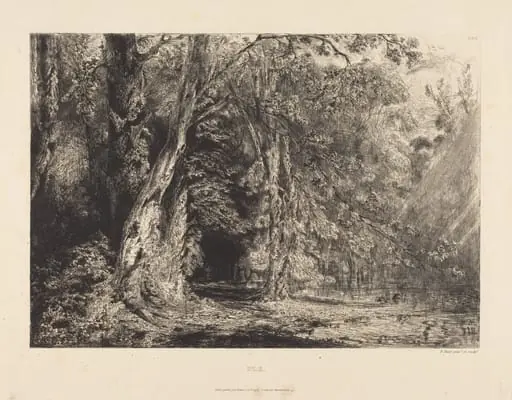 L'Ile Séguin in Flood
 Landscape: Near Chailleux (Paysage: Pres Chailleux)