Artwork
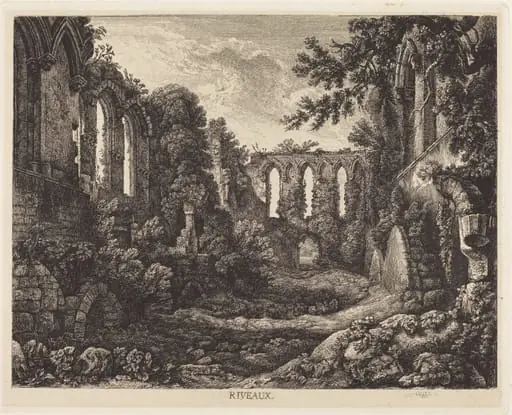
The Refectory, Rievaulx Abbey, Yorkshire
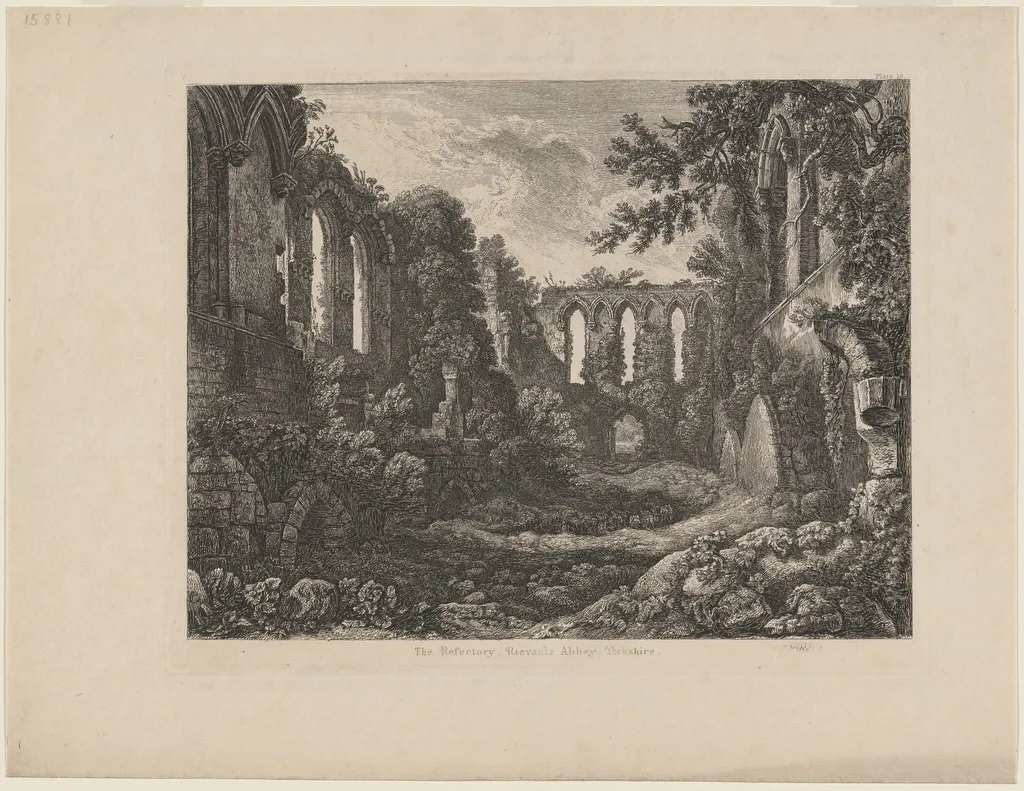
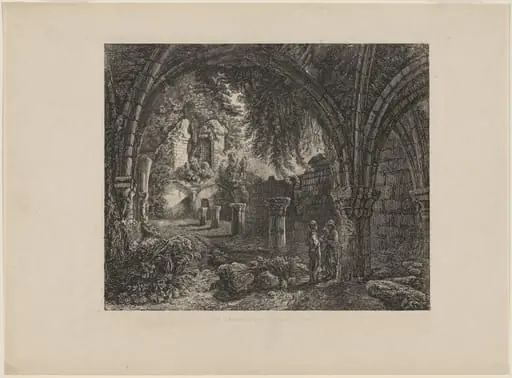
The Refectory, Rievaulx Abbey, Yorkshire is an ink print by the Romanticist artist George Cuitt the Younger. It dates from 1822 and is held in the collection of the National Gallery of Art.
About this work
Overview
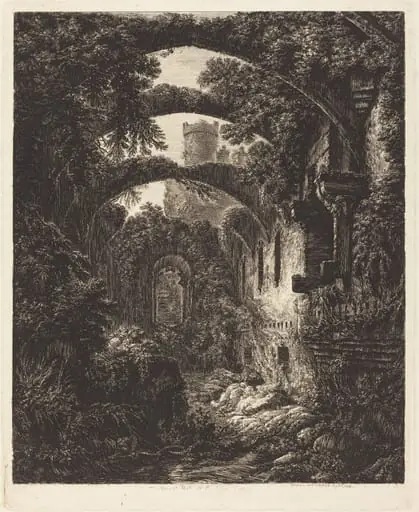
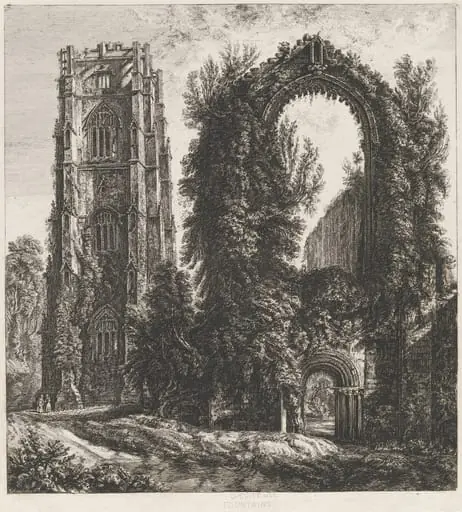
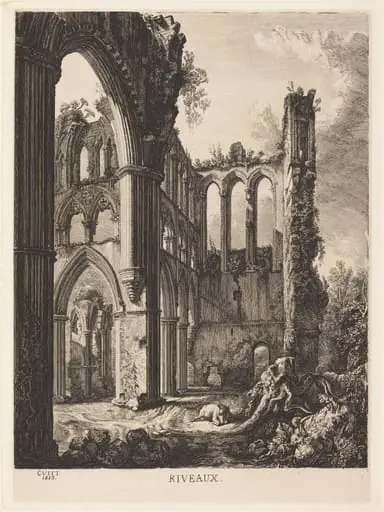
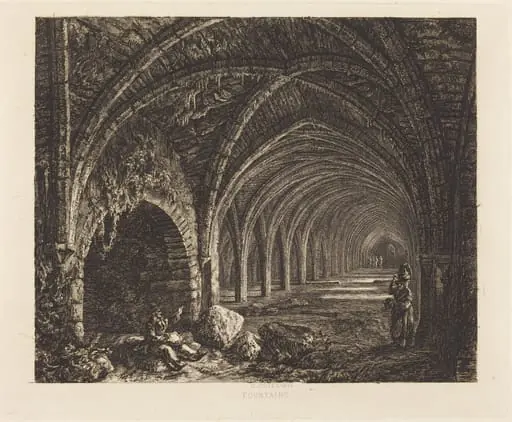
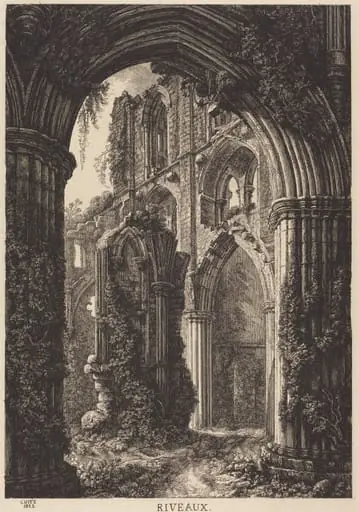
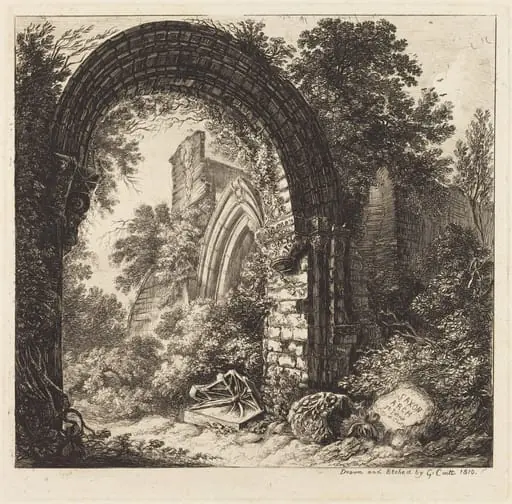
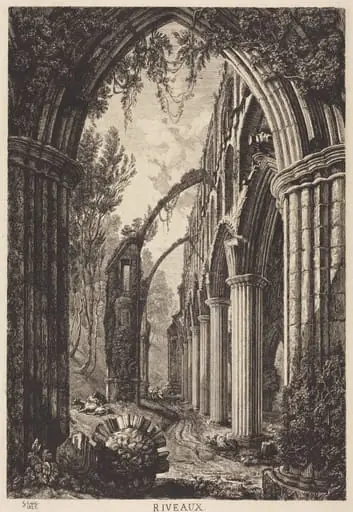
Created in 1822, this black‑and‑white etching by George Cuitt the Younger depicts the ruined refectory of Rievaulx Abbey in Yorkshire. The composition presents a stone structure, partly overtaken by vegetation, with a winding path leading toward a modest tower, all rendered in delicate line work that emphasizes the quiet atmosphere of the deserted site.
Subject & Meaning
The image records the former dining hall of the Cistercian monastery, a place where monks once gathered for meals. By foregrounding the encroaching trees, ivy, and broken arches, the print conveys the passage of time and the transformation of sacred architecture into a romantic ruin, inviting contemplation of decay and the persistence of history within the landscape.
Technique & Style
Cuitt employed traditional copperplate etching on wove paper, using fine, controlled lines to model light and shadow across stone and foliage. The contrast between crisp architectural details and the softer, stippled vegetation creates depth, while the careful handling of perspective guides the viewer’s eye along the meandering path toward the distant tower.
History & Provenance
The work was produced during Cuitt’s mature period, when he focused on British antiquities and picturesque ruins. It was likely issued as part of a series of prints illustrating historic sites, and copies have appeared in 19th‑century print collections and auction catalogues, confirming its circulation among collectors of topographical art.
Context
Rievaulx Abbey, a former Cistercian house founded in the 12th century, had been in ruins since the Dissolution of the Monasteries. In the early 19th century, such ruins attracted the Romantic imagination, and artists like Cuitt documented them, contributing to a growing public interest in medieval heritage and the sublime qualities of decay.
Artist & collection