Artwork
Salome with the Head of Saint John the Baptist
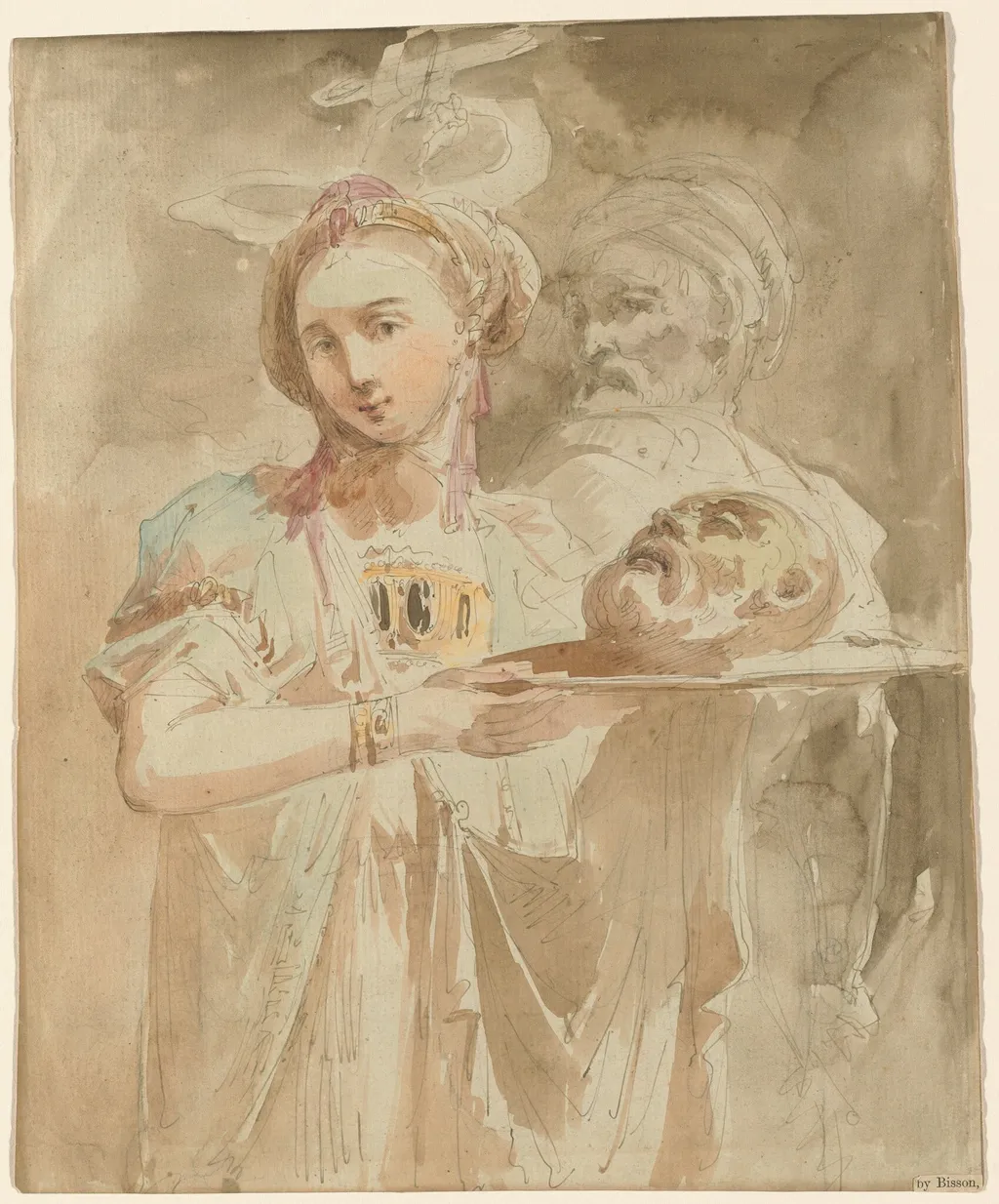
Salome with the Head of Saint John the Baptist is an ink drawing by the Romanticist artist Giuseppe Bernardino Bison. It dates from 1830 and is held in the collection of the National Gallery of Art.
About this work
Overview
Though Bison was primarily known for landscapes and architectural fantasies, this work stands as a rare religious subject in his oeuvre.
Created in 1830 by Giuseppe Bernardino Bison, this drawing combines pen and brown ink with watercolor washes and chalk on laid paper. Though Bison was primarily known for landscapes and architectural fantasies, this work stands as a rare religious subject in his oeuvre. The medium’s layered application—particularly glazing techniques—enhances the atmospheric tension, while the use of red chalk subtly defines Salome’s lips, adding a quiet intensity to the scene.
Subject & Meaning
The drawing portrays Salome holding the severed head of John the Baptist on a platter, a moment drawn from biblical narrative. Unlike dramatic interpretations, Bison renders her expression composed, almost detached. The absence of overt horror shifts focus to the psychological weight of the act, inviting contemplation rather than shock. The single candle’s glow isolates the figures, emphasizing solitude and moral ambiguity over violence.
Technique & Style
Bison employed glazing—thin, translucent layers of watercolor—to modulate light and shadow, allowing the paper’s white surface to contribute to the luminosity. Brown-gray washes deepen the surrounding darkness, while the candle’s light selectively illuminates Salome’s face and the head’s pale skin. Red chalk accents at her lips and mouth introduce a restrained chromatic emphasis, grounding the figure in physical presence without sensationalism.
History & Provenance
The drawing’s early ownership is undocumented, but it likely originated in northern Italy, where Bison traveled extensively for commissions. Its survival as a standalone work—rather than a study or preparatory sketch—suggests it was valued for its emotional restraint and technical refinement. No record of exhibition or public display before the 20th century exists, indicating it remained in private hands for much of its history.
Context
In early 19th-century Italy, religious themes persisted in art despite rising secular trends. Bison’s choice to depict this scene reflects a lingering interest in biblical drama among collectors, even as his reputation leaned toward topographical views. The work’s intimate scale and subdued palette contrast with the grandeur of contemporary frescoes, aligning it more with private devotional drawings than public altarpieces.
Legacy
Though not widely reproduced or studied, this drawing illustrates Bison’s versatility beyond his celebrated landscapes. Its quiet psychological depth and refined technique offer insight into lesser-known facets of his practice. It remains a subtle example of how Romantic-era artists reinterpreted classical subjects through understated means, prioritizing mood over narrative spectacle.
Artist & collection

Artist
Giuseppe Bernardino Bison was an itinerant Italian painter of frescoes, landscapes, vedute, capriccios and some religious works.

 Baccante
 Allegorical Figure
 Lady Hamilton Playing a Lyre
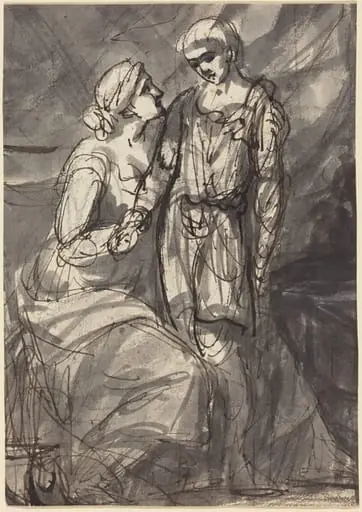 Two Figures in Classical Dress
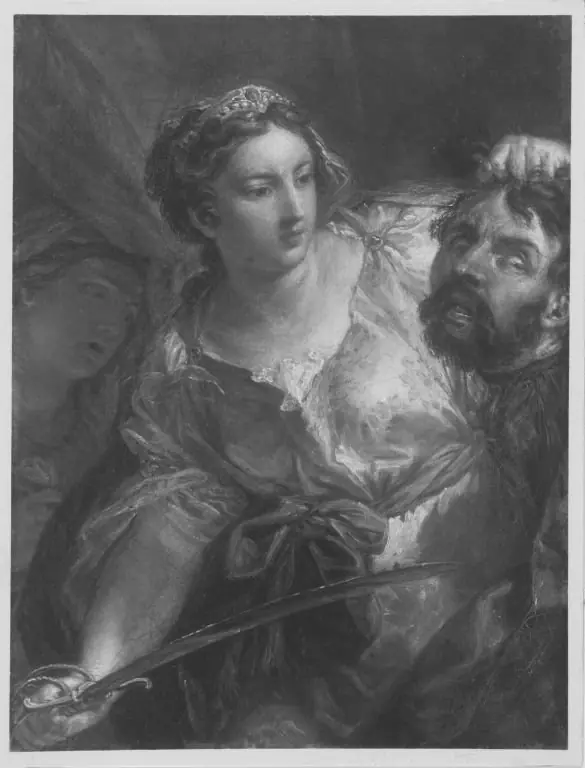 Judith mit dem Haupt des Holofernes
![Mary Magdalene [verso], by Biagio Pupini](https://artifactworldgallery.com/img/biagio-pupini--mary-magdalene-verso--8b62d2d37815f802-w320.webp) Mary Magdalene [verso]
Mary Magdalene [verso]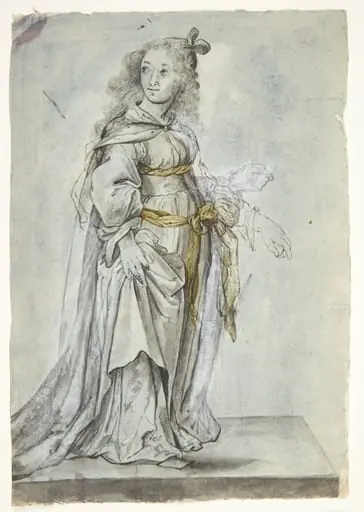 Allegorisk kvindefigur. Hele højre side af kroppens kontur er rettet. Kvindens venstre arm udsat for pentiménto
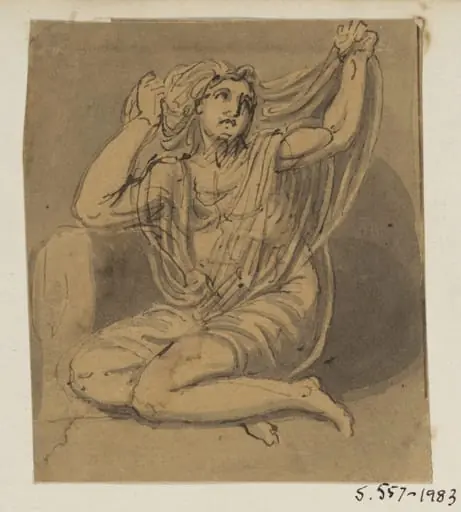 Untitled
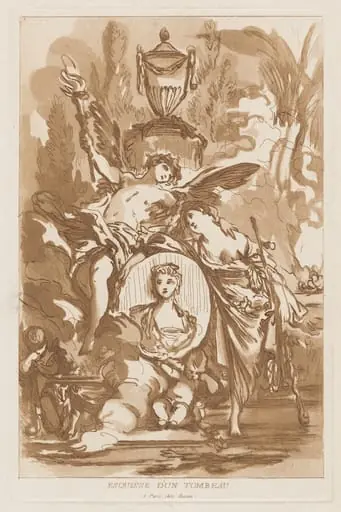 Esquisse d’un tombeau (Sketch for a Tomb)
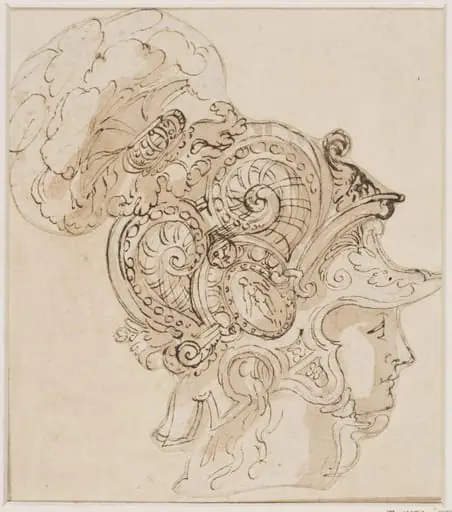 Head of a youth in a plumed helmet
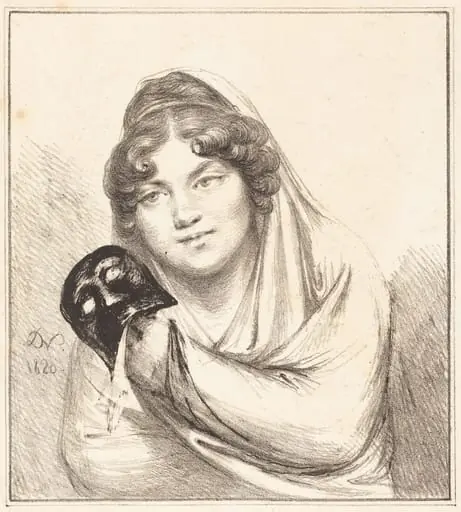 Girl with a Mask
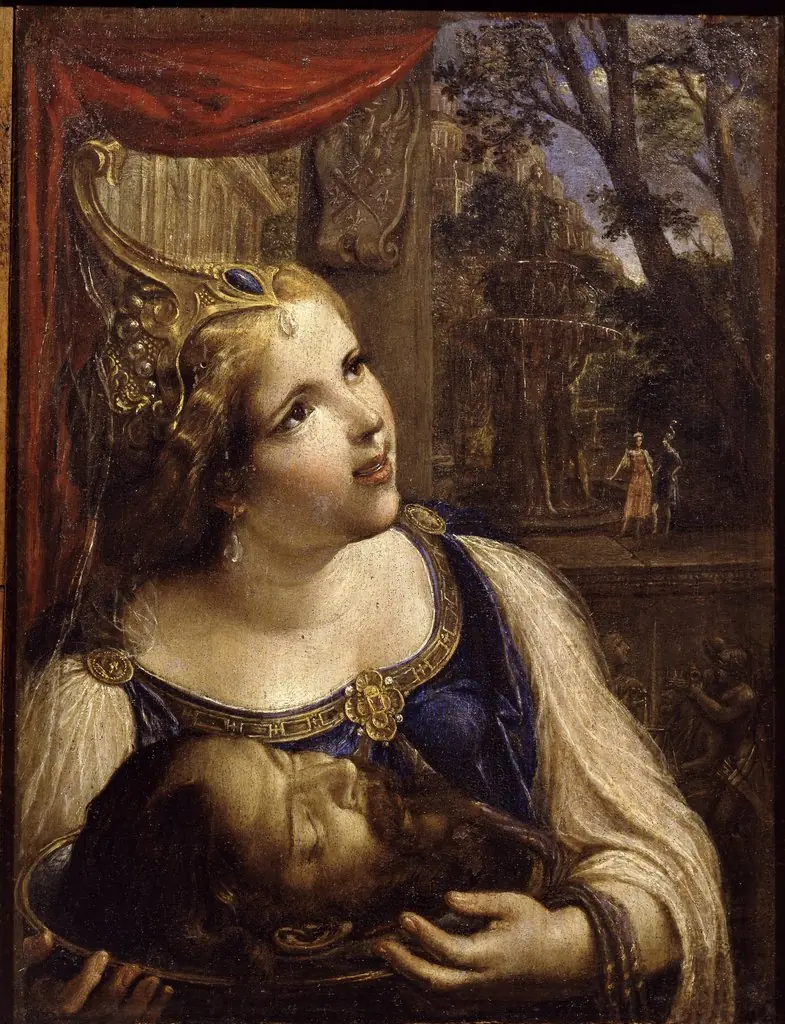 Salome with the head of St John the Baptist