Artwork
Woodford Bridge in the Avon Valley
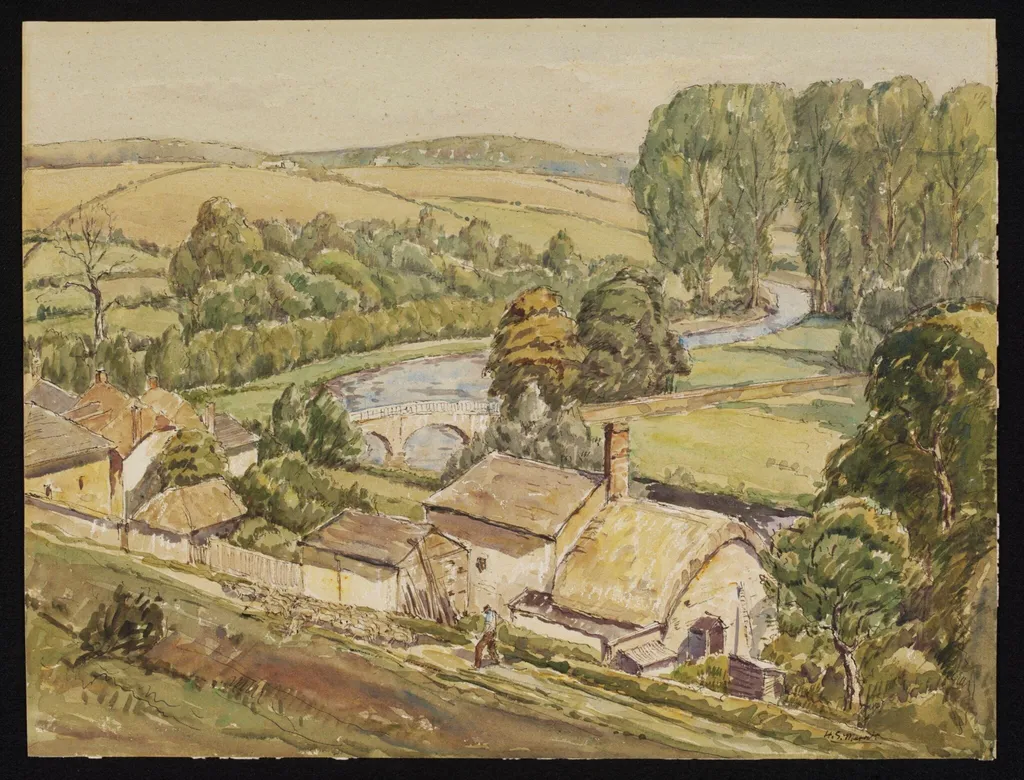
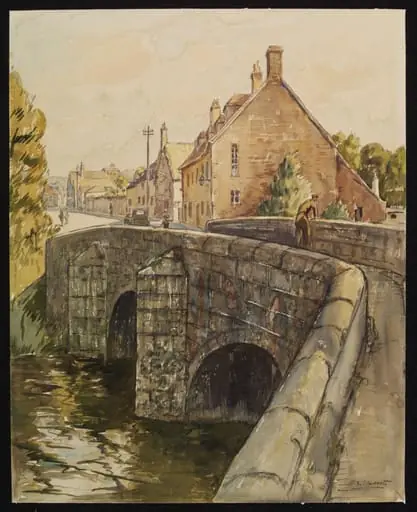
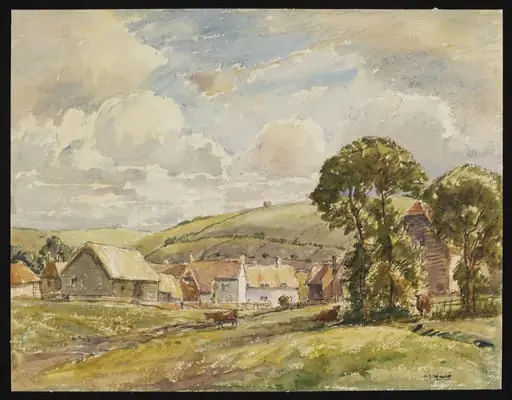
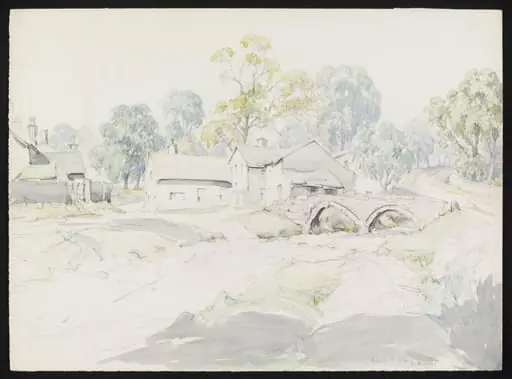
Woodford Bridge in the Avon Valley is a watercolor work on paper by Anna Lea Merritt. It is held in the collection of the Victoria and Albert Museum. Created in 1942, this watercolour by Merritt captures a rural vista in the Avon Valley near Woodford.
About this work
Overview
Created in 1942, this watercolour by Merritt captures a rural vista in the Avon Valley near Woodford.
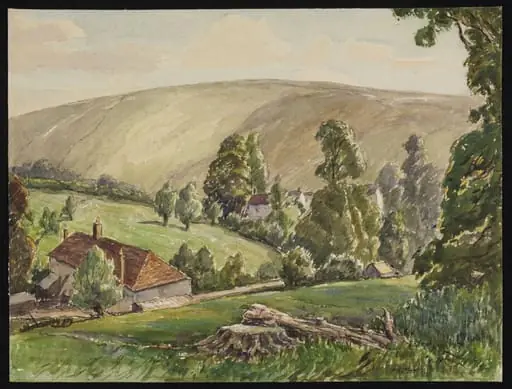
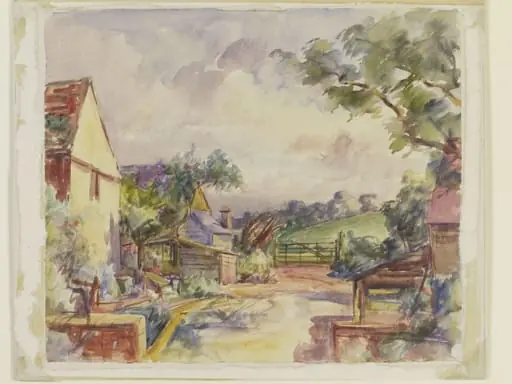
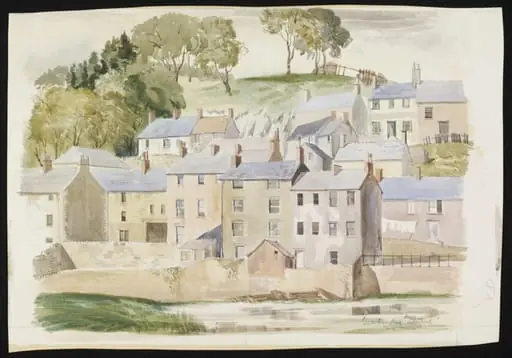
Created in 1942, this watercolour by Merritt captures a rural vista in the Avon Valley near Woodford. Executed in soft, translucent washes, the work belongs to the 'Recording Britain' project, a wartime effort to preserve visual records of the British countryside. The piece is signed by the artist and remains part of the collection held by the Victoria and Albert Museum, where it contributes to a broader archive of topographical studies from the early 1940s.
Subject & Meaning
The scene portrays a quiet, unassuming stretch of countryside: a stone bridge crosses the River Avon, flanked by modest dwellings and scattered trees. A solitary figure walks near the buildings, emphasizing stillness and solitude. The composition avoids dramatic tension, instead offering a contemplative record of everyday rural life. This quietude reflects the project’s aim to document ordinary places at risk of being lost to war or progress.
Technique & Style
Merritt employed loose, rapid brushwork and diluted watercolour to suggest form rather than define it. The palette is restrained, dominated by muted greens, browns, and greys, with subtle shifts in tone to indicate distance and light. The sky is lightly washed, creating a hazy atmosphere that softens the horizon. The technique conveys immediacy, as if the scene was observed and rendered on-site in a single session.
History & Provenance
The painting was produced in 1942 as part of the 'Recording Britain' initiative, commissioned under the Ministry of Labour and National Service and funded by the Pilgrim Trust. Directed by Sir Kenneth Clark, the project enlisted artists to document vulnerable landscapes before they could be altered by conflict or development. The work entered the Victoria and Albert Museum’s collection following the project’s conclusion in 1943.
Context
During the Second World War, British cultural institutions sought to safeguard national heritage through documentation. 'Recording Britain' responded to fears of wartime destruction and rapid modernization by commissioning artists to record vernacular architecture and rural scenery. This watercolour reflects a broader cultural effort to preserve identity through visual testimony, prioritizing quiet, unremarkable places over grand monuments.
Legacy
The painting endures as part of a significant archive of wartime topographical art. Its unembellished realism and modest scale distinguish it from heroic or propagandistic imagery of the era. Today, it serves as a historical record of pre-industrial rural England, offering insight into how artists responded to national anxiety through careful observation of the everyday landscape.
Artist & collection

Artist
Anna Massey Lea Merritt (September 13, 1844 – April 7, 1930) was an American artist from Philadelphia who lived and worked in Great Britain for most of her life.