Artwork
Job and His Family
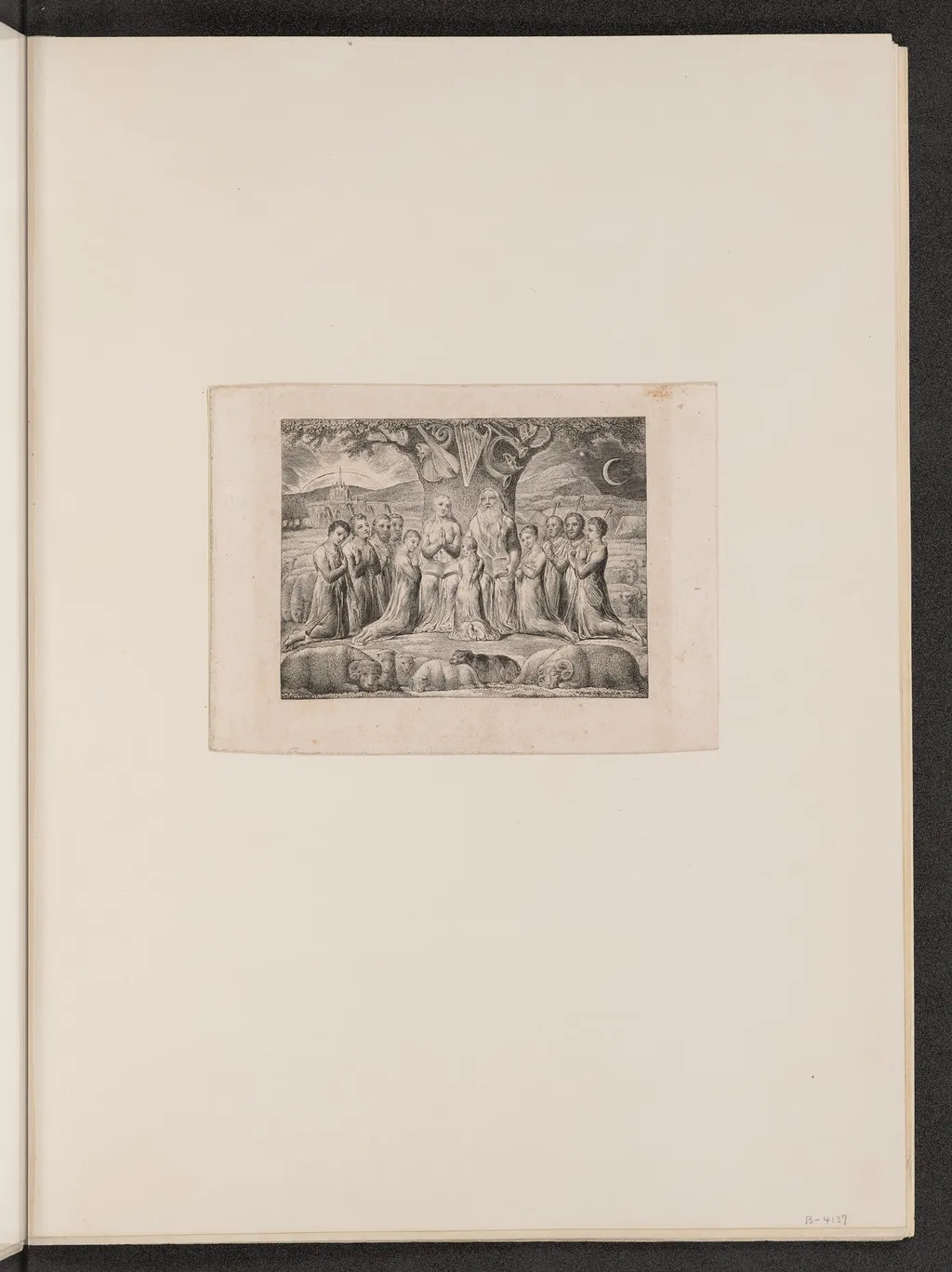
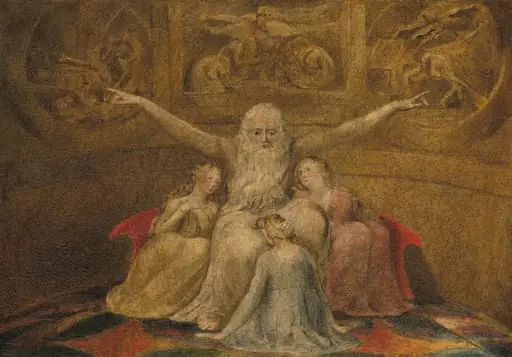
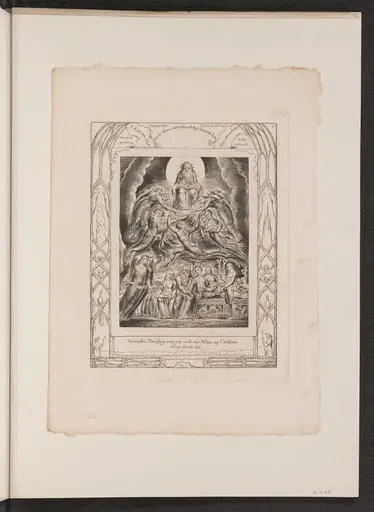
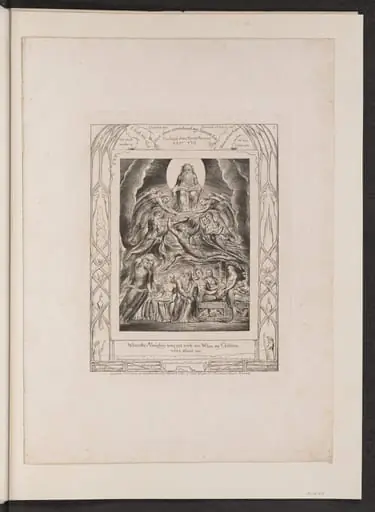
Job and His Family is an ink print by the Romanticist artist William Blake. It dates from 1825 and is held in the collection of the National Gallery of Art.
About this work
Overview
Job and His Family is an engraving on thick paper created by William Blake in 1825, characteristic of his later graphic output. The work exemplifies Blake's signature blend of symbolic imagery and exploration of biblical themes.
Subject & Meaning
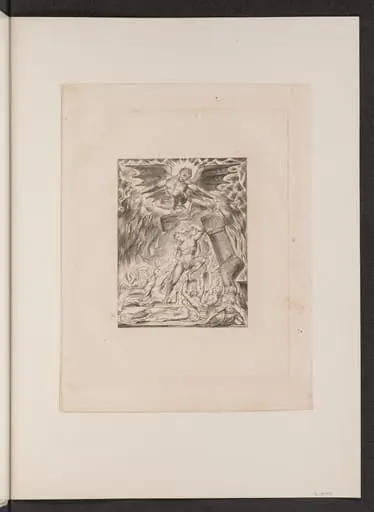
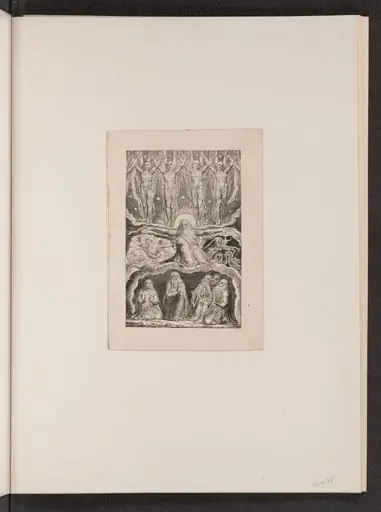
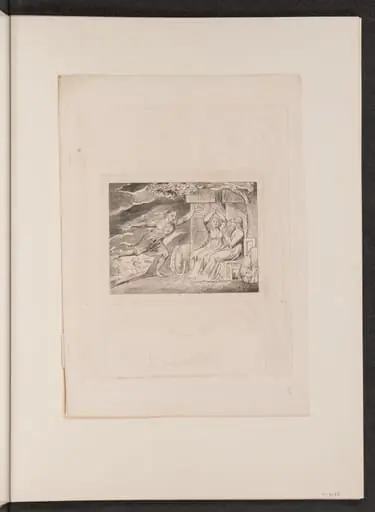
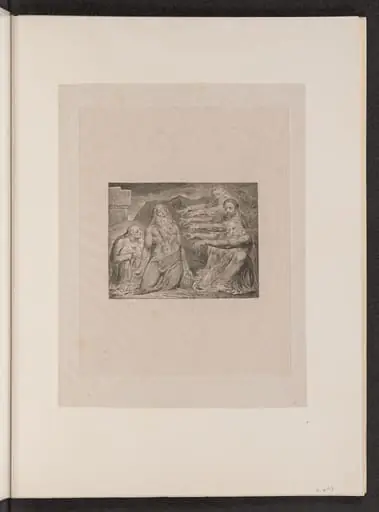
The engraving depicts a solemn, bearded man (Job) surrounded by his family in a circular formation, with gestures and expressions conveying a narrative of resilience amidst hardship, hinting at a transition towards hope.
Technique & Style
Blake employed intricate line work to build shadows and define shapes, imbuing the scene with drama. The composition features a prominent tree with swirling branches and a moon, set against a stark black-and-white palette.
History & Provenance
Produced in 1825, this engraving was part of Blake's later works, created during his time in London. Like much of his diverse output, it remained largely unrecognized during his lifetime.
Context
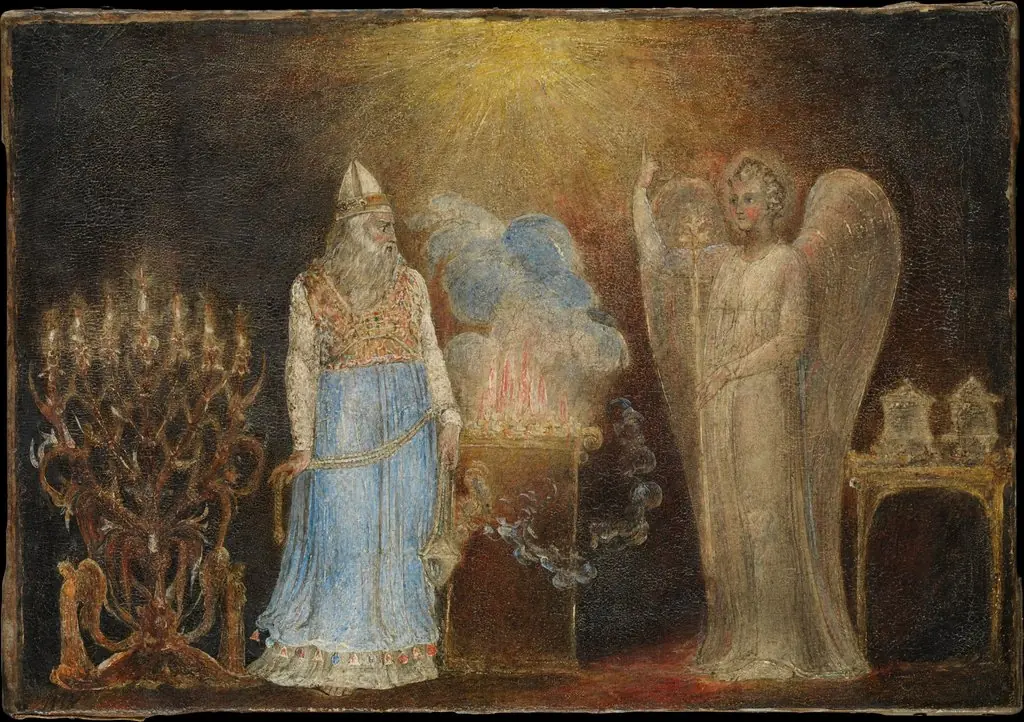
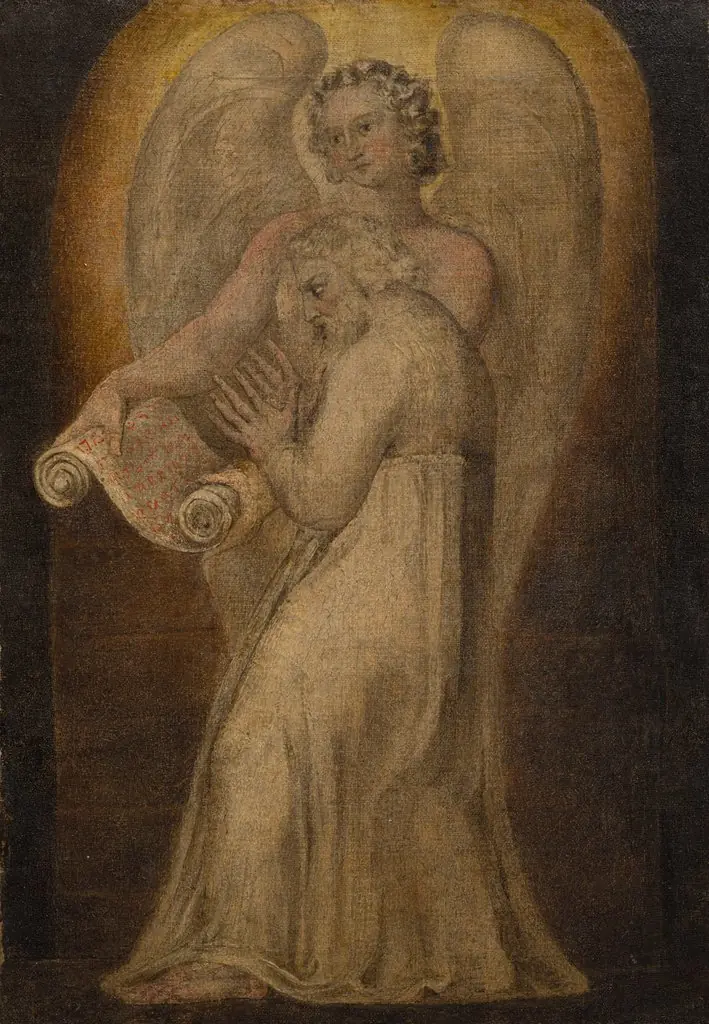
This piece reflects Blake's broader artistic preoccupations: the interplay of imagination, biblical narrative, and the emotional depth of human experience, all hallmarks of his poetic and visual oeuvre.
Artist & collection
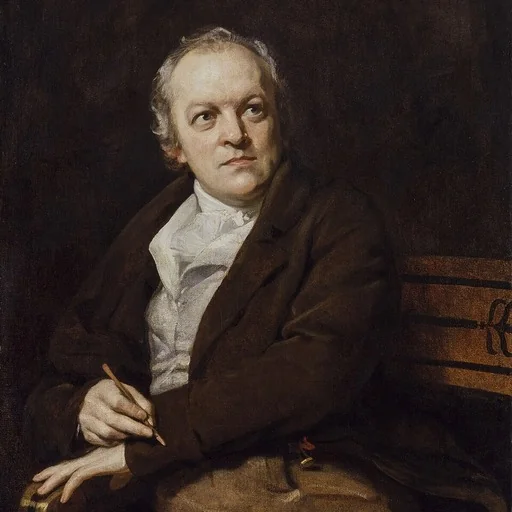
Artist
William Blake (28 November 1757 – 12 August 1827) was an English poet, painter and printmaker.