Artwork
When the Morning Stars Sang Together
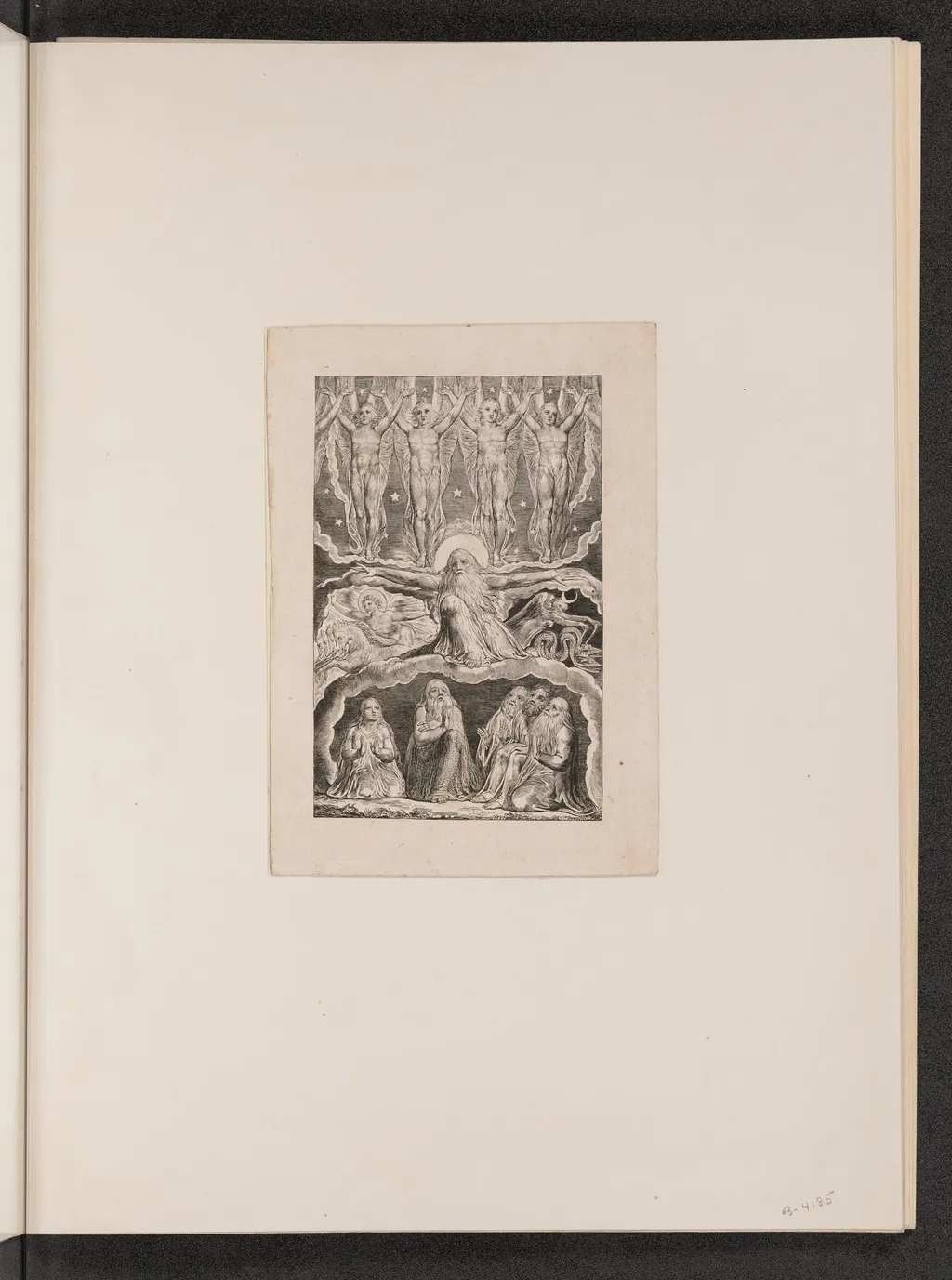
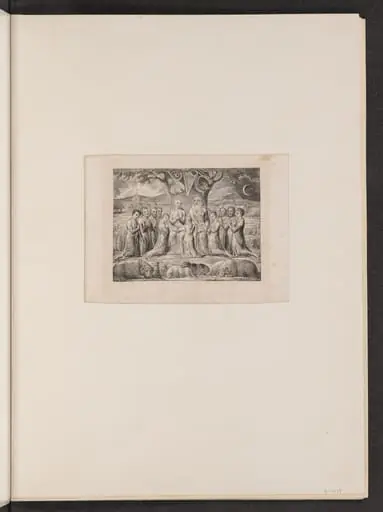
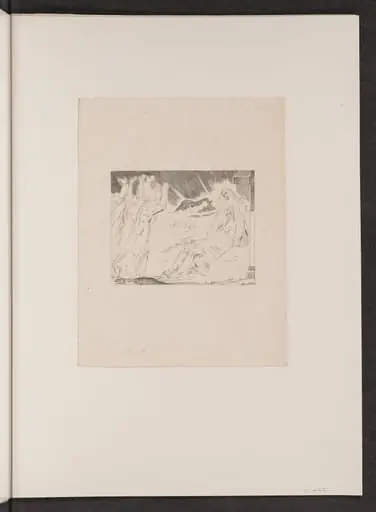
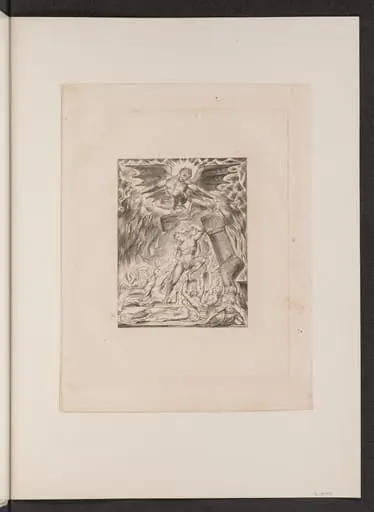
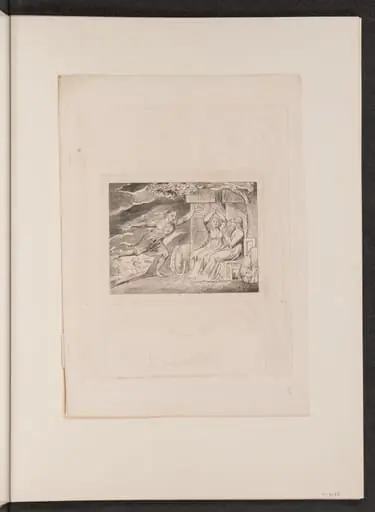
When the Morning Stars Sang Together is an ink print by the Romanticist artist William Blake. It dates from 1825 and is held in the collection of the National Gallery of Art.
About this work
Overview
When the Morning Stars Sang Together is an 1825 engraving by William Blake, created on thick paper. Characterized by sharp lines, cross-hatching, and a predominantly dark, dreamy atmosphere, the print showcases Blake's distinctive blend of symbolic imagery and imaginative depth.
Subject & Meaning
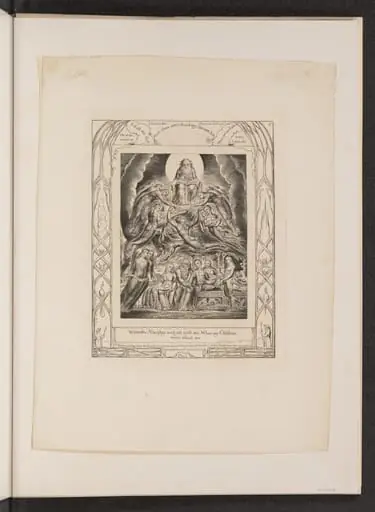
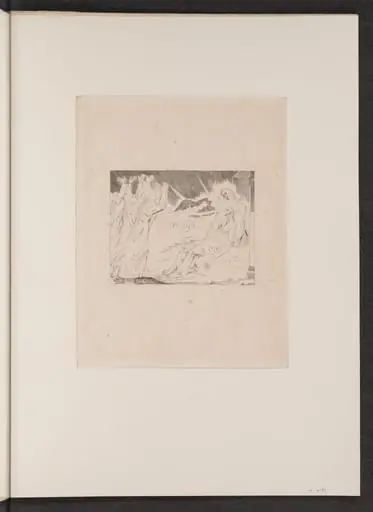
The engraving depicts a celestial scene with winged, naked figures at the top, arms raised in song, and a kneeling, cloudy figure below, accompanied by three smaller individuals expressing varied emotions. The composition conveys a sense of mystical, heavenly harmony.
Technique & Style
Blake employed cross-hatching to achieve deep shadows and textures, with crisscrossing lines building dramatic light and dark contrasts. This technique lends the image a carved, ghostly appearance, enhancing its symbolic and emotional impact.
History & Provenance
Created in 1825 in London, the work reflects Blake's later period. Though unrecognized in his lifetime, Blake's innovative style and symbolism would later influence Romantic-era art and poetry, securing his posthumous reputation.
Context
Produced within Blake's broader oeuvre of poetic and visual works emphasizing imagination and symbolism, *When the Morning Stars Sang Together* aligns with his exploration of spiritual and mystical themes.
Artist & collection
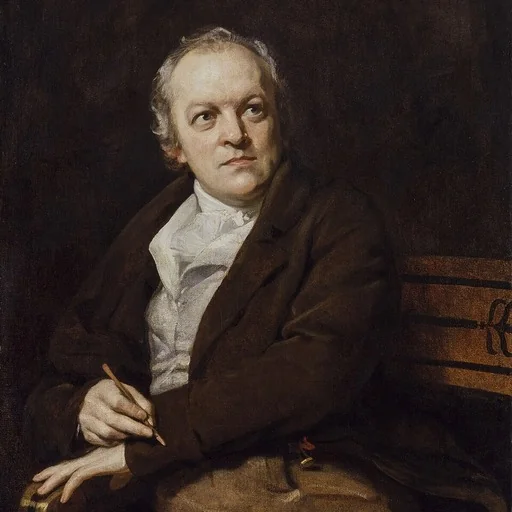
Artist
William Blake (28 November 1757 – 12 August 1827) was an English poet, painter and printmaker.