Artwork
Satan Before the Throne of God
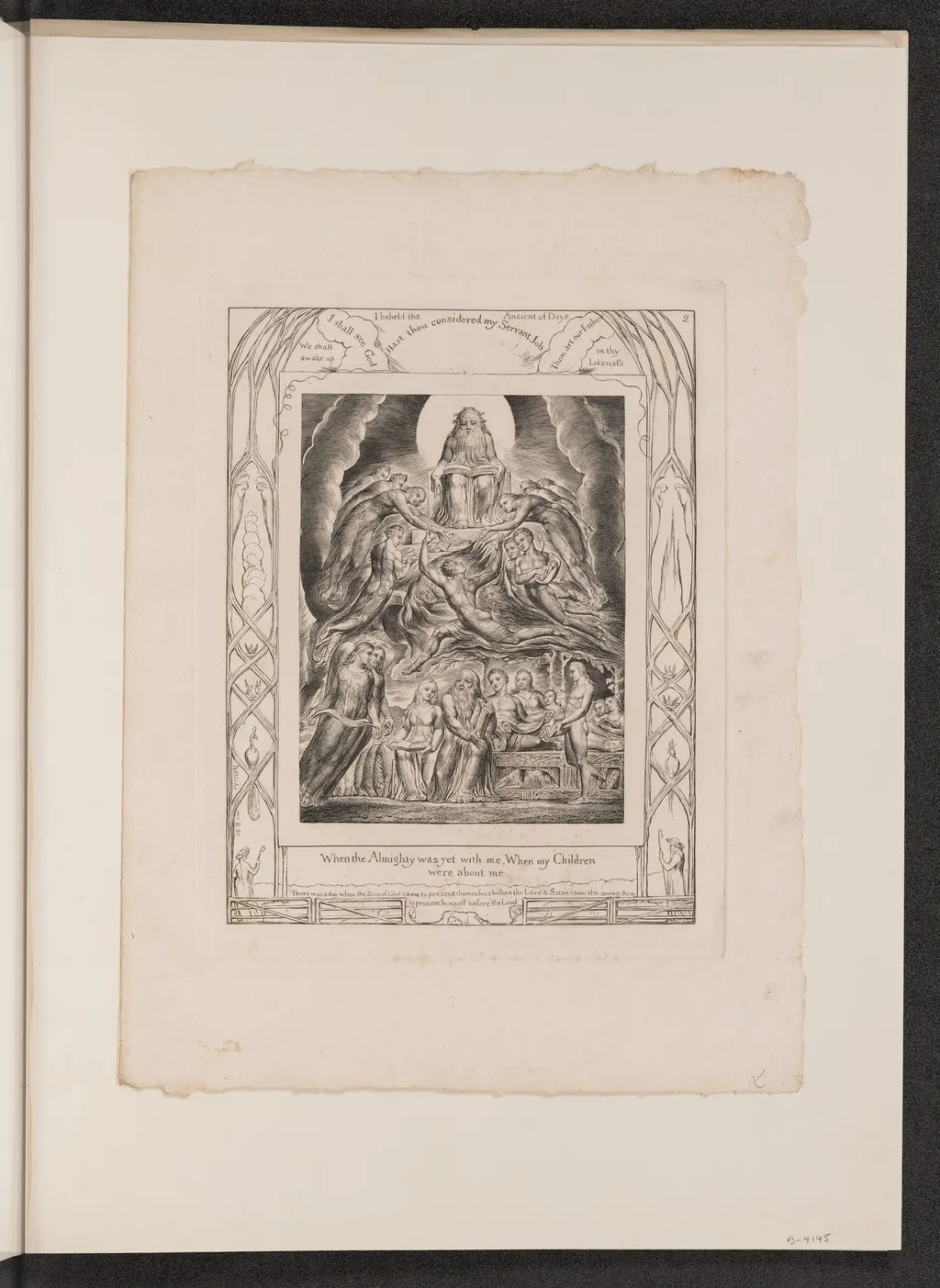
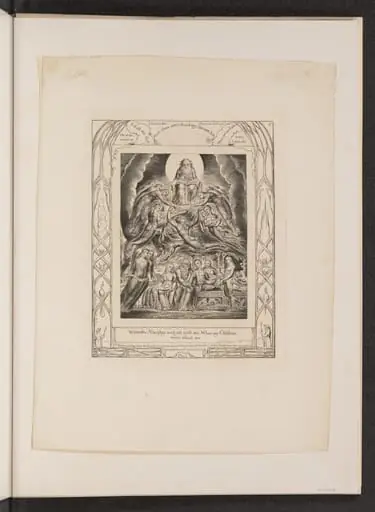
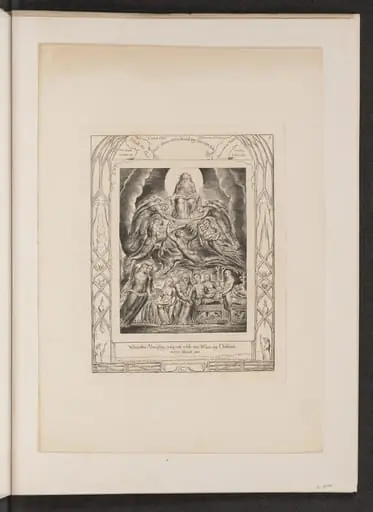
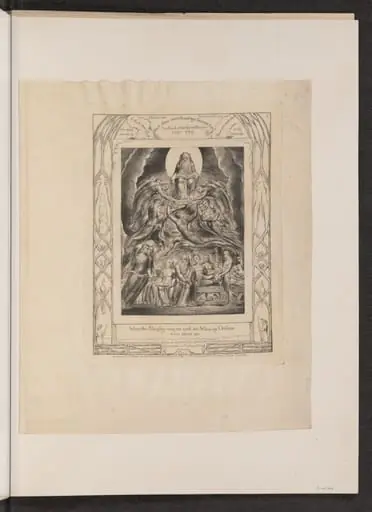
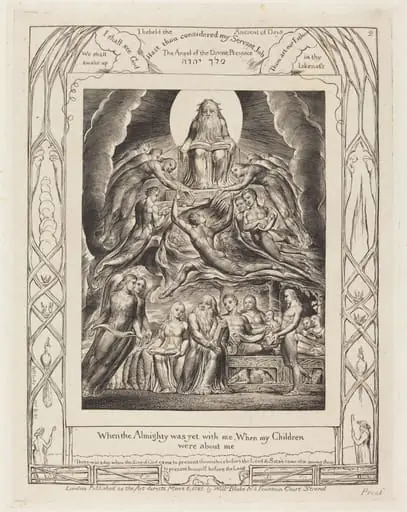
Satan Before the Throne of God is an ink print by the Romanticist artist William Blake. It dates from 1825 and is held in the collection of the National Gallery of Art.
About this work
Overview
Created in 1825, this engraving by William Blake depicts a celestial courtroom scene drawn from biblical imagery.
Created in 1825, this engraving by William Blake depicts a celestial courtroom scene drawn from biblical imagery. Executed in fine, precise lines on thick paper, the work is part of Blake’s series illustrating the Book of Job. His method involved hand-carving the design into a metal plate, then printing it with ink, a technique he refined over decades to merge text and image in a unified visual language.
Subject & Meaning
The composition presents Satan standing before a divine presence, surrounded by celestial beings and kneeling figures. The central cloud-like form suggests the throne of God, while the figures below—some winged—convey a hierarchy of spiritual witnesses. Blake’s interpretation diverges from literal scripture, framing the moment as a psychological and moral reckoning rather than a doctrinal event.
Technique & Style
Blake employed intaglio engraving, incising fine lines directly into copper to create sharp contrasts and dense textures. Parallel hatching and cross-contour lines model volume and shadow, while the border’s ornamental scrollwork integrates textual fragments from his poetic commentary. The intricate detail demands close viewing, reflecting his belief that spiritual truths are revealed through sustained contemplation.
History & Provenance
The print was produced as part of a limited set of illustrations for Blake’s illuminated Book of Job, commissioned by John Linnell. Only a small number of impressions were pulled during his lifetime, most retained by the artist or his patrons. The work remained largely obscure until the late 19th century, when interest in Blake’s visionary art revived among Pre-Raphaelite circles.
Context
In early 19th-century England, Blake stood apart from mainstream artistic trends, rejecting academic conventions in favor of personal symbolism. His engagement with biblical narratives was shaped by radical religious views and opposition to institutional dogma. This engraving reflects his broader project: using art to express inner spiritual visions rather than external reality.
Legacy
Blake’s engravings, including this one, influenced later Symbolist and mystical artists who valued subjective expression over naturalism. Though unrecognized in his time, his integration of poetry, printmaking, and theology laid groundwork for modern conceptual art. Today, the work is studied for its technical innovation and its challenge to conventional religious iconography.
Artist & collection
Artist
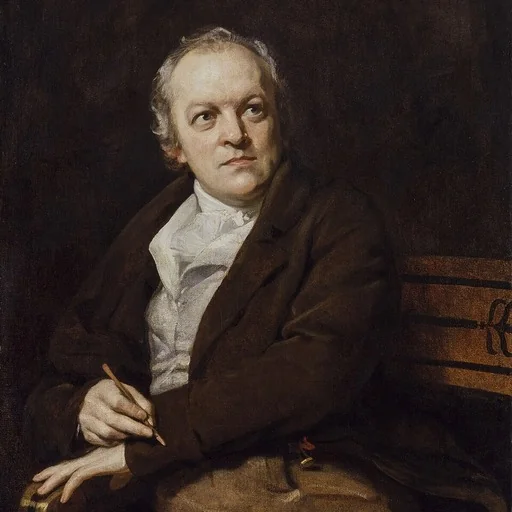
William Blake (28 November 1757 – 12 August 1827) was an English poet, painter and printmaker.

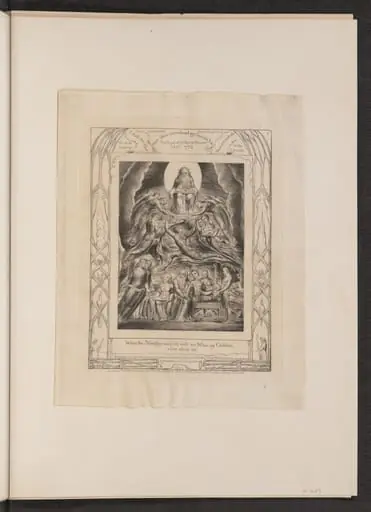 Satan Before the Throne of God
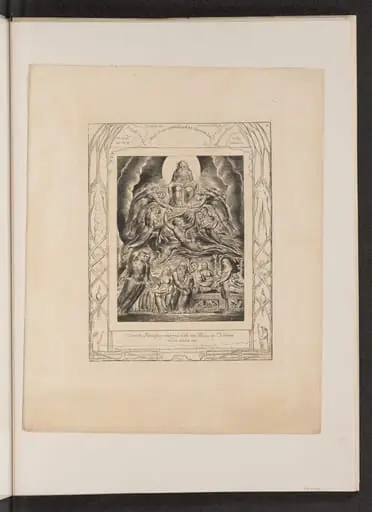 Satan Before the Throne of God
 Satan Before the Throne of God
 Satan Before the Throne of God
 Satan Before the Throne of God
 Satan Before the Throne of God
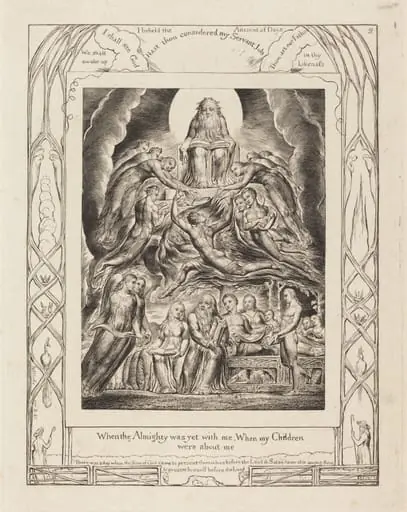 Satan Before the Throne of God
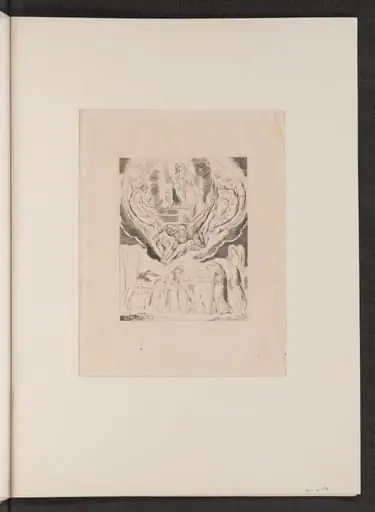 Satan Going Forth from the Presence of the Lord
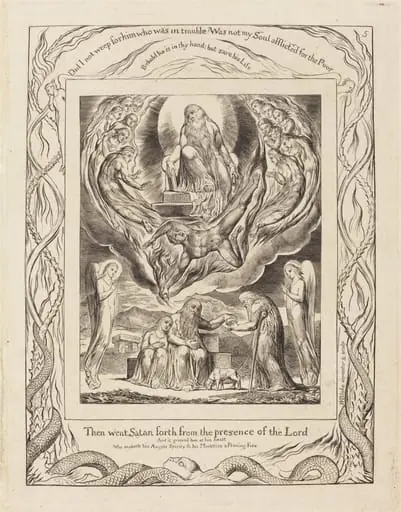 Satan Going Forth from the Presence of the Lord
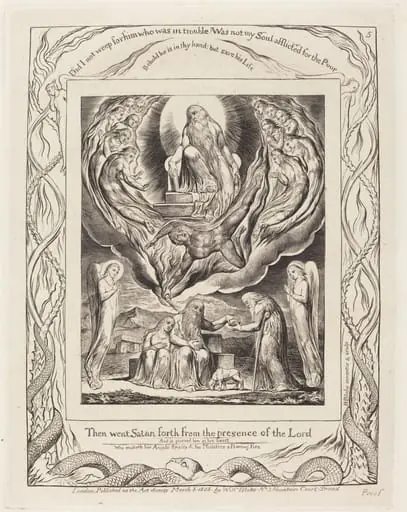 Satan Going Forth from the Presence of the Lord