Artwork
Job and His Family
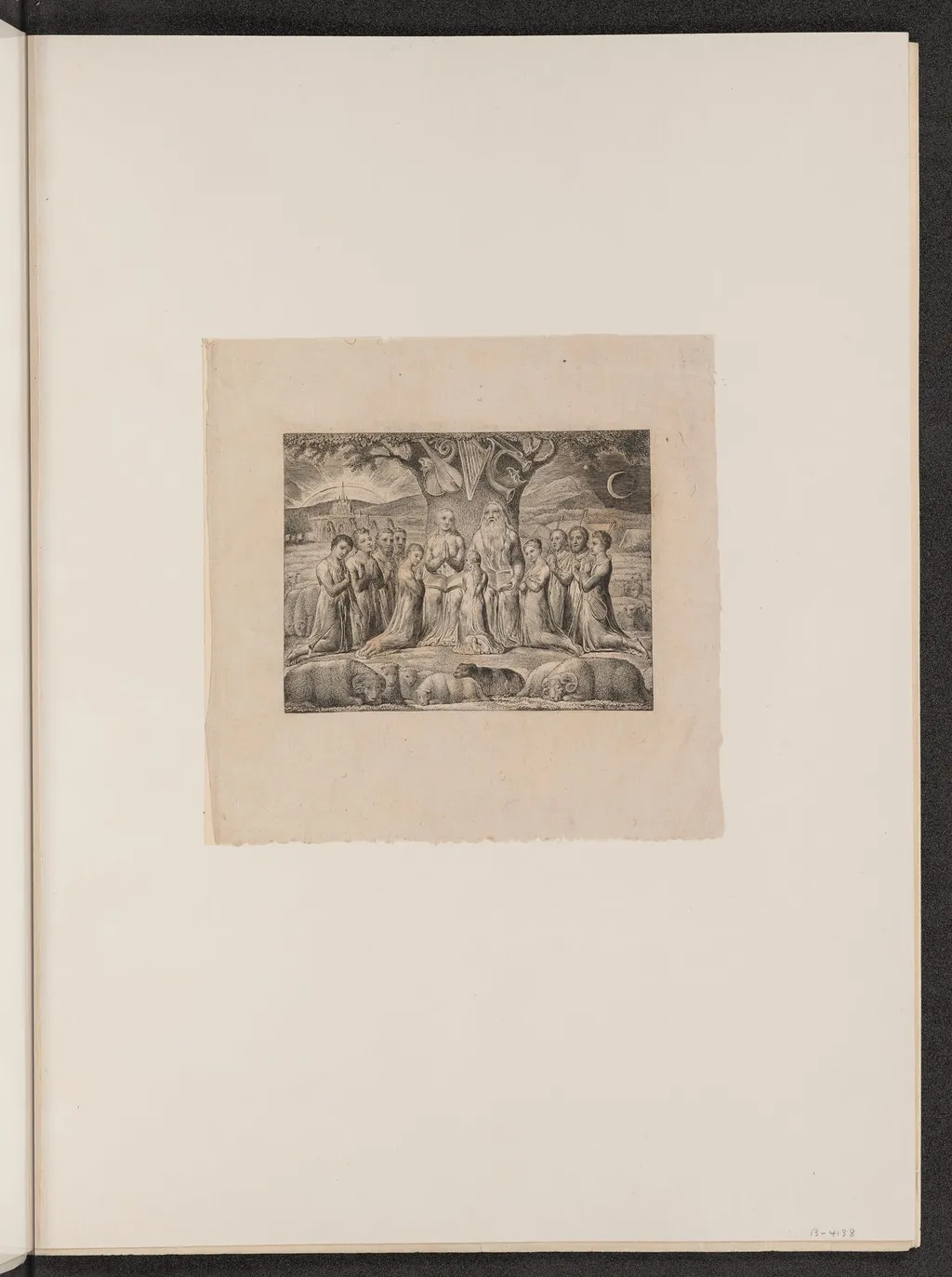
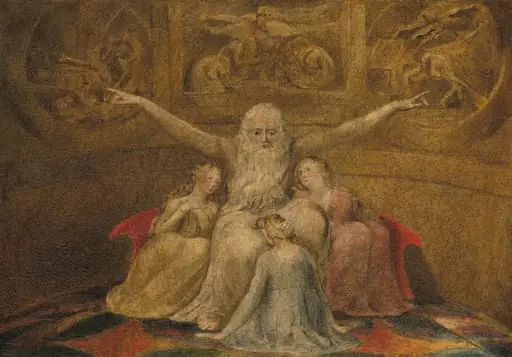
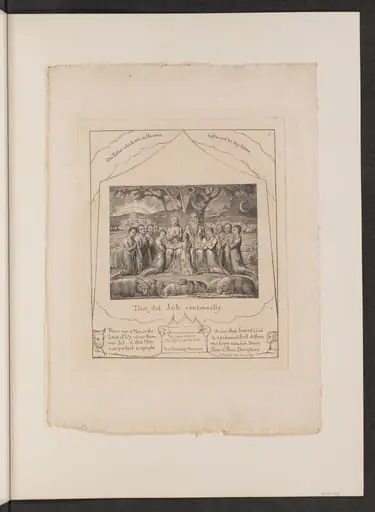
Job and His Family is an ink print by the Romanticist artist William Blake. It dates from 1825 and is held in the collection of the National Gallery of Art.
About this work
Overview
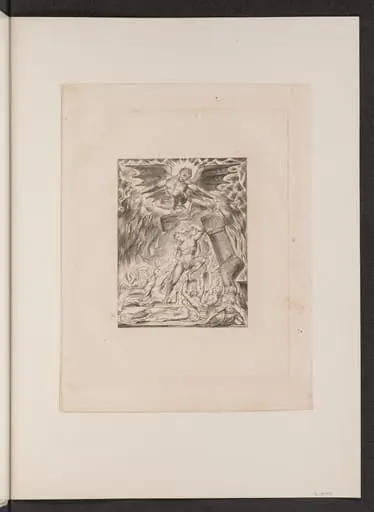
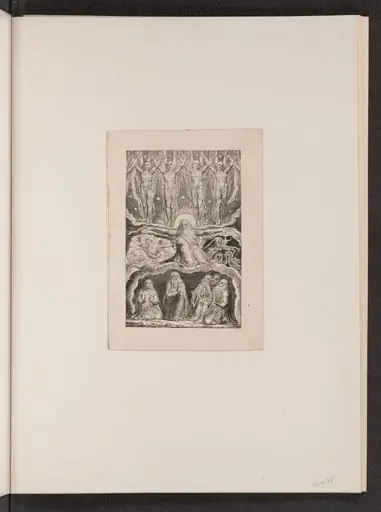
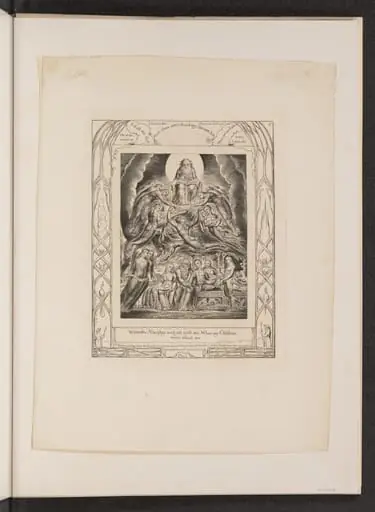
Created in 1825, this engraving by William Blake is part of a series illustrating the Book of Job. Executed in fine lines on delicate paper, it reflects Blake’s unique method of relief etching, which allowed him to merge text and image as a unified artistic expression. The work belongs to his later period, when his spiritual and poetic concerns became more intensely visual.
Subject & Meaning
The scene portrays Job, a biblical patriarch enduring hardship, seated beneath a tree with his family clustered around him.
The scene portrays Job, a biblical patriarch enduring hardship, seated beneath a tree with his family clustered around him. Rather than emphasizing despair, Blake presents a moment of quiet communion, suggesting resilience through familial bonds. The composition implies divine presence not through overt symbolism, but through the stillness and unity of the figures, aligning with Blake’s view of suffering as a path to spiritual insight.
Technique & Style
Blake employed fine cross-hatching and delicate line work to model form and texture, creating depth without color. The thin paper amplifies the subtlety of the ink lines, enhancing the intimacy of the image. His style blends meticulous detail with expressive contours, avoiding naturalism in favor of a symbolic, almost sculptural rendering of figures and landscape.
History & Provenance
This print was produced as part of Blake’s illuminated series on Job, commissioned by John Linnell, a patron and fellow artist. Only a small number of impressions were made during Blake’s lifetime, and most were hand-colored by him or his wife. The work remained largely within private collections until entering public institutional holdings in the 19th and 20th centuries.
Context
Blake worked outside the mainstream of Romantic art, rejecting academic conventions in favor of personal mythologies. While contemporaries like Turner focused on sublime nature, Blake turned inward, using biblical narratives to explore inner psychological and spiritual states. His prints were made for a limited audience, circulating among intellectual and esoteric circles rather than the public.
Legacy
Blake’s Job engravings are now recognized as pivotal in the history of printmaking for their fusion of poetry, theology, and visual invention. Though overlooked in his time, they influenced later Symbolist and modernist artists drawn to his integration of narrative and personal vision. The series remains a touchstone for studies of religious imagery in non-traditional forms.
Artist & collection
Artist
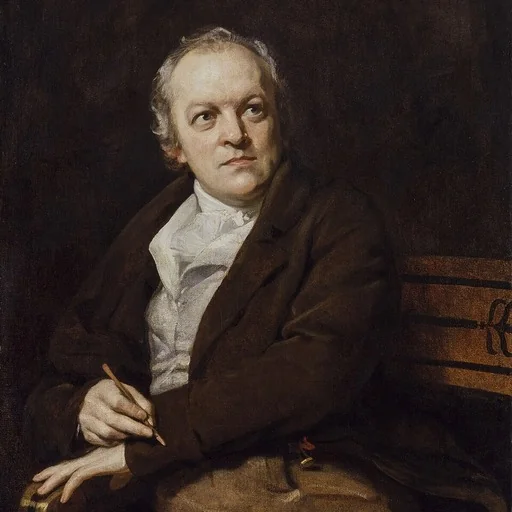
William Blake (28 November 1757 – 12 August 1827) was an English poet, painter and printmaker.