Artwork
Boy Returning Joyfully with Plough and Oxen
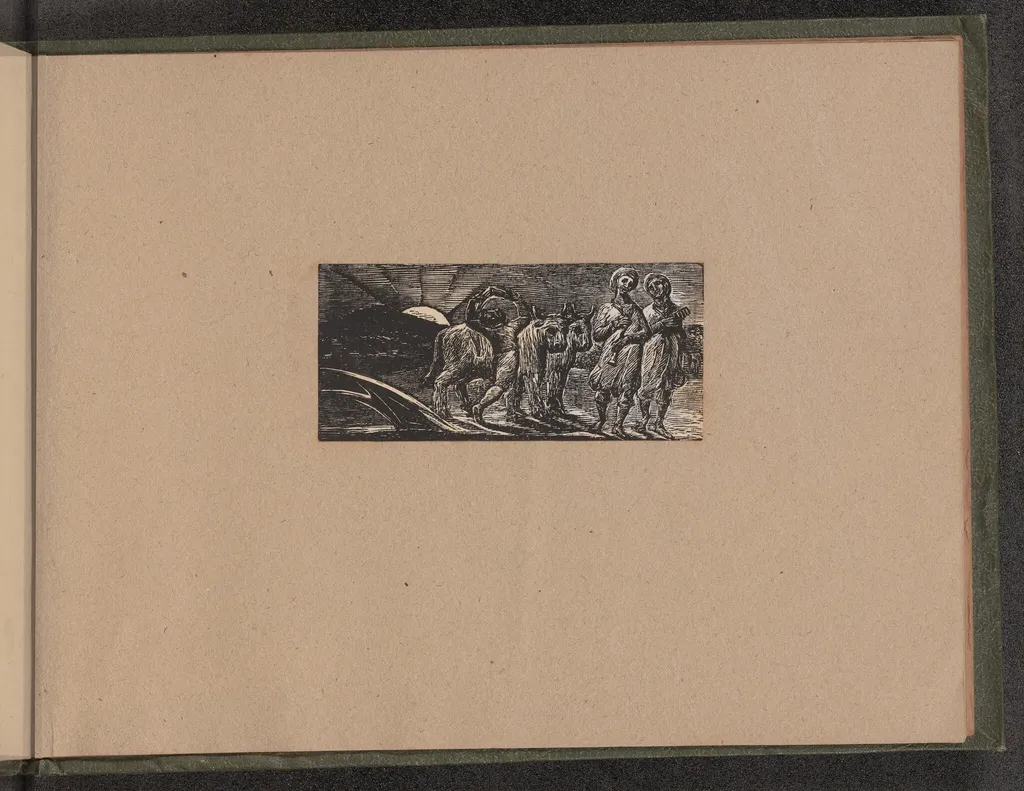
Boy Returning Joyfully with Plough and Oxen is an ink print by the Romanticist artist William Blake. It dates from 1821 and is held in the collection of the National Gallery of Art.
About this work
Overview
William Blake’s wood engraving *Boy Returning Joyfully with Plough and Oxen* (1821) is a small, monochrome print that depicts a rural procession at twilight. Three figures walk alongside two oxen beneath a low, waning moon, rendered in precise, intersecting lines that give the scene depth and texture without the use of colour.
Subject & Meaning
The image captures a moment of agrarian labor returning home, suggesting themes of communal effort and the cyclical nature of work. The joyful posture of the boy, contrasted with the steady presence of the oxen, reflects Blake’s interest in the harmony between human activity and the natural world.
Technique & Style
Blake employed cross‑hatching, a dense network of intersecting strokes, to model light and shadow. This method creates a sense of solidity for the figures and animals, while the stark black‑and‑white palette emphasizes the engraving’s graphic clarity and the atmospheric mood of dusk.
History & Provenance
Created in 1821, the print belongs to the later period of Blake’s career, when he was primarily based in London, aside from a brief three‑year residence in Felpham. Although Blake’s work was not widely celebrated during his lifetime, this engraving illustrates his continued experimentation with printmaking techniques.
Context
Blake’s output straddles poetry and visual art, positioning him as a pivotal figure in the Romantic movement. His prints, including this engraving, combine symbolic content with inventive craftsmanship, contributing to a body of work that would later influence both literary and artistic circles.
Artist & collection
Artist
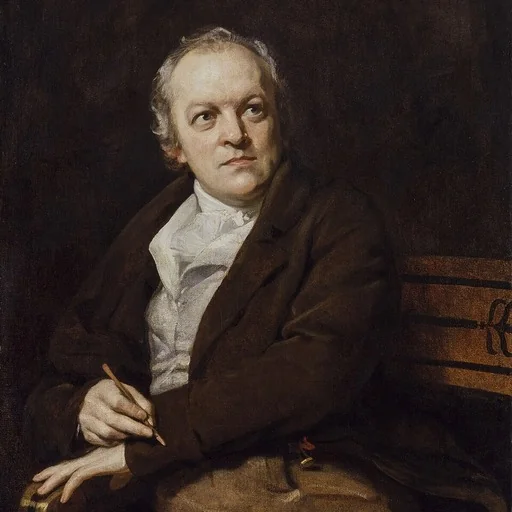
William Blake (28 November 1757 – 12 August 1827) was an English poet, painter and printmaker.

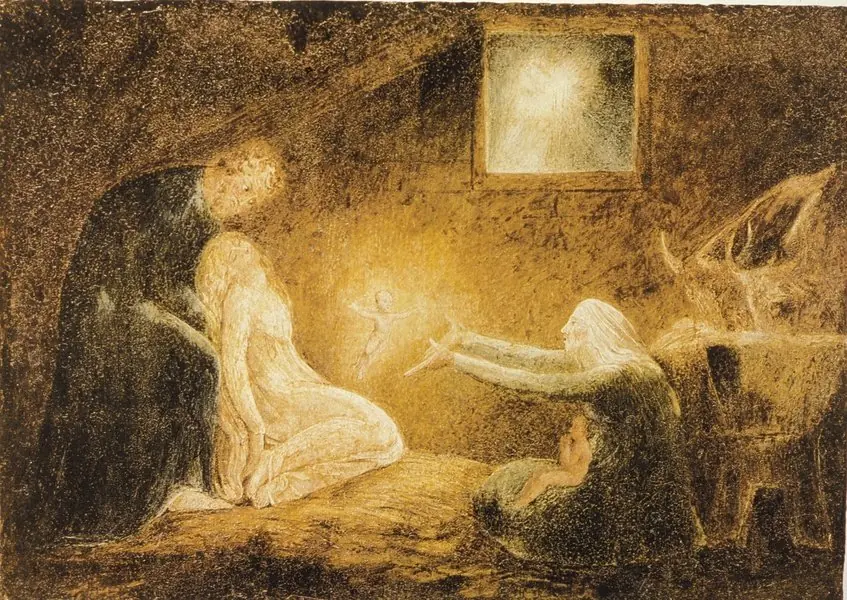
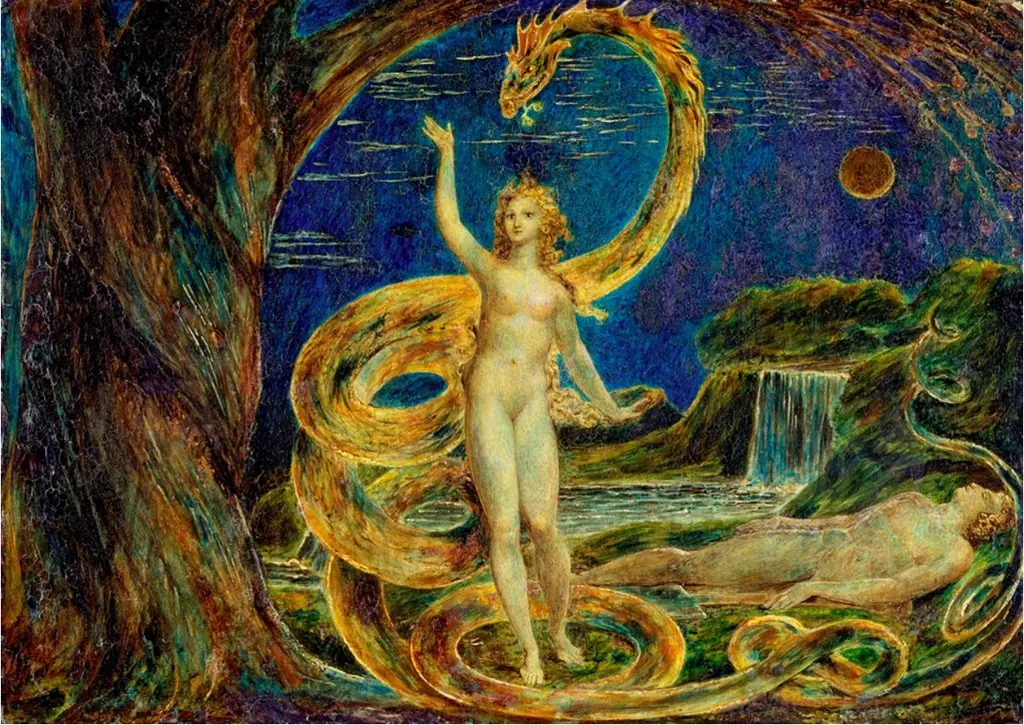
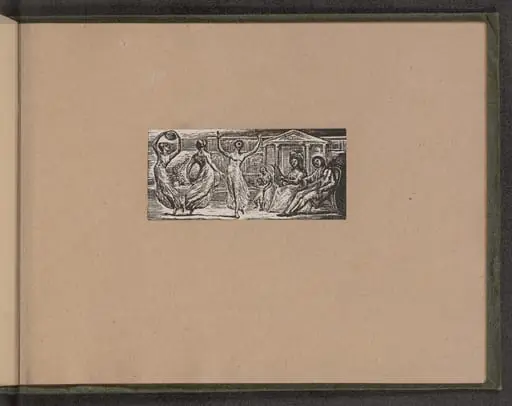 Menalcas Watching Women Dance
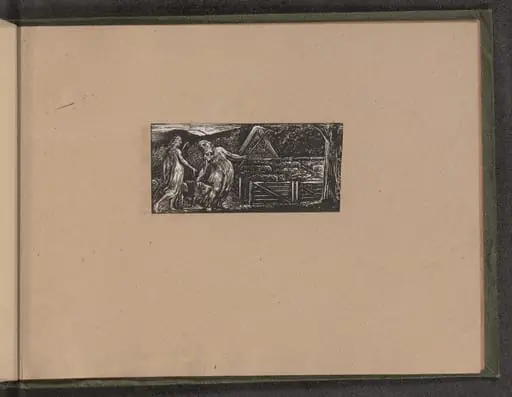 Thenot and Colinet Lead their Flocks Together
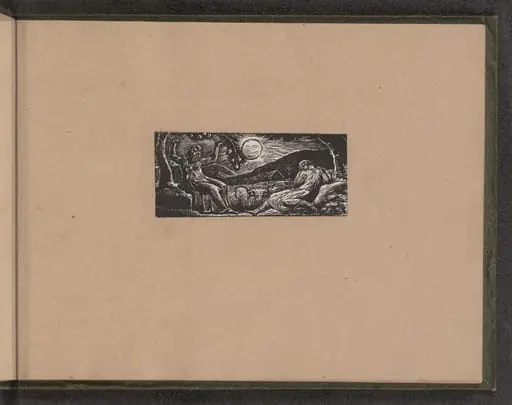 Thenot under Fruit Tree
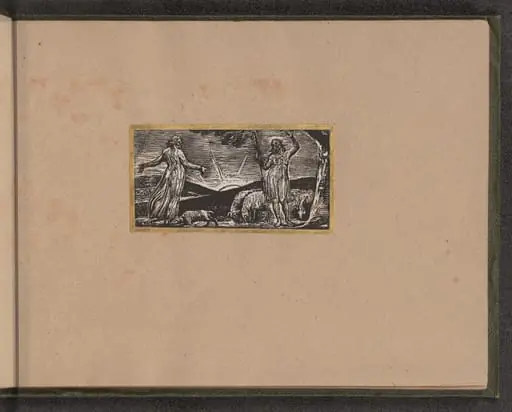 Thenot Remonstrates with Colinet
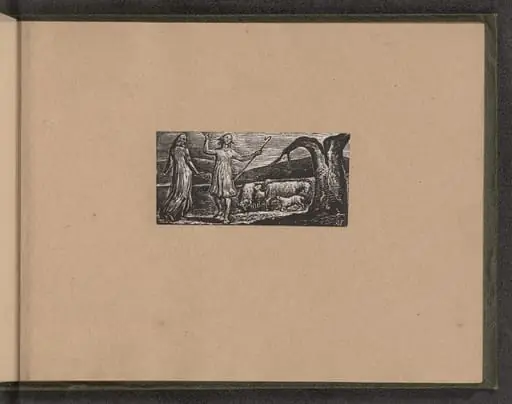 Colinet Departs in Sorrow
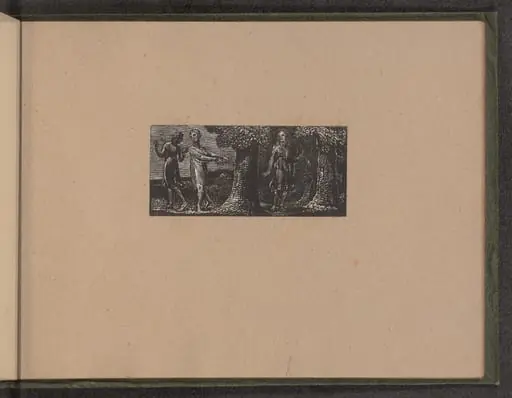 Colinet Mocked by Two Boys
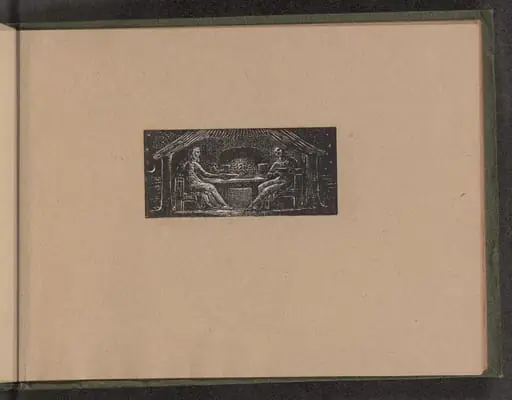 Thenot and Colinet Eat their Evening Meal
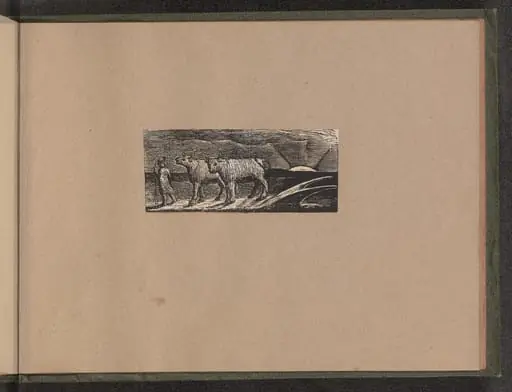 Return of the Shepherd
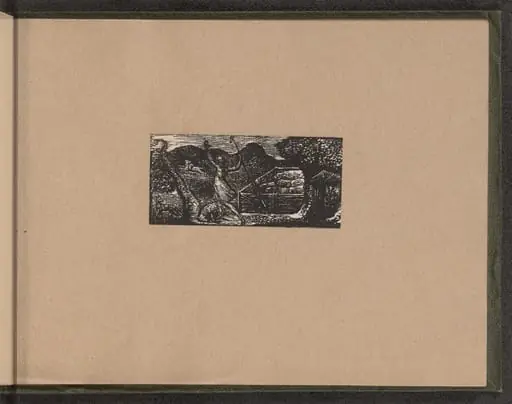 Shepherd Chases away Wolf
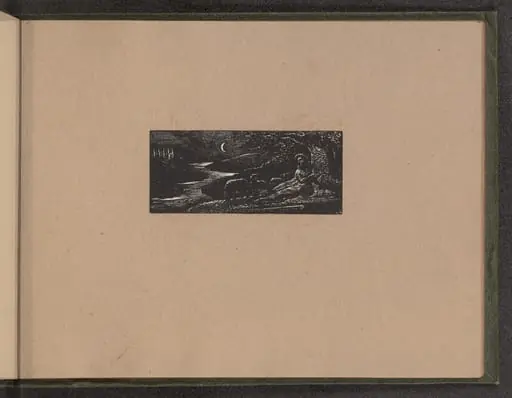 Colinet Resting by Night
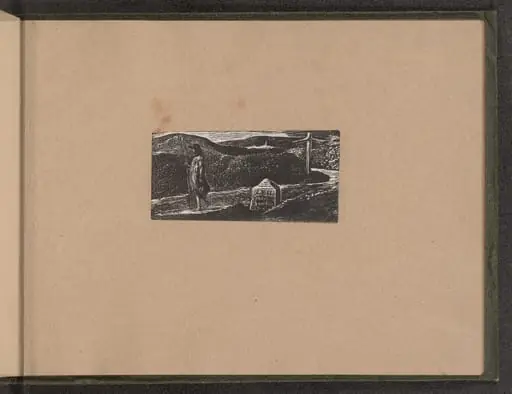 Colinet's Journey
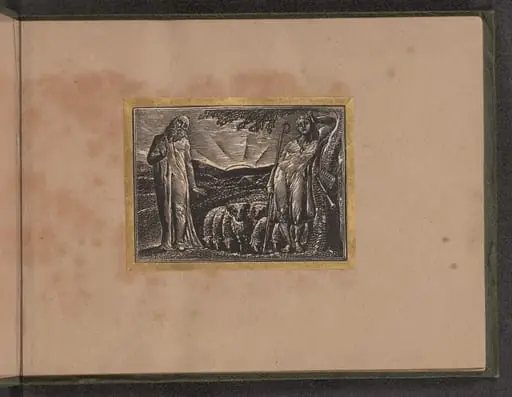 Thenot and Colinet