Artwork
Job and His Family Restored to Prosperity
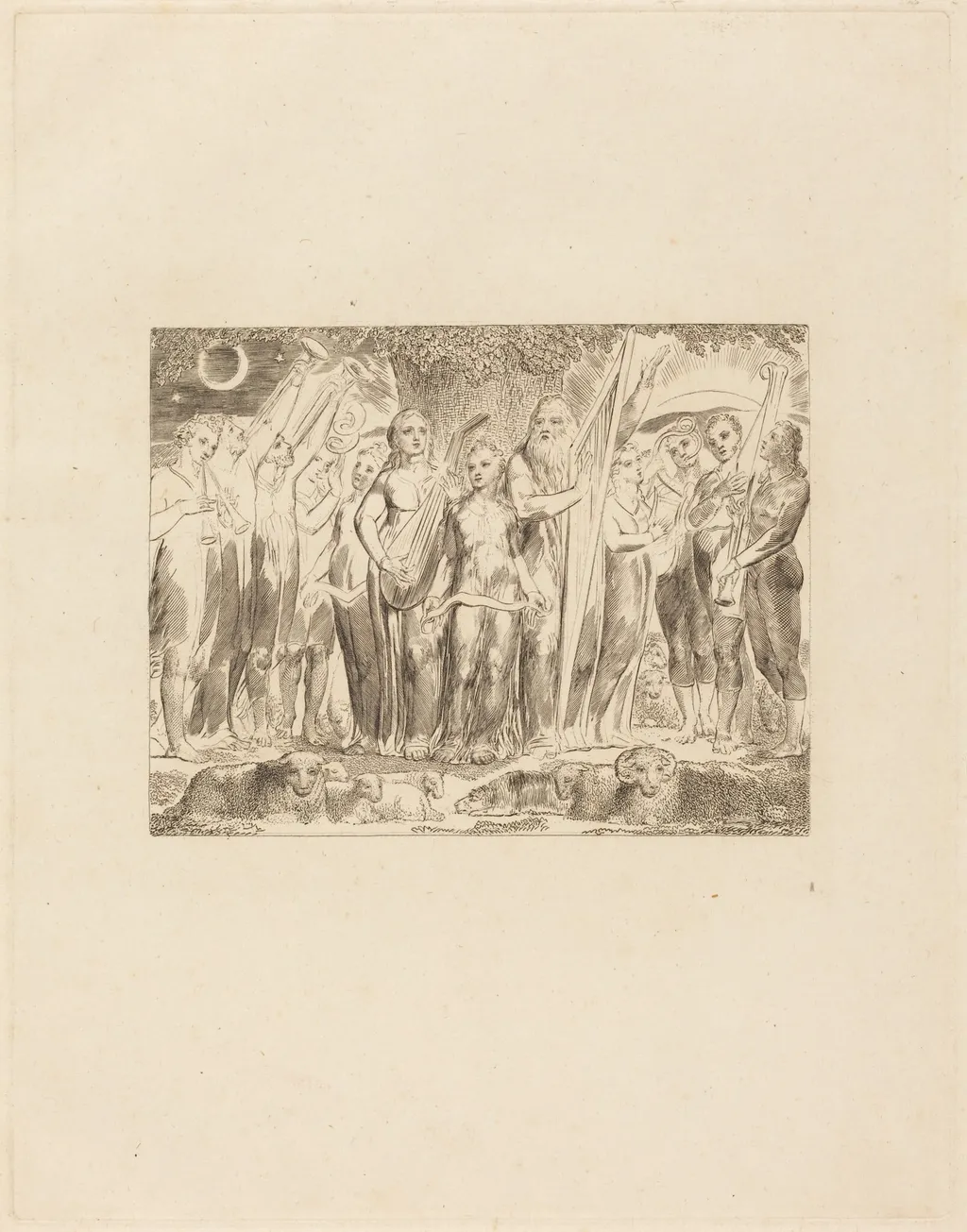
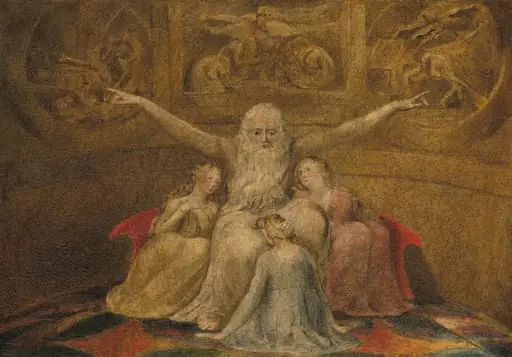
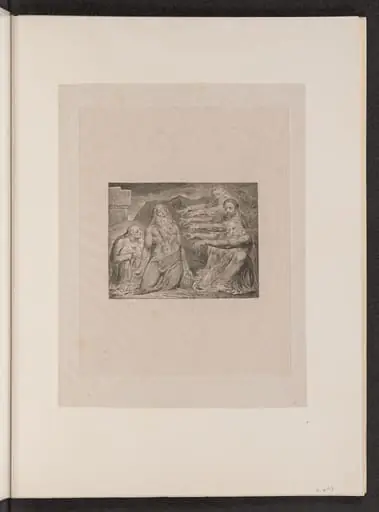
Job and His Family Restored to Prosperity is an ink print by the Romanticist artist William Blake. It dates from 1825 and is held in the collection of the National Gallery of Art.
About this work
Overview
Executed on thick paper using fine-line engraving, it belongs to a series of biblical illustrations produced late in Blake’s career.
Created in 1825, this engraving by William Blake depicts a moment of divine restoration from the Book of Job. Executed on thick paper using fine-line engraving, it belongs to a series of biblical illustrations produced late in Blake’s career. Unlike conventional religious imagery, Blake infused the scene with personal symbolism and emotional intensity, reflecting his unique fusion of poetry, vision, and printmaking.
Subject & Meaning
The scene portrays Job and his family reinstated in grace after suffering, surrounded by livestock and figures holding staffs or banners. Their upward gazes suggest spiritual revelation rather than mere material recovery. Blake emphasizes divine intervention through light descending from a dark sky, framing the moment as a mystical awakening rather than a simple return to wealth. The composition conveys redemption as an inner, transcendent experience.
Technique & Style
Blake employed cross-hatching to model form and depth, using intricate lines to render fabric, skin, and terrain without color. The thick paper supports fine detail, allowing subtle tonal variations to emerge from the engraved lines. His style merges precision with expressive energy, avoiding naturalism in favor of symbolic clarity. The moonlit atmosphere and elongated figures reflect his departure from academic conventions, aligning with his visionary aesthetic.
History & Provenance
The engraving was part of a series commissioned by John Linnell, a patron and fellow artist, to illustrate the Book of Job. Blake completed the set between 1823 and 1826, shortly before his death. These prints were hand-colored and distributed in limited numbers, primarily among close associates. The work remained within private collections until entering institutional holdings in the 19th and 20th centuries.
Context
Produced during the Romantic period, Blake’s work diverged from prevailing trends in British art by rejecting realism in favor of spiritual allegory. While contemporaries focused on landscape or portraiture, Blake turned to ancient texts as vessels for personal mythmaking. His prints were not mass-produced but crafted as intimate objects, reflecting his belief in art as a conduit for higher truth beyond institutional religion.
Legacy
Blake’s Job engravings are now recognized as pivotal in redefining biblical illustration through psychological and symbolic depth. Though largely overlooked in his lifetime, they influenced later Symbolist and mystical artists. Scholars value them not only for technical innovation but for their challenge to conventional religious representation, positioning Blake as a precursor to modern expressive printmaking.
Artist & collection
Artist
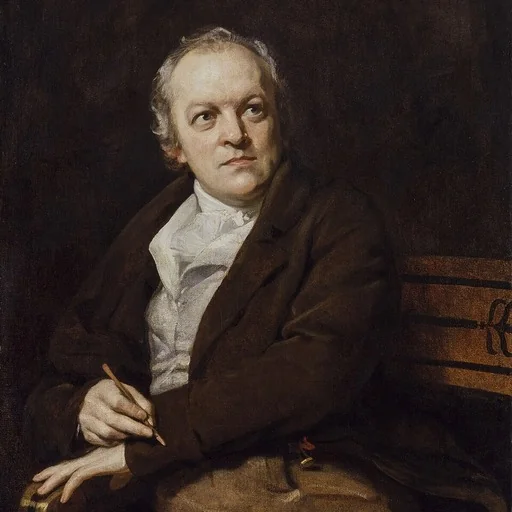
William Blake (28 November 1757 – 12 August 1827) was an English poet, painter and printmaker.