Artwork
The Fall and Redemption of Man
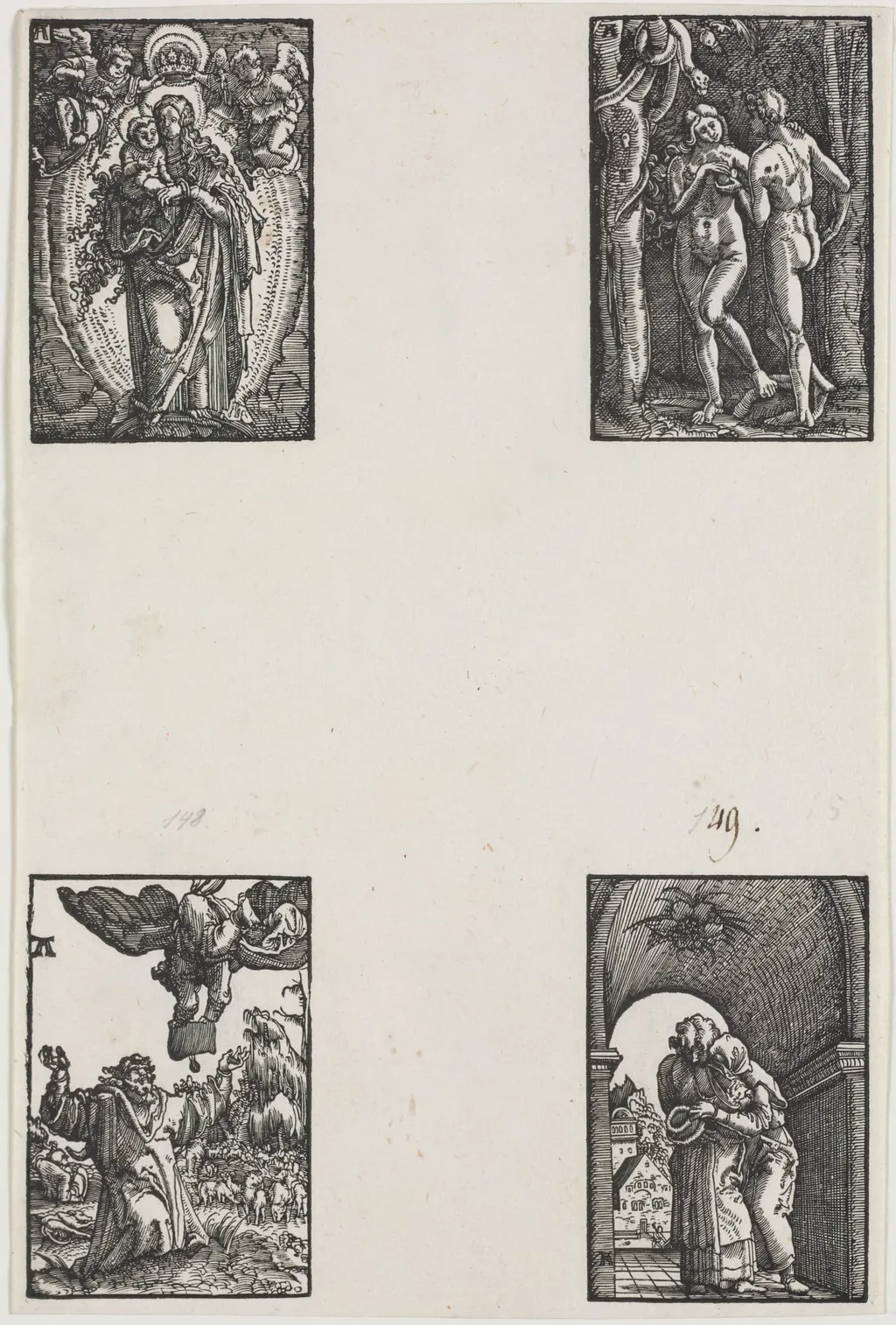
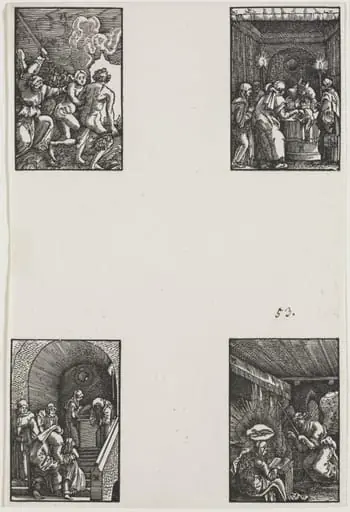
The Fall and Redemption of Man is a print by the Renaissance artist Albrecht Altdorfer. It dates from 1513 and is held in the collection of the Cleveland Museum of Art. Eight woodcuts from a larger series of forty depict key moments in Christian salvation history, from the Fall to the Last Judgment.
About this work
Overview
Eight woodcuts from a larger series of forty depict key moments in Christian salvation history, from the Fall to the Last Judgment.
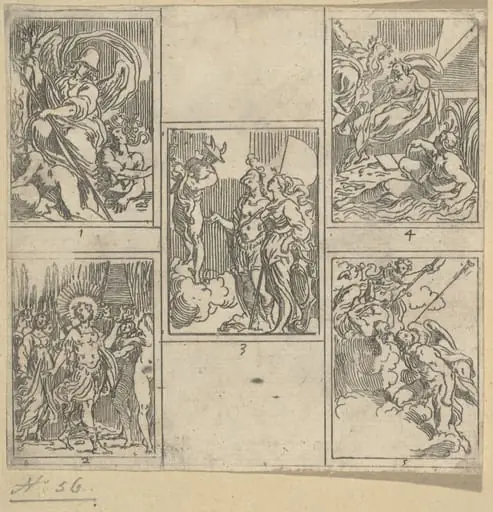
Eight woodcuts from a larger series of forty depict key moments in Christian salvation history, from the Fall to the Last Judgment. Originally printed in groups of eight on five large sheets, the prints were later separated for sale. The museum’s set retains the original sheet divisions, preserving four images per page. The sequence is disrupted due to post-printing cutting, though numerical labels indicate their intended narrative order.
Subject & Meaning
The scenes illustrate foundational biblical events: Adam and Eve’s expulsion, Noah’s flood, Moses receiving the Law, and other episodes leading to redemption. Each image functions as a visual sermon, tracing humanity’s fall from grace and divine intervention. The selection emphasizes moral and theological continuity, framing individual acts within a grand arc of sin and salvation.
Technique & Style
Executed in fine black-line woodcut, the prints display exceptional detail for the medium, rivaling the precision of engravings. Altdorfer’s deep, controlled carving achieved a level of intricacy uncommon in woodcut at the time. The small scale and dense composition reflect influences from Dürer’s Small Passion, yet the work stands out for its technical ambition in a medium typically suited to bolder forms.
History & Provenance
Created around 1513, the series was part of a broader trend in devotional printmaking. The sheets were likely cut into individual prints after printing, a common practice for distribution. The museum’s version preserves the original sheet structure, suggesting it was never fully disassembled. Its survival in near-original form is rare among surviving sets of the series.
Context
Altdorfer’s work emerged alongside other German printmakers exploring narrative cycles in miniature form. Dürer’s Small Passion (1511) provided a direct precedent, while Holbein’s Dance of Death (c. 1526) later echoed its scale and ambition. These prints catered to private devotion, reflecting the growing market for portable, theologically rich imagery in early Reformation Europe.
Legacy
The series demonstrated that woodcut could achieve unprecedented detail, expanding the medium’s expressive potential. Though not widely copied, its technical rigor influenced later printmakers seeking to merge narrative clarity with fine craftsmanship. Its survival in partial original form offers insight into early print distribution and the evolving role of religious imagery in domestic settings.
Artist & collection
Artist
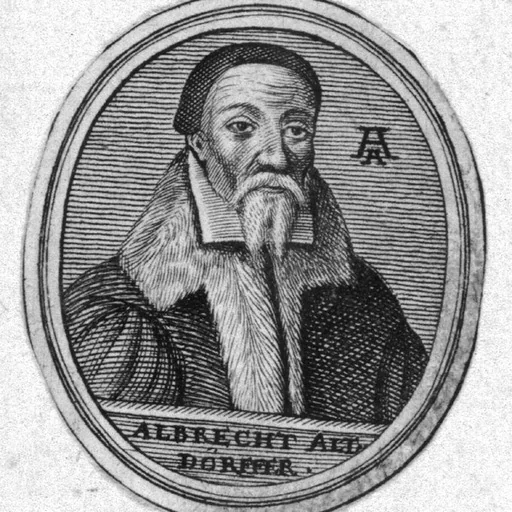
Albrecht Altdorfer (c. 1480 – 12 February 1538) was a German painter, engraver and architect of the Renaissance working in Regensburg. Along with Lucas Cranach the Elder and Wolf Huber he is regarded to be the main…

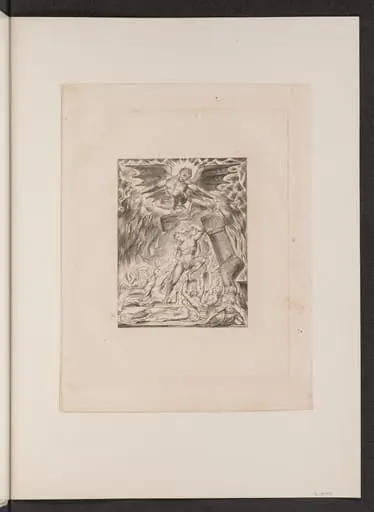 Job's Sons and Daughters Overwhelmed by Satan
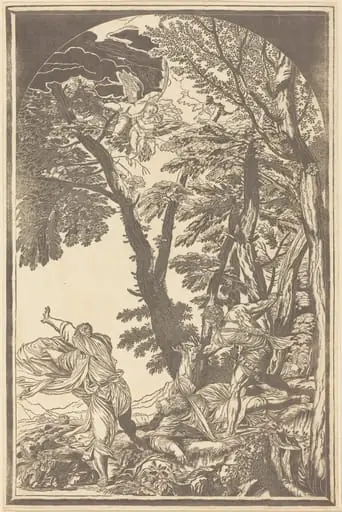 The Death of Saint Peter Martyr
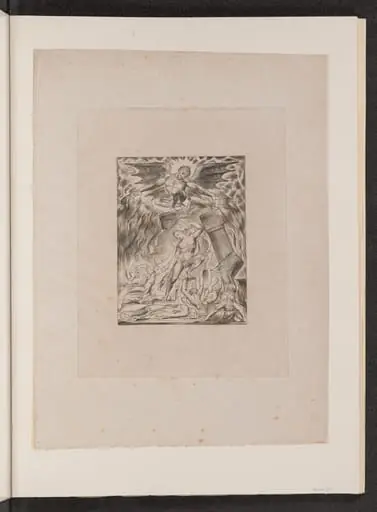 Job's Sons and Daughters Overwhelmed by Satan
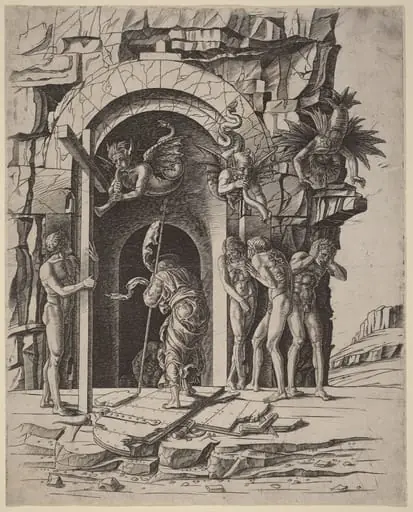 Descent into Limbo
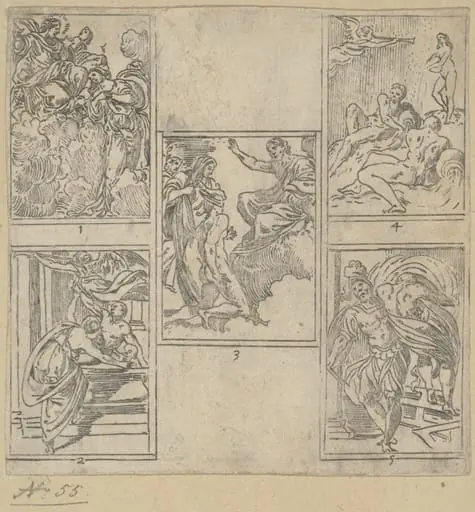 The Obsequies of Agostino Carracci: Third Plate
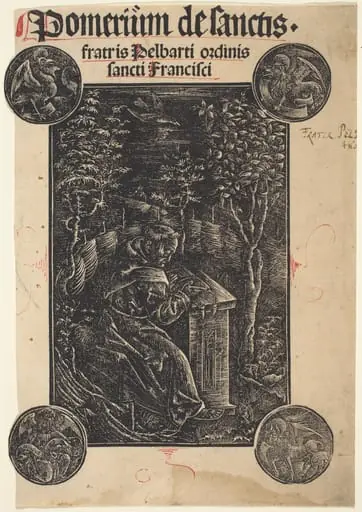 Franciscan, Pelbartus of Temesvar, in a Garden
 The Obsequies of Agostino Carracci: Second Plate
 War (The Accusers of Theft, Adultery, Murder)
 Job Rebuked by His Friends
 When the Morning Stars Sang Together
 Heute Roth, Morgen Tod (Today Red, Tomorrow Dead)
 The Fall and Redemption of Man