Artwork
Moses and the Burning Bush
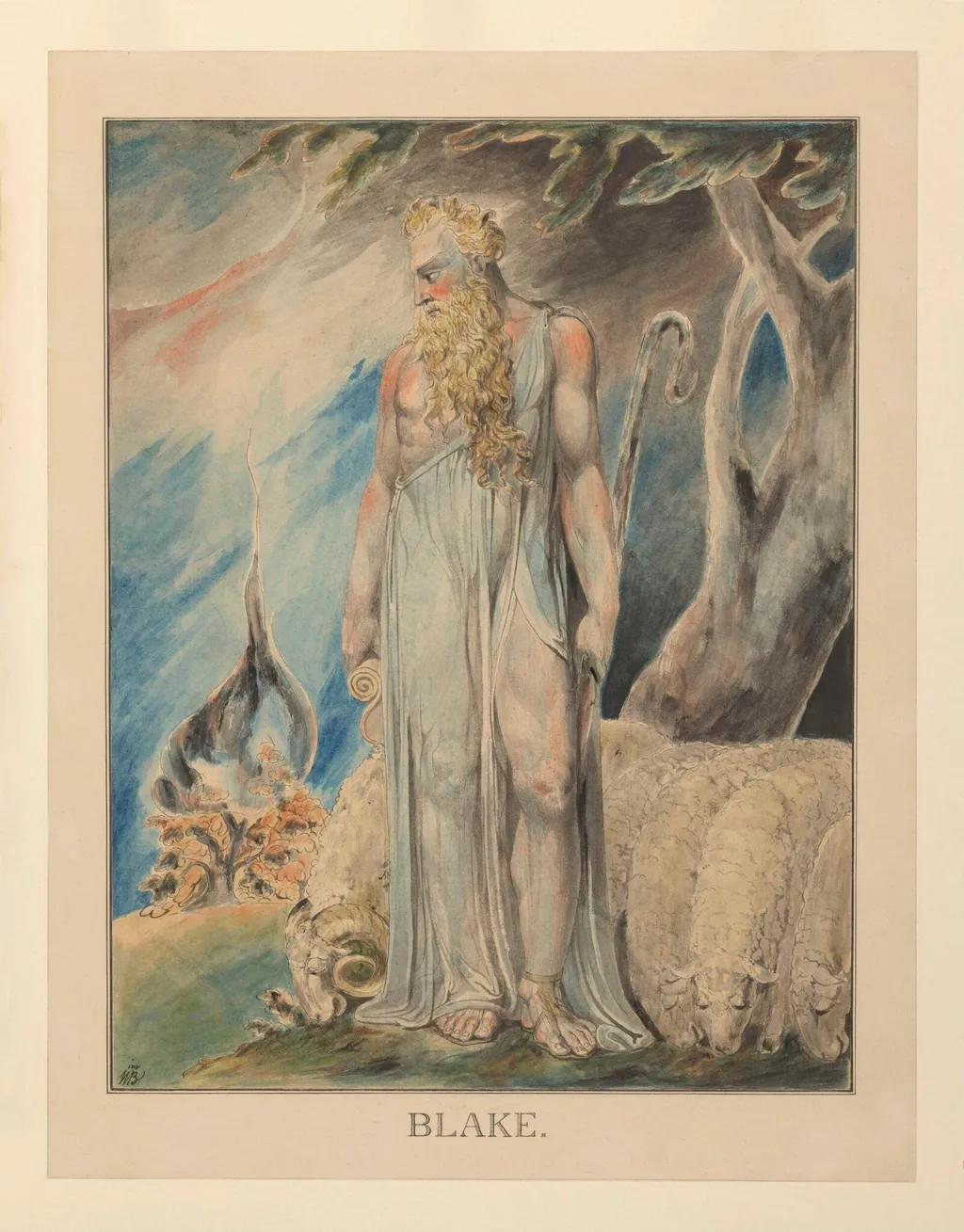
Moses and the Burning Bush is a watercolor work on paper by the British Romanticist artist William Blake. It dates from 1802 and is held in the collection of the Victoria and Albert Museum.
About this work
Overview
Moses and the Burning Bush is a watercolour on paper created by William Blake in 1802, depicting a pivotal biblical scene with characteristic imaginative flair.
Subject & Meaning
The work illustrates Moses standing barefoot beside a burning bush, accompanied by a shepherd’s crook and a flock of sheep to his left. A crouching, shadowy figure with horns and tail to the right introduces an enigmatic element, contrasting with the serene, divine presence of the burning bush.
Technique & Style
Blake employed loose, sketchy lines and vibrant, dreamlike colors, imbuing the scene with a sense of dynamism. The animated depiction of flames and clouds, blending seamlessly into the sky, reflects the expressive and imaginative qualities of Romantic-era art.
History & Provenance
Originally owned by Thomas Butts, the piece passed to his son before being sold at Foster’s auction house in 1853. It was later acquired by Sir Charles W. Dilke, who donated it to a museum in 1884.
Context
Created in 1802, this watercolour aligns with the burgeoning Romantic movement, characterized by emphasis on emotion, imagination, and the sublime. Blake’s unique style within this context blends mysticism with biblical narrative.
Legacy
As part of Blake’s oeuvre, Moses and the Burning Bush contributes to the artist’s reputation for innovative, spiritually charged works that influenced the development of Romanticism in early 19th-century art.
Own this work as a print
Artist & collection
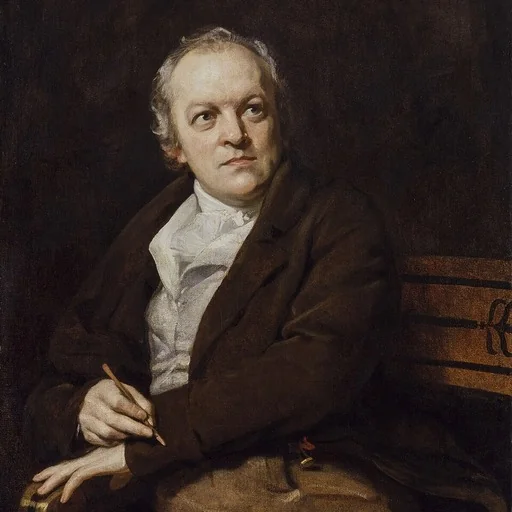
Artist
William Blake (28 November 1757 – 12 August 1827) was an English poet, painter and printmaker.