Artwork
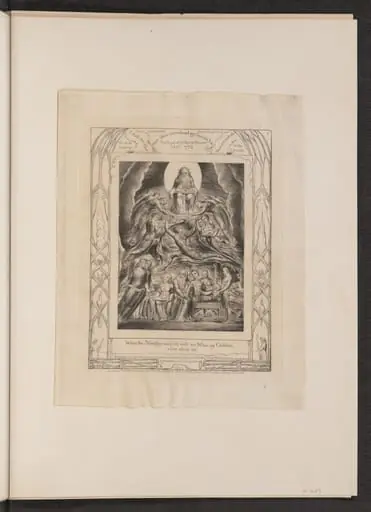
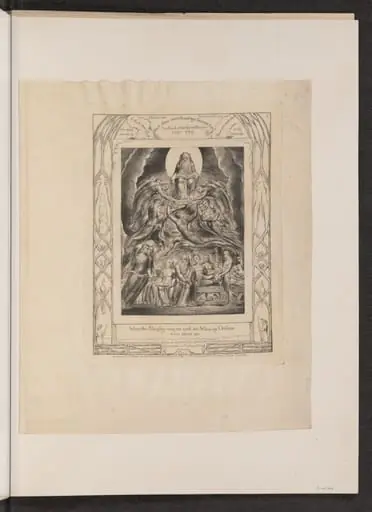
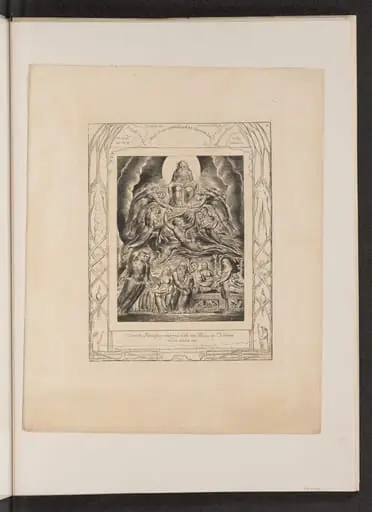
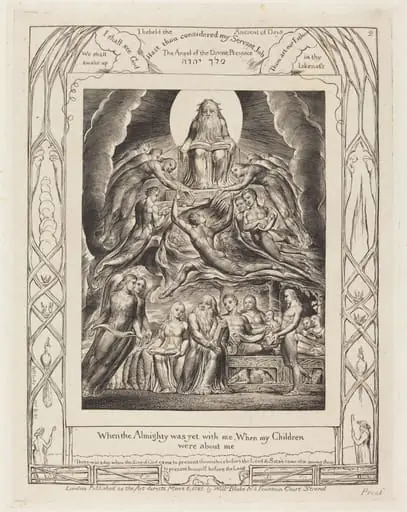
Satan Before the Throne of God
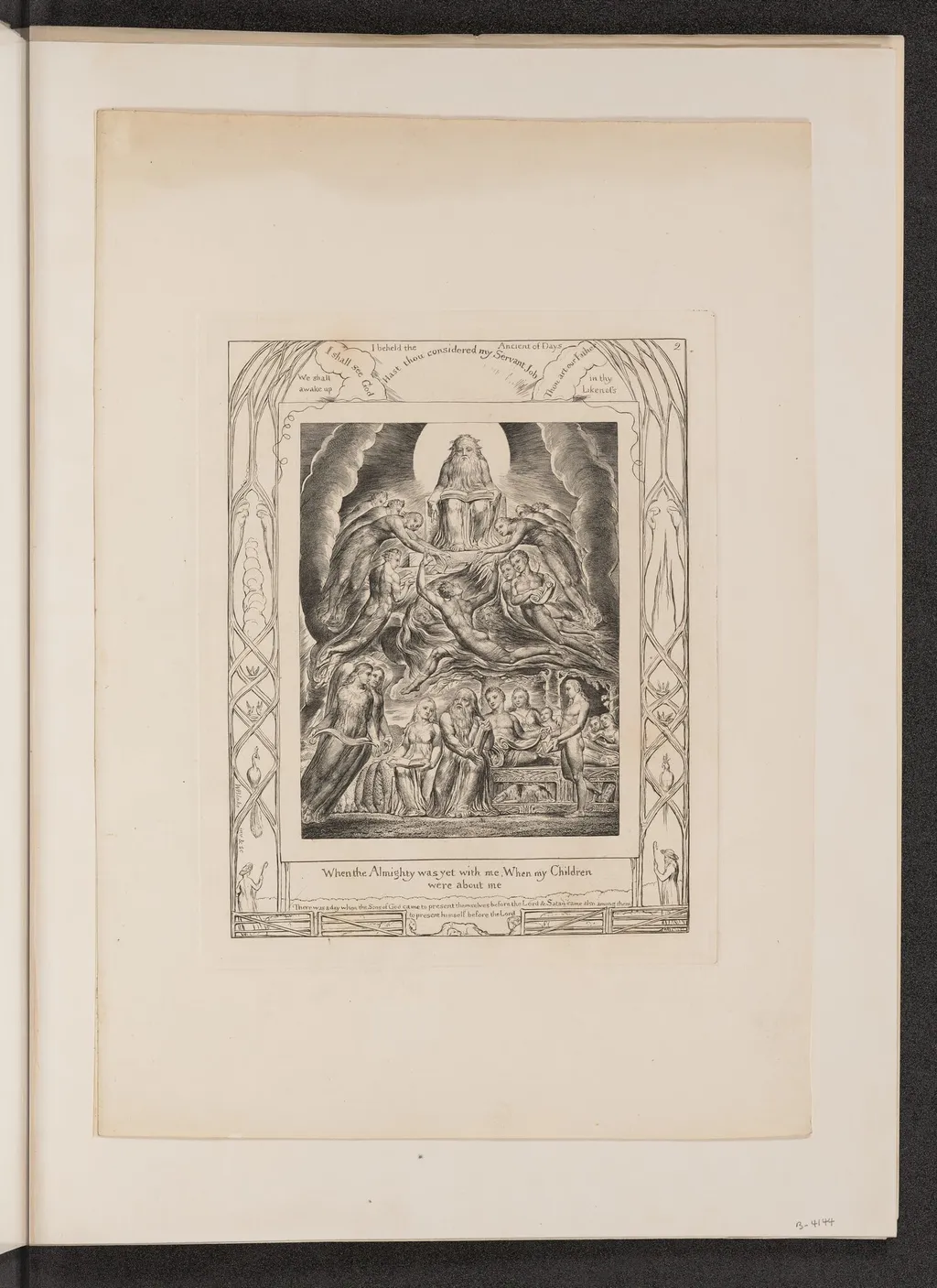
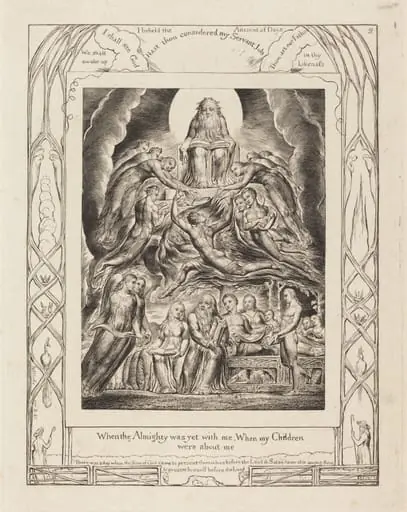
Satan Before the Throne of God is an ink print by the Romanticist artist William Blake. It dates from 1825 and is held in the collection of the National Gallery of Art.
About this work
Overview
Executed in black ink on thick paper, it reflects his unique method of relief etching, which allowed him to combine text and image in a single printed surface.
Created in 1825, this engraving by William Blake is part of his series illustrating biblical and prophetic themes. Executed in black ink on thick paper, it reflects his unique method of relief etching, which allowed him to combine text and image in a single printed surface. The work emerged from his sustained engagement with spiritual vision, produced independently of mainstream artistic trends in early 19th-century England.
Subject & Meaning
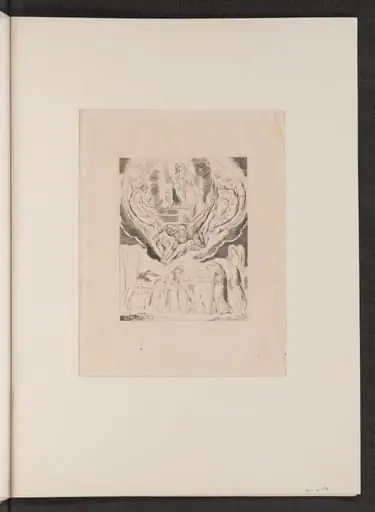
The scene portrays Satan and a group of fallen beings before a radiant, crowned divine figure, drawing from the Book of Job and Blake’s own mythological system. The figures below express varied reactions—fear, defiance, submission—reflecting moral and spiritual states rather than literal narrative. Surrounding biblical verses reinforce the theological tension, positioning the image as an allegory of rebellion, judgment, and divine authority.
Technique & Style
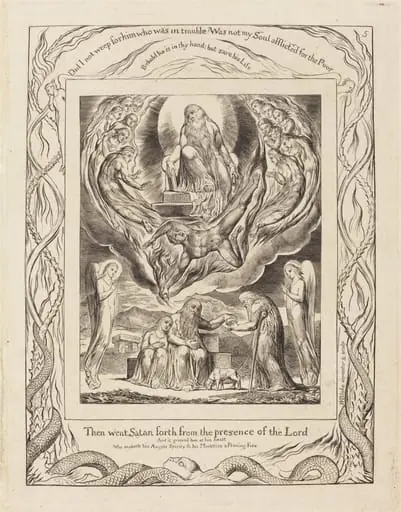
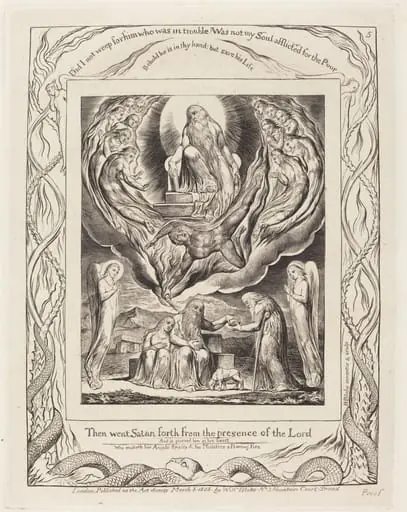
Blake employed fine, incised lines to model form and depth without color, relying on contrast and texture to convey emotion. The swirling backgrounds and dense inscriptions are etched with precision, integrating text as visual rhythm rather than mere annotation. His technique fused printmaking with poetic composition, allowing each element—figure, line, word—to contribute to a unified symbolic field.
History & Provenance
This engraving was produced as part of Blake’s late series of biblical illustrations, likely intended for private circulation among patrons and associates. It was never widely distributed during his lifetime, and few impressions survive. Its existence is tied to his self-funded printing practice in London, where he maintained full control over production, from design to impression.
Context
While Romanticism emphasized emotion and nature, Blake’s work diverged into intensely personal mythologies. His rejection of institutional religion and conventional artistic training placed him outside the academic mainstream. This piece reflects his lifelong effort to visualize spiritual truths through symbolic forms, resisting Enlightenment rationalism in favor of visionary experience.
Legacy
Though largely ignored in his time, Blake’s engravings gained recognition in the late 19th and 20th centuries as foundational to modern symbolic art. His integration of text and image influenced later illustrators and poets. This work, like others in his prophetic series, is now studied for its complex layering of theology, personal vision, and technical innovation in printmaking.
Artist & collection
Artist
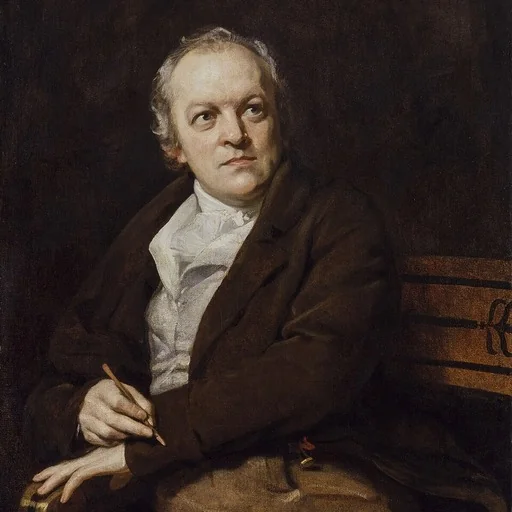
William Blake (28 November 1757 – 12 August 1827) was an English poet, painter and printmaker.

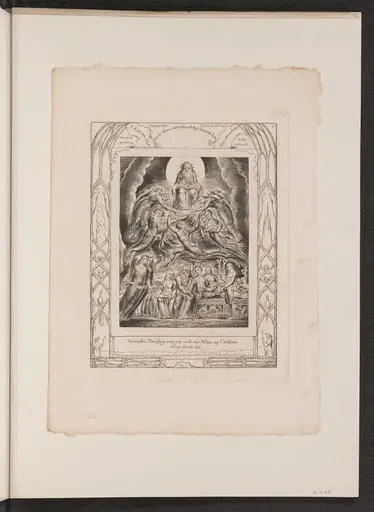 Satan Before the Throne of God
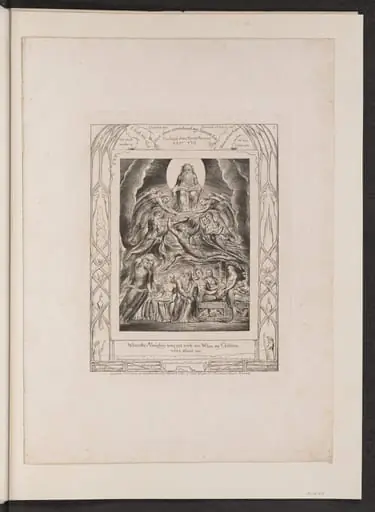 Satan Before the Throne of God
 Satan Before the Throne of God
 Satan Before the Throne of God
 Satan Before the Throne of God
 Satan Before the Throne of God
 Satan Going Forth from the Presence of the Lord
 Satan Before the Throne of God
 Satan Going Forth from the Presence of the Lord
 Satan Going Forth from the Presence of the Lord