Artwork
Satan Going Forth from the Presence of the Lord
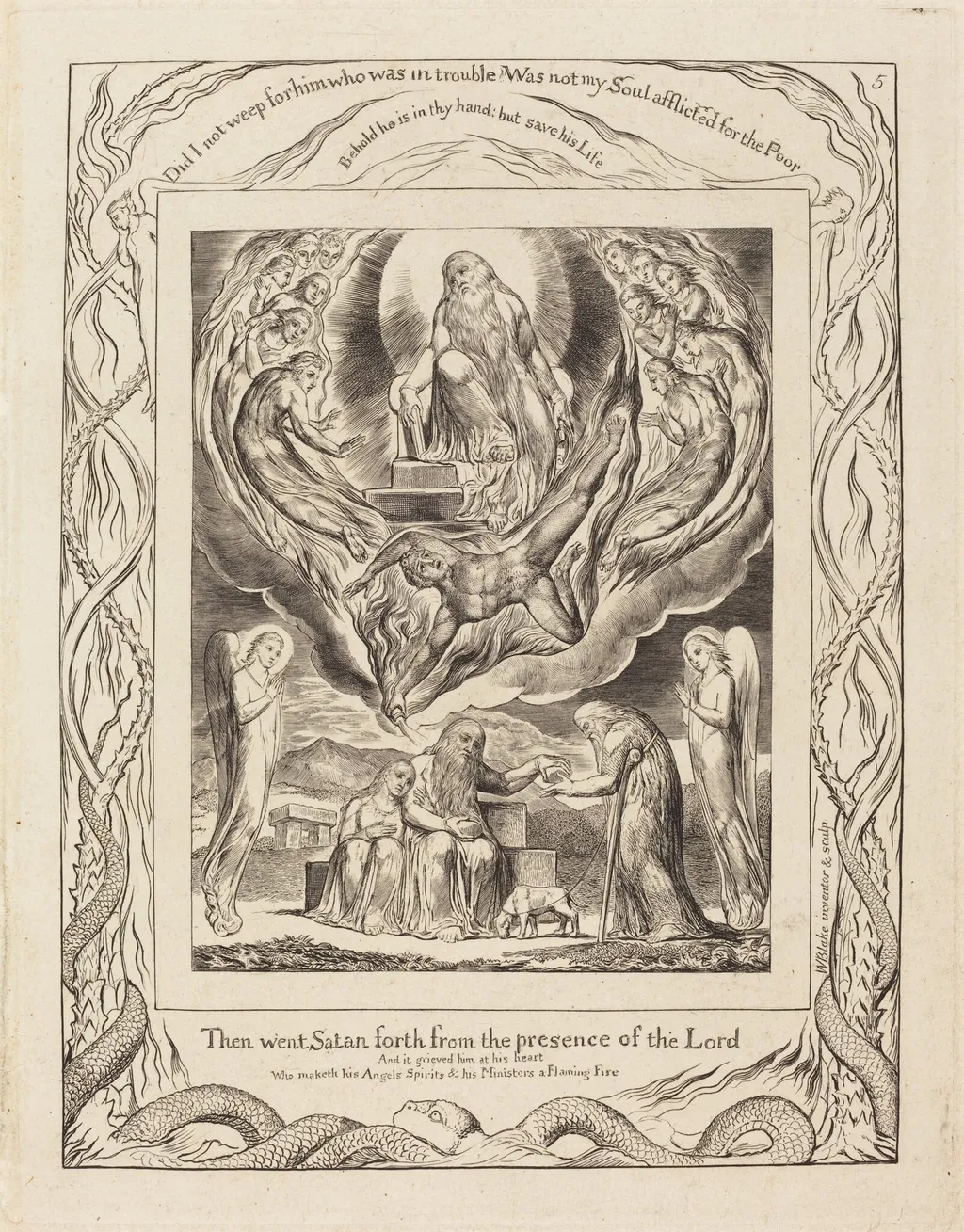
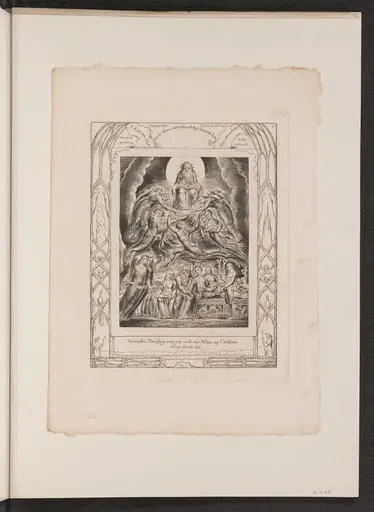
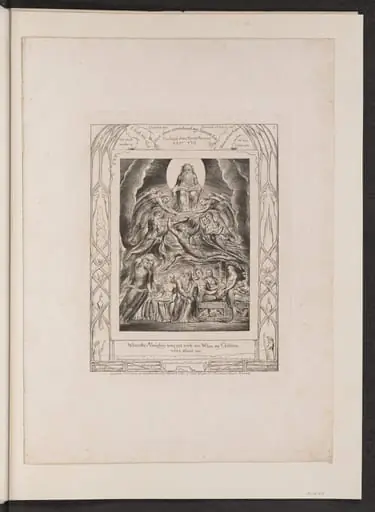
Satan Going Forth from the Presence of the Lord is an ink print by the Romanticist artist William Blake. It dates from 1825 and is held in the collection of the National Gallery of Art.
About this work
Overview
The composition is densely populated, with dramatic figures, swirling clouds and a profusion of floating heads that convey a sense of upheaval.
Created in 1825, *Satan Going Forth from the Presence of the Lord* is an engraved print by the English poet‑artist William Blake. Executed on a metal plate and printed in black and white, the image captures a turbulent biblical moment in which the fallen angel is expelled from divine proximity. The composition is densely populated, with dramatic figures, swirling clouds and a profusion of floating heads that convey a sense of upheaval.
Subject & Meaning
The central focus is a massive, horned and winged Satan, recoiling as a host of smaller angels thrust him outward. Beneath the celestial conflict a modestly dressed woman kneels beside a child, while another figure sits nearby, suggesting humanity’s vulnerable witness to the cosmic drama. The surrounding chaos of twisted forms and disembodied heads amplifies the theme of divine judgment and the violent severance of Satan from God’s presence.
Technique & Style
Blake employed the traditional intaglio engraving process, incising fine lines into a copper plate before inking and pressing onto paper. His characteristic use of sharp, intersecting lines and stark chiaroscuro creates a three‑dimensional effect within the flat medium. The dense hatching and cross‑hatching generate deep shadows, while the intricate detailing of the figures and background demonstrates Blake’s meticulous hand and his penchant for symbolic visual complexity.
History & Provenance
Blake, who lived and worked primarily in London, produced the print during the later stage of his career, a period marked by the creation of his so‑called “prophetic” series. Although the work received little attention in his lifetime, it later entered collections that recognize Blake’s contribution to Romantic visual culture. The print has been documented in several museum holdings and scholarly catalogues of Blake’s graphic oeuvre.
Context
The image draws on the biblical narrative of Satan’s expulsion from the heavenly throne, a theme that resonated with Blake’s broader theological and mythic concerns. Situated among his other prophetic engravings, the piece reflects his belief in the power of imagination to reinterpret sacred stories. Contemporary critics such as Northrop Frye have highlighted the depth of Blake’s symbolic language, noting that his visionary prints, though obscure to his contemporaries, anticipate later Romantic and modernist sensibilities.
Artist & collection
Artist
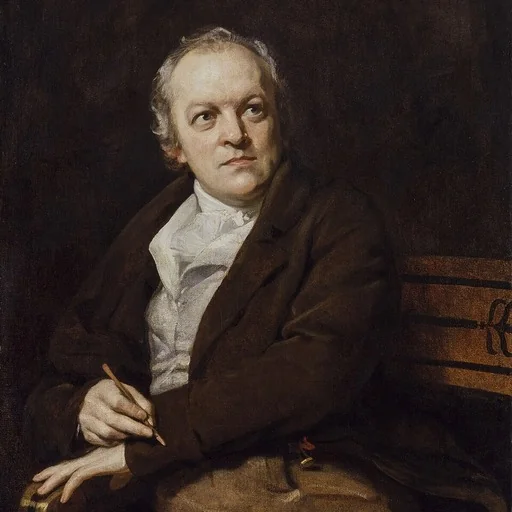
William Blake (28 November 1757 – 12 August 1827) was an English poet, painter and printmaker.

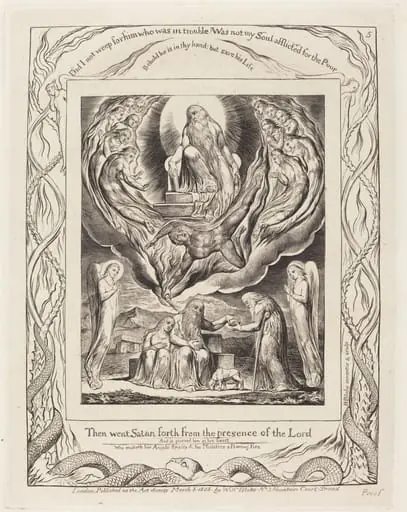 Satan Going Forth from the Presence of the Lord
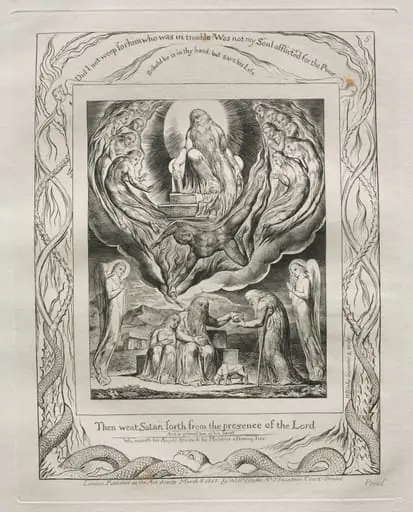 The Book of Job: Pl. 5, Then went Satan forth from the presence of the Lord
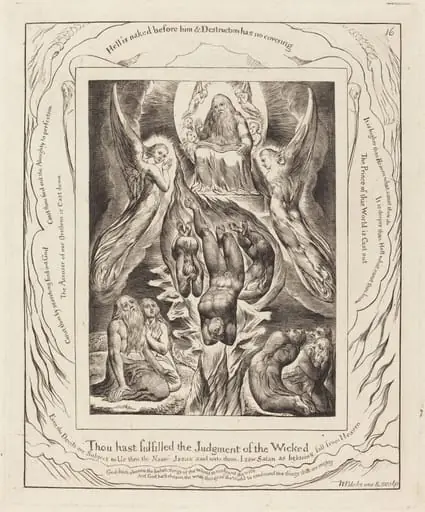 The Fall of Satan
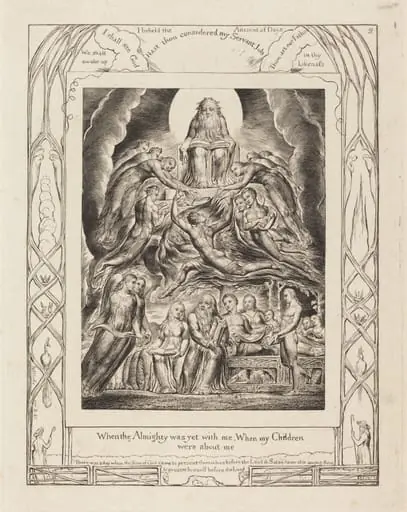 Satan Before the Throne of God
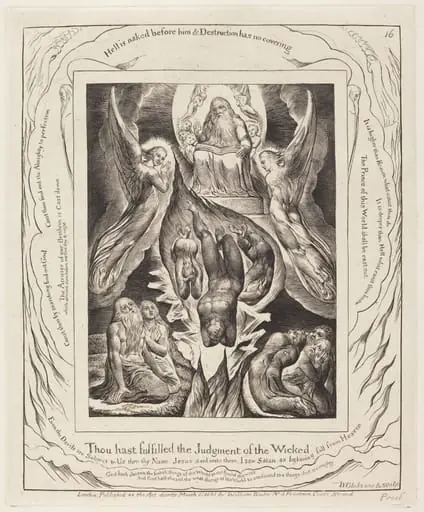 The Fall of Satan
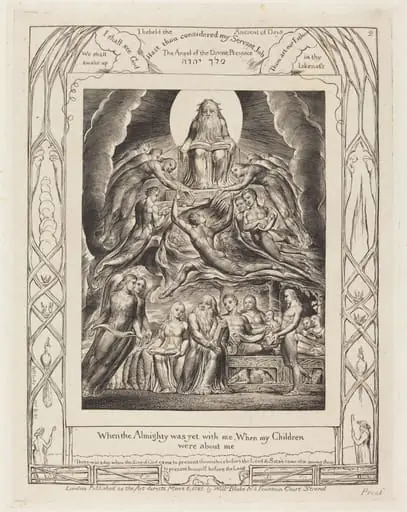 Satan Before the Throne of God
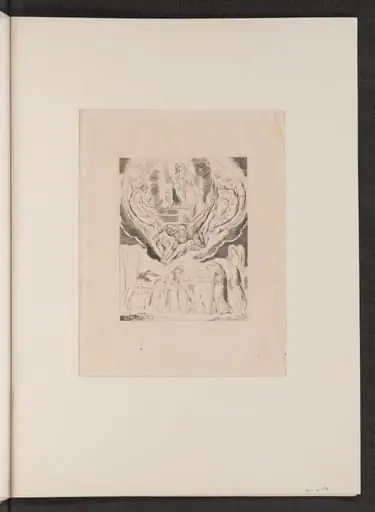 Satan Going Forth from the Presence of the Lord
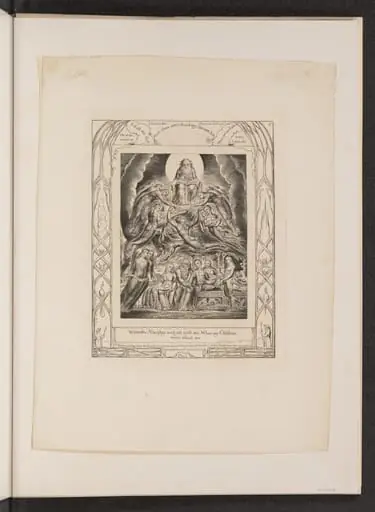 Satan Before the Throne of God
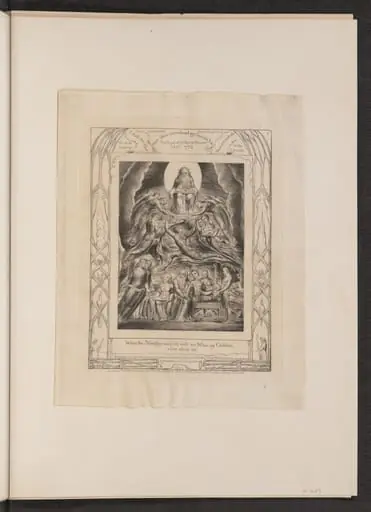 Satan Before the Throne of God
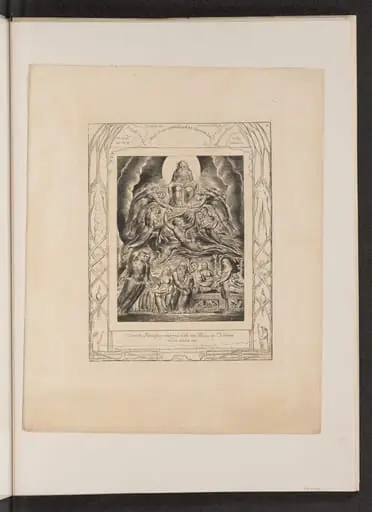 Satan Before the Throne of God
 Satan Before the Throne of God
 Satan Before the Throne of God