Artwork
The Messengers Tell Job of His Misfortunes
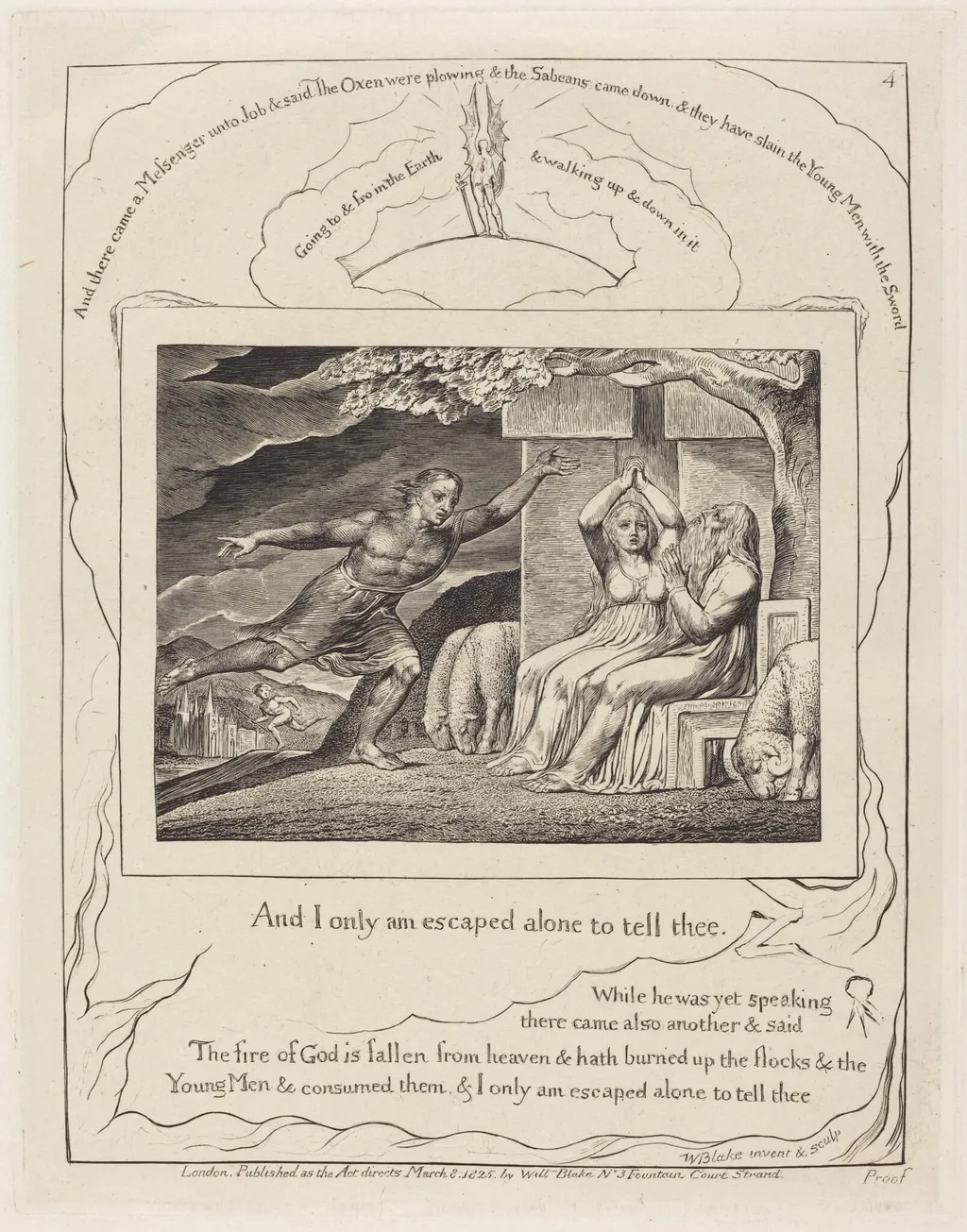
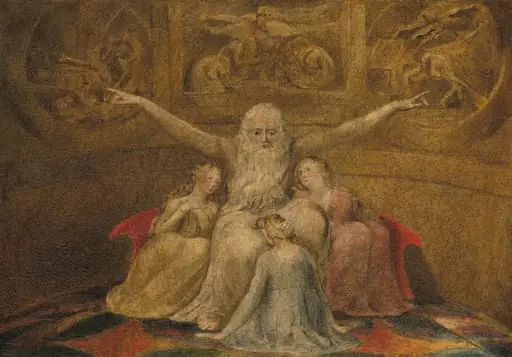
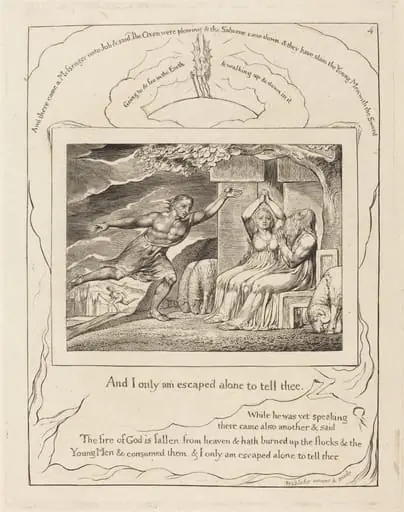
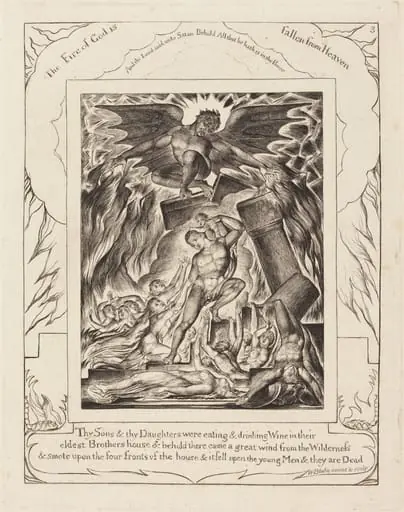
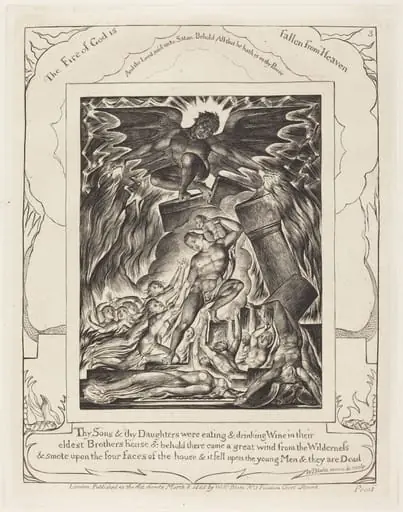
The Messengers Tell Job of His Misfortunes is an ink print by the Romanticist artist William Blake. It dates from 1825 and is held in the collection of the National Gallery of Art.
About this work
Overview
The Messengers Tell Job of His Misfortunes is an 1825 engraving on India paper by William Blake, a British polymath known for his poetic and artistic works infused with visionary and symbolic elements.
Subject & Meaning
The engraving depicts a somber scene from the biblical story of Job, where messengers inform him of his misfortunes. The composition conveys themes of suffering, warning, and resilience through the contrasting postures of the kneeling and seated figures, set against a backdrop of turmoil.
Technique & Style
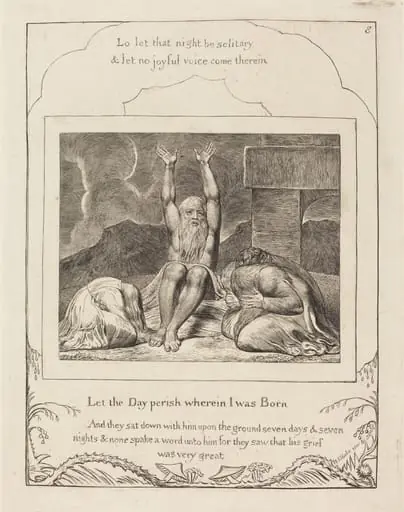
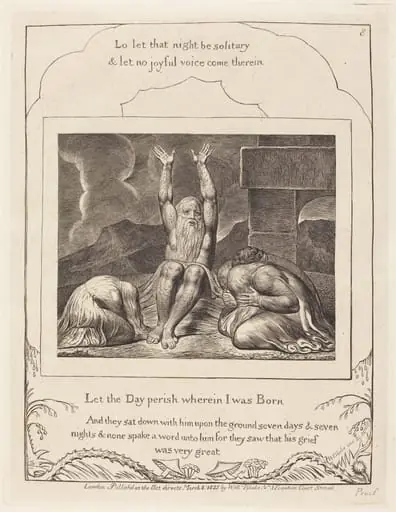
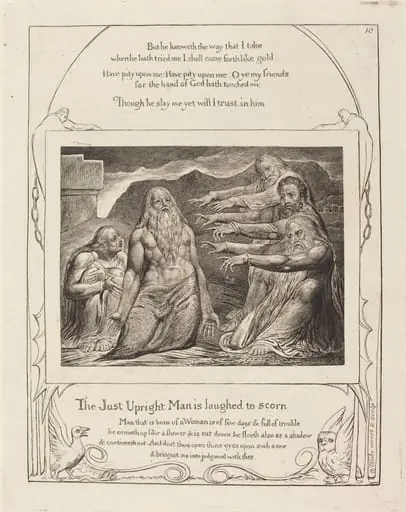
Blake employed sharp, detailed lines and heavy shading to evoke emotion and movement. The use of small lines to build shadows and textures adds depth and drama to the scene, characteristic of his expressive and symbolically dense style.
History & Provenance
Created in Blake's later period, this work is part of his 'prophetic' graphic output. Though unrecognized in his lifetime, it contributes to his posthumous reputation as a key figure in Romantic-era art and poetry.
Context
Executed during Blake's primarily London-based career, with a brief exception in Felpham, the engraving blends religious narrative with imaginative symbolism, reflecting his unique artistic vision.
Legacy
Despite initial lack of recognition, The Messengers Tell Job of His Misfortunes is now regarded as a representative piece of Blake's visionary art, influencing the broader appreciation of Romantic symbolic expression in both visual art and literature.
Artist & collection
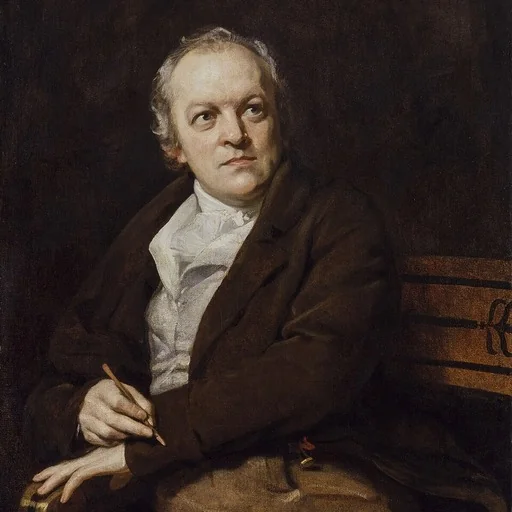
Artist
William Blake (28 November 1757 – 12 August 1827) was an English poet, painter and printmaker.