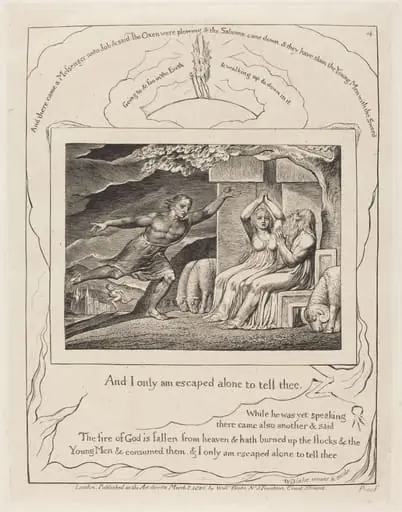
Artwork
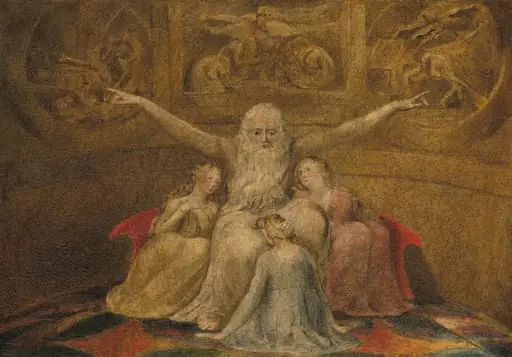
The Destruction of Job's Sons
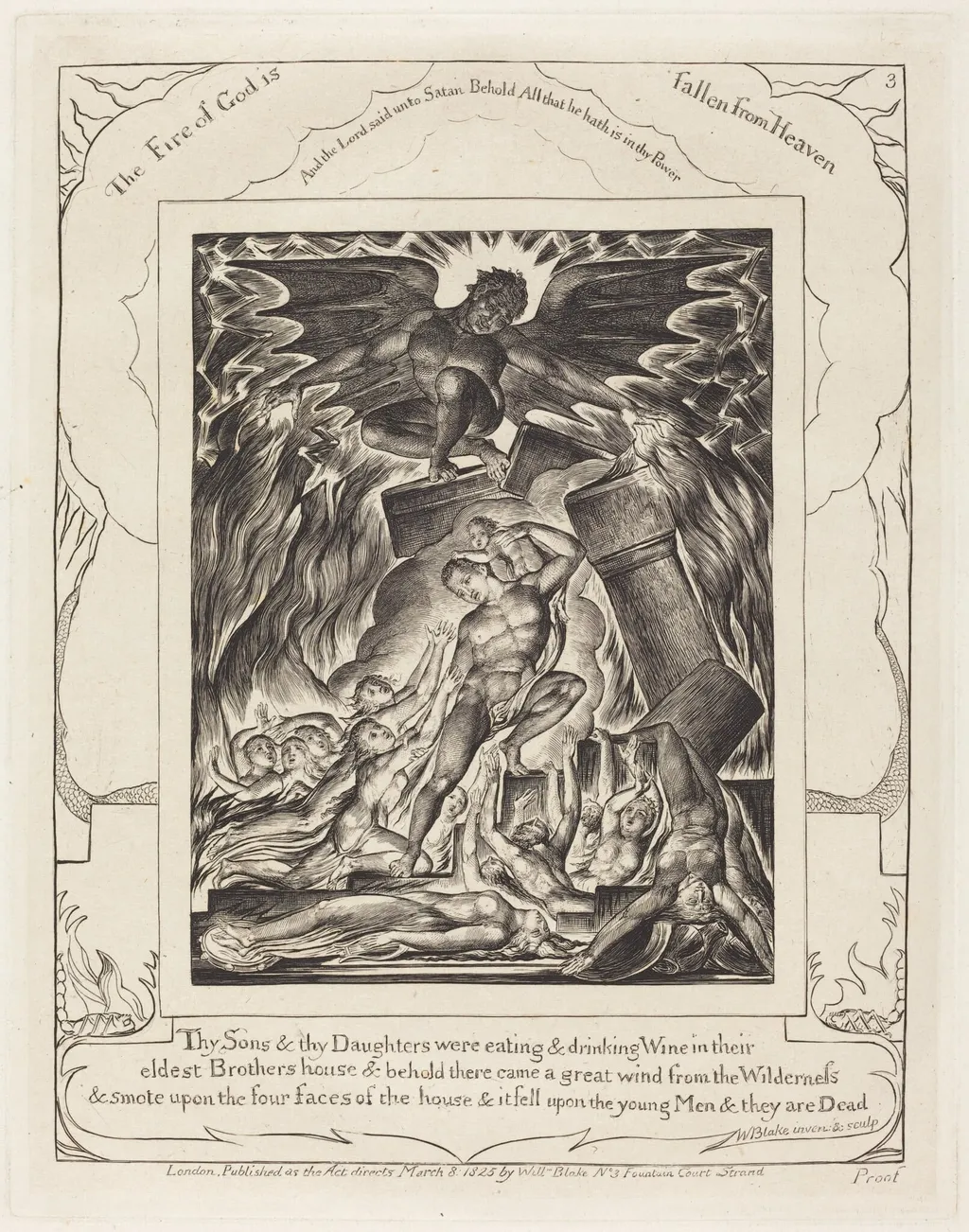
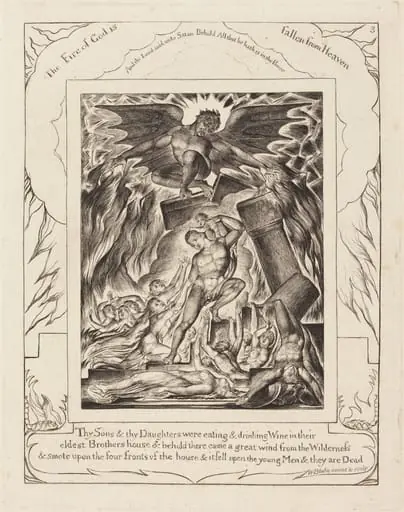
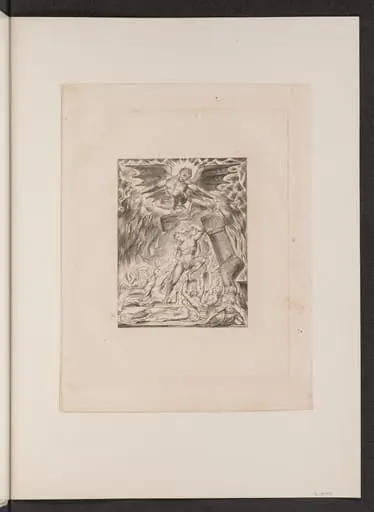
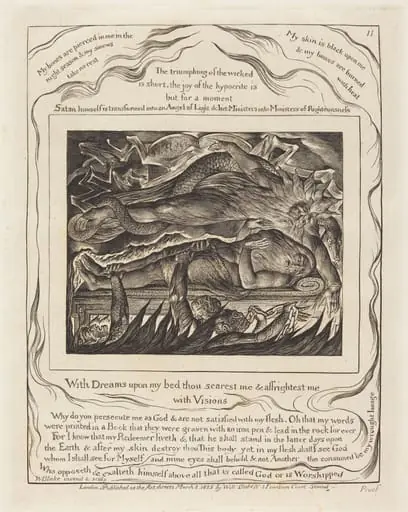
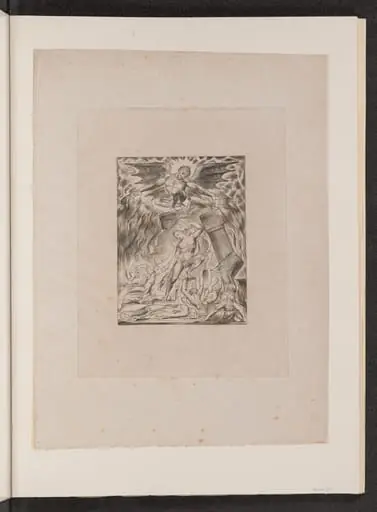
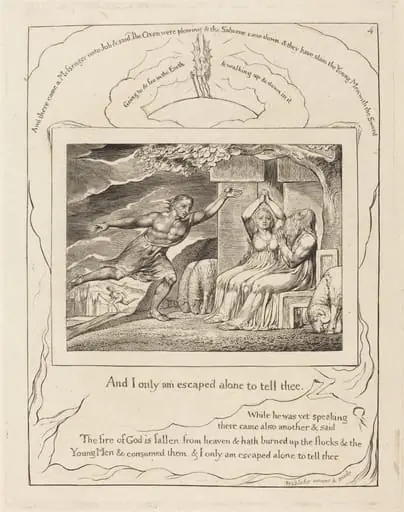
The Destruction of Job's Sons is an ink print by the Romanticist artist William Blake. It dates from 1825 and is held in the collection of the National Gallery of Art.
About this work
Overview
Created in 1825, this black‑and‑white engraving on India paper depicts a tumultuous biblical scene in which figures descend from the heavens, some clutching infants, while others are caught in tangled, swirling lines that suggest wind or flame. The composition is framed by scriptural quotations that reference a sudden disaster, emphasizing the narrative’s dramatic intensity.
Subject & Meaning
The image visualizes the biblical account of the destruction of Job’s sons, portraying the chaos and panic of the moment. By focusing on the physical collapse of the figures and the fearful observers below, the work underscores themes of divine judgment and human vulnerability within a mythic framework.
Technique & Style
Executed with fine, intersecting lines, the engraving employs stark contrasts and dynamic hatching to convey motion and emotional turbulence. The use of crisscrossed strokes creates a sense of wind or fire, while the precise rendering of individual gestures heightens the overall drama without reliance on color.
History & Provenance
The print was produced in London, the city where the artist lived and worked for most of his life, aside from a short residence in Felpham. It forms part of a larger series of works that explore biblical and prophetic subjects through imaginative visual language.
Context
Emerging from the Romantic period, the engraving reflects the era’s fascination with the power of imagination to reinterpret religious narratives. Its symbolic density aligns with the artist’s broader practice of merging poetry, painting, and printmaking to explore visionary themes.
Artist & collection

Artist
William Blake (28 November 1757 – 12 August 1827) was an English poet, painter and printmaker.