Artwork
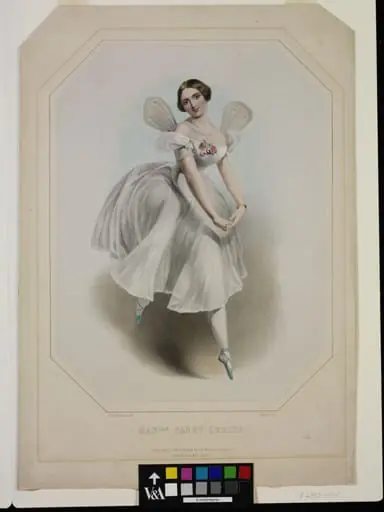
Mademoiselle Fanny Cerito
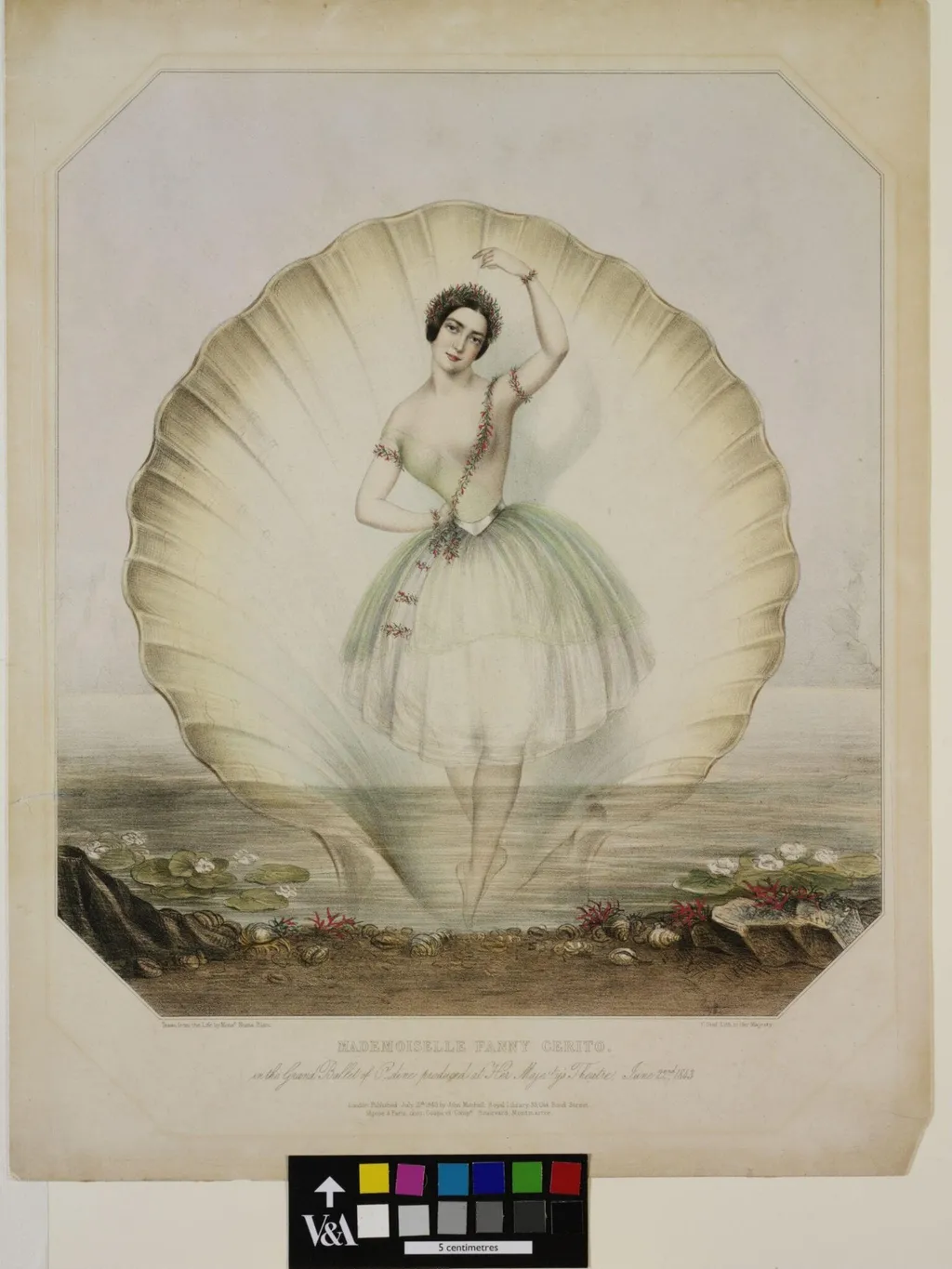
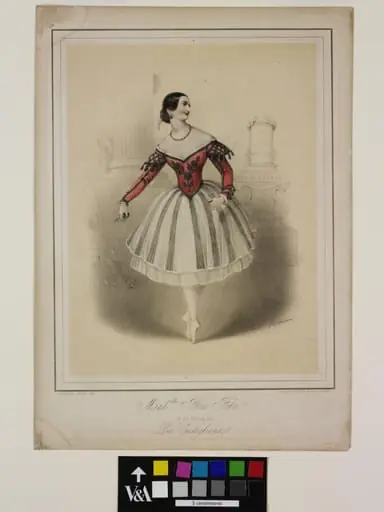
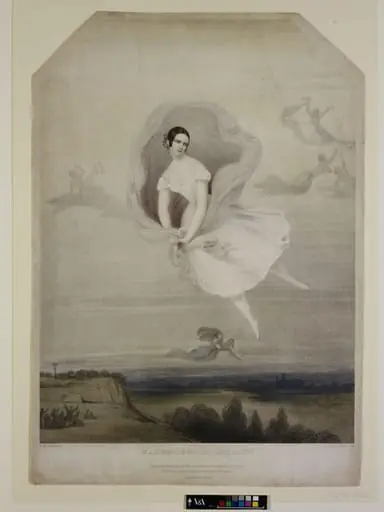
Mademoiselle Fanny Cerito is a print by the Romanticist artist Numa Blanc. It dates from 15 and is held in the collection of the Victoria and Albert Museum.
About this work
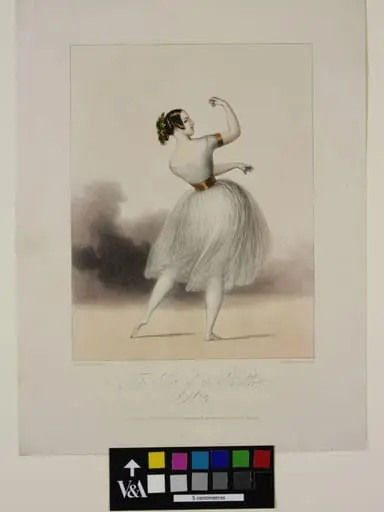
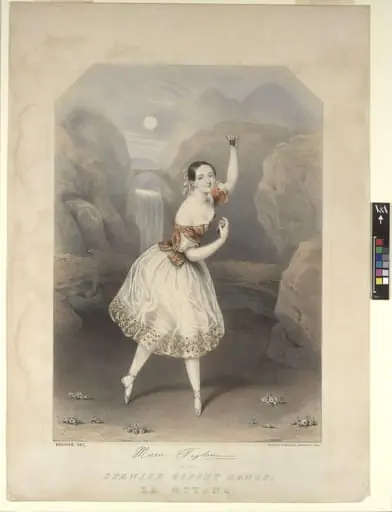
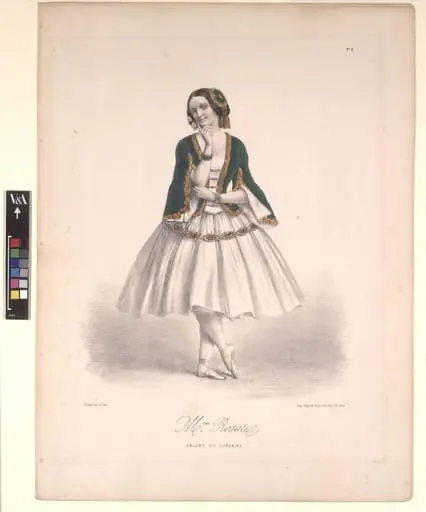
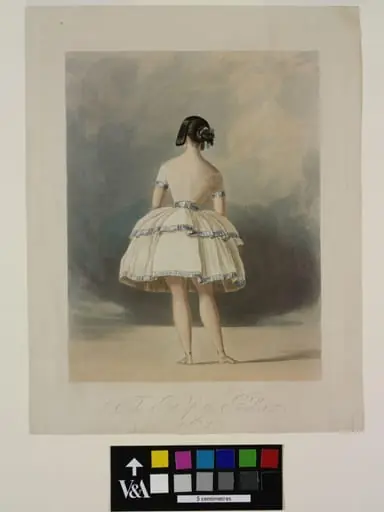
Numa Blanc captured Fanny Cerrito’s first entrance as the water nymph Ondine, rising from the stage on a shell.
This print shows a ballet star in a famous role. Numa Blanc captured Fanny Cerrito’s first entrance as the water nymph Ondine, rising from the stage on a shell. The print documents a 1843 London show full of tricks and magic.
The magic came from stage tech, not paint. Cerrito didn’t really float—she stood on a rising platform while waves hid the mechanics. Later scenes flew her across rocks into the sea.
Look up the Victoria and Albert Museum.
Overview
The print, titled *Mademoiselle Fanny Cerito / in the Grand Ballet of Ondine, produced at Her Majesty's Theatre, June 22nd 1843*, depicts the celebrated ballerina Fanny Cerrito in the opening tableau of Jules Perrot’s ballet *Ondine*. Executed as a printed image, it records the moment when the dancer, embodying the water‑nymph, ascends the stage atop a large cockle shell.
Subject & Meaning
In the narrative of *Ondine*, the titular nymph falls in love with a mortal, a plot that allowed the lead dancer to embody both ethereal grace and human longing. The print captures the symbolic emergence of the nymph from the sea, emphasizing the theme of transformation from water to flesh.
Technique & Style
The image was produced by the lithographer Numa Blanc, who rendered the scene with fine line work and tonal shading to suggest the shimmering surface of water and the delicate shell. The composition focuses on the vertical movement of the dancer, using contrast to highlight the illusion of ascent.
History & Provenance
The ballet premiered at London’s Her Majesty’s Theatre on 22 June 1843, with the role of Ondine created expressly for Cerrito. The printed record was likely issued shortly after the performance to commemorate the production’s innovative stagecraft. The work now forms part of the Victoria and Albert Museum’s collection of 19th‑century theatrical prints.
Context
Perrot’s *Ondine* was renowned for its elaborate mechanical effects; the dancer’s rise was achieved by a concealed platform that rose behind a wave‑like set, while later scenes involved the performer being ‘flown’ across a rock into the sea. Such theatrical engineering was a hallmark of mid‑Victorian ballet productions, enhancing the spectacle for London audiences.
Artist & collection
Artist