Artwork
Marie Taglioni (facsimile signature)
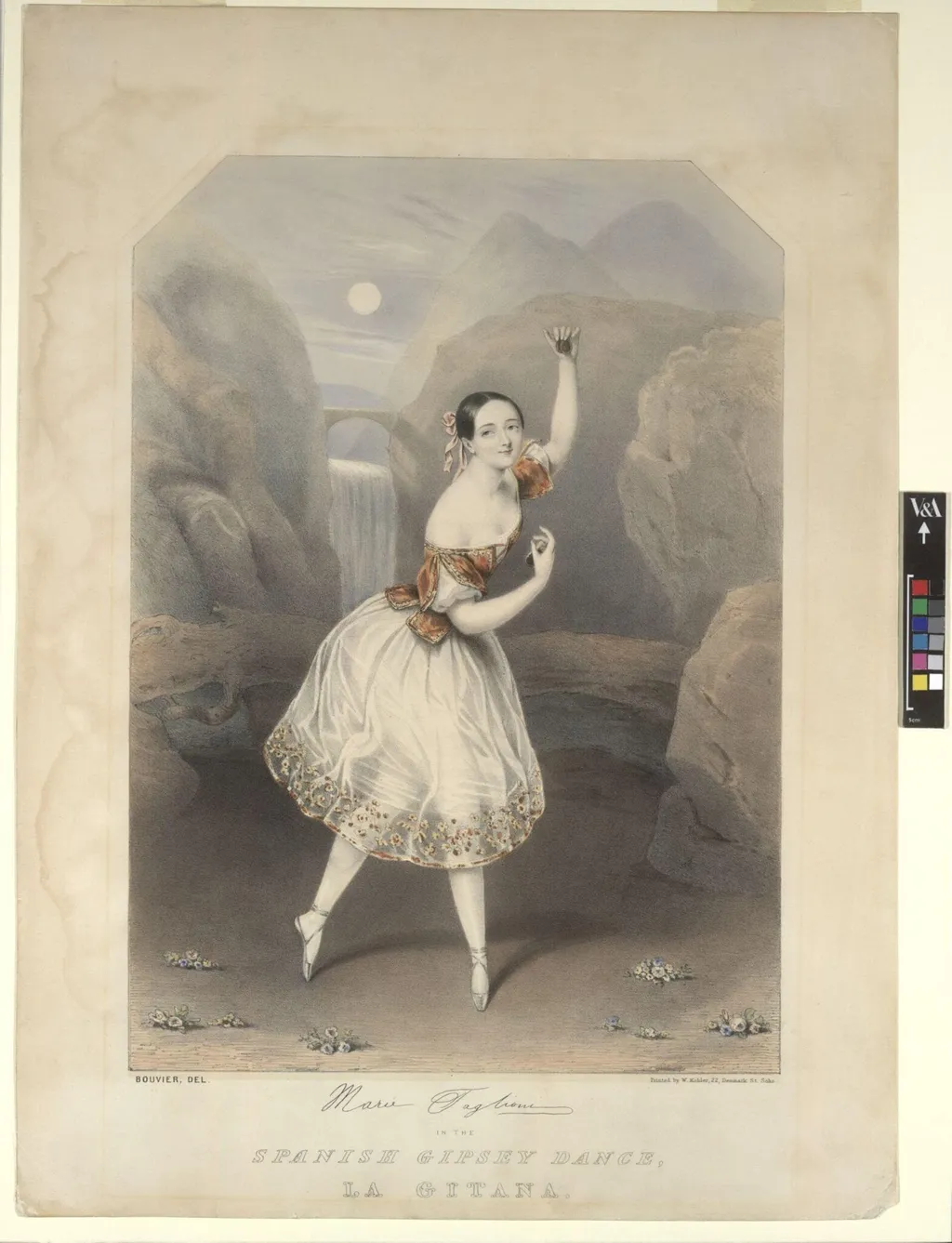
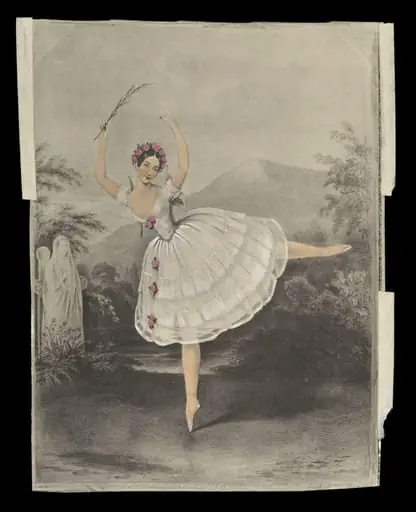
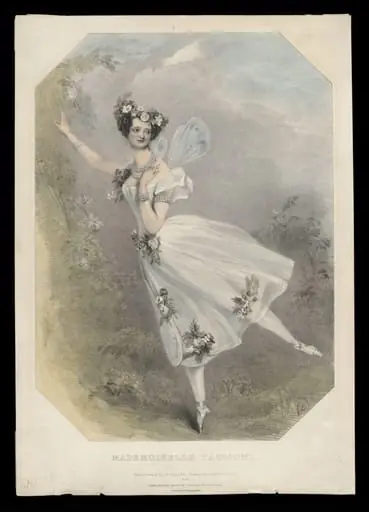
Marie Taglioni (facsimile signature) is a print by the Romanticist artist Jules Bouvier. It dates from 1840 and is held in the collection of the Victoria and Albert Museum.
About this work
This print shows Marie Taglioni, a famous 19th-century ballerina, in a scene from a ballet called *La Gitana*.
This print shows Marie Taglioni, a famous 19th-century ballerina, in a scene from a ballet called *La Gitana*. The work is by Jules Bouvier and dates to about 1840. It’s a Romantic-era print held at the Victoria and Albert Museum.
Taglioni’s role was a twist: she played a child stolen by gypsies and raised in their ways. She danced a Spanish-style solo, using castanets to signal the style. Critics loved her graceful take on a fiery Spanish dance.
Check out *La Sylphide* next.
Overview
This 1840 print by Jules Bouvier depicts Marie Taglioni in character as the titular gypsy from the ballet La Gitana. Created during the height of Romantic ballet, the image captures her in a moonlit forest setting, performing a Spanish-inspired solo. Though best known for ethereal roles like the Sylph, Taglioni here demonstrates versatility, embodying a grounded, earthy character while maintaining her signature delicacy. The print, held at the Victoria and Albert Museum, reflects the era’s fascination with exoticism and theatrical spectacle.
Subject & Meaning
La Gitana tells the story of a noble child raised among Romani people, later reclaimed by her birth family. Taglioni’s portrayal of the gypsy heroine was a deliberate artistic counterpoint to her rival Fanny Elssler, who specialized in fiery Spanish dances. By adopting the same cultural motifs—castanets, rhythmic footwork—Taglioni reinterpreted them through her own refined aesthetic, transforming perceived wildness into lyrical grace. The role challenged audiences’ expectations of both ballet and ethnic representation.
Technique & Style
Taglioni’s costume—low-cut bodice, laced over a delicate blouse, with a tiered tarlatan skirt—was standard for Romantic ballerinas by 1840. The diaphanous fabric and knee-length silhouette emphasized lightness and movement. Her only explicit Spanish markers were the castanets, held with restraint, contrasting with Elssler’s more vigorous style. The print captures her poised posture and subtle gestures, conveying emotion through economy rather than theatricality, aligning with the Romantic ideal of inner feeling made visible.
History & Provenance
The print was produced shortly after Taglioni’s 1838 performance in La Gitana, likely as a commercial souvenir for admirers. Its attribution to Jules Bouvier, a known illustrator of theatrical subjects, situates it within the popular print culture of the time. The Victoria and Albert Museum acquired it as part of its extensive collection of performance ephemera, preserving a visual record of how ballet was consumed and remembered by the public beyond the stage.
Context
In the 1830s and 1840s, Romantic ballet thrived on themes of otherness, nature, and the supernatural. La Gitana tapped into contemporary European fascination with Romani culture, often romanticized or stereotyped. Taglioni’s casting in such a role reflected ballet’s shift toward narrative complexity and character depth. Her performance occurred amid intense public rivalry with Elssler, turning dance into a cultural battleground where technique, style, and identity were fiercely contested.
Legacy
Though La Gitana is no longer performed, Taglioni’s interpretation remains a significant moment in ballet history. It demonstrated that technical precision and emotional restraint could coexist with cultural exoticism, expanding the expressive range of the ballerina. The print endures as evidence of how performance, costume, and print media collaborated to shape public perception of dance, influencing later portrayals of female dancers as both ethereal and grounded.
Artist & collection
Artist
Jules Bouvier made 19th-century lithographs that turned leading ballet dancers into star prints.

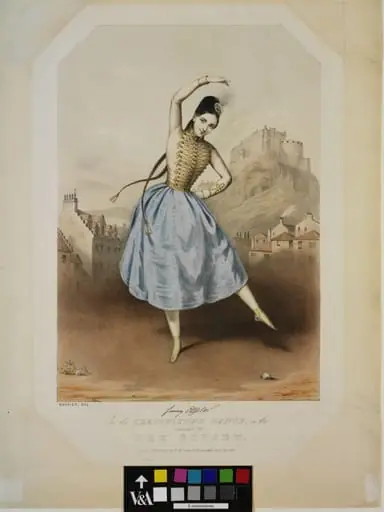
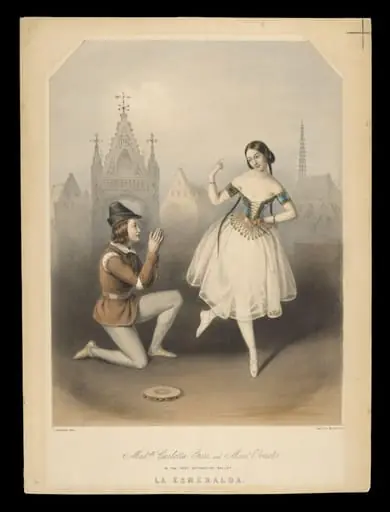
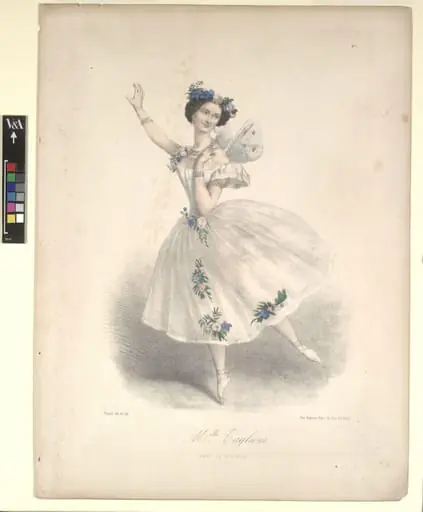 Melle Taglioni
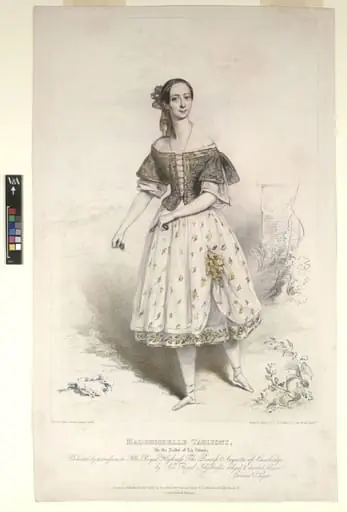 MADEMOISELLE TAGLIONI,
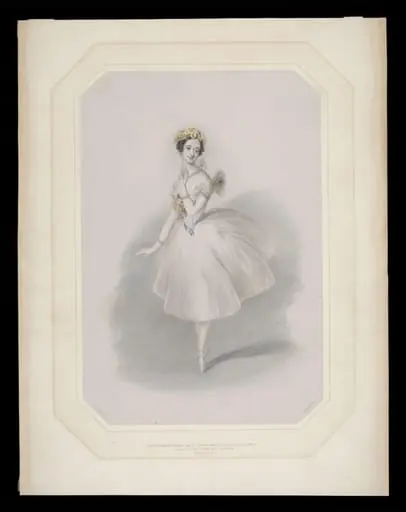 Print Collection
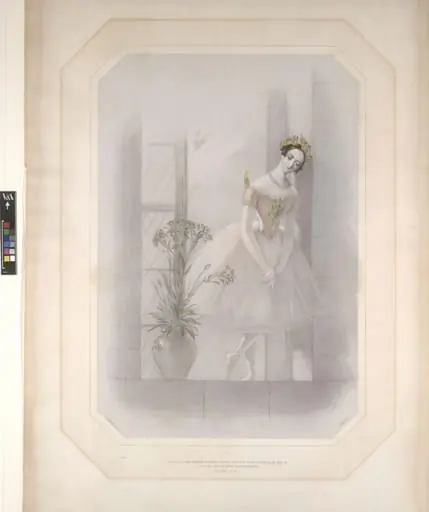 Marie Taglioni in La Sylphide (Souvenir d'adieu, No. 2)
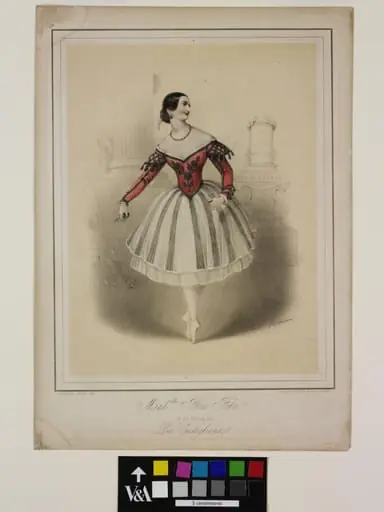 Madlle Flora Fabri,(sic)
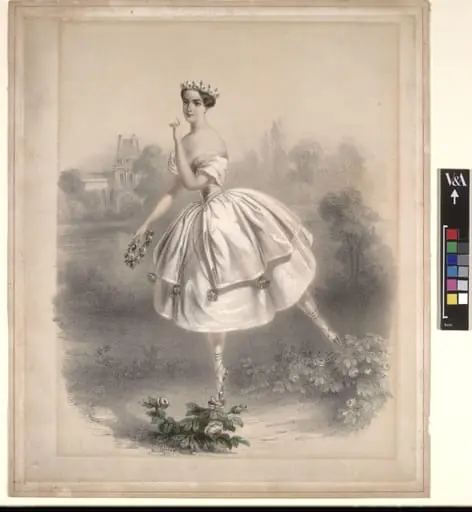 Marie Taglioni in L'Ombre
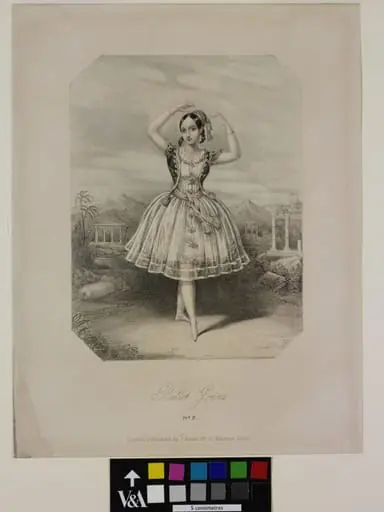 Ballet Graces
 Print Collection
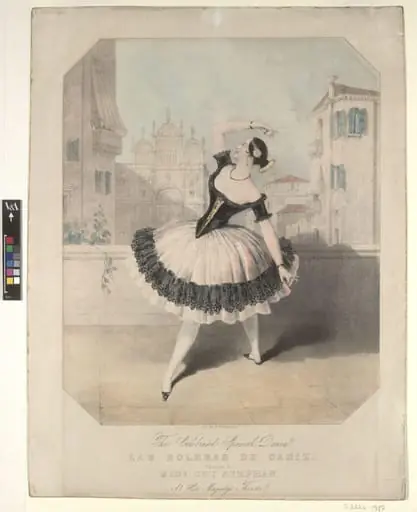 The Celebrated Spanish Dance Las Boleras de Cadiz danced by Marie Guy Stephan
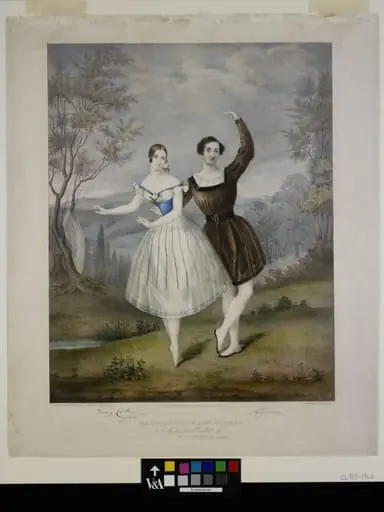 Madle Cerito & Sigr Guerra. In the favorite Ballet of, "Le lac des Fées." By Guerra. Fanny Cerito. A Guerra