Artwork
Juno
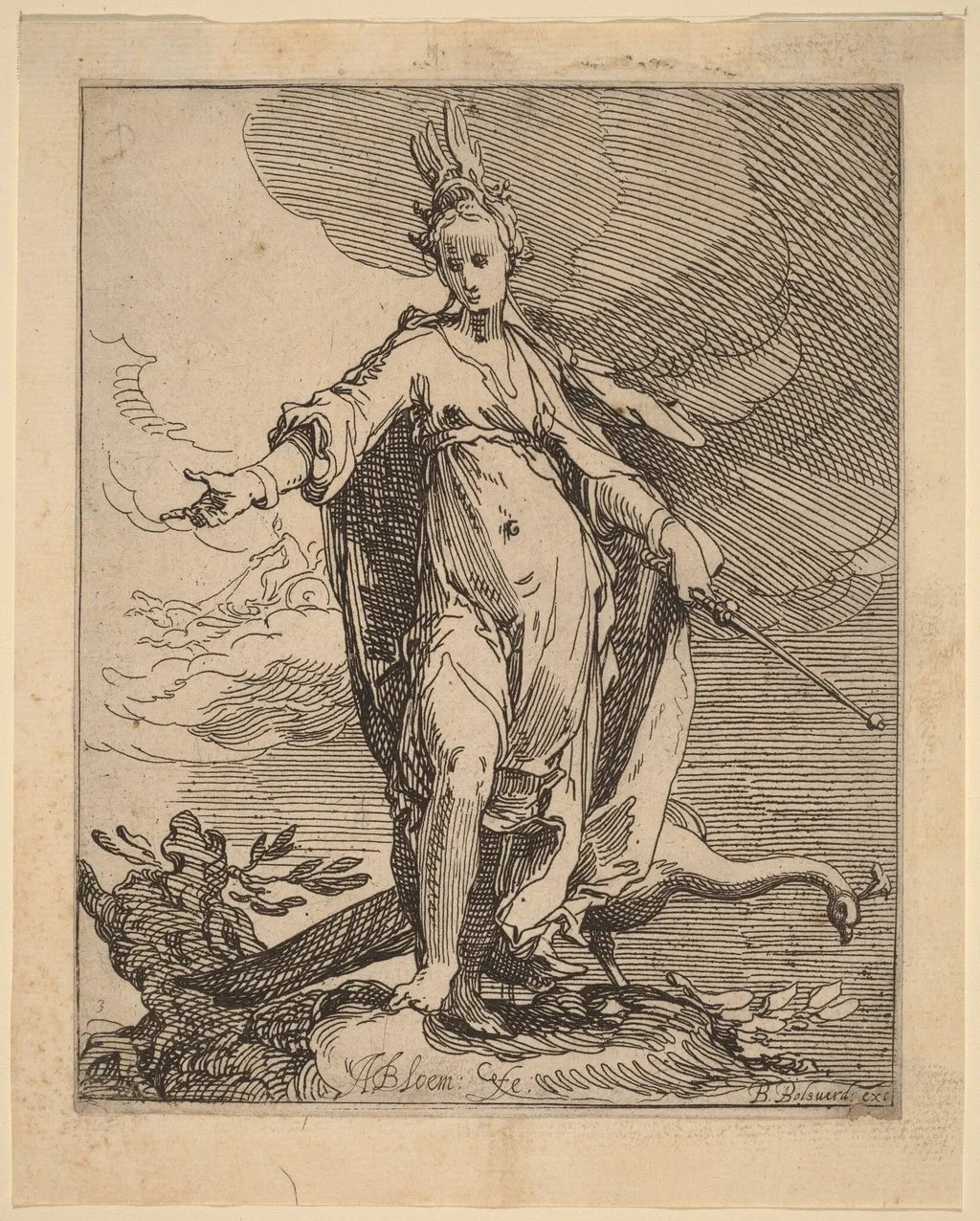
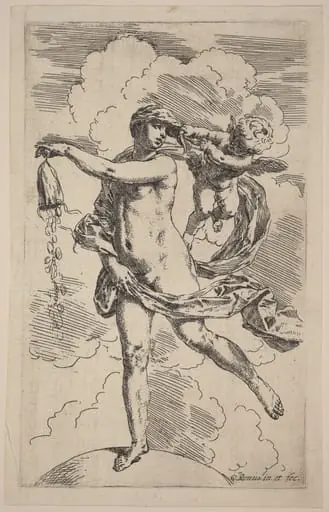
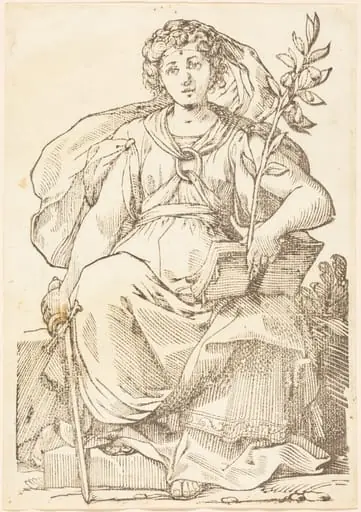
Juno is an ink print by the Baroque artist Abraham Bloemaert. It dates from 1610 and is held in the collection of the National Gallery of Art.
About this work
Overview
Abraham Bloemaert's 'Juno' is an etching on laid paper, created around 1610. The work showcases Bloemaert's skill as a Dutch painter and printmaker.
Subject & Meaning
The print depicts Juno, a figure from Roman mythology, in a classical setting. Juno is shown with detailed folds in her clothing and a calm facial expression, embodying a serene representation of the goddess.
Technique & Style
Bloemaert employed etching, a technique involving scratching a design into a metal plate, to create 'Juno'. His work reflects a transition from the 'Haarlem Mannerists' style to the emerging Baroque style of the early 17th century.
History & Provenance
Bloemaert was a significant figure in Dutch art, not only as a printmaker but also as a teacher, notably influencing the Utrecht Caravaggisti. His work primarily focused on history subjects and landscapes.
Artist & collection

Artist
Abraham Bloemaert (25 December 1566 – 27 January 1651) was a Dutch painter and printmaker who used etching and engraving.

![Tobias and the Angel [verso], by Hermann Weyer](https://artifactworldgallery.com/img/hermann-weyer--tobias-and-the-angel-verso--e00682edf3b74b17-w320.webp)