Artwork
Tragedy
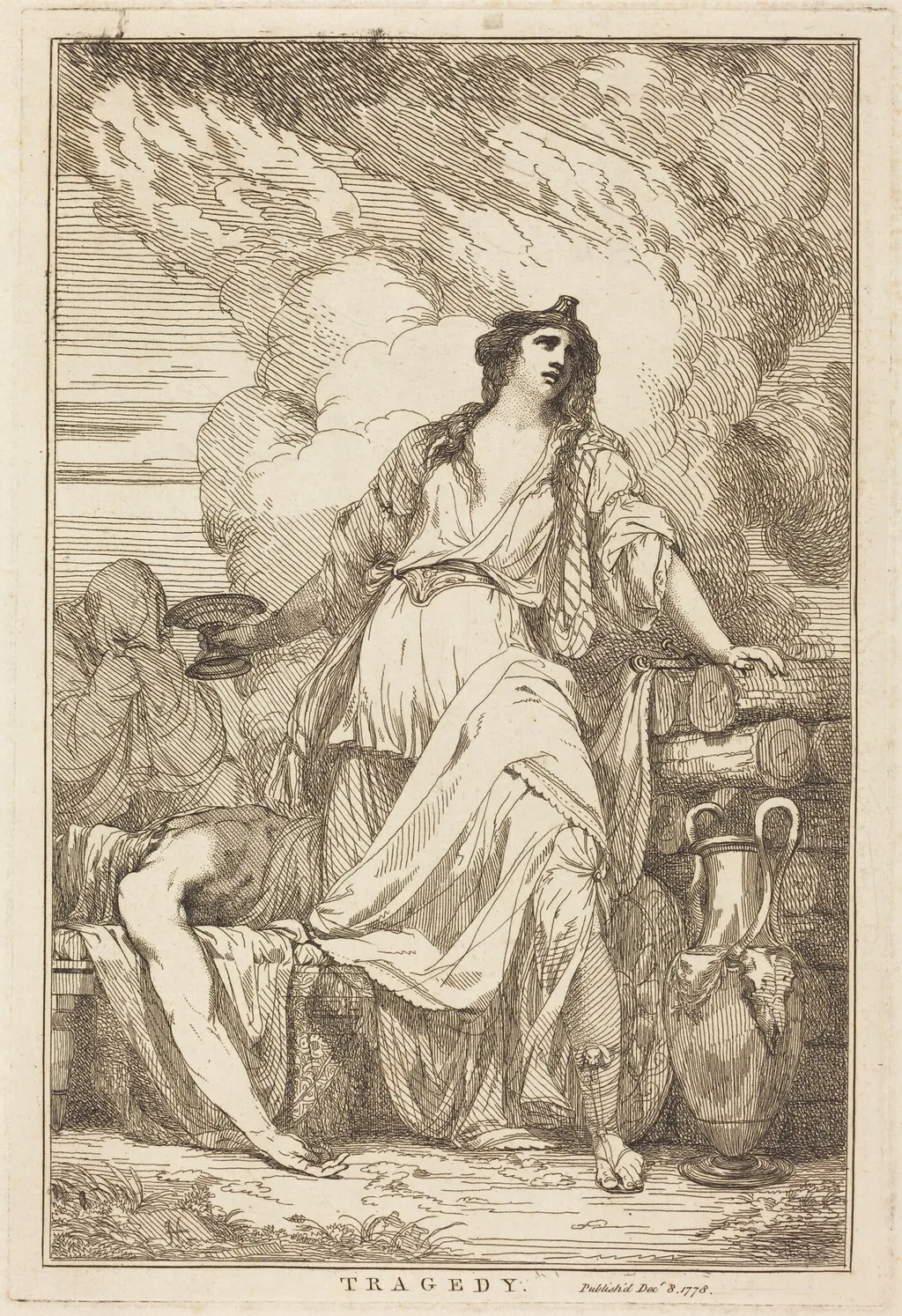
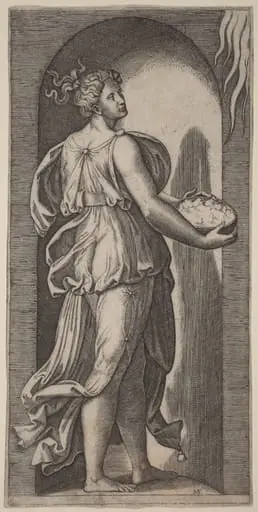
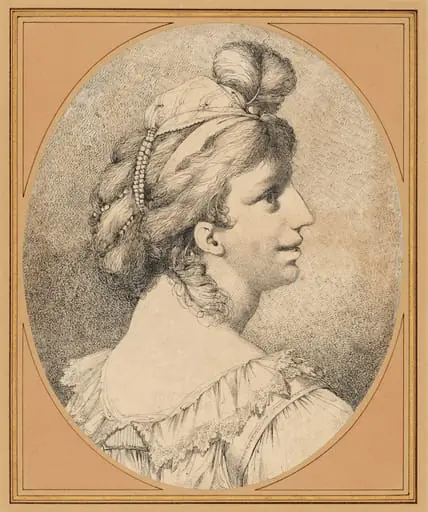
Tragedy is an ink print by the Romanticist artist John Hamilton Mortimer. It dates from 1778 and is held in the collection of the National Gallery of Art.
About this work
Overview
John Hamilton Mortimer produced *Tragedy* in 1778 as an etching, one of several works exploring heightened emotional and historical themes.
John Hamilton Mortimer produced *Tragedy* in 1778 as an etching, one of several works exploring heightened emotional and historical themes. Though primarily recognized for his paintings, Mortimer also worked extensively in printmaking, often drawing inspiration from Italianate landscapes and the turbulent compositions of Salvator Rosa. This particular work exemplifies his interest in allegorical subjects, rendered with a restrained yet evocative technique.
Subject & Meaning
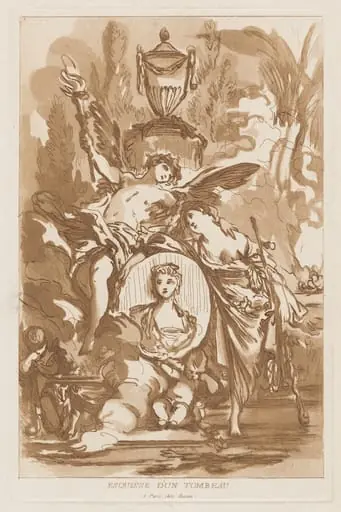
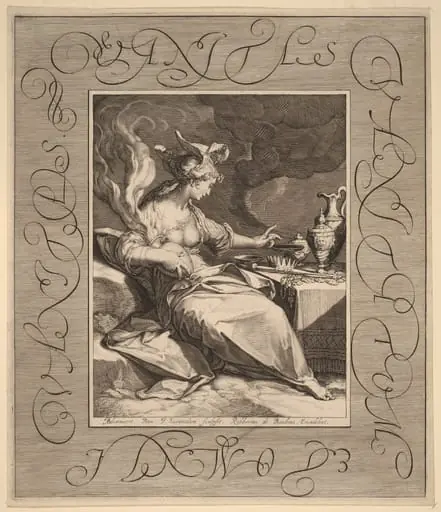
The etching presents an allegorical figure embodying tragedy, depicted as a woman in classical drapery. Her somber expression and downcast posture, along with the bowl she holds, suggest themes of sorrow or sacrifice. The seated, partially obscured figure behind her reinforces the work’s melancholic tone, while the architectural setting and draped vase contribute to a sense of timeless, theatrical gravity.
Technique & Style
Mortimer’s etching employs fine, controlled lines to define form and texture, characteristic of his printmaking practice. The composition relies on stark contrasts—between the woman’s flowing garments and the rigid stone wall—to heighten the dramatic effect. Muted tonalities and strategic placement of figures create depth while maintaining an atmosphere of quiet intensity, aligning with the aesthetic of late 18th-century British romanticism.
History & Provenance
Created in 1778, *Tragedy* emerged during a period when Mortimer was deeply engaged with historical and allegorical themes. His tenure as President of the Society of Artists in 1774 marked a peak in his professional recognition, though his career was cut short by his death in 1779. The etching’s early history remains tied to his broader body of work, which circulated among collectors of British prints in the late 18th and early 19th centuries.
Context
The 1770s saw Mortimer exploring themes of human emotion and classical antiquity, reflecting broader artistic trends in Britain. His work often drew from Salvator Rosa’s dramatic landscapes and the emerging romantic sensibility, which favored expressive, morally charged subjects. *Tragedy* fits within this framework, offering a visual meditation on suffering and loss through allegorical representation rather than narrative specificity.
Legacy
Though less frequently discussed than his paintings, Mortimer’s etchings contributed to the development of British printmaking in the late 18th century. *Tragedy* exemplifies his ability to merge allegory with emotional resonance, a quality that influenced later artists working in similar modes. The work remains a study in the period’s fascination with classical themes and the expressive potential of print as a medium.
Artist & collection
Artist
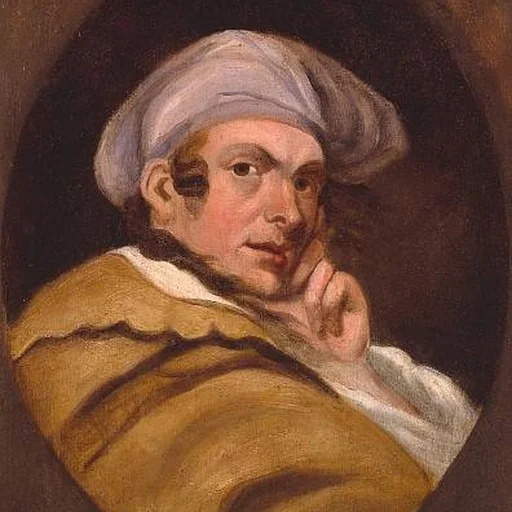
John Hamilton Mortimer (17 September 1740 – 4 February 1779) was a British figure and landscape painter and printmaker, known for romantic paintings set in Italy, works depicting conversations, and works drawn in the…

![Mucius Scaevola [recto], by John Hamilton Mortimer](https://artifactworldgallery.com/img/john-hamilton-mortimer--mucius-scaevola-recto--0de678fa443f7962-w320.webp)