Artwork
Callistemma brachiatum
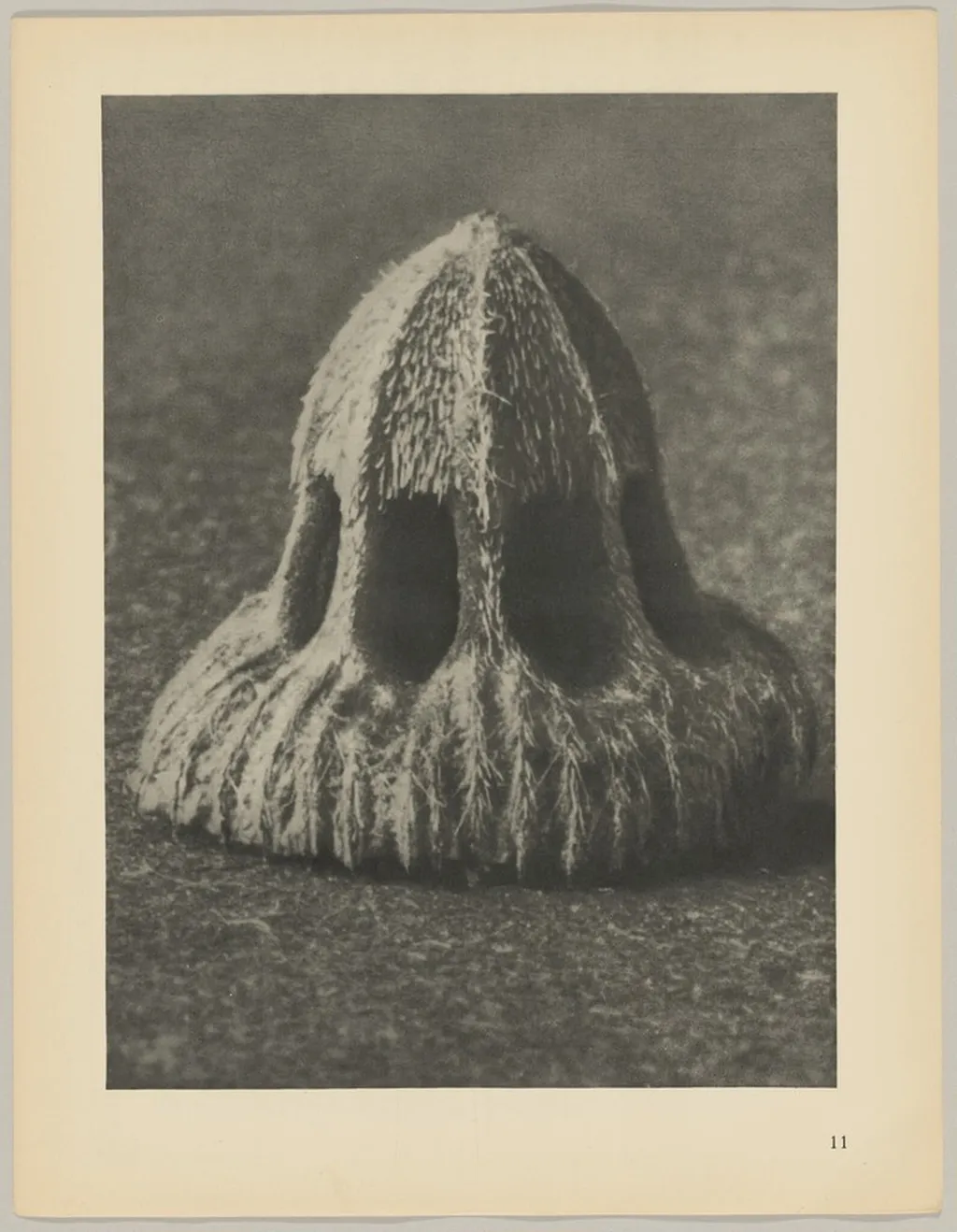
Callistemma brachiatum is a print by Karl Blossfeldt. It dates from 1928 and is held in the collection of the National Gallery of Art.
About this work
Overview
Callistemma brachiatum is a 1928 photogravure print by Karl Blossfeldt, a German artist known for capturing the structural details of plants through photography.
Subject & Meaning
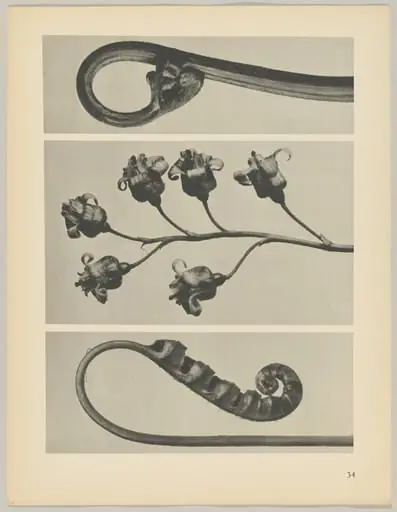
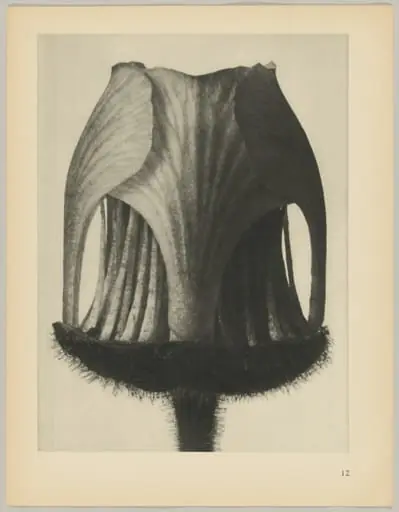
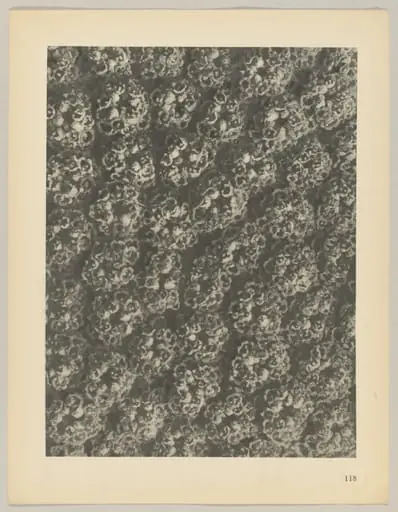
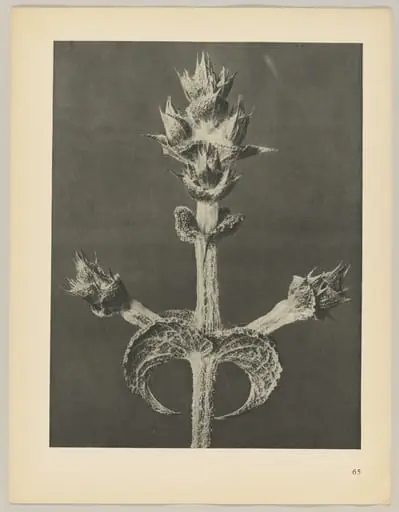
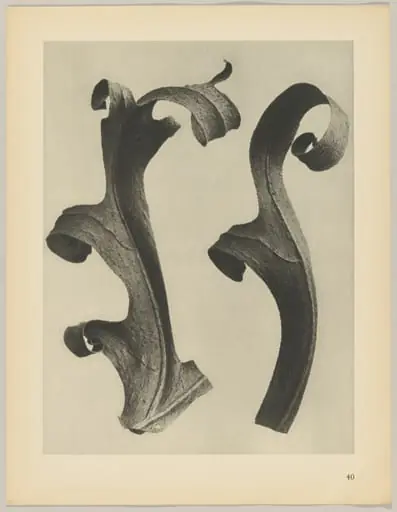
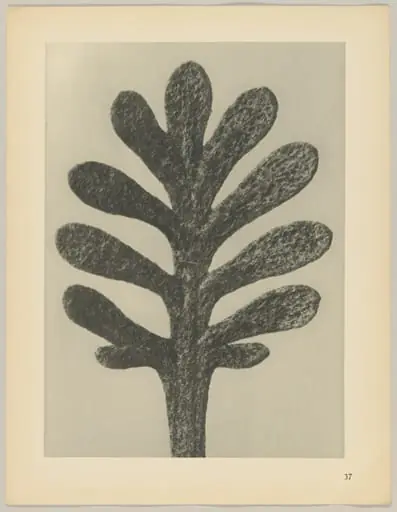
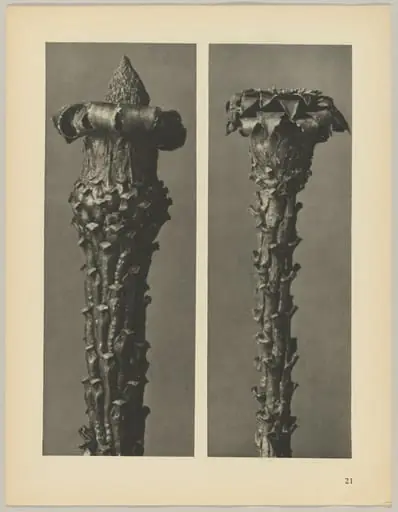
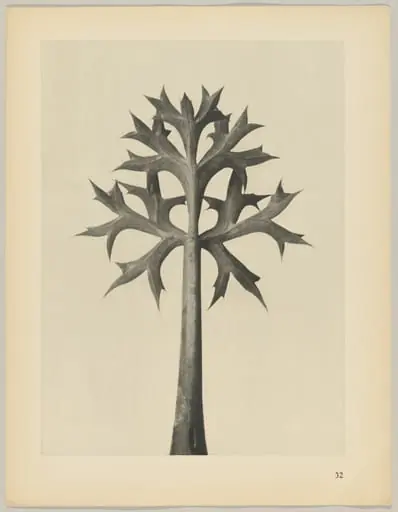
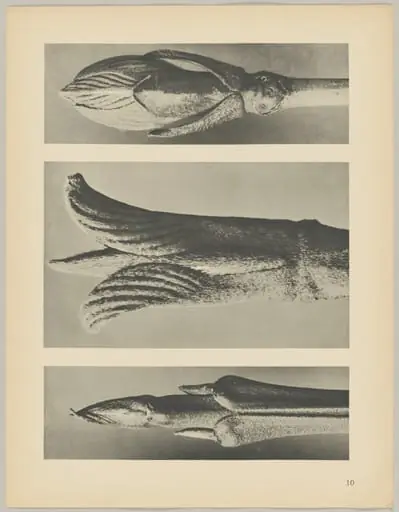
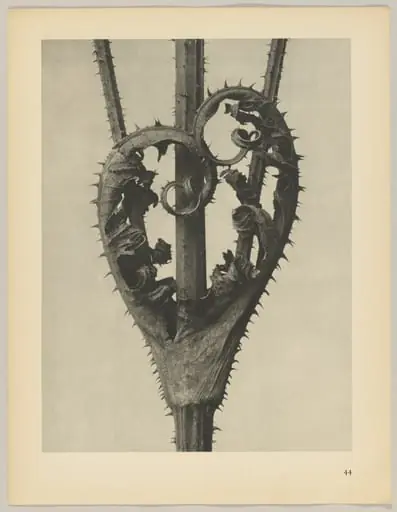
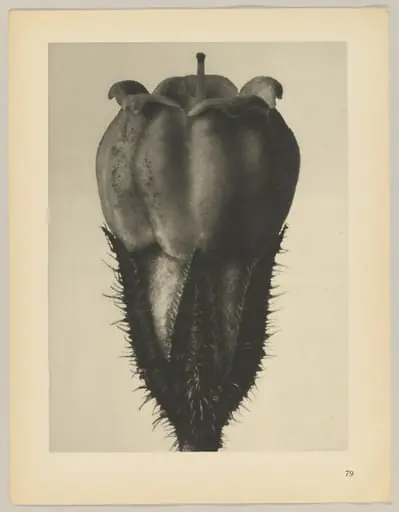
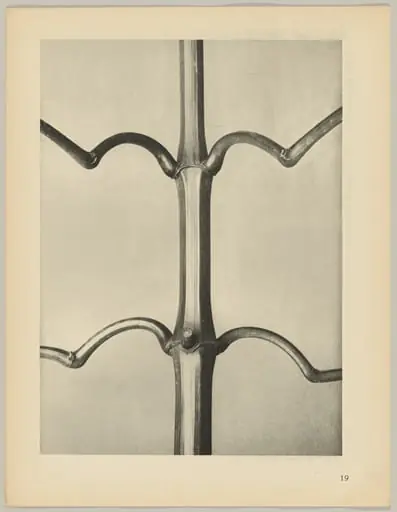
The print depicts a close-up of a marine plant, highlighting its unique, spiky morphology, with a dark, fuzzy upper portion and long, slender strands at the base. Blossfeldt aimed to reveal the aesthetic and structural beauty inherent in natural forms.
Technique & Style
Blossfeldt employed photogravure, a photographic process allowing for detailed, high-contrast prints, to meticulously document the plant's texture and form, characteristic of his precise and intimate plant studies.
History & Provenance
Created in 1928, Callistemma brachiatum was later included in Blossfeldt's seminal publication Urformen der Kunst (1929), a collection showcasing his lifelong exploration of natural beauty and growth patterns.
Context
Although described as resembling a 'mushroom and feather duster,' the subject is actually a type of marine plant. Blossfeldt's work often featured unusual plant specimens, emphasizing their inherent beauty.
Legacy
Callistemma brachiatum contributes to Blossfeldt's influential body of work, which has inspired admiration for the aesthetic value of botanical subjects and the potential of photography as a tool for detailed natural documentation.
Artist & collection
Artist
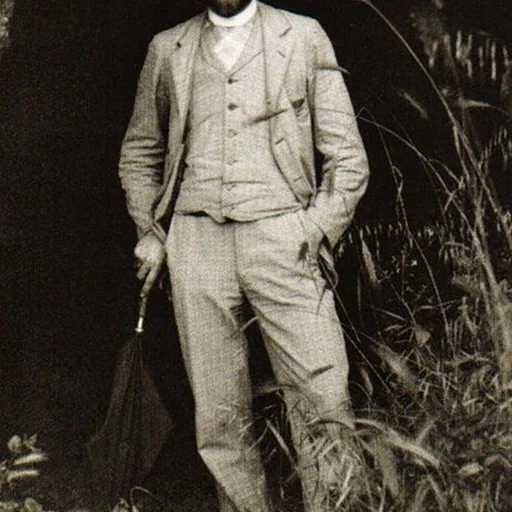
Karl Blossfeldt (13 June 1865 – 9 December 1932) was a German photographer and sculptor.