Artwork
Symphytum officinale
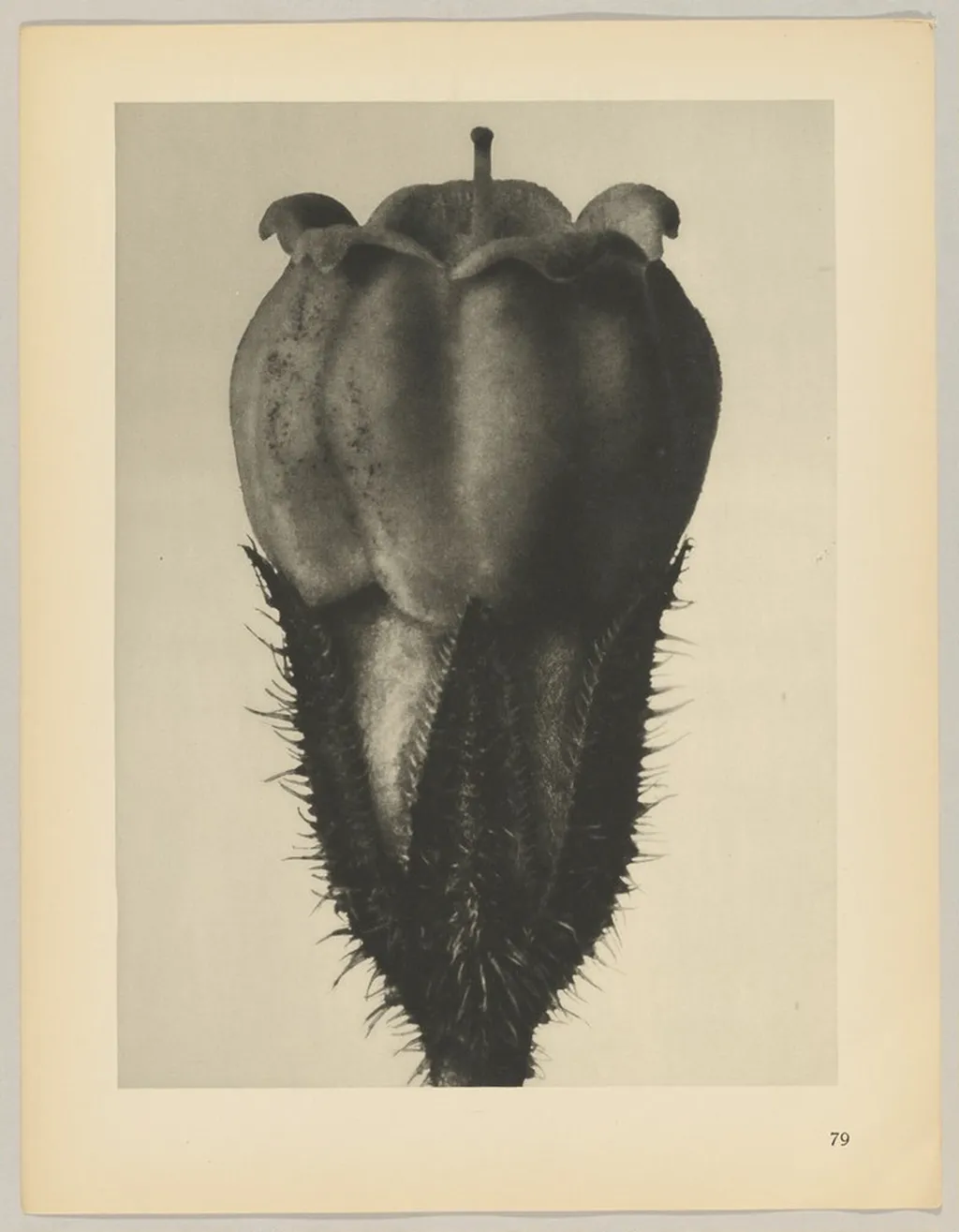
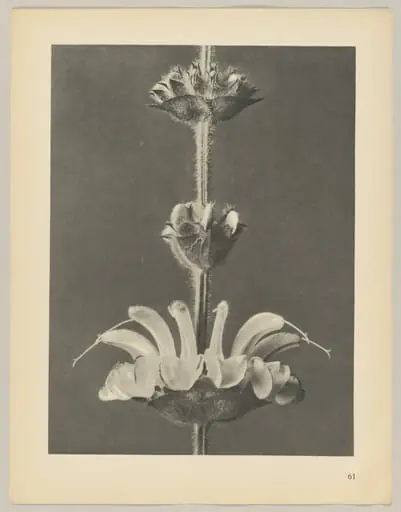
Symphytum officinale is a print by Karl Blossfeldt. It dates from 1928 and is held in the collection of the National Gallery of Art.
About this work
Overview
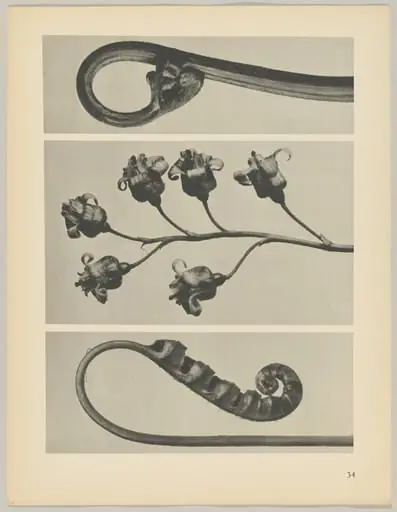
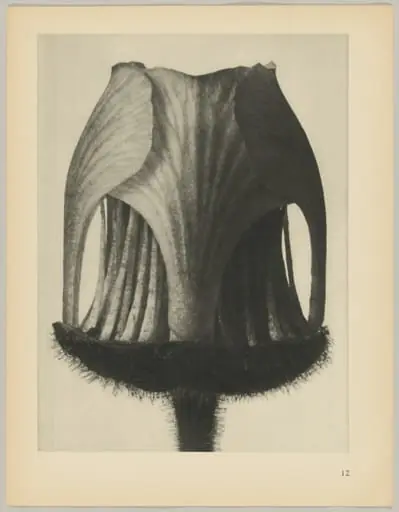
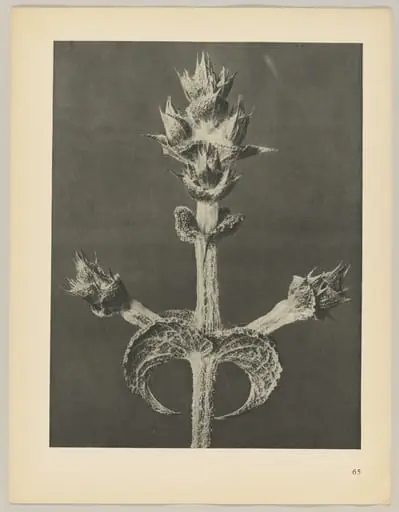
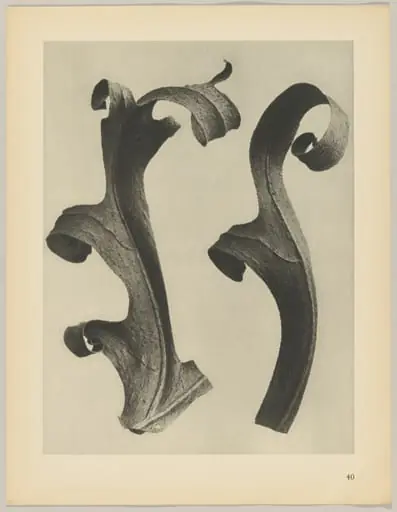
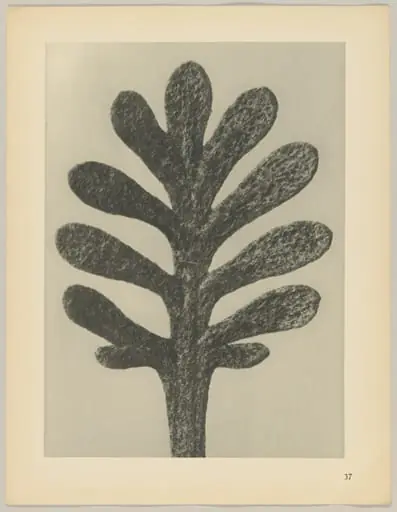
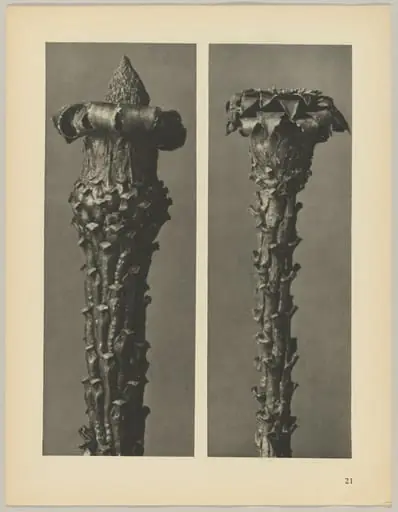
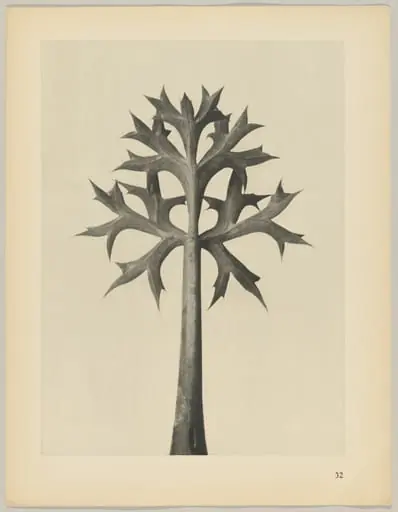
Created in 1928, *Symphytum officinale* is a photogravure print by German photographer and sculptor Karl Blossfeldt. The image presents a top‑down view of a comfrey flower, rendered in stark black and white, with rounded petals and delicate, hair‑like stamens extending from the centre.
Subject & Meaning
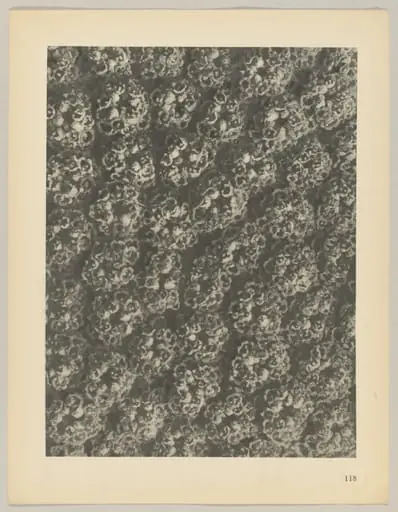
The work isolates the botanical form of *Symphytum officinale*, emphasizing the precise geometry and texture of the flower’s structure. By magnifying minute details, Blossfeldt invites viewers to consider the inherent order and complexity of natural growth patterns.
Technique & Style
Blossfeldt employed the photogravure process, a method that transfers a photographic image onto a copper plate for high‑quality intaglio printing. His characteristic close‑up approach captures fine surface textures, producing a crisp, graphic rendering that highlights the plant’s architectural qualities.
History & Provenance
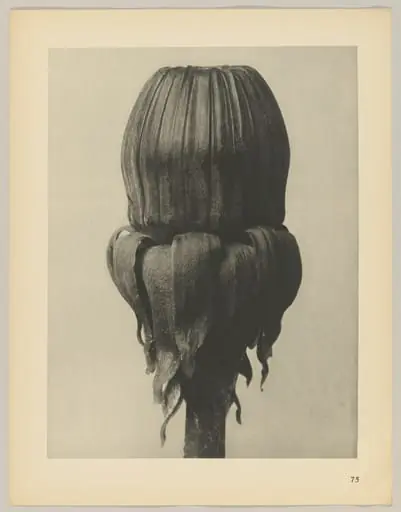
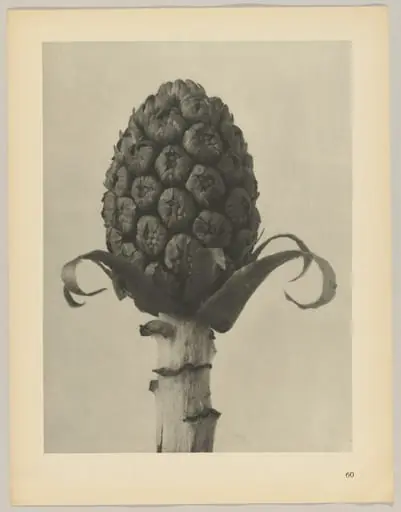
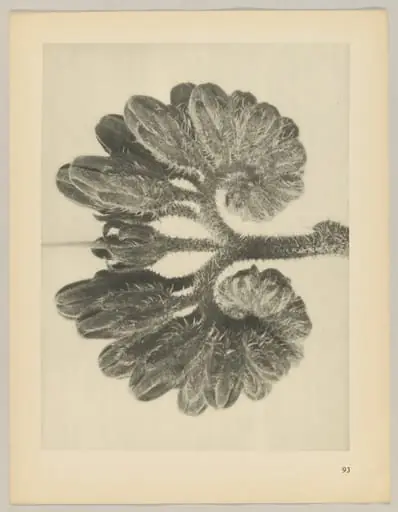
The print was part of a series later assembled in Blossfeldt’s 1929 book *Urformen der Kunst* (The Original Forms of Art). That publication presented his botanical studies as visual evidence of the formal affinities between natural organisms and artistic design.
Context
During the late 1920s, photographers increasingly explored macro imaging to document scientific subjects. Blossfeldt’s work aligns with contemporary interests in the intersection of art, design, and natural science, reflecting the Bauhaus emphasis on functional beauty.
Artist & collection
Artist
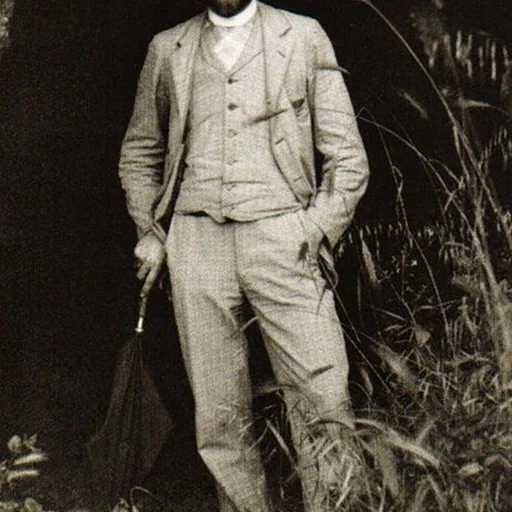
Karl Blossfeldt (13 June 1865 – 9 December 1932) was a German photographer and sculptor.