Artwork
Forsythia suspensa
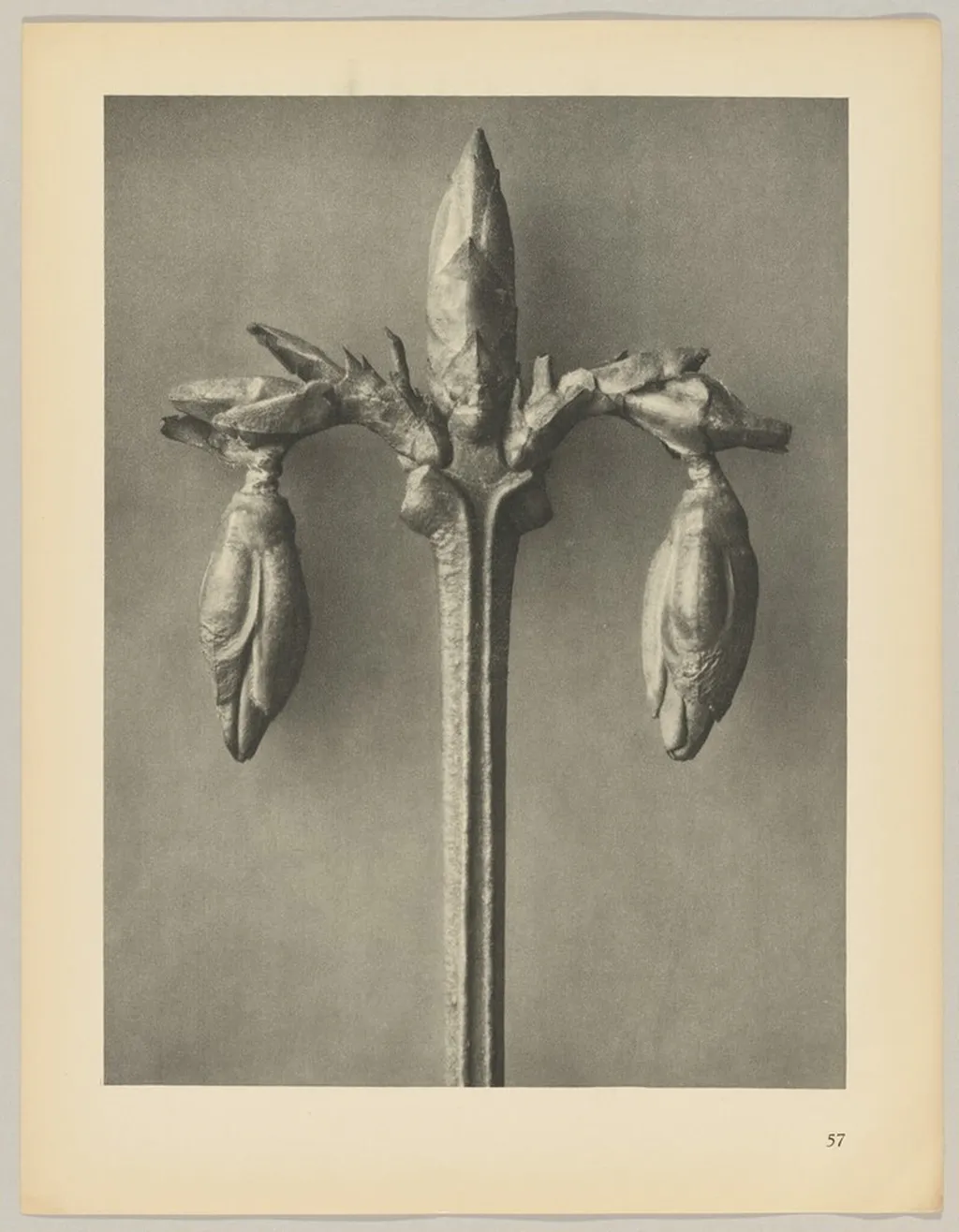
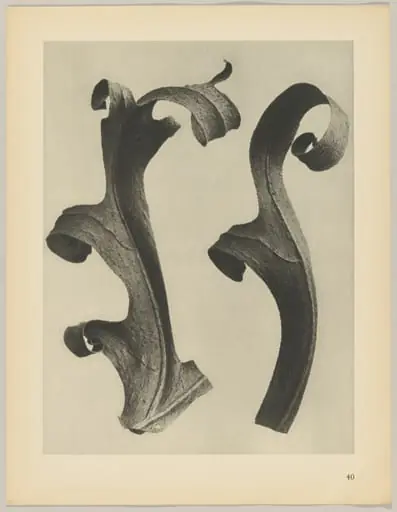
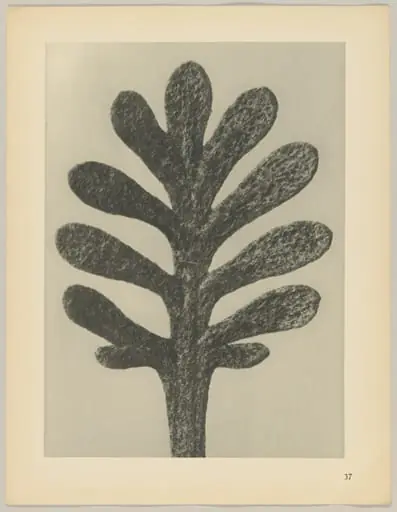
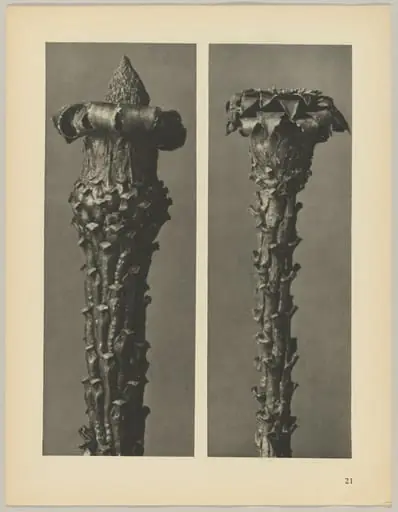
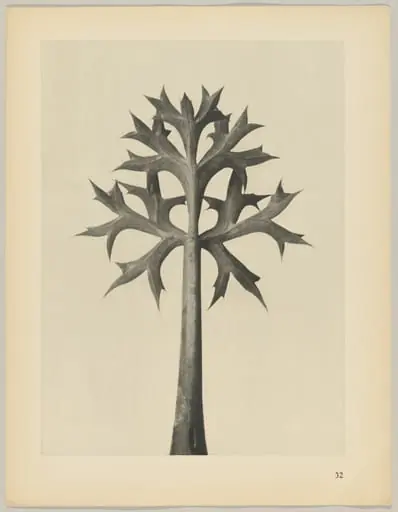
Forsythia suspensa is a print by Karl Blossfeldt. It dates from 1928 and is held in the collection of the National Gallery of Art.
About this work
Overview
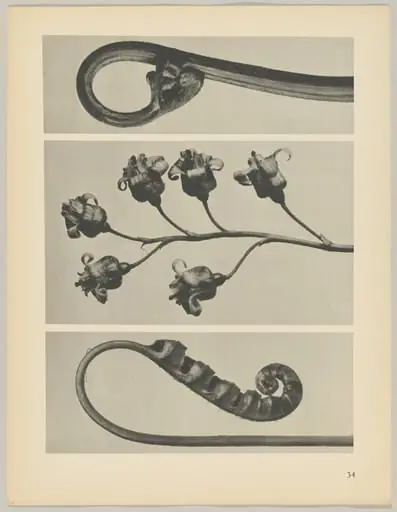
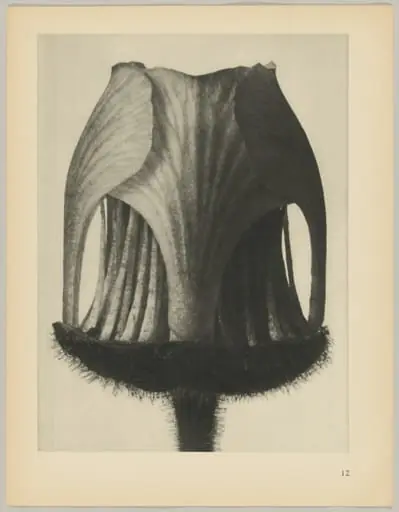
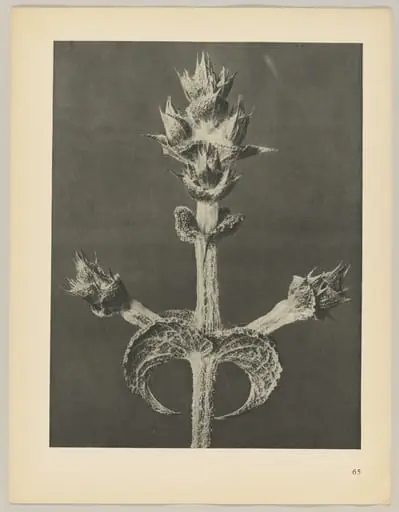
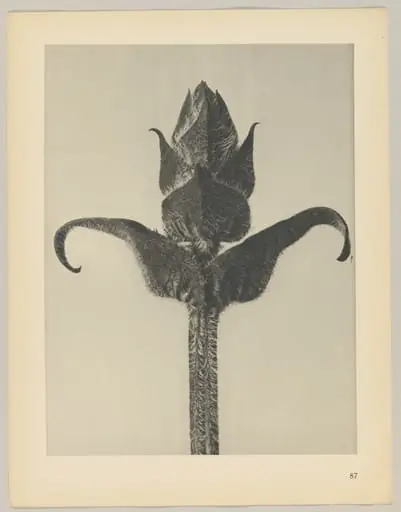
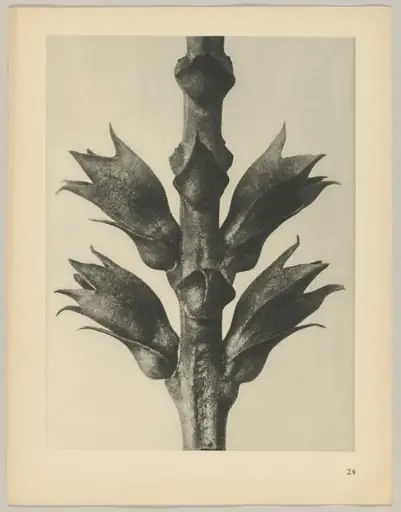
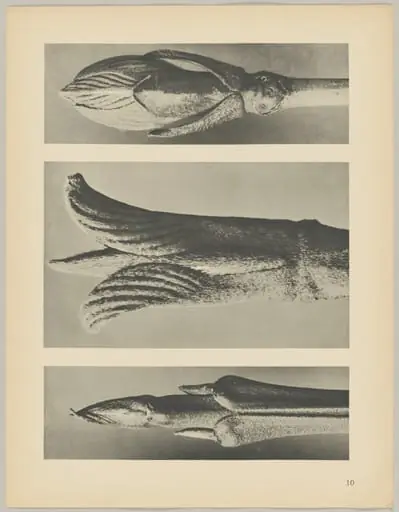
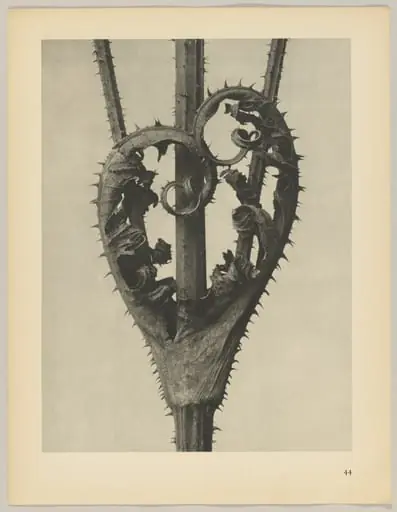
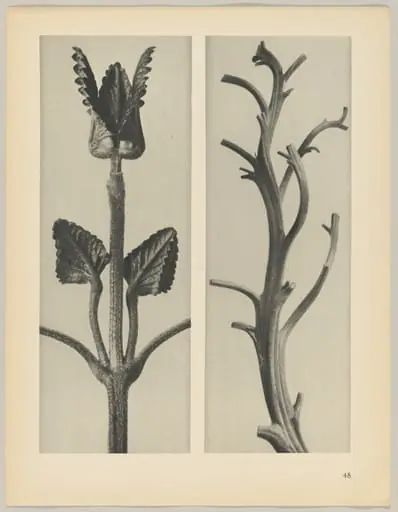
Forsythia suspensa is a 1928 photogravure print by Karl Blossfeldt, a German photographer and sculptor. The work showcases a single forsythia flower stem in meticulous detail, highlighting Blossfeldt's characteristic close-up approach to botanical subjects.
Subject & Meaning
The print focuses on the structural nuances of a forsythia stem, featuring three buds in varying stages of bloom (unopened, half-open, fully bloomed) alongside sharp, pointed leaves. This composition reflects Blossfeldt's enduring interest in the natural world's forms and growth patterns.
Technique & Style
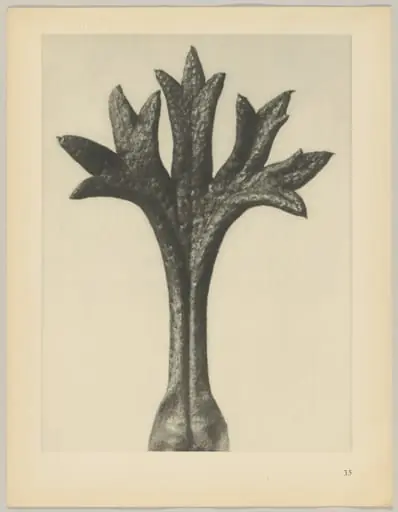
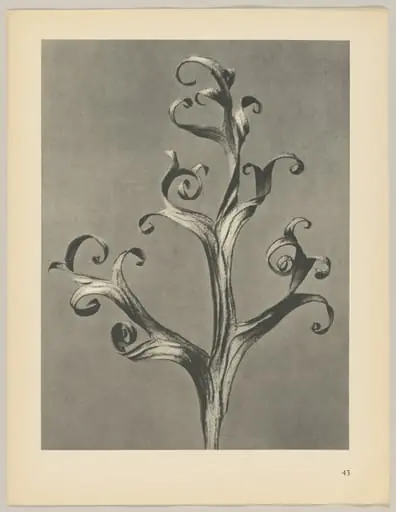
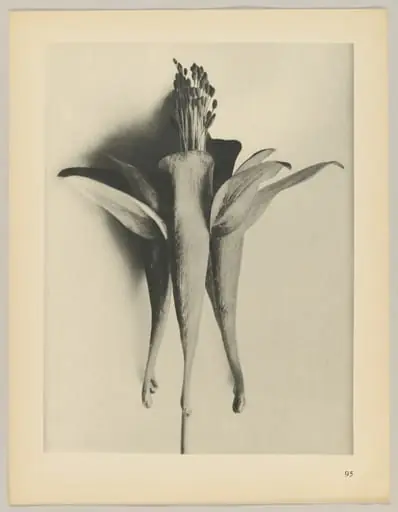
Captured through photography and reproduced as a photogravure, the image boasts sharp, high-contrast detail, emphasizing the plant's textures against a plain, dark background. The result blends scientific precision with artistic intent, resembling detailed scientific illustrations.
History & Provenance
Created in 1928, Forsythia suspensa was later included in Blossfeldt's seminal publication Urformen der Kunst (1929), a collection showcasing his photographic explorations of plant morphology.
Context
Blossfeldt's work, including Forsythia suspensa, sits at the intersection of early 20th-century photography, botanical illustration, and the broader artistic fascination with natural forms during this period.
Legacy
Forsythia suspensa, through its inclusion in Urformen der Kunst, has contributed to Blossfeldt's legacy as a pioneer in photographic studies of plants, influencing both artistic and scientific perceptions of natural subjects.
Artist & collection
Artist
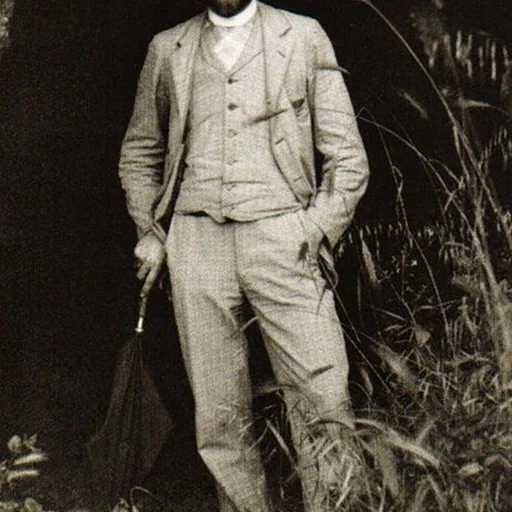
Karl Blossfeldt (13 June 1865 – 9 December 1932) was a German photographer and sculptor.