Artwork
Koln, Maria-Capitol
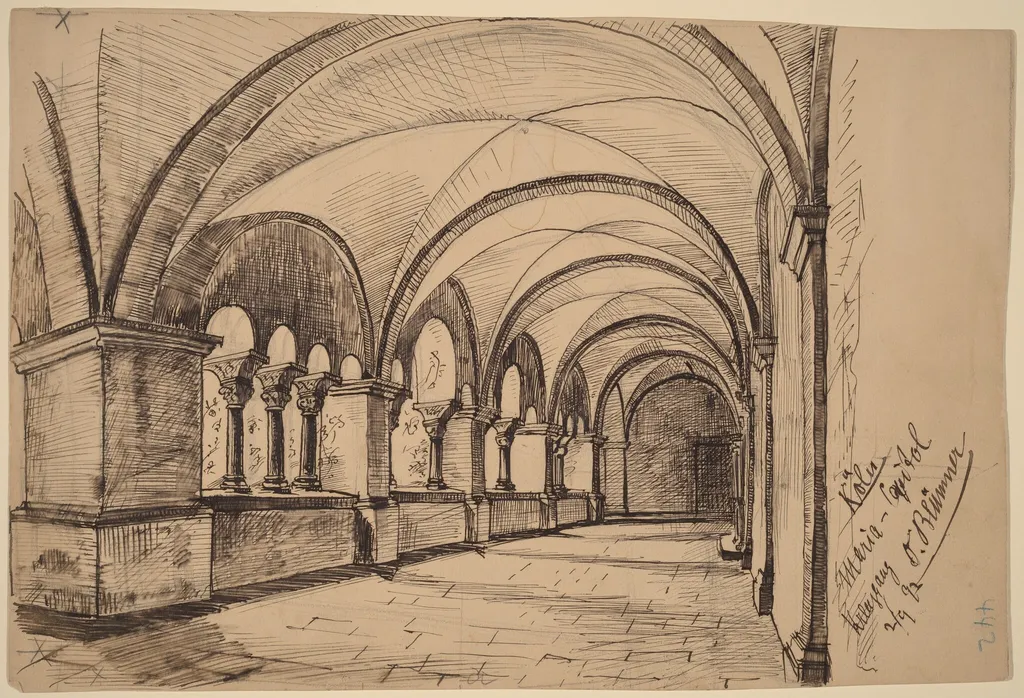
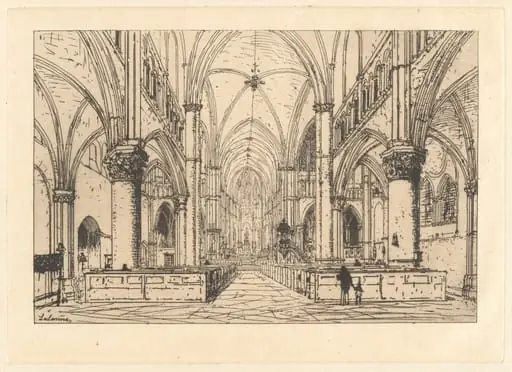
Koln, Maria-Capitol is an ink drawing by the Impressionist artist Oscar F. Bluemner. It dates from 1892 and is held in the collection of the National Gallery of Art. Oscar F.
About this work
You can find more works like this at the National Gallery of Art, Washington, which holds this piece, and learn about the artist Bluemner, Oscar F.
The painting is titled Koln, Maria-Capitol by Oscar F. Bluemner.
It's from 1892 and combines pen and black ink over graphite.
The artist created this work during a specific time period, which might have influenced his style, and he was active around the turn of the century, but I don't know much about his life.
You can find more works like this at the National Gallery of Art, Washington, which holds this piece, and learn about the artist Bluemner, Oscar F.
Overview
Oscar F. Bluemner created this drawing in 1892, depicting the Cologne Cathedral, known in German as Maria-Capitol. Executed in pen and black ink over graphite underpencil, the work reflects his early engagement with European architecture during a formative period before his move to the United States. It is held in the collection of the National Gallery of Art in Washington, D.C.
Subject & Meaning
The subject is the imposing silhouette of Cologne Cathedral, a Gothic landmark that symbolized both religious devotion and civic identity in late 19th-century Germany. Bluemner’s focus on its verticality and intricate stonework suggests an interest in structural grandeur rather than narrative or human activity, conveying a sense of quiet monumentality.
Technique & Style
Bluemner employed precise pen lines over a light graphite framework to define the cathedral’s arched windows, flying buttresses, and spires. The contrast between the bold ink and delicate pencil creates depth without color, emphasizing form and rhythm. The restrained palette and linear clarity reflect a draftsperson’s discipline, typical of architectural studies of the era.
History & Provenance
Created during Bluemner’s time in Germany before emigrating to the U.S. in 1892, the drawing likely served as a personal record of his observations. It entered the National Gallery of Art’s collection through later acquisitions, preserving a rare early work from an artist better known for his American modernist paintings.
Context
In 1892, Germany was undergoing rapid industrialization, yet Gothic architecture remained a potent cultural symbol. Bluemner, trained as an architect, was part of a generation of artists documenting historic structures amid modern change. This drawing aligns with a broader European tradition of topographical sketching as both artistic and documentary practice.
Legacy
Though Bluemner later shifted toward abstracted landscapes in America, this early work reveals his foundational attention to structure and spatial harmony. As one of his few surviving European drawings, it offers insight into the artistic development of an immigrant artist whose later work would influence American modernism.
Artist & collection


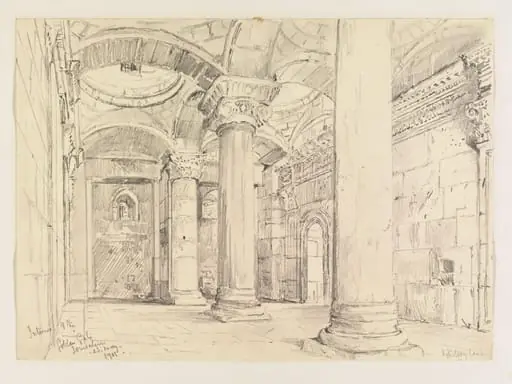 Interior of the Golden Gate Jerusalem
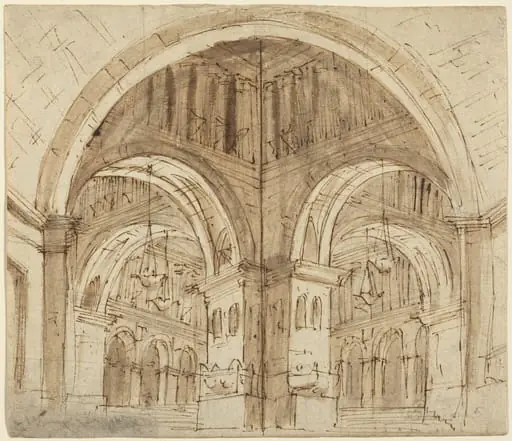 Design for a Vaulted Hall
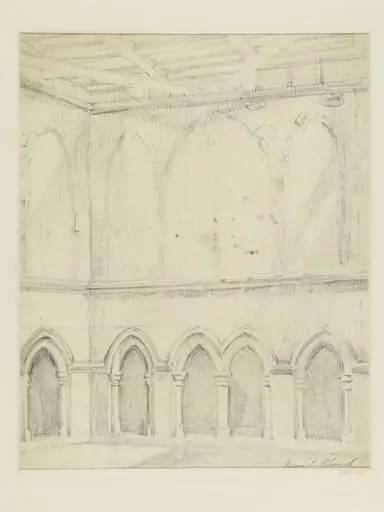 Temple Church
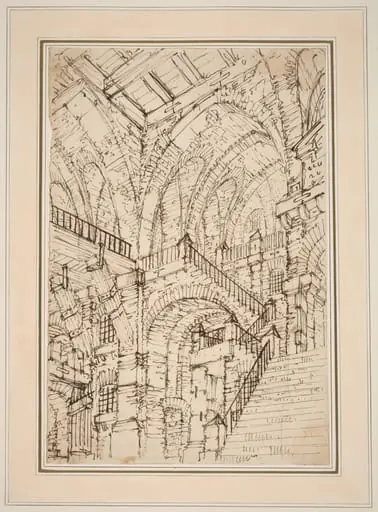 A Prison Interior with a Monumental Staircase
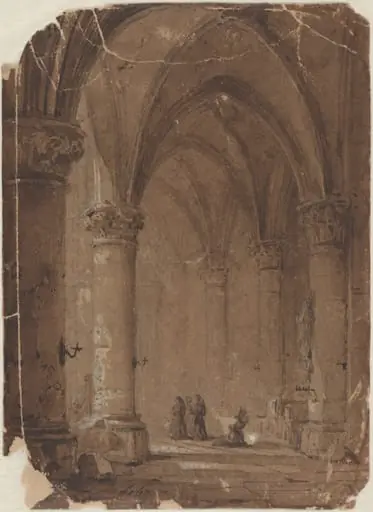 Monks in a Cathedral
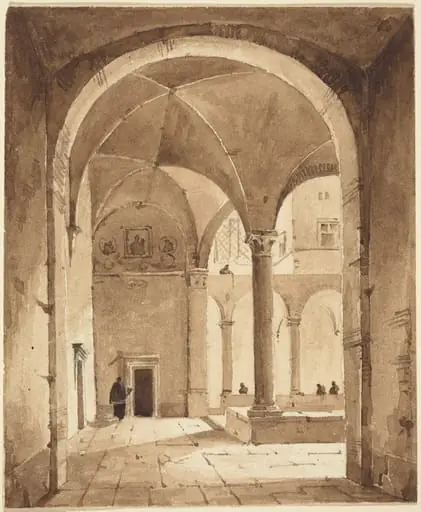 A Cloister
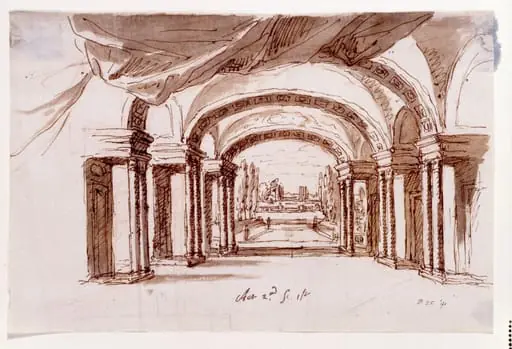 Drawing, Design for a stage set for Arsinoe, Queen of Cyprus at the Theatre Royal, London for Act II, scene 1, a great hall looking into a garden
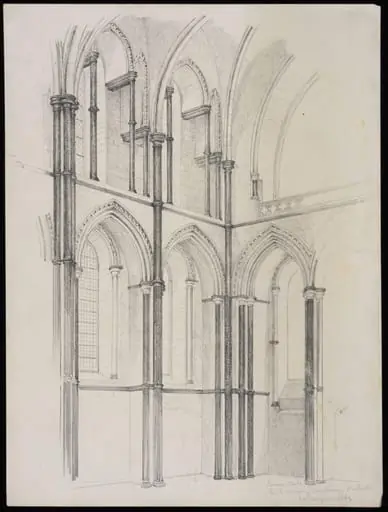 Interior of N.E. corner of the Sanctuary, Rochester Cathedral
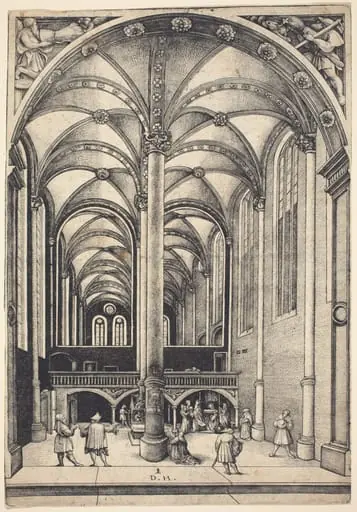 Interior of the Church of Saint Maria Magdalena with the Parable of the Offering of the Widow
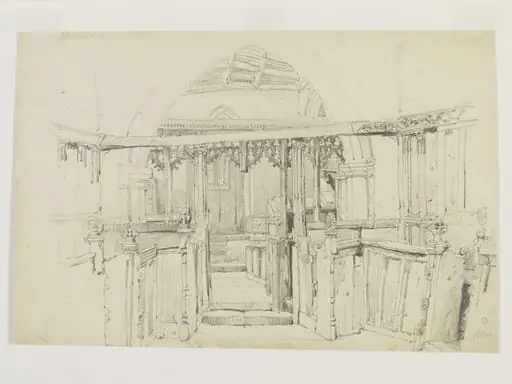 Blore-Ray Church in Staffordshire
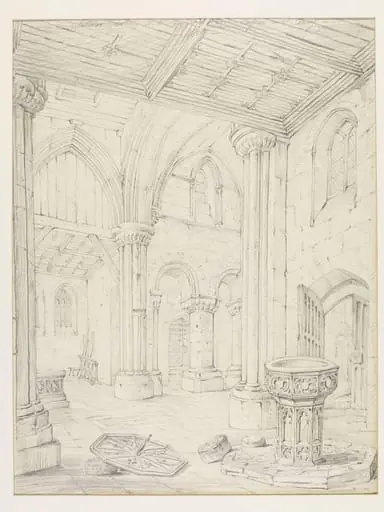 Priory church at Boxgrove
 Church Interior