Artwork
Drawing, Design for a stage set for Arsinoe, Queen of Cyprus at the Theatre Royal, London for Act II, scene 1, a great hall looking into a garden
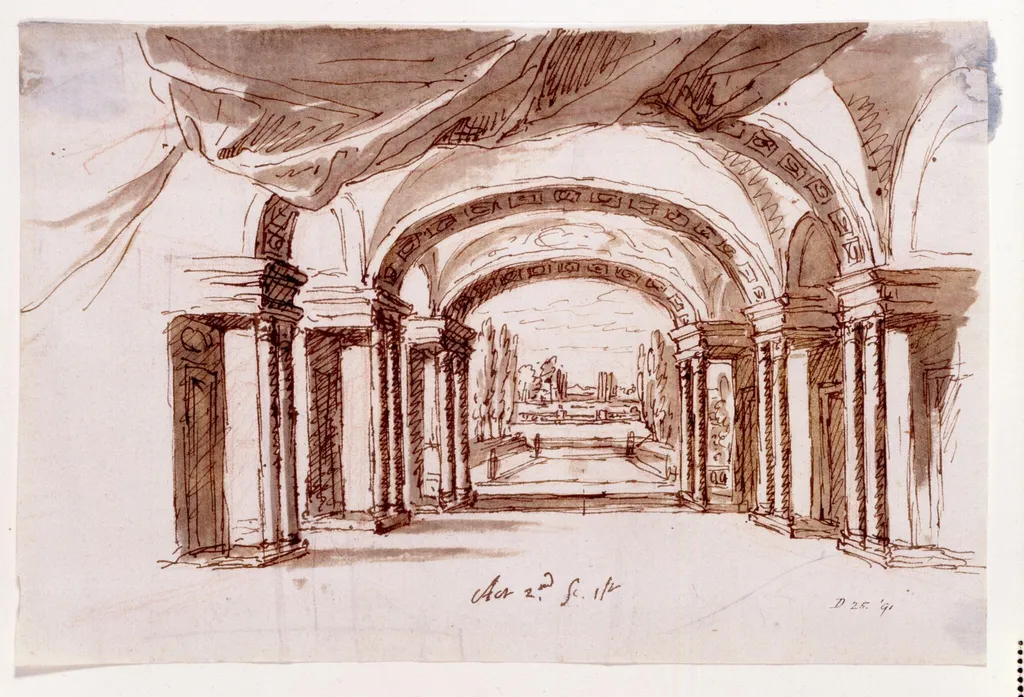
Drawing, Design for a stage set for Arsinoe, Queen of Cyprus at the Theatre Royal, London for Act II, scene 1, a great hall looking into a garden is a drawing by the Baroque artist James Thornhill. It dates from 1705 and is held in the collection of the Victoria and Albert Museum.
About this work
Overview
Rendered in red chalk underdrawing with pen and ink, and accented with tonal washes, it reflects the practical artistry of early 18th-century stage design.
This ink and wash drawing serves as a theatrical design for Act II, Scene I of the 1705 production of Arsinoe, Queen of Cyprus at London’s Theatre Royal. Executed by James Thornhill, it illustrates a grand interior space opening onto a garden, intended to guide the construction of the stage backdrop. Rendered in red chalk underdrawing with pen and ink, and accented with tonal washes, it reflects the practical artistry of early 18th-century stage design.
Subject & Meaning
The scene depicts a monumental hall with architectural arches leading to an open garden, suggesting a transition from the confined world of courtly intrigue to the natural realm beyond. This spatial contrast may symbolize shifting fortunes or hidden truths within the play’s narrative, aligning with the dramatic conventions of the time. The design prioritizes visual depth and architectural grandeur to support the opera’s emotional tone.
Technique & Style
Thornhill employed red chalk for initial compositional sketches, then refined the forms with precise pen lines and layered washes to define shadow and volume. The technique balances spontaneity with control, allowing for both structural clarity and atmospheric depth. The use of washes to model light and space reflects Baroque sensibilities, emphasizing dramatic contrast and spatial illusion without excessive ornamentation.
History & Provenance
Created for the 1705 premiere at the Theatre Royal, the drawing was likely retained by Thornhill or the theatre’s workshop before entering the Victoria and Albert Museum’s collection. Its survival is uncommon, as most stage designs were discarded after performances. The piece offers rare insight into the working methods of a leading English artist of the period, who later became known for mural painting.
Context
In early 18th-century London, opera and drama relied heavily on elaborate scenery to convey setting and mood, as lighting and mechanical effects were limited. Thornhill’s designs were part of a broader tradition where painters collaborated with stage carpenters to translate two-dimensional concepts into three-dimensional environments. His work bridged fine art and theatrical craft, reflecting the era’s integration of visual culture into public performance.
Legacy
As one of the few surviving stage designs by Thornhill, this drawing contributes to the understanding of English theatrical design before the rise of more mechanized scene-changing techniques. It illustrates the painter’s role in shaping audience perception through illusionistic space, influencing later generations of scenic artists who sought to merge artistic composition with functional stagecraft.
Artist & collection
Artist
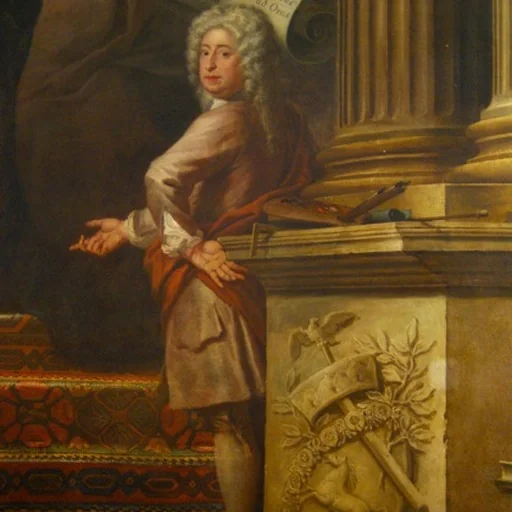
Sir James Thornhill was an English painter of historical subjects working in the Italian baroque tradition.

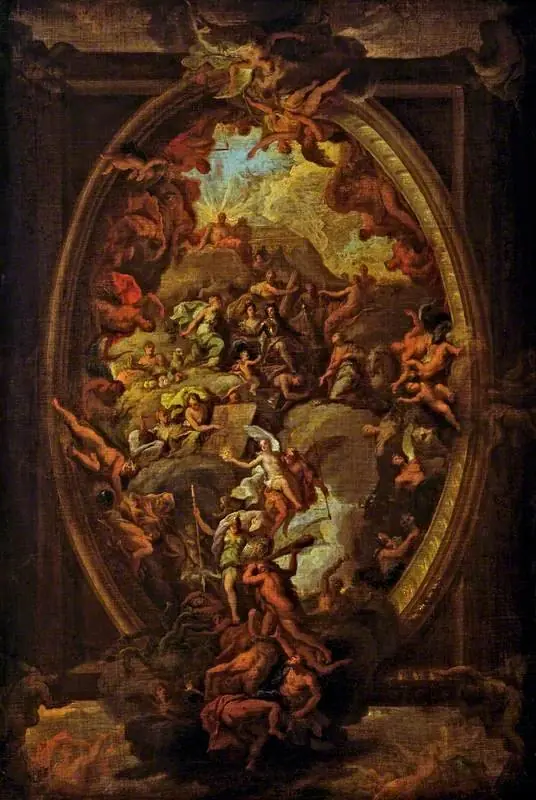 William and Mary Presenting the Cap of Liberty to Europe (sketch for the painted ceiling of the Great Hall, Greenwich Hospital)
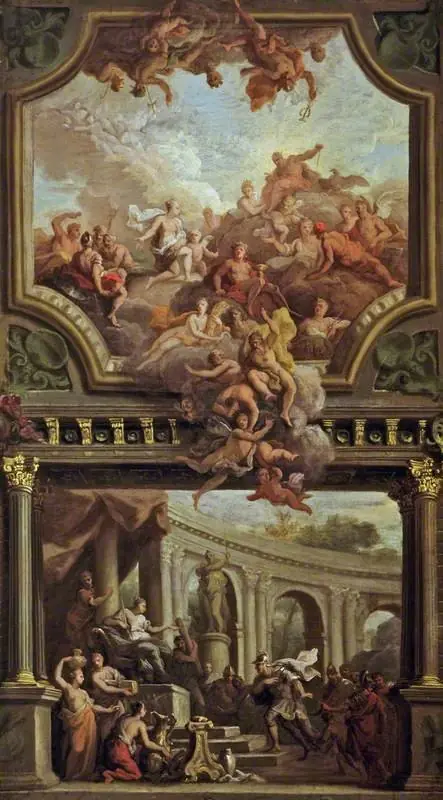 Aeneas before Dido, and Venus Supplicating Jupiter (sketch for a wall and ceiling decoration)
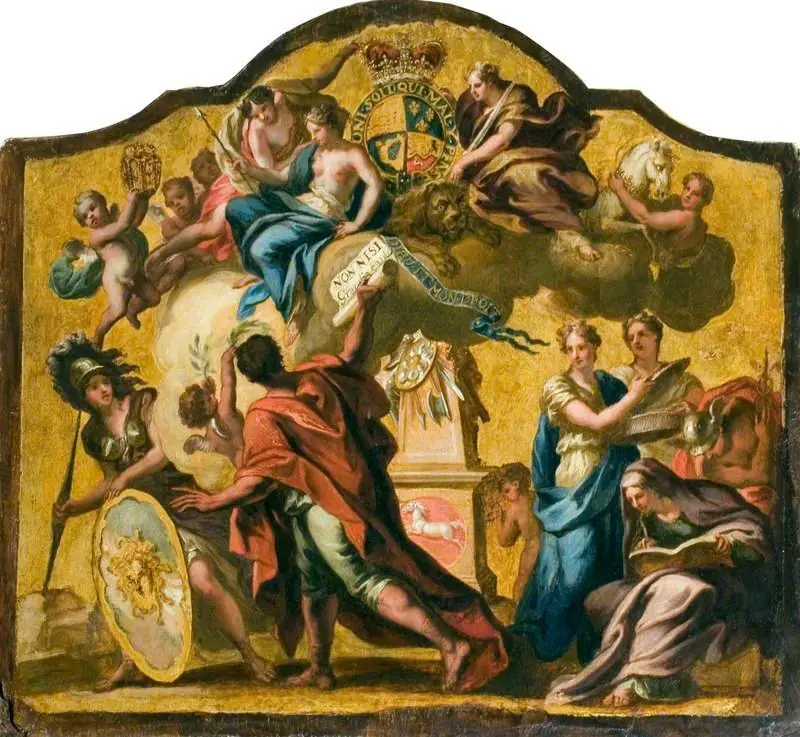 Allegorical Figures: Clemency, Prudence and Justice with Pallas, Heroic Poetry, Liberty, Discretion, History and Mercury (from the Royal State Coach for George I)
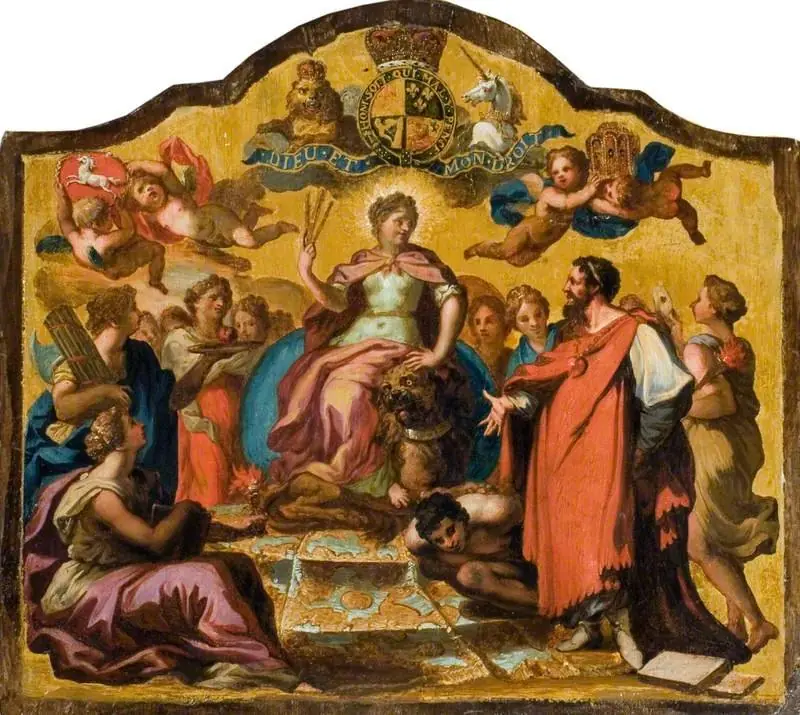 Allegorical Figures: Britannia Enthroned, Surrounded by Concord, Learning and Religion Overcoming Vice (from the Royal State Coach for George I)
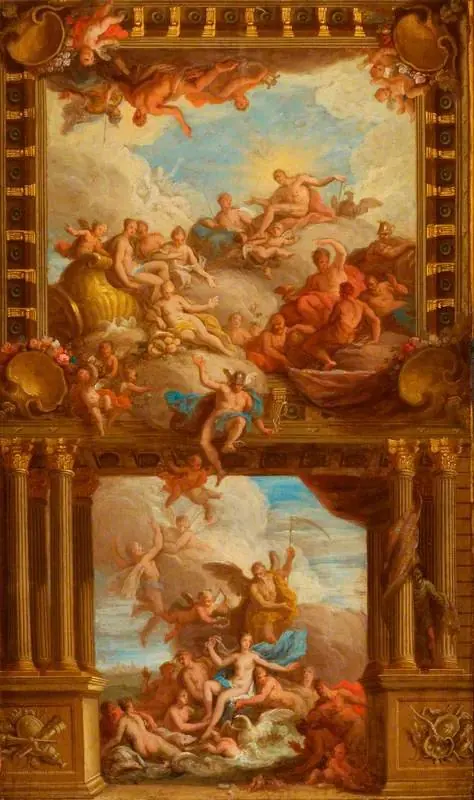 The Birth of Venus, and the Gods of Olympus (sketch for a wall and ceiling decoration)
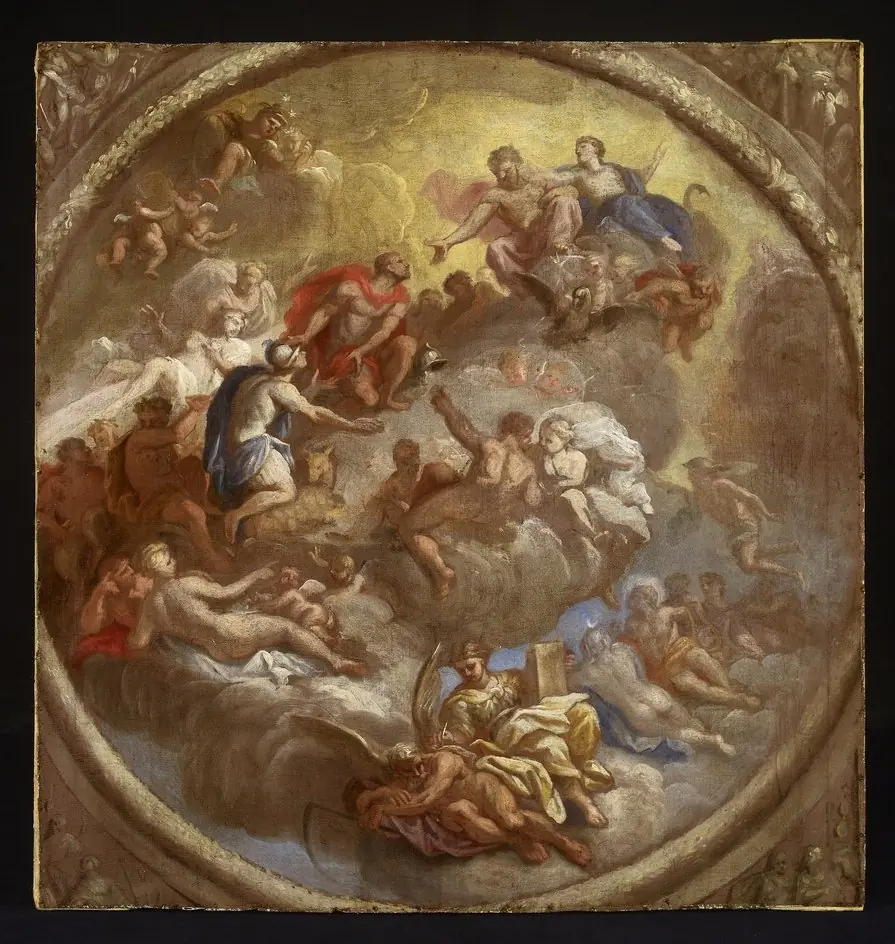 Sketch for a Ceiling Design
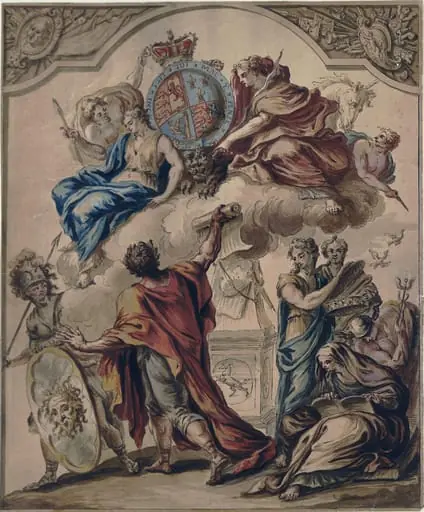 Allegorical design with figures: Clemency, Prudence and Justice with Pallas, Heroic Poetry, Liberty, Discretion, History and Mercury (preliminary design for a panel from Royal State Coach for George I)
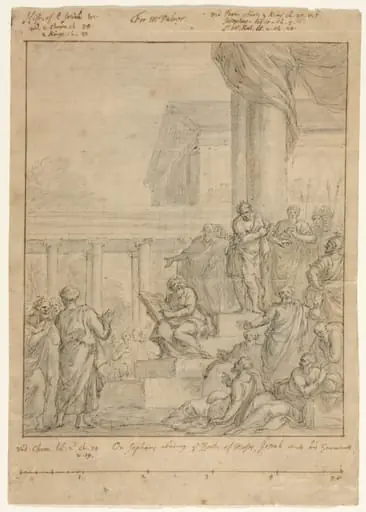 Study for King Josiah Rending his Garments
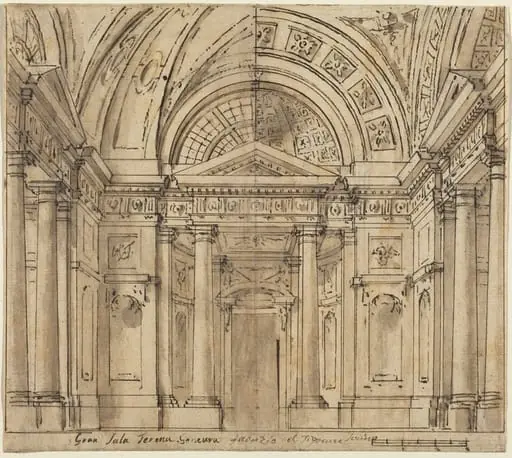 Design for Entrance to a Hall
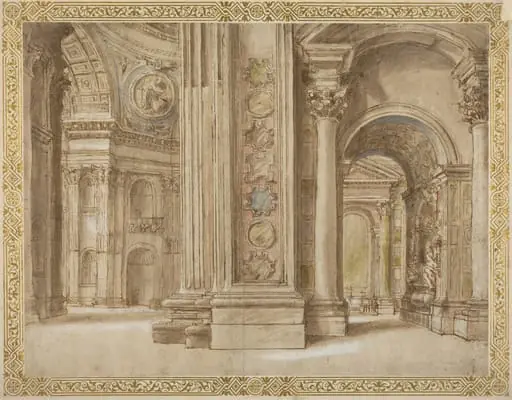 The Interior of Saint Peter's, Rome
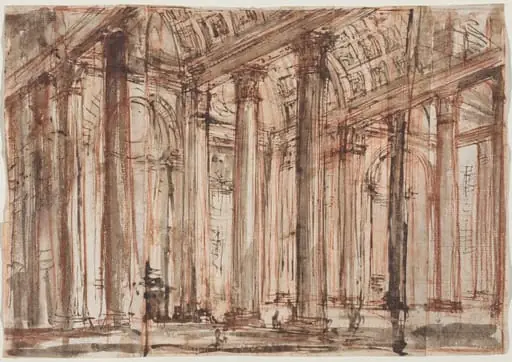 The Portico of the Pantheon
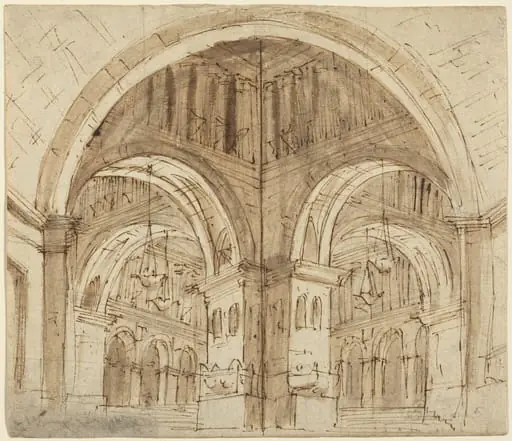 Design for a Vaulted Hall
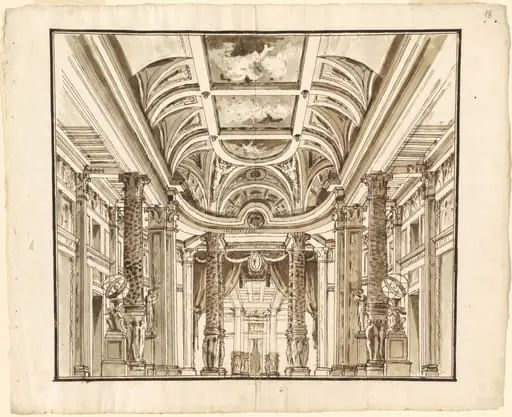 Fantasy of a Great Hall with Basketweave Columns
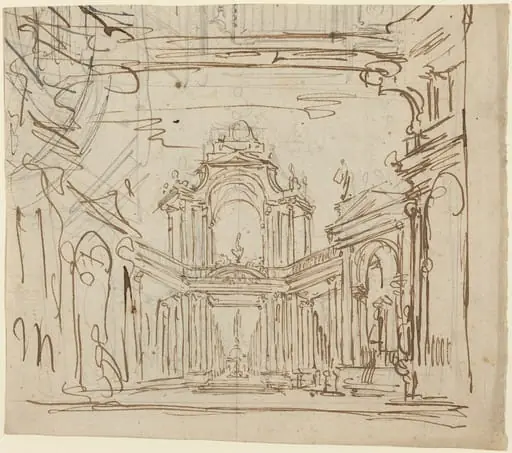 Stage Design
 Fantasy of an Ancient Bath
 Interior of a Palazzo with Classical Sculptures in Niches and above a Door
 Stage Design
 Large archway in the centre nave of St. Paul's Church, Macao, after it was burnt (December 1835)
 Fantasy of Magnificent Courtyards and Loggie with a Monumental Staircase
 Design for a stage set for Arsinoe, Queen of Cyprus at the Theatre Royal, London for Act I, scene 1, Arsinoe sleeping in a garden at night