Artwork
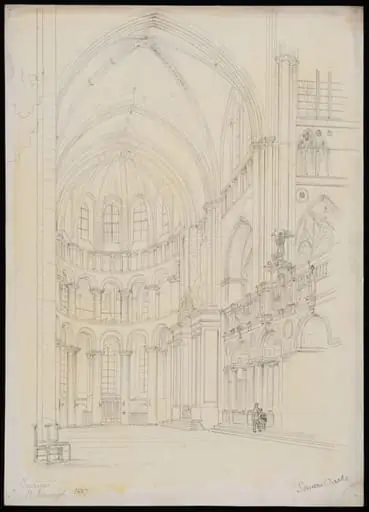
Interior of N.E. corner of the Sanctuary, Rochester Cathedral
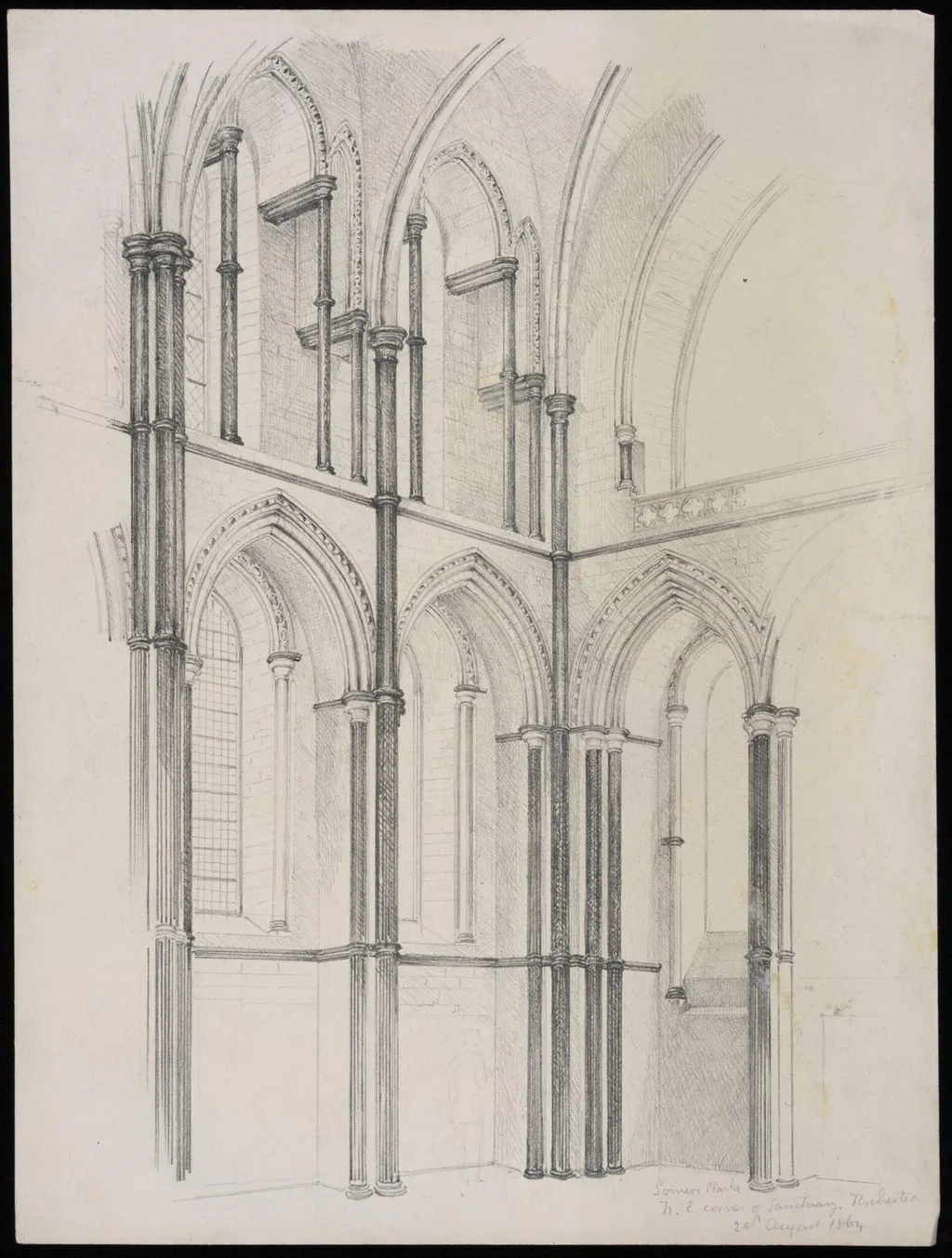
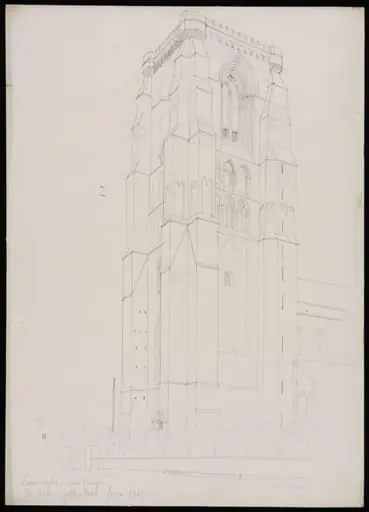
Interior of N.E. corner of the Sanctuary, Rochester Cathedral is a drawing by the Impressionist artist Somers Clarke. It dates from 16 and is held in the collection of the Victoria and Albert Museum. This pencil drawing captures a precise view of the northeastern corner of the sanctuary within Rochester Cathedral.
About this work
The drawing is rendered in fine lines and subtle shading, giving a sense of depth and texture to the stone surfaces.
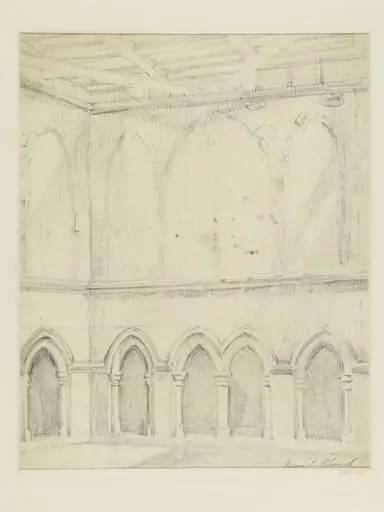
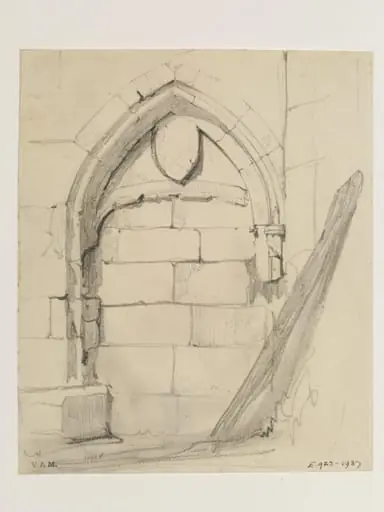
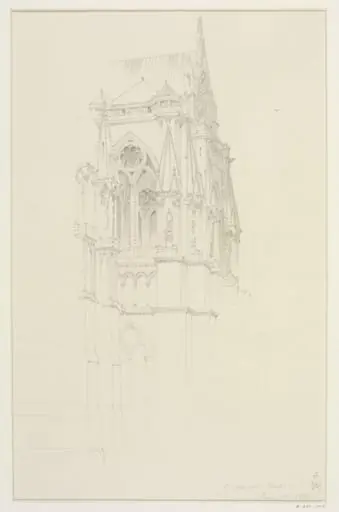
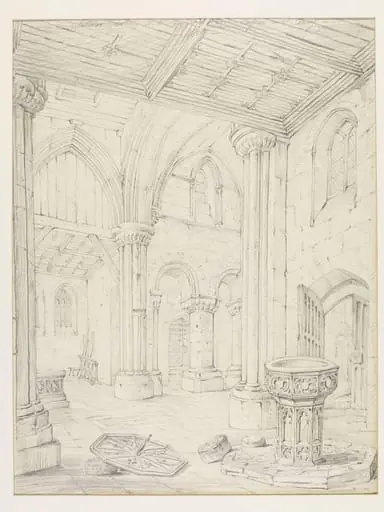
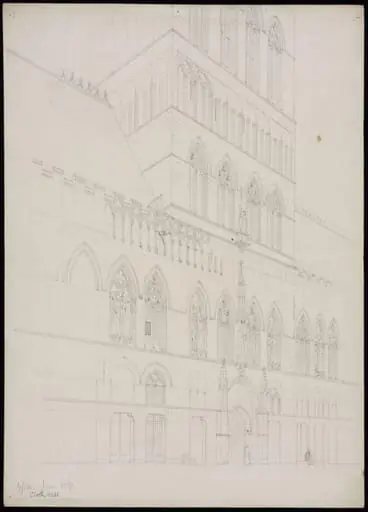
This drawing shows the interior of a corner in Rochester Cathedral. The space is divided by tall, slender columns and arches, with a grid-patterned window on the left wall. The walls are made of stone blocks, and the vaulted ceiling curves above.
A small inscription in the corner reads "Interior of N.E. corner of Sanctuary, Rochester Cathedral" and is dated "25th August 1864". The drawing is rendered in fine lines and subtle shading, giving a sense of depth and texture to the stone surfaces.
If you're interested in more works like this, you might want to explore the Victoria and Albert Museum.
Overview
This pencil drawing captures a precise view of the northeastern corner of the sanctuary within Rochester Cathedral. Executed on paper, it records architectural details with careful attention to proportion and spatial relationships. The date inscribed—25th August 1864—marks its creation, situating it within a period of heightened interest in medieval ecclesiastical structures. The work serves as a documentary record rather than a decorative piece.
Subject & Meaning
The drawing focuses on the structural elements of the cathedral’s sanctuary corner: stone walls, slender columns, pointed arches, and a vaulted ceiling. The grid-patterned window introduces light and rhythm into the composition. The inscription confirms the location and date, suggesting the artist’s intent was to document the building’s form and condition at a specific moment, likely for archival or scholarly purposes.
Technique & Style
Rendered in fine pencil lines with delicate shading, the drawing emphasizes texture and depth without color. The artist uses varied pressure to suggest the roughness of stone and the soft shadows cast by architectural projections. The precision of the lines reflects a topographical approach, prioritizing accuracy over expressive flourish, aligning with 19th-century architectural drawing conventions.
History & Provenance
The drawing was made in 1864, during a time when many British architects and antiquarians were systematically recording historic buildings. While its original owner is unrecorded, its survival suggests it was preserved within a collection focused on ecclesiastical architecture. It may have been part of a larger series of studies of Rochester Cathedral, now held in institutions such as the Victoria and Albert Museum.
Context
In the mid-19th century, interest in medieval architecture surged alongside the Gothic Revival movement. Drawings like this were often made by architects, students, or antiquarians to study and preserve details of cathedrals undergoing restoration or at risk of neglect. Rochester Cathedral, with its Norman and Gothic elements, was a frequent subject of such documentation.
Legacy
This drawing contributes to a broader archive of architectural records that helped shape modern understanding of medieval English cathedrals. Its methodical detail provides a baseline for comparing structural changes over time. Though not widely exhibited, such works remain valuable resources for historians, conservators, and architectural researchers studying the evolution of sacred spaces.
Artist & collection

Artist
George Somers Clarke was an architect and English Egyptologist who worked on the restoration and design of churches and at a number of sites throughout Egypt, notably in El Kab, where he built a mud brick house.