Artwork
Silenus
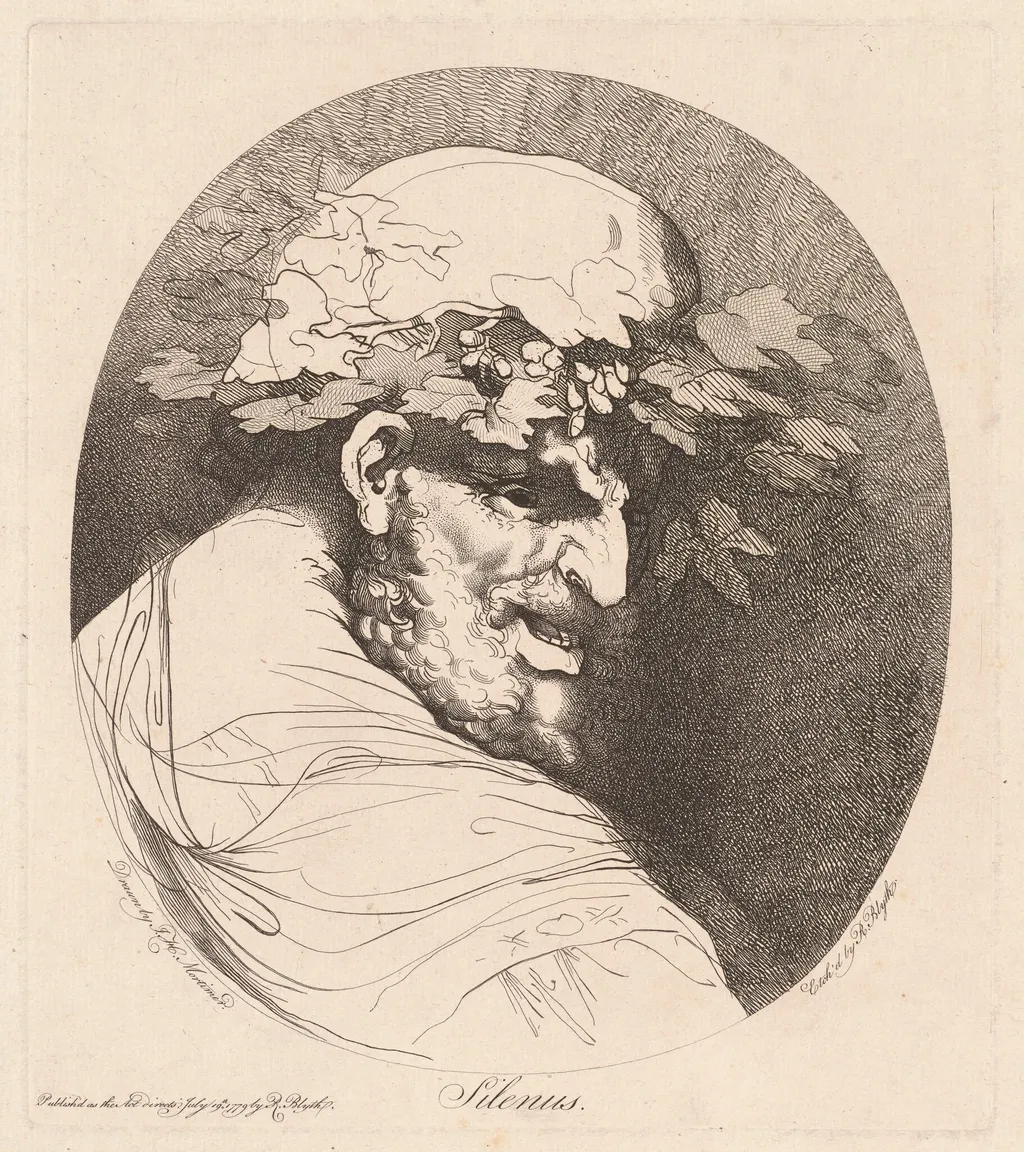
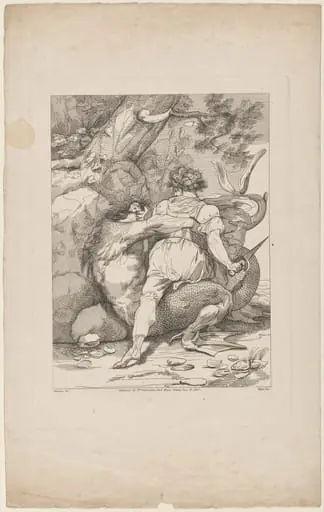
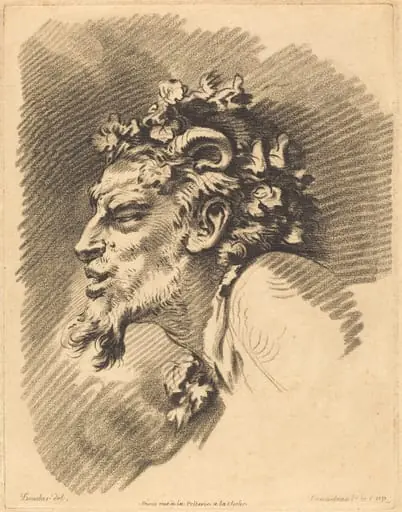
Silenus is an ink print by the Romanticist artist Robert Blyth. It dates from 1779 and is held in the collection of the National Gallery of Art.
About this work
Overview
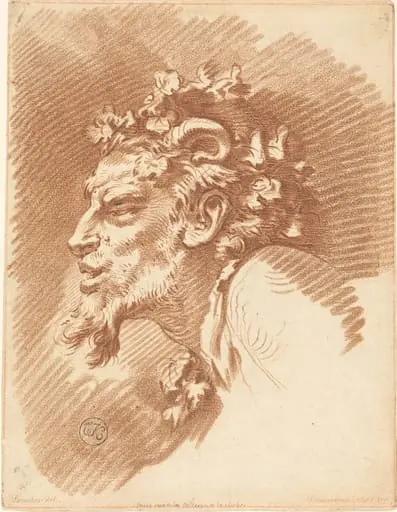
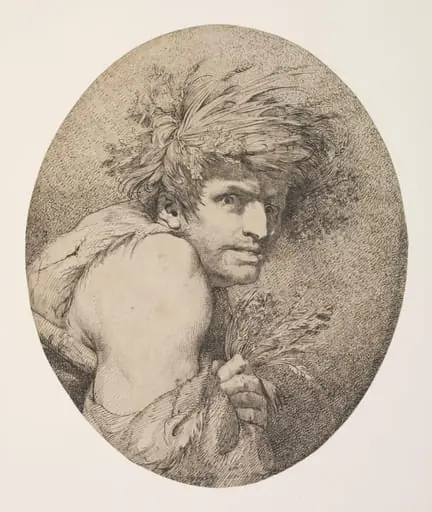
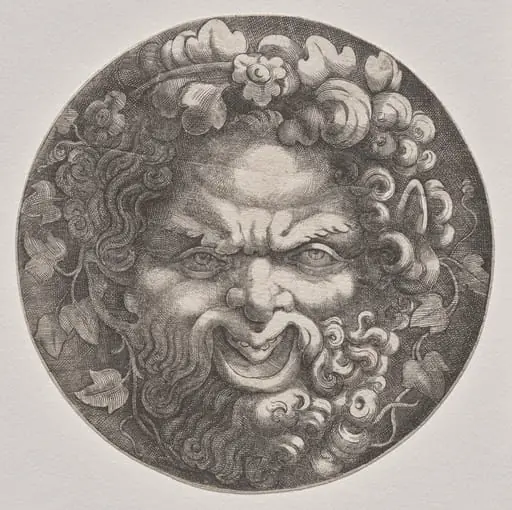
Robert Blyth’s 1779 etching titled Silenus presents a monochrome study of a mythic figure. Rendered on laid paper, the print relies on delicate black lines to define a shaggy, bearded visage emerging from tangled foliage against a suggestion of craggy terrain.
Subject & Meaning
The composition depicts Silenus, the rustic companion of Dionysus in classical mythology, traditionally portrayed as a half‑man, half‑goat creature. Here the artist emphasizes the figure’s wild, aged character through unkempt hair, a weathered beard, and a half‑hidden expression, inviting contemplation of the ancient themes of indulgence and nature.
Technique & Style
Blyth employed the etching process, incising fine lines into a copper plate that were then transferred onto light‑toned laid paper. The print’s texture arises from meticulous hatching that renders wrinkles and foliage, while the absence of color focuses attention on line work and tonal contrast.
History & Provenance
Created in 1779, the work belongs to Blyth’s early output during a period when British printmakers were exploring classical subjects. The inscription “Silenus” appears at the bottom of the plate, confirming the artist’s intent and serving as a signature element for identification.
Context
The image reflects the 18th‑century fascination with antiquity, when neoclassical themes permeated British art. Silenus, as a symbol of rustic wisdom and revelry, offered a suitable subject for an etcher seeking to demonstrate skill in rendering complex textures within a single‑plane composition.
Artist & collection