Artwork
Canards Sauvages
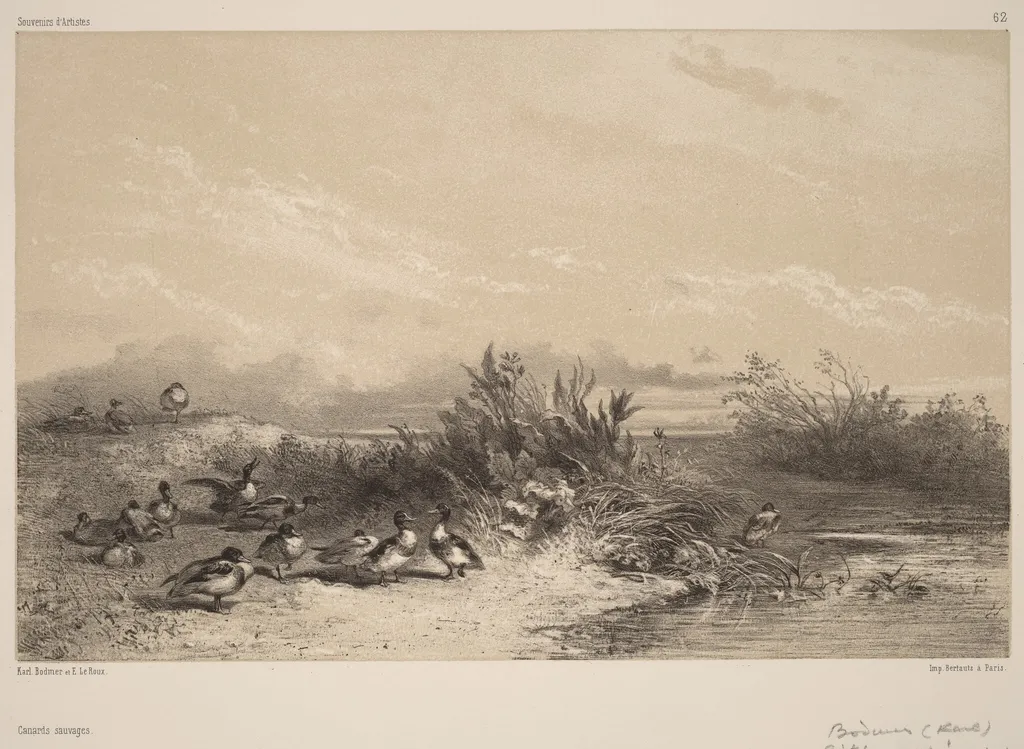
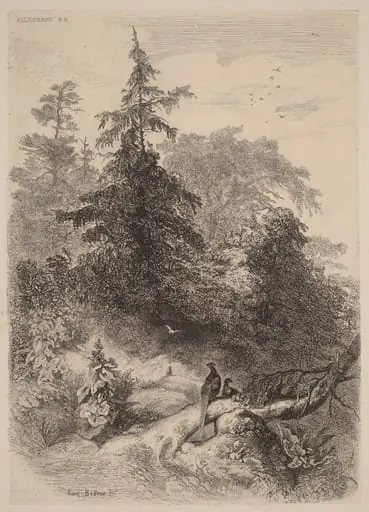
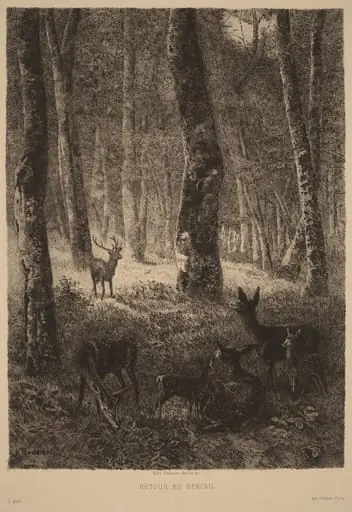
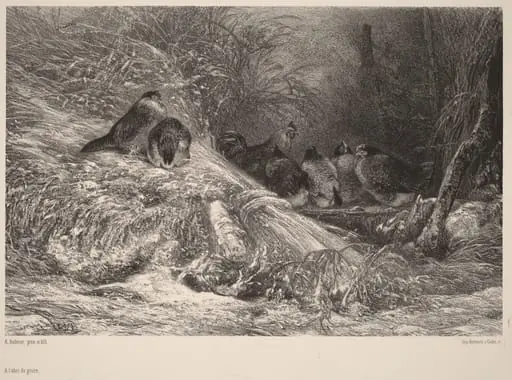
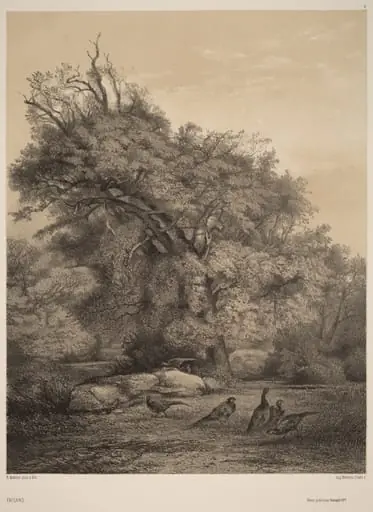
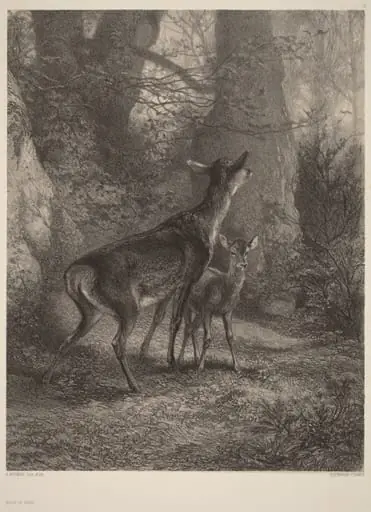
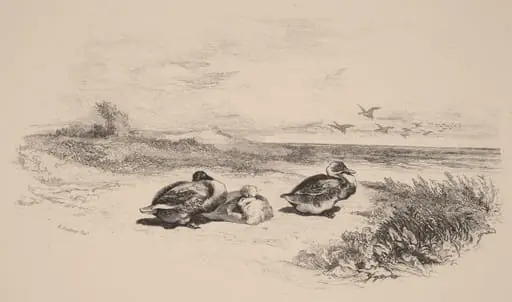
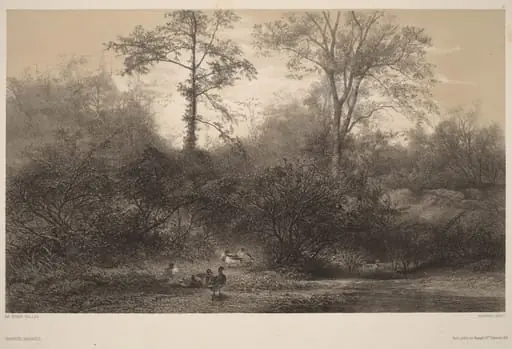
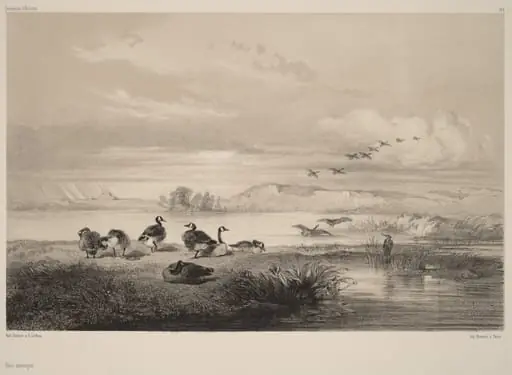
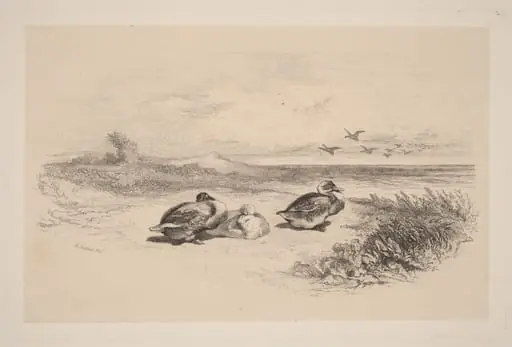
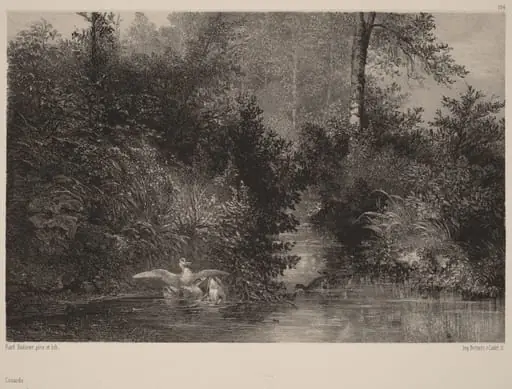
Canards Sauvages is an ink print by the Romanticist artist Karl Bodmer. It dates from 1851 and is held in the collection of the National Gallery of Art.
About this work
Overview
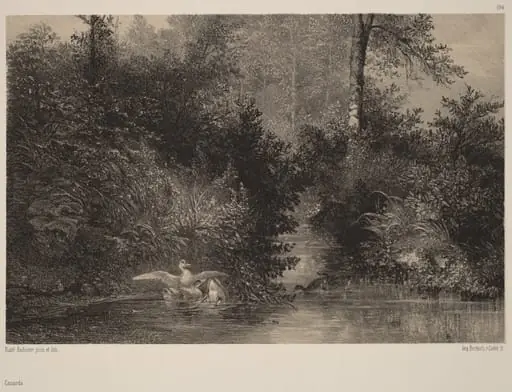
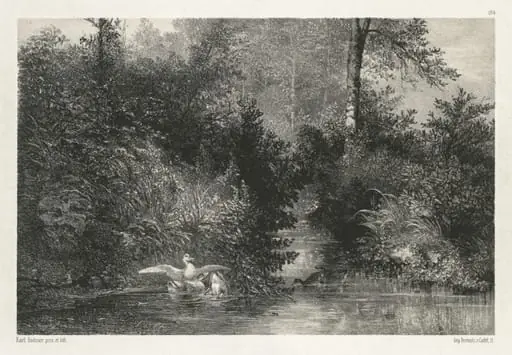
Canards Sauvages is a lithograph created by Karl Bodmer in 1851, depicting a serene natural scene of ducks in a shallow, muddy pond surrounded by tall reeds, wild plants, and a distant treeline under a cloudy sky.
Subject & Meaning
The print showcases Bodmer's affinity for documenting natural subjects, capturing the intimate details of ducks in their habitat, emphasizing the interplay between the animals and their environment.
Technique & Style
Executed using lithography, which allows direct drawing on stone, the work highlights Bodmer's attention to detail, evident in the textured feathers of the ducks and the rippling water, reflecting his background in detailed watercolors and drawings.
History & Provenance
Created in 1851 by Karl Bodmer, a Swiss-born artist who worked in Germany and later France (where he used the monogram K Bodmer), this lithograph represents a continuation of his European practice in printmaking.
Context
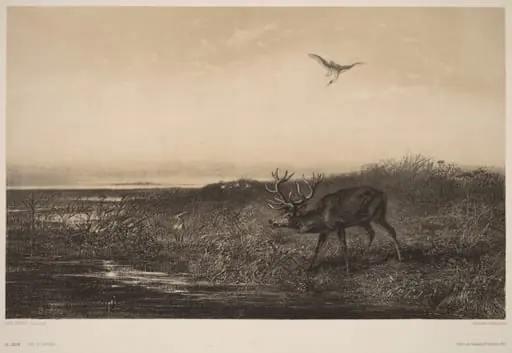
Canards Sauvages sits within the broader 19th-century European tradition of natural history illustration and landscape printing, where artists like Bodmer contributed to the visual documentation of the natural world.
Legacy
While specific legacy details of Canards Sauvages are not highlighted, it contributes to Bodmer's overall body of work, which remains notable for its detailed depictions of European landscapes and natural subjects through various printmaking techniques.
Artist & collection
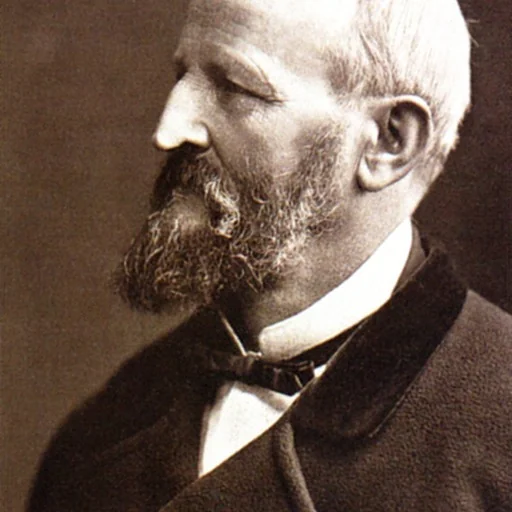
Artist
Johann Carl Bodmer (11 February 1809 – 30 October 1893) was a Swiss-French printmaker, etcher, lithographer, zinc engraver, draughtsman, painter, illustrator, and hunter.