Artwork
Le Charlemagne (forêt de fontainebleau)
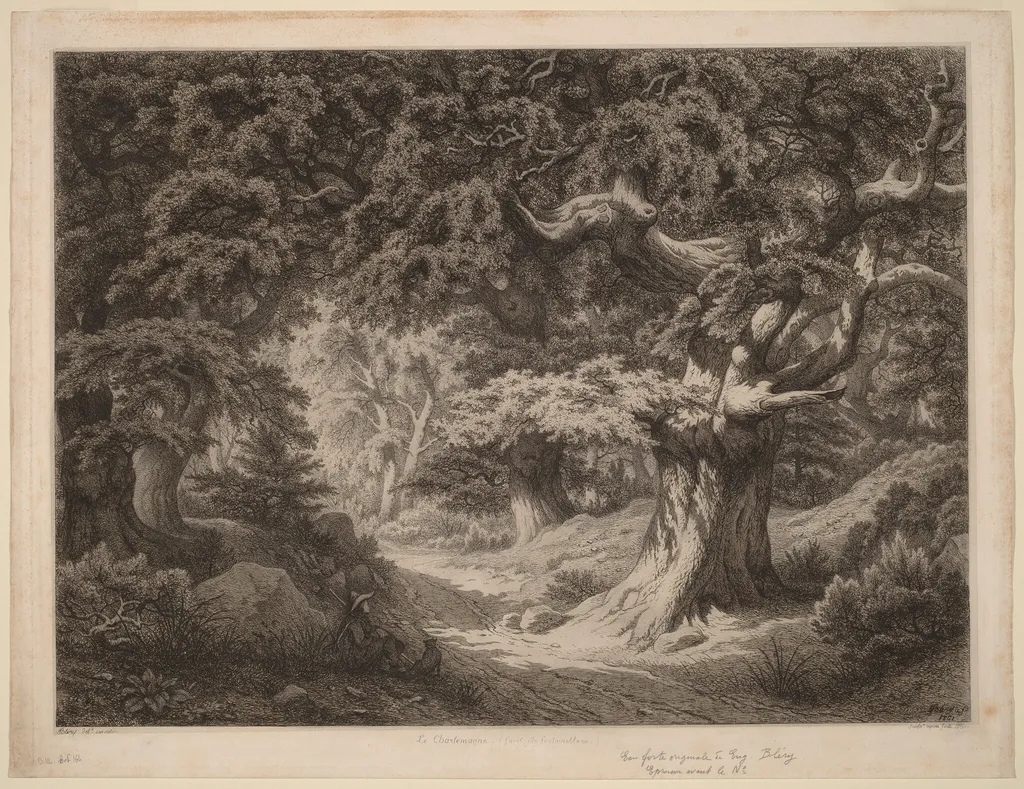
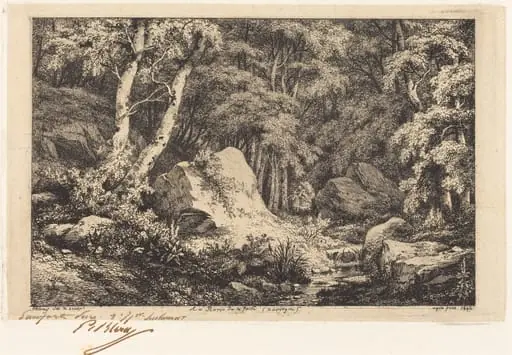
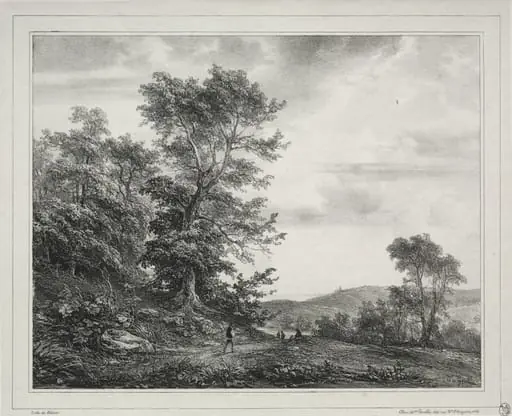
Le Charlemagne (forêt de fontainebleau) is an ink print by the Impressionist artist Eugène Bléry. It dates from 1861 and is held in the collection of the National Gallery of Art.
About this work
Overview
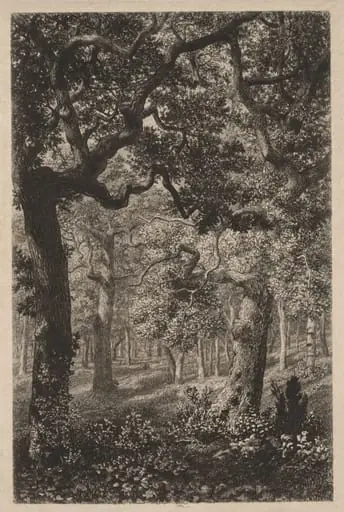
Created in 1861 by Eugène Bléry, this etching on chine collé captures a section of the Forest of Fontainebleau. The work is rendered in monochrome, emphasizing tonal contrasts between dense shadows and faint, diffused light. The technique allows for intricate line work, conveying the forest’s oppressive stillness and layered vegetation through precise engraving on a metal plate.
Subject & Meaning
The scene depicts a secluded, ancient woodland path winding through thick undergrowth. No human figures are present, and the trees appear ancient and entangled, their roots twisting across the ground. The absence of clear direction or destination suggests a meditation on nature’s indifference to human passage, evoking solitude and the quiet persistence of the wild.
Technique & Style
Bléry employed etching to carve fine, controlled lines into a metal plate, then printed the image onto delicate chine collé paper for enhanced detail. The dark, rich ink and meticulous cross-hatching model the textures of bark, moss, and leaf litter. The composition relies on chiaroscuro, using deep blacks and muted grays to suggest depth and the filtering of light through a dense canopy.
History & Provenance
Produced in 1861, the print emerged during a period when French artists were increasingly drawn to natural landscapes as subjects for intimate, detailed works.
Produced in 1861, the print emerged during a period when French artists were increasingly drawn to natural landscapes as subjects for intimate, detailed works. Bléry, known for his topographical prints, likely made this piece during one of his visits to Fontainebleau, a favored site for artists seeking raw, unidealized nature. Its survival in private and institutional collections reflects its quiet resonance among 19th-century print collectors.
Context
In mid-19th century France, the Forest of Fontainebleau was a refuge for painters and printmakers rejecting academic idealism. Bléry’s work aligns with a growing interest in realism and the expressive potential of printmaking. Unlike romanticized landscapes, this etching avoids drama, instead offering a restrained, almost documentary view of the forest’s untamed character.
Legacy
Though not widely exhibited today, Bléry’s etching contributes to a broader tradition of French landscape printmaking that valued observation over ornament. Its technical precision and subdued mood influenced later artists interested in the psychological weight of natural spaces, preserving a quiet, unadorned vision of the forest that predates modern environmental awareness.
Artist & collection


 In the Woods
 Summer
 Oeuvres de A. Calame: No. 52
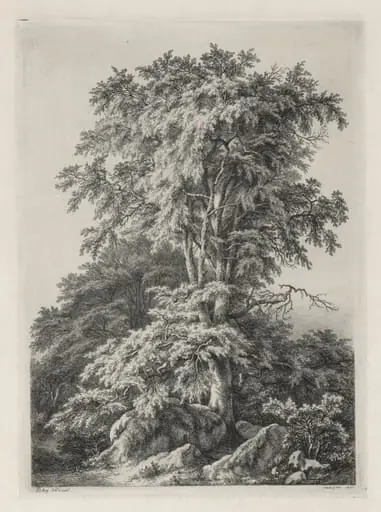 Studies Drawn and Engraved after Nature: The Beach, Fontainebleau (Études dessinées et Gravées D'après nature: Le hêtre, Fontainebleau)
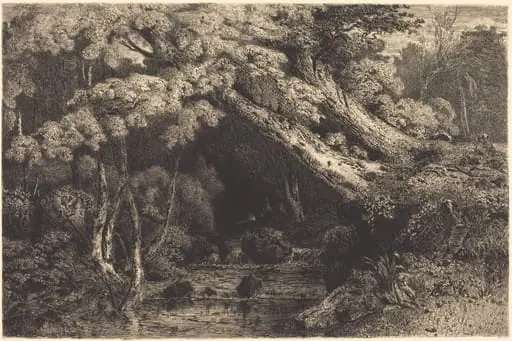 Saint-Pierre Stream near Pierrefond (Ruisseaude Saint-Pierre, pres Pierrefond)
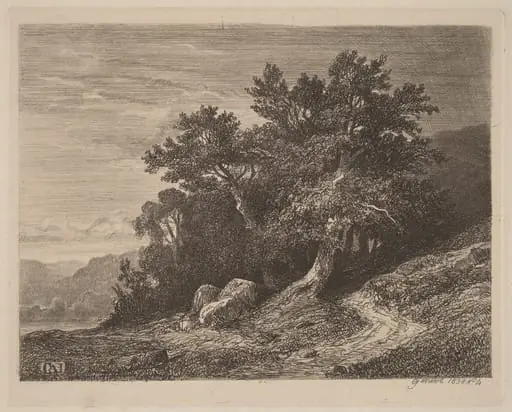 Ancient Trees on a Hillside
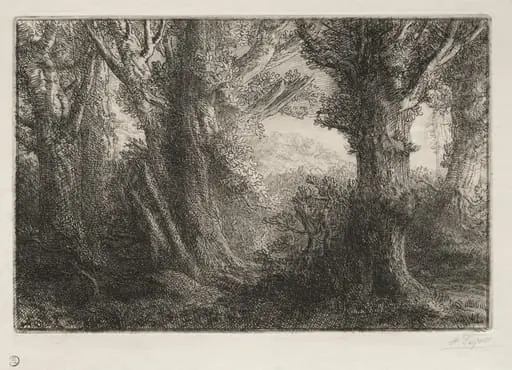 In the Forest at Conteville
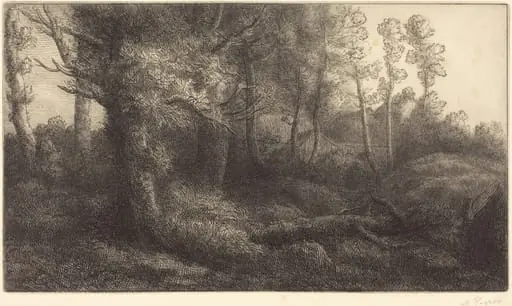 In the Forest (Lisiere de foret)
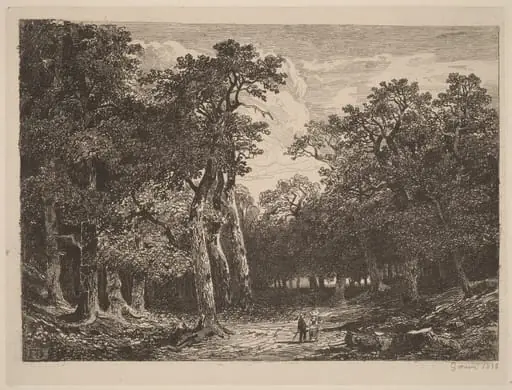 Couple in a Clearing
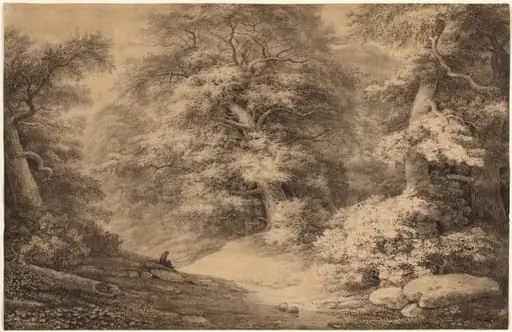 A Beech Wood with a Resting Traveler
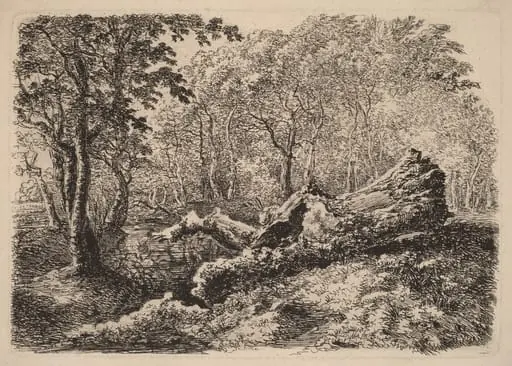 Mouldering Tree Trunk
 Landscape with Figures