Artwork
Henry Frederick, Prince of Wales
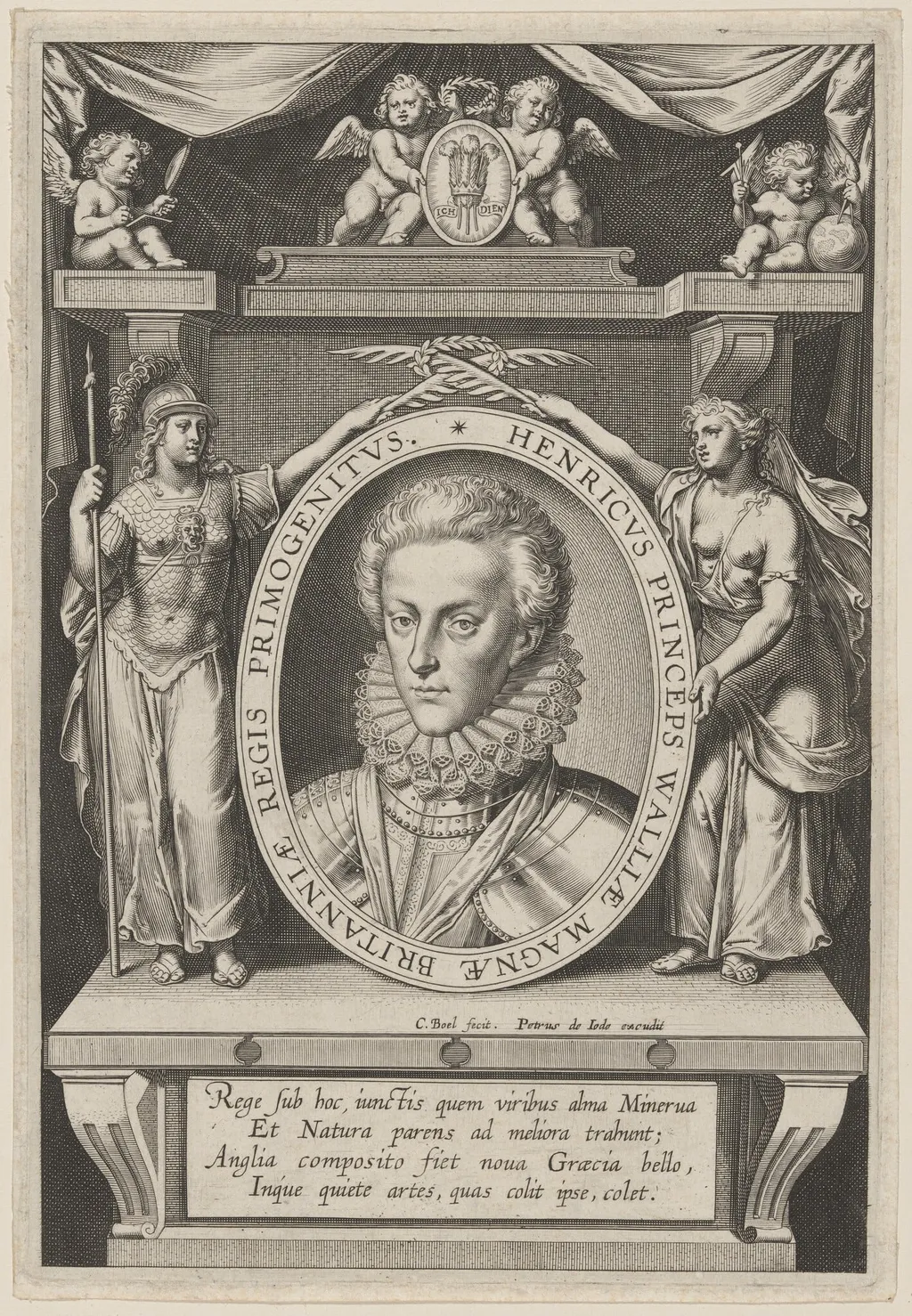
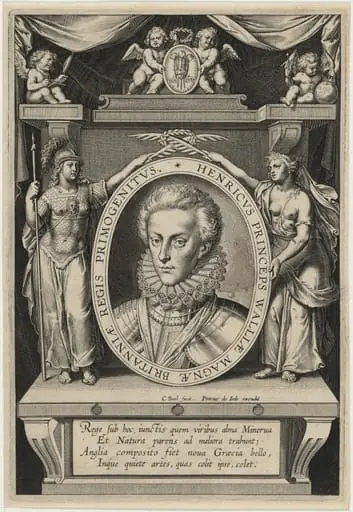
Henry Frederick, Prince of Wales is an ink print by the Renaissance artist Cornelis Boel. It dates from 1598 and is held in the collection of the National Gallery of Art.
About this work
Overview
This engraving by Cornelis Boel, dated 1598, depicts Henry Frederick, Prince of Wales, in a circular medallion format.
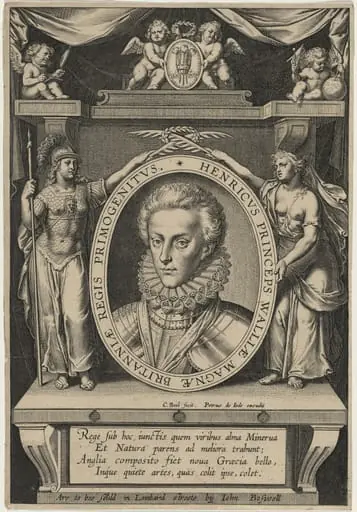
This engraving by Cornelis Boel, dated 1598, depicts Henry Frederick, Prince of Wales, in a circular medallion format. The composition is framed by elaborate decorative elements, including allegorical figures and heraldic symbols. Rendered with meticulous line work, the image reflects the conventions of early 17th-century royal portraiture in print form, intended for dissemination among elite audiences.
Subject & Meaning
The portrait represents Henry Frederick, heir to the English throne, portrayed with regal attributes: armor beneath his garments and a ruffled collar signaling nobility. Above him, cherubs support a family crest, reinforcing dynastic legitimacy. Flanking figures, likely personifications of Justice and Magnanimity, hold staffs, symbolizing virtues expected of a future monarch. The imagery blends personal identity with political idealism.
Technique & Style
Boel employed fine-line engraving to achieve intricate detail, using cross-hatching to model volume and texture in the prince’s face, collar, and armor. The circular composition is enclosed by symmetrical ornamentation, typical of commemorative prints of the period. The precision of the lines and the controlled density of shading demonstrate mastery of the burin tool and an adherence to Northern European engraving traditions.
History & Provenance
Created in 1598, the engraving was likely produced to commemorate the prince’s status following his formal investiture as Prince of Wales. It circulated among courtiers and foreign dignitaries as a token of loyalty and political alignment. While its early ownership is undocumented, surviving impressions suggest it was reproduced in limited numbers, consistent with high-status royal imagery of the time.
Context
This print emerged during a period when the Stuart court actively used visual culture to project authority. Engravings like this served as accessible alternatives to painted portraits, allowing royal imagery to reach wider audiences. The inclusion of allegorical figures aligns with contemporary European trends in dynastic propaganda, particularly in Protestant courts seeking to legitimize succession through symbolic language.
Legacy
Though not widely known today, the engraving exemplifies the role of print in early modern statecraft. It reflects the transition from hand-painted portraiture to reproducible imagery as a tool of political communication. Boel’s work contributes to a broader corpus of royal engravings that shaped public perception of monarchy before the rise of mass media.
Artist & collection