Artwork
Henry Frederick, Prince of Wales
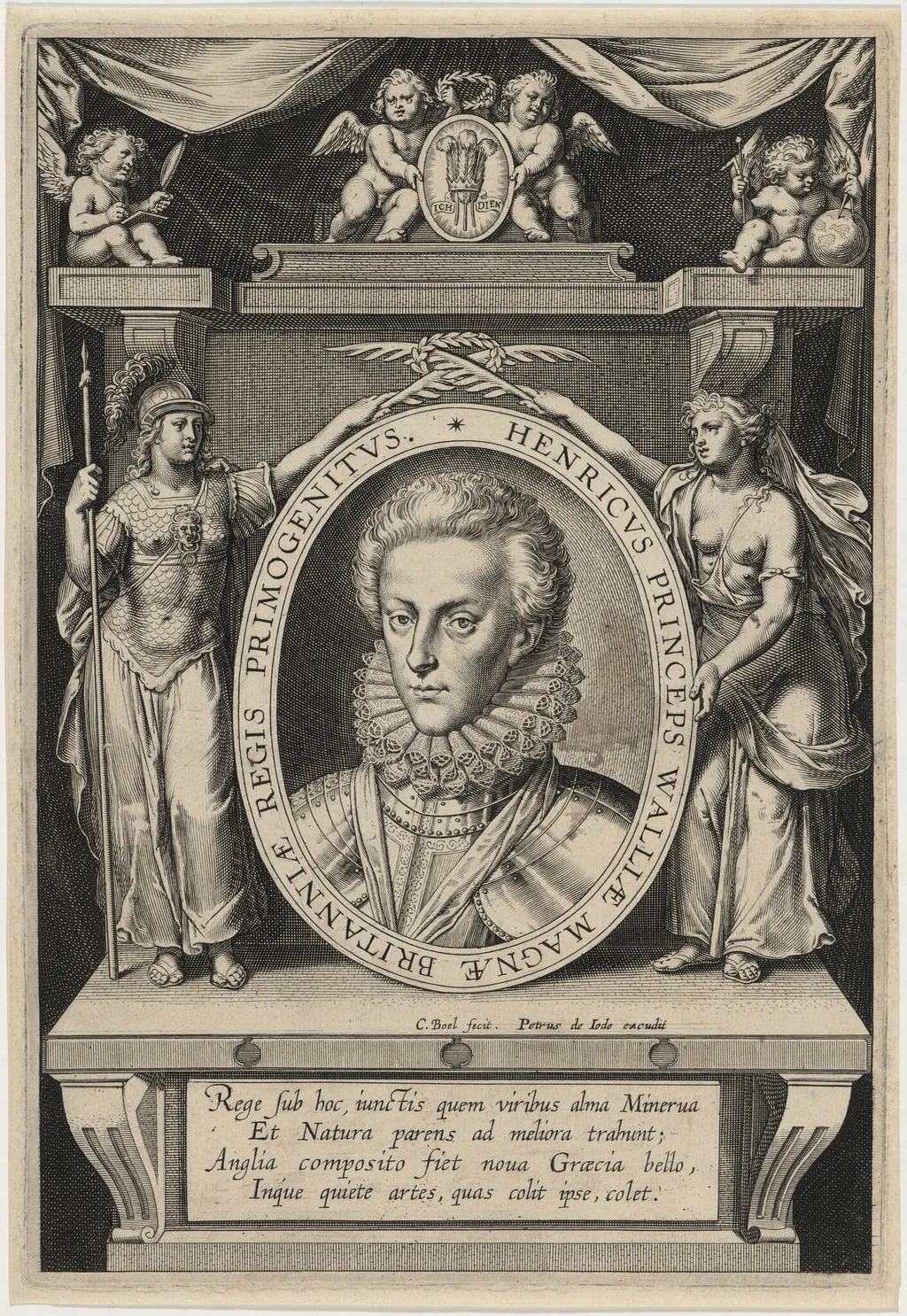
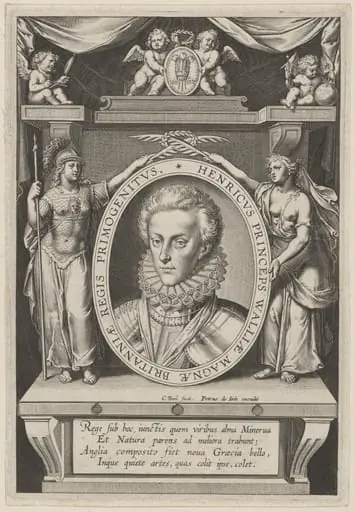
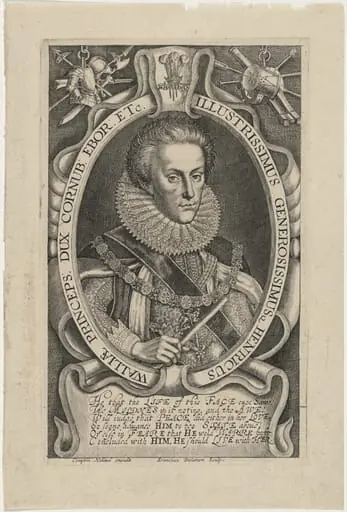
Henry Frederick, Prince of Wales is an ink print by the Renaissance artist Cornelis Boel. It dates from 1598 and is held in the collection of the National Gallery of Art.
About this work
Overview
The figure is centered within a circular frame, surrounded by Latin inscriptions identifying the sitter.
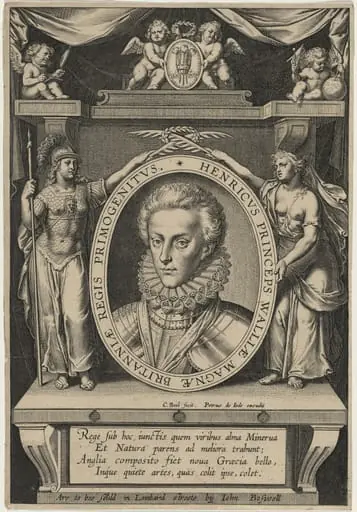
Cornelis Boel’s 1598 engraving presents Henry Frederick, Prince of Wales, in a formal portrait. The figure is centered within a circular frame, surrounded by Latin inscriptions identifying the sitter. Flanking the prince are two female figures, one bearing a spear and the other a scroll, while three cherubic figures hover above a heraldic crest featuring a deer’s head. The composition is rendered entirely in black‑and‑white line work.
Subject & Meaning
The central figure is Henry Frederick, the eldest son of James I, depicted in armor and a decorative collar that signals his princely status. The accompanying women likely symbolize virtues or allegorical concepts—perhaps martial prowess and wisdom—while the cherubs and deer crest reinforce themes of noble lineage and hopeful destiny for England, as suggested by the surrounding Latin motto.
Technique & Style
Boel employs fine, cross‑hatching and stippling to model the textures of metal, fabric, and flesh, creating a sculptural sense of depth without tonal shading. The circular border and Latin legend are typical of late‑sixteenth‑century portrait engravings, where line work conveys both detail and atmospheric effect. The overall effect is a precise, almost architectural rendering of the subject.
History & Provenance
The print was produced in 1598, shortly after Henry Frederick’s death in 1612, and likely served as a commemorative image circulated among the English court. Cornelis Boel, a Flemish engraver active in England, was known for portraiture and book illustrations, and this work exemplifies his role in disseminating royal iconography during the early Stuart period.
Context
At the turn of the seventeenth century, portrait engravings functioned as a means of political propaganda, reinforcing the legitimacy of the heir apparent. The inclusion of allegorical figures and Latin epithets aligns the prince with classical virtues, a common practice in Tudor and early Stuart visual culture to associate monarchy with learned and moral authority.
Artist & collection