Artwork
Henry Frederick, Prince of Wales
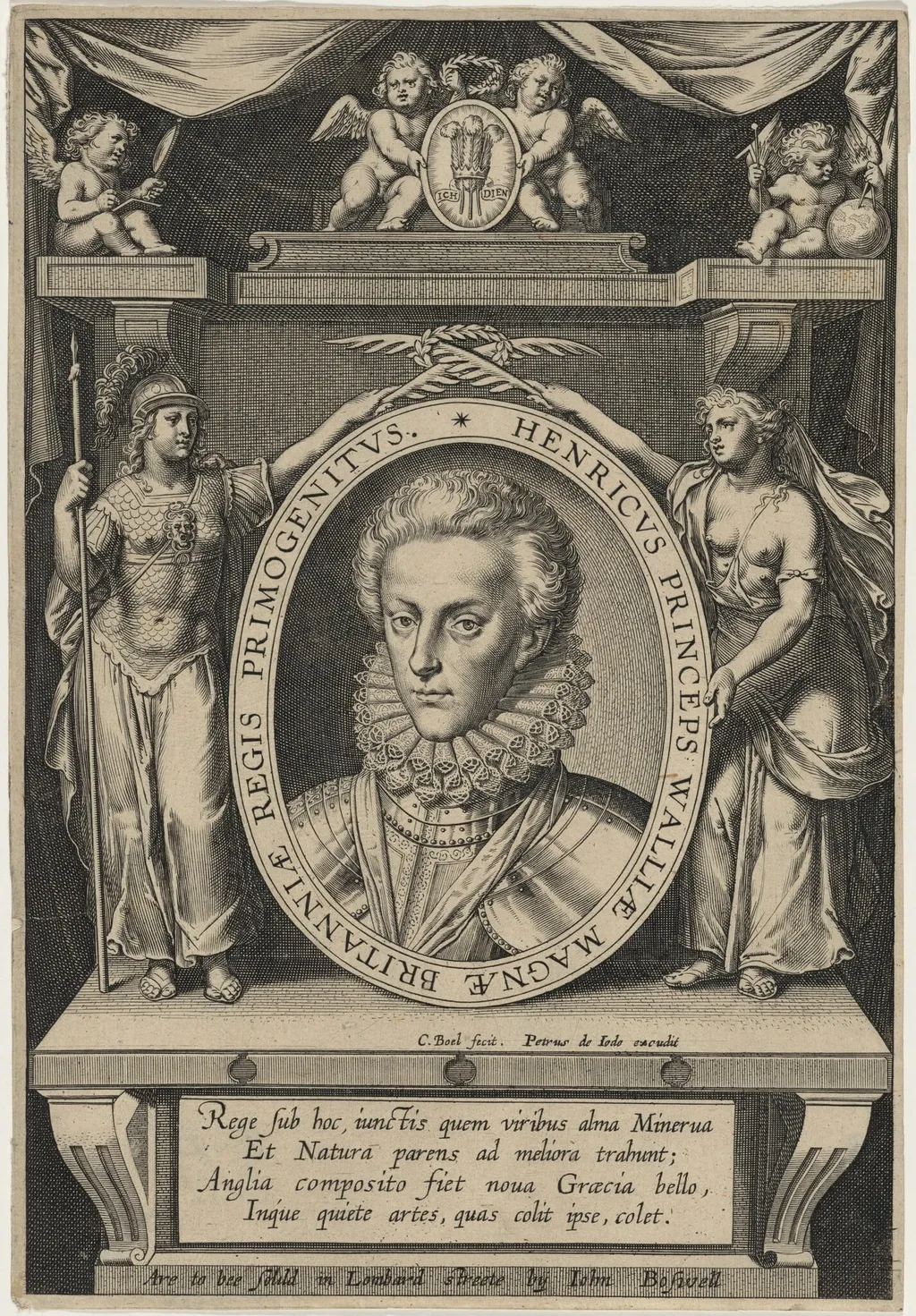
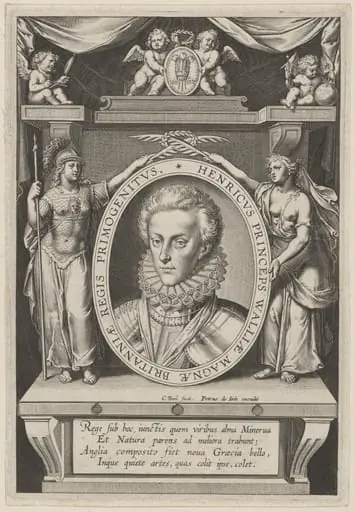
Henry Frederick, Prince of Wales is an ink print by the Renaissance artist Cornelis Boel. It dates from 1598 and is held in the collection of the National Gallery of Art.
About this work
Overview
Rendered in fine linear detail, it captures the prince in a solemn pose, framed within an oval border that encloses an inscription.
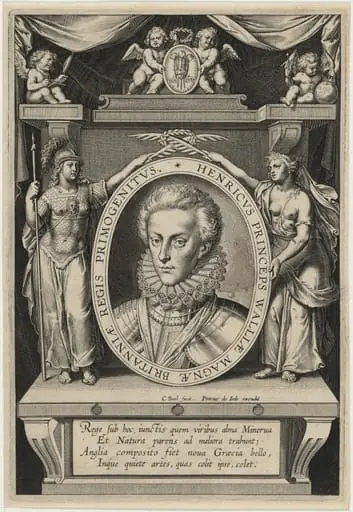
This engraving by Cornelis Boel depicts Henry Frederick, Prince of Wales, born in 1594, as a youth around the age of four. Executed in 1598, the work is a formal portrait intended for dissemination among courtly circles. Rendered in fine linear detail, it captures the prince in a solemn pose, framed within an oval border that encloses an inscription. The dark background isolates the figure, emphasizing his status and the precision of the engraving technique.
Subject & Meaning
The portrait presents Henry Frederick not as a child but as a future monarch, dressed in elaborate court attire with a high ruffled collar and richly detailed fabric. His serious expression and direct gaze convey dignity and composure, aligning with early modern ideals of princely conduct. The inclusion of Latin text reinforces his royal identity and the engraving’s function as a propagandistic image, affirming dynastic continuity during a period of political uncertainty.
Technique & Style
Cornelis Boel employed fine, controlled lines typical of Northern European engraving traditions to render texture in the prince’s clothing, hair, and skin. The intricate cross-hatching and delicate stippling create subtle tonal variations without the use of tone or color. The oval composition and ornamental border reflect conventions of Renaissance portraiture, where symmetry and clarity served to elevate the subject’s authority through visual restraint and precision.
History & Provenance
Created in 1598, the engraving was likely produced for distribution to loyalists and foreign dignitaries as part of the Stuart court’s efforts to project legitimacy. Boel, a Flemish engraver active in England, was commissioned by royal patrons to produce multiple portraits of the prince. The work survives in several institutional collections, including the British Museum, where it is preserved as an early example of printed royal imagery in Jacobean England.
Context
In late 16th-century England, printed portraits of royalty were rare and carefully controlled. This engraving emerged during a time when the Stuart dynasty sought to strengthen its public image following the union of the English and Scottish crowns. The use of engraving—rather than painting—allowed for wider circulation, making it a strategic tool for shaping perceptions of the heir to the throne among both elite and literate audiences.
Legacy
Boel’s engraving set a precedent for later royal portraiture in print, influencing how future heirs were visually represented in the early 17th century. Its formal tone and emphasis on lineage became a template for subsequent engravings of British royalty. Though not widely known today, it remains a significant artifact in the history of print culture and the visual politics of monarchy in early modern Europe.
Artist & collection