Artwork
Emperor Rudolph II
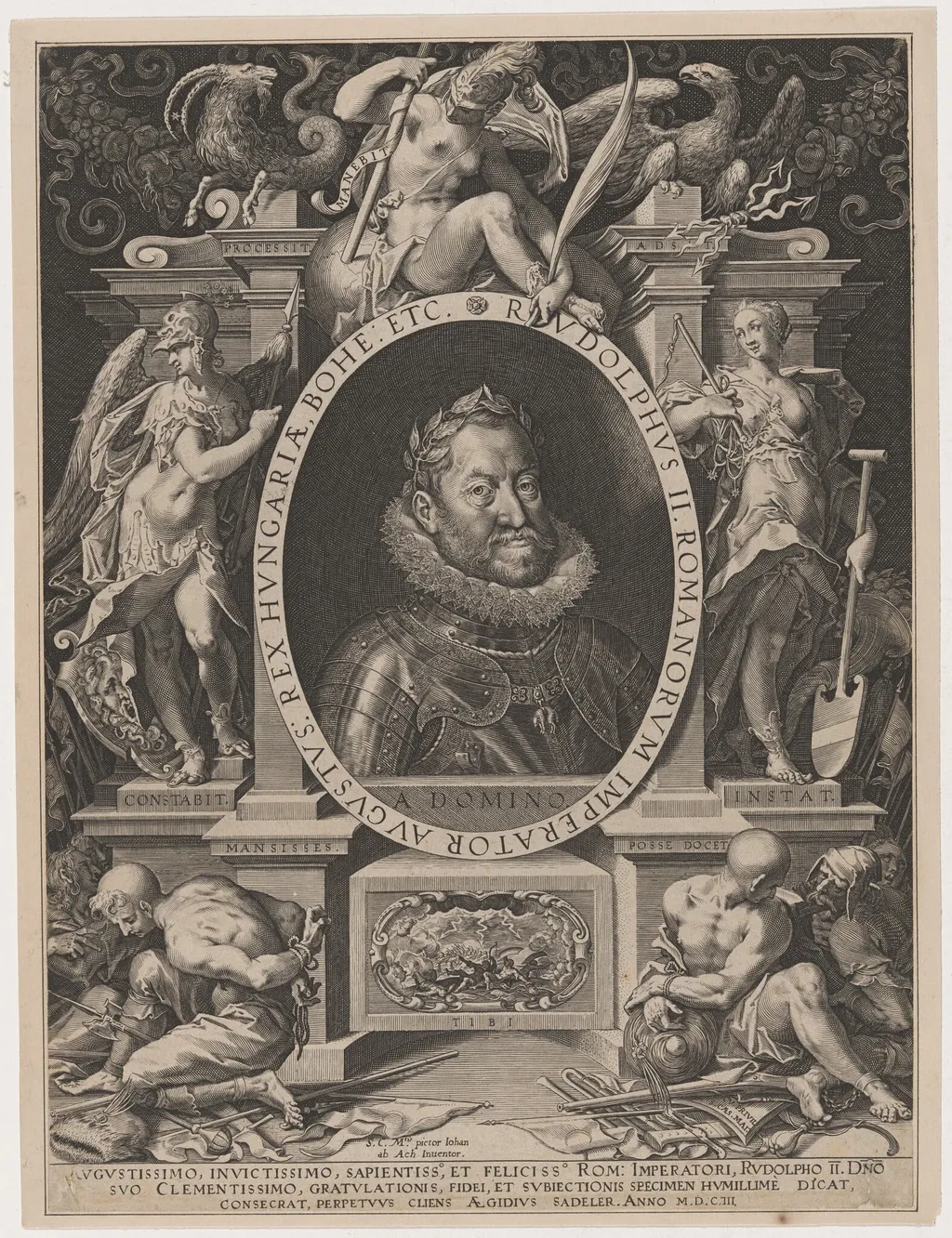
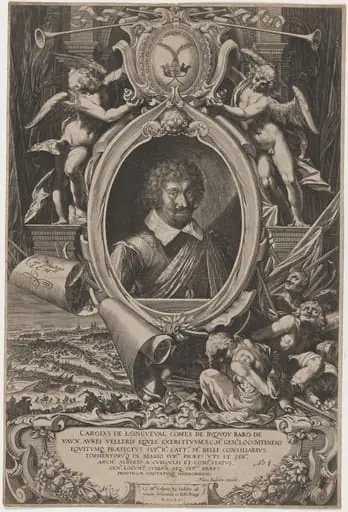
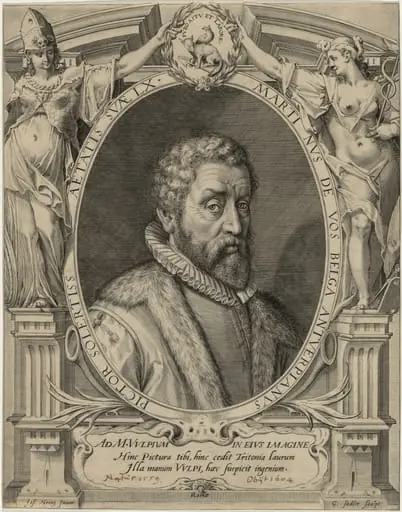
Emperor Rudolph II is an ink print by the Baroque artist Aegidius Sadeler II. It dates from 1603 and is held in the collection of the National Gallery of Art.
About this work
Overview
The print is a formal portrait rendered in fine linear detail, typical of the engraving technique, where ink is pressed from incised copper plates onto paper.
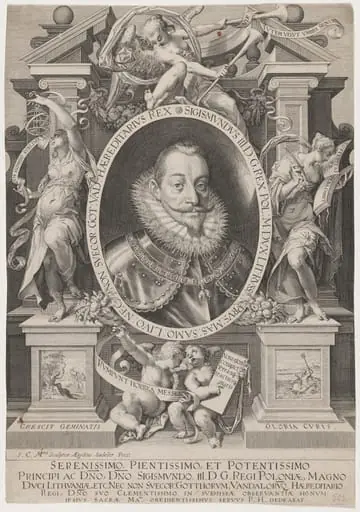
Created in 1603 by Aegidius Sadeler II, this black-and-white engraving portrays Holy Roman Emperor Rudolph II. Sadeler, a Flemish artist based in Prague, produced the work during his tenure at the imperial court. The print is a formal portrait rendered in fine linear detail, typical of the engraving technique, where ink is pressed from incised copper plates onto paper. It reflects the court’s emphasis on visual propaganda and intellectual display.
Subject & Meaning
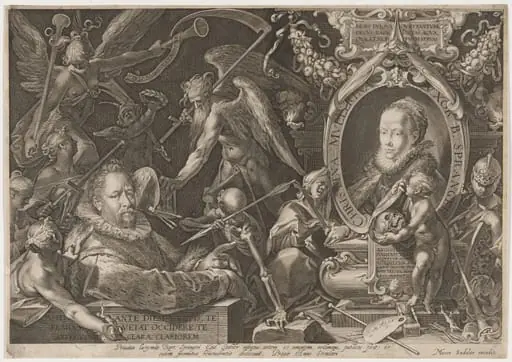
The portrait centers on Rudolph II, depicted in ornate armor, conveying his role as a sovereign and military leader. Surrounding him are four allegorical winged figures holding shields and scrolls, symbolizing virtues or domains under his rule. Above, an arched frame bears Latin inscriptions, reinforcing imperial authority. The dense background—filled with flora, fauna, and cryptic emblems—suggests the emperor’s patronage of natural philosophy and esoteric knowledge, hallmarks of his court’s intellectual culture.
Technique & Style
Sadeler employed fine, precise lines to model form and texture, using cross-hatching to render the weight of armor and the depth of shadows. The engraving’s clarity and detail reflect mastery of the copperplate method, where each line was hand-incised. The composition is tightly structured, with the emperor’s face as the focal point, surrounded by symbolic elements rendered in miniature scale. This technique allowed for mass reproduction, disseminating the emperor’s image across Europe.
History & Provenance
The print was made during Sadeler’s employment at Rudolph II’s Prague court, a hub for artists, scientists, and alchemists. As court engraver, Sadeler produced numerous portraits and allegorical prints for imperial use. This work likely served as a diplomatic gift or official portrait, circulating among European elites. Its survival in multiple institutional collections suggests it was widely distributed and valued for its craftsmanship and political messaging.
Context
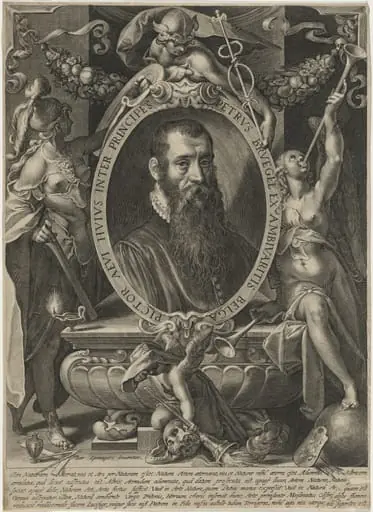
Rudolph II’s reign in Prague (1576–1612) was marked by a unique fusion of art, science, and mysticism. Unlike other Habsburg rulers, he prioritized intellectual curiosity over military expansion, attracting figures like Kepler and Bruegel. Sadeler’s engraving mirrors this environment: the imagery blends classical authority with Renaissance humanism and occult symbolism, aligning the emperor with a broader cultural project that valued knowledge as a form of power.
Legacy
Sadeler’s engraving remains a key example of early 17th-century imperial portraiture. It exemplifies how printmaking served political ends through visual symbolism and technical precision. The work influenced later court artists and contributed to the standardization of dynastic imagery in print. Its detailed iconography continues to be studied for insights into the intersection of power, art, and esoteric thought in the Holy Roman Empire.
Artist & collection
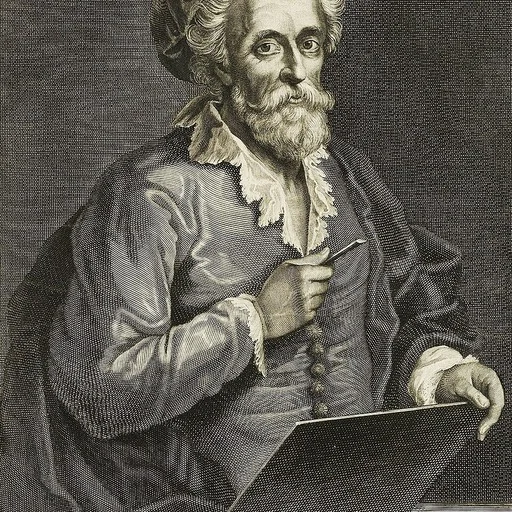
Artist
Aegidius Sadeler or Aegidius Sadeler II (1570–1629) was a Flemish engraver who was principally active at the Prague court of Rudolf II, Holy Roman Emperor and his successors.