Artwork
Dunkerque
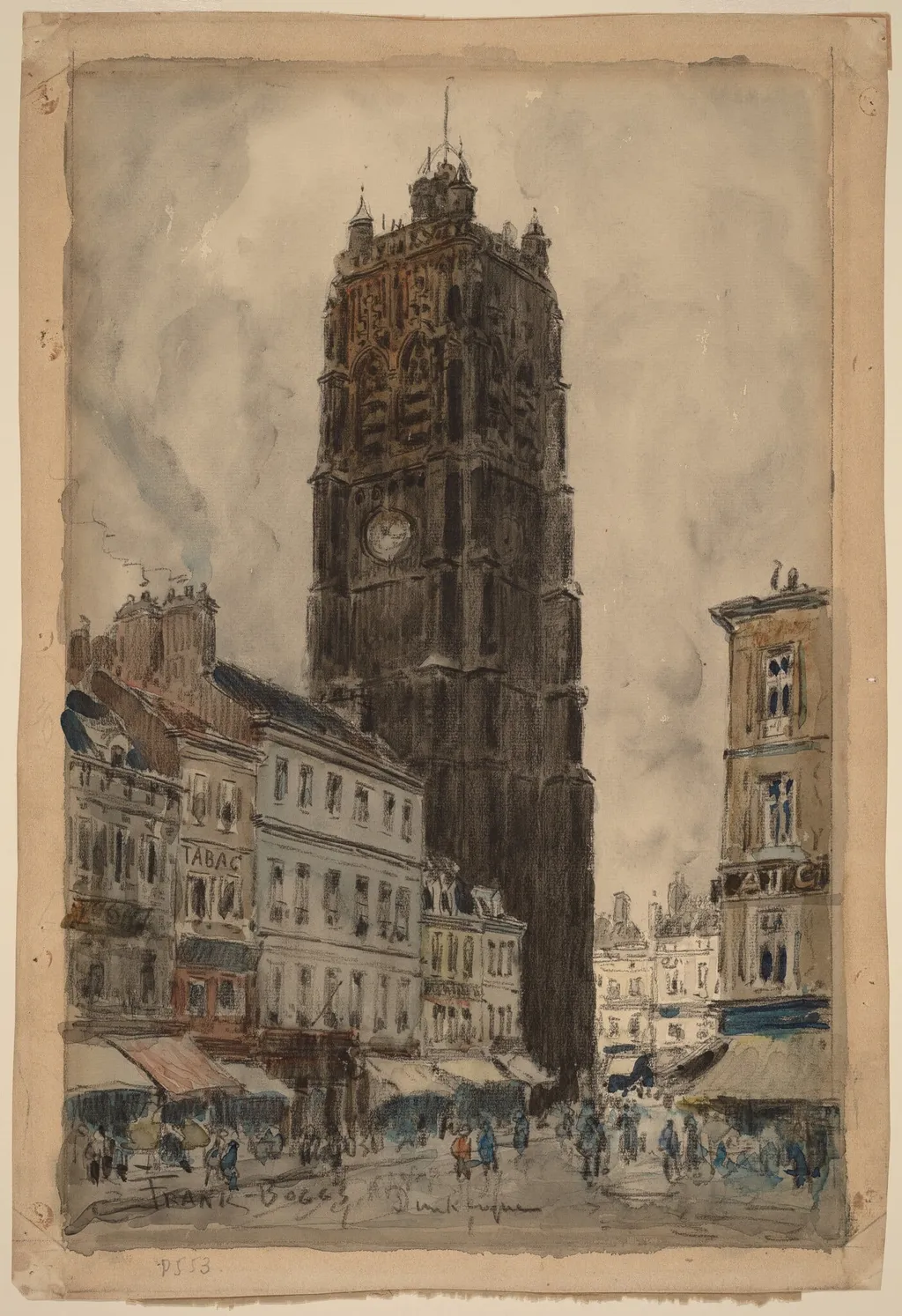
Dunkerque is a chalk drawing by Frank Myers Boggs. It dates from 1924 and is held in the collection of the National Gallery of Art.
About this work
Overview
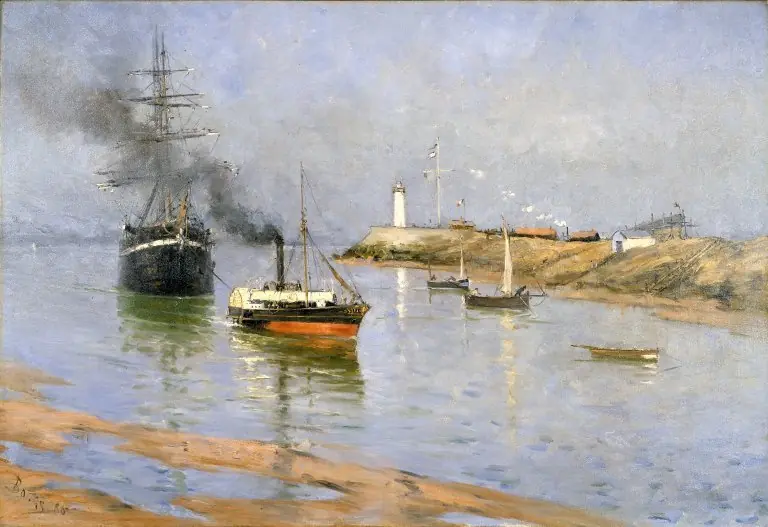
Created circa 1924, *Dunkerque* is a drawing executed in watercolor, black chalk and graphite on wove paper. The work records the French port city of Dunkerque, presenting its harbor and urban layout through a combination of delicate washes and linear drawing.
Subject & Meaning
The composition concentrates on the maritime environment, emphasizing the bustling activity of ships, docks and waterfront architecture. By foregrounding the port’s infrastructure, the piece reflects the artist’s sustained interest in the interplay between water, industry and the built city.
Technique & Style
Boggs employs transparent watercolor washes to suggest atmospheric light, while black chalk and graphite provide structural definition and tonal contrast. The mixed media approach allows for both fluid, impressionistic areas and precise, rendered details, characteristic of his late‑period drawing practice.
History & Provenance
Frank Myers Boggs, an American-born painter who settled in Montmartre, produced the work after completing his studies at the École des Beaux‑Arts under Jean‑Léon Gérôme. He became a naturalized French citizen in 1923; *Dunkerque* entered museum collections in France during his lifetime, reflecting his acceptance within the French art establishment.
Context
The drawing belongs to a broader series of coastal and urban scenes that Boggs created while living in France. During the early 1920s, interest in industrial modernity and maritime commerce was prominent in French art, and Boggs’s focus on ports aligns with this cultural moment.
Artist & collection
Artist
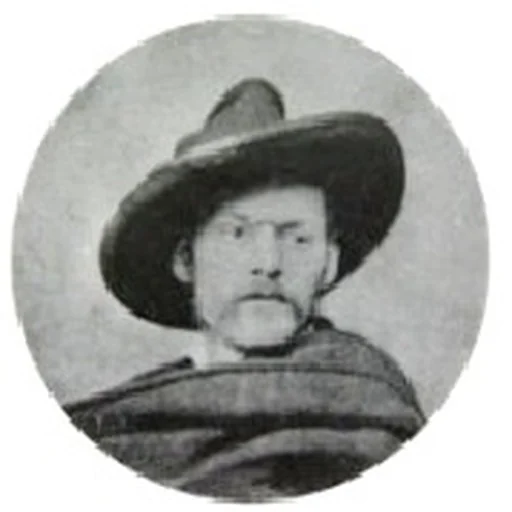
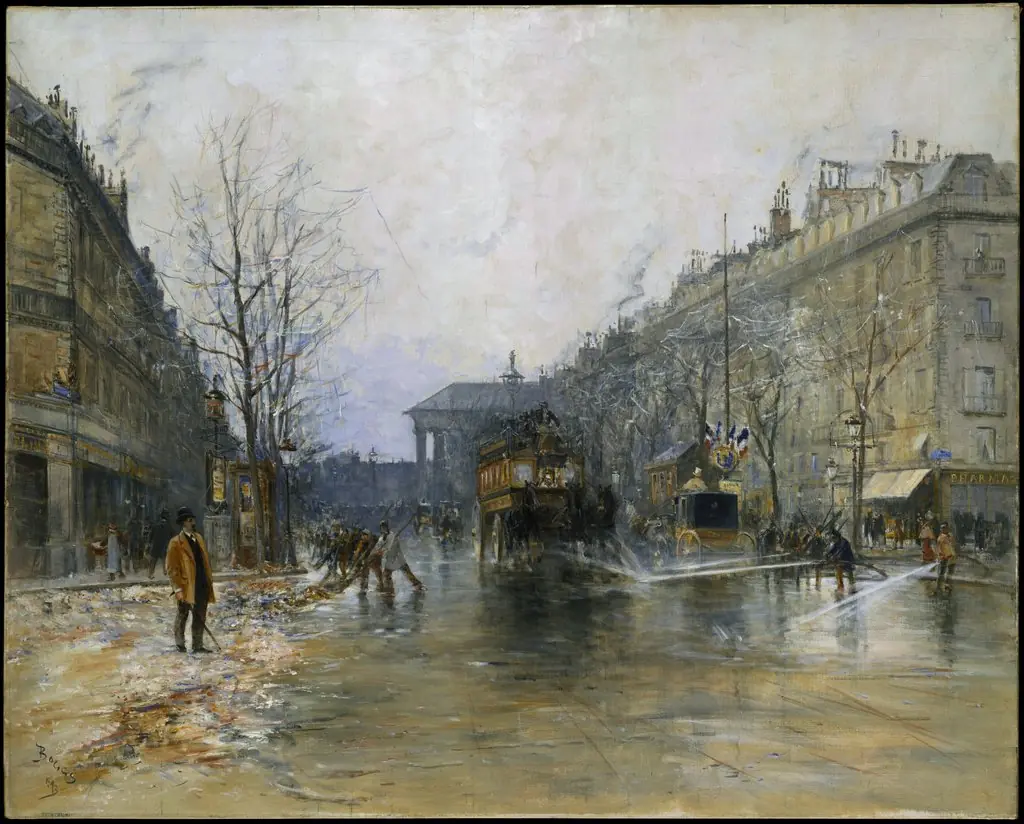
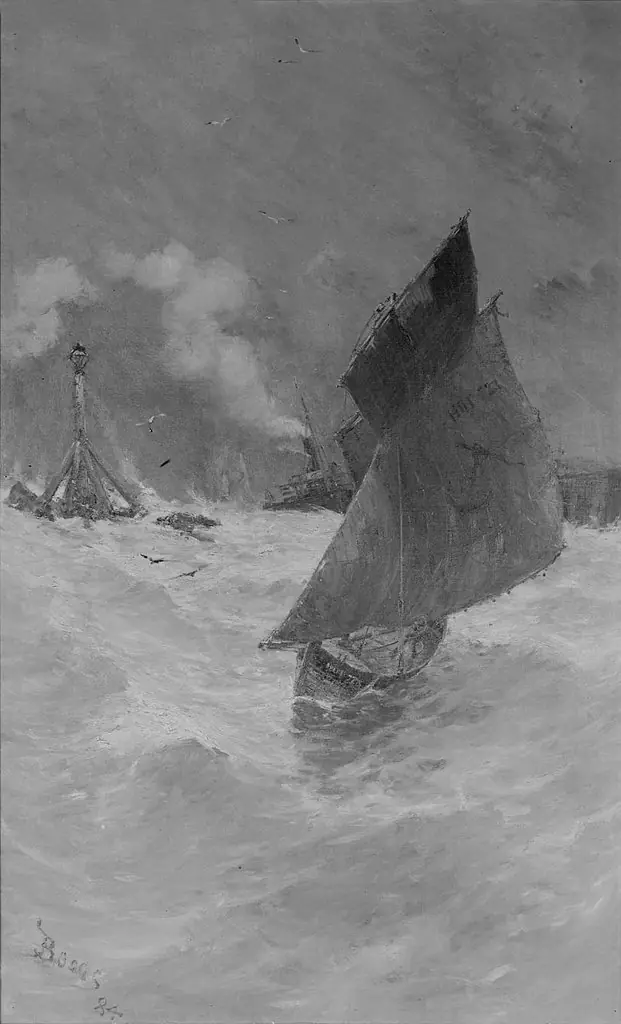
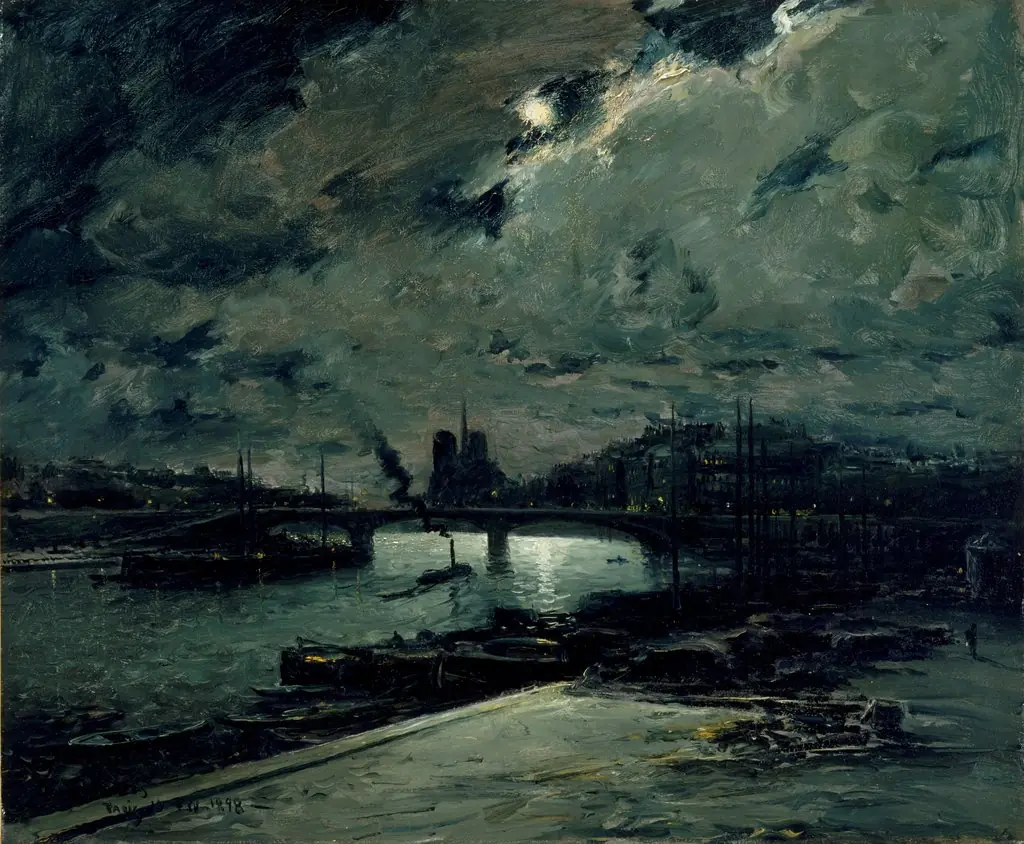
Frank Myers Boggs (December 6, 1855 in Springfield, Ohio- 1926) was an American-born French painter.

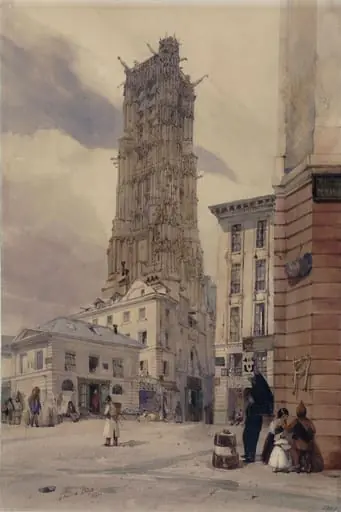 The Tower of St Jacques, Paris
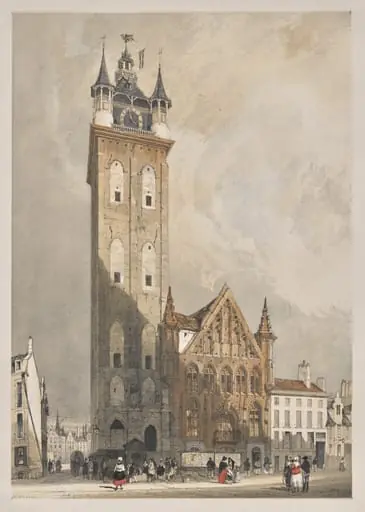 Picturesque Architecture in Paris, Ghent, Antwerp, Rouen: Belfrey, Ghent, Belgium
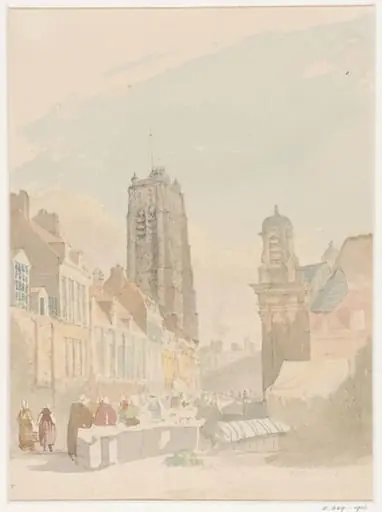 The fish market, Bruges
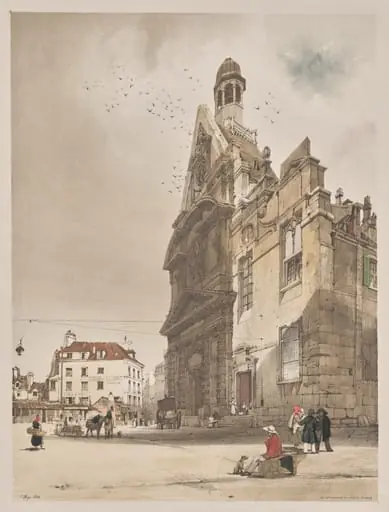 Picturesque Architecture in Paris, Ghent, Antwerp, Rouen: St. Etienne du Mont, Paris
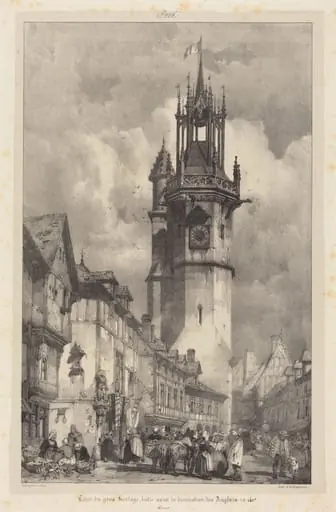 Tour du gros-horloge, Evreux
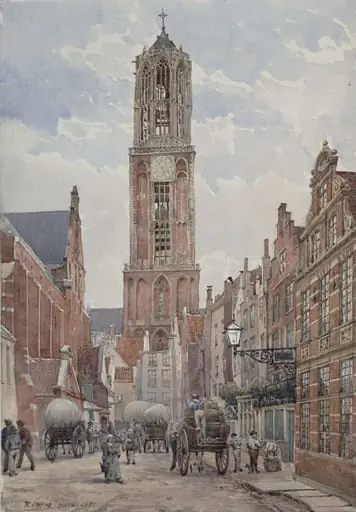 Utrecht: The Cathedral Tower
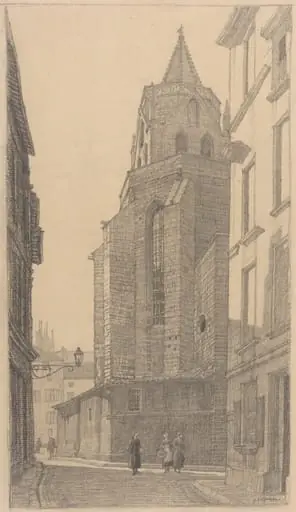 Apse of St.-Didier, Avignon
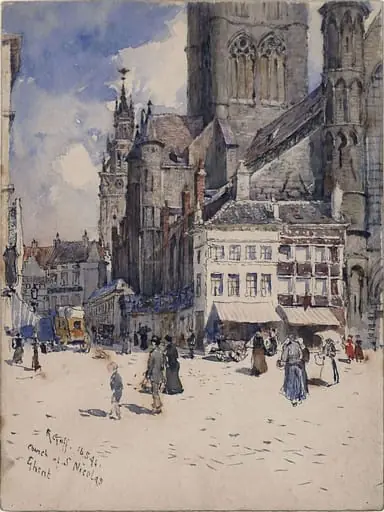 The Church of St. Nicholas, Ghent
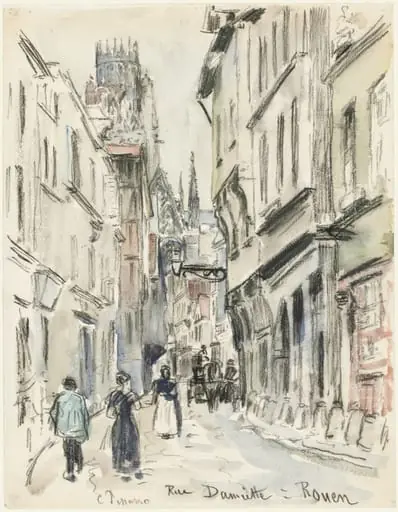 Rue Damiette, Rouen
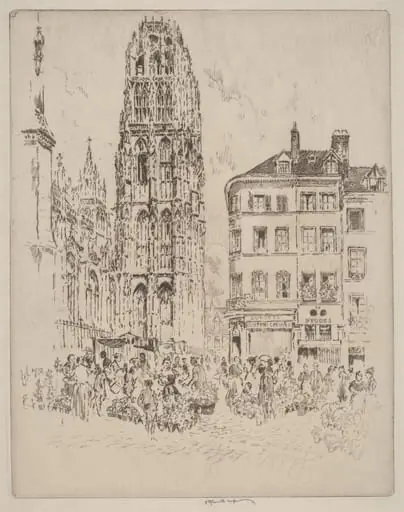 Flower Market and Butter Tower, Rouen
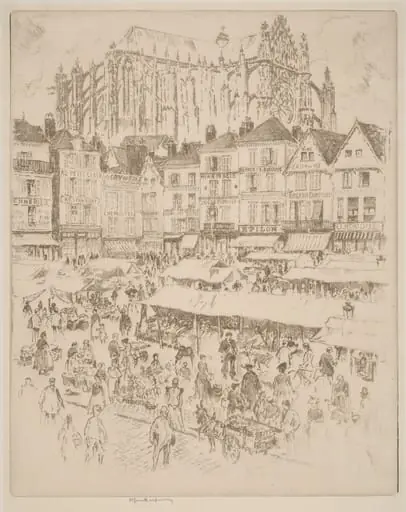 La Place, Beauvais
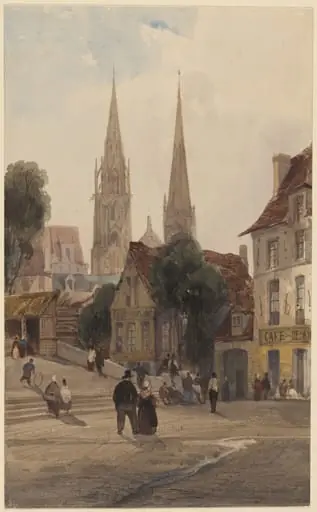 A Street in Chartres