Artwork
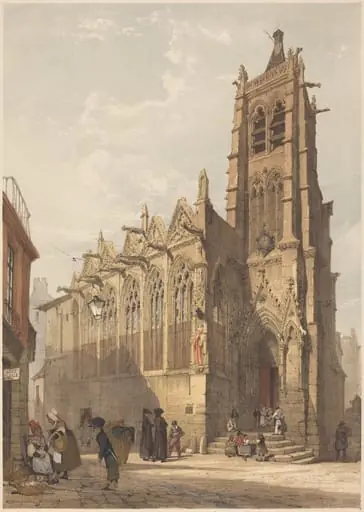
Picturesque Architecture in Paris, Ghent, Antwerp, Rouen: St. Etienne du Mont, Paris
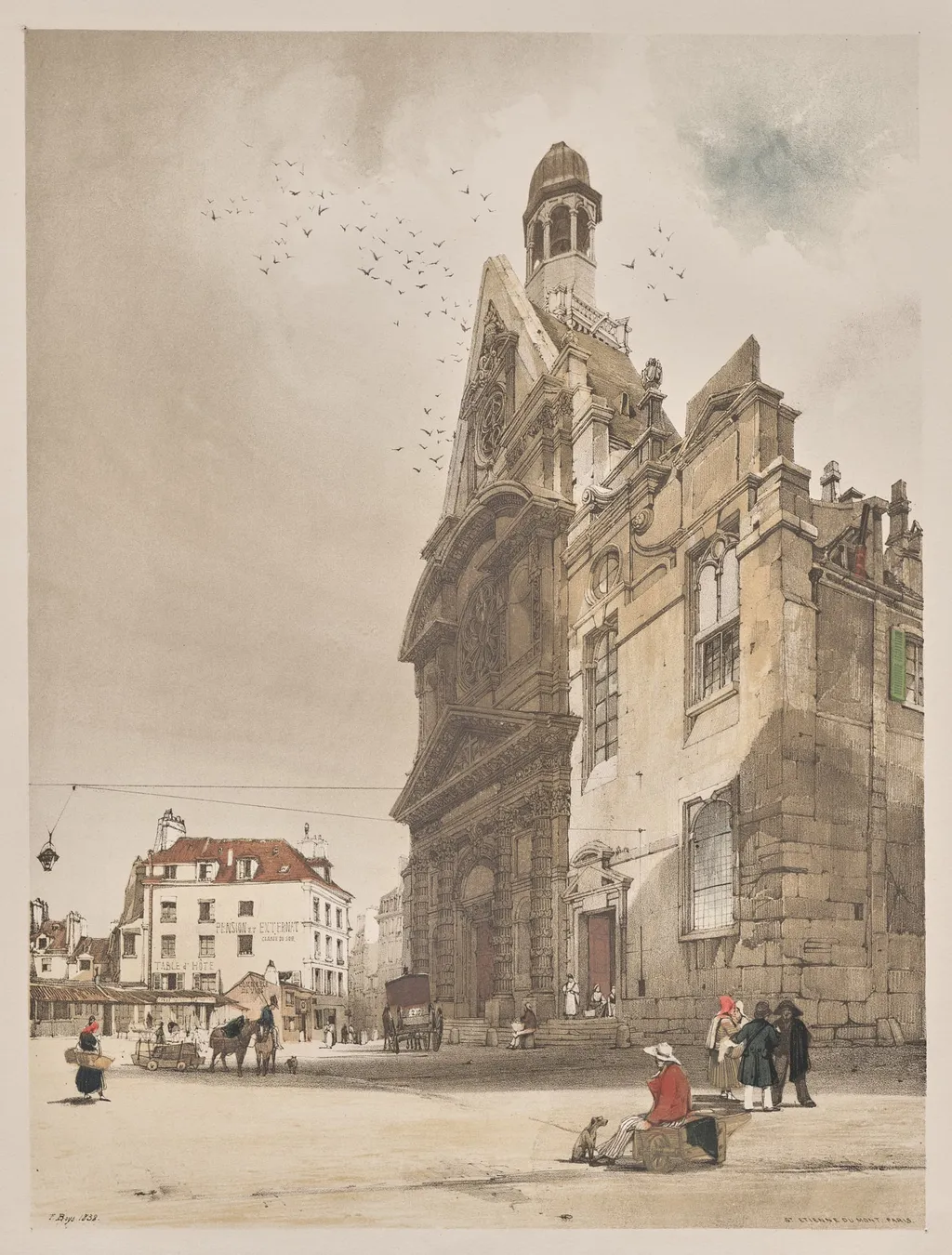
Picturesque Architecture in Paris, Ghent, Antwerp, Rouen: St. Etienne du Mont, Paris is a work on paper by the Romanticist artist Thomas Shotter Boys. It dates from 1839 and is held in the collection of the Cleveland Museum of Art.
About this work
Overview
Thomas Shotter Boys produced this lithograph in 1839 as part of a portfolio documenting urban architecture across northern France and the Low Countries.
Thomas Shotter Boys produced this lithograph in 1839 as part of a portfolio documenting urban architecture across northern France and the Low Countries. The print captures the Church of Saint-Étienne-du-Mont in Paris, rendered through watercolor and lithographic techniques. Boys, a British artist known for precise architectural studies, aimed to record the visual character of European cities during a period of renewed interest in medieval design.
Subject & Meaning
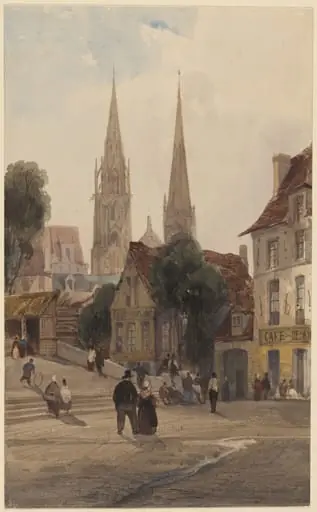
The image centers on Saint-Étienne-du-Mont, a late Gothic structure noted for its ornate façade and prominent clock tower. Surrounding elements—a modest market, pedestrians, and unadorned neighboring buildings—ground the church in everyday urban life. The composition suggests a quiet reverence for the building’s presence amid ordinary activity, reflecting 19th-century fascination with historical architecture as part of lived experience rather than isolated monument.
Technique & Style
Boys used delicate watercolor washes to model the church’s stonework, enhancing the illusion of depth through subtle gradations of light. Lithography allowed for fine lines that define intricate carvings, while the pale sky and muted tones of surrounding structures contrast with the sharply defined tower. The placement of birds and figures adds scale and movement, reinforcing the building’s dominance without romanticizing it.
History & Provenance
Created during Boys’s travels through France and Belgium, this print was part of a published series intended for an English audience interested in continental architecture. The portfolio circulated among collectors and architects, contributing to the British appreciation of Gothic Revival forms. No record indicates the original watercolor survives; the lithograph remains the primary surviving version of this view.
Context
In the 1830s, European cities were undergoing modernization, prompting artists and scholars to document historic buildings before they vanished. Boys’s work aligned with broader antiquarian efforts to record medieval structures, particularly in France, where restoration and demolition were accelerating. His focus on St. Étienne-du-Mont reflects a growing cultural awareness of Gothic heritage beyond religious function.
Legacy
Boys’s lithographs influenced British architectural illustration by emphasizing observational accuracy over idealization. Though not widely known today, his portfolio provided a visual reference for architects and historians studying Gothic forms in situ. The work remains a quiet but valuable record of Parisian urban fabric before the sweeping changes of Haussmann’s renovations.
Artist & collection
Artist
Thomas Shotter Boys (1803–1874) was an English watercolour painter and lithographer, mostly producing cityscapes and images of buildings, although he produced some rural landscapes and marine subjects.

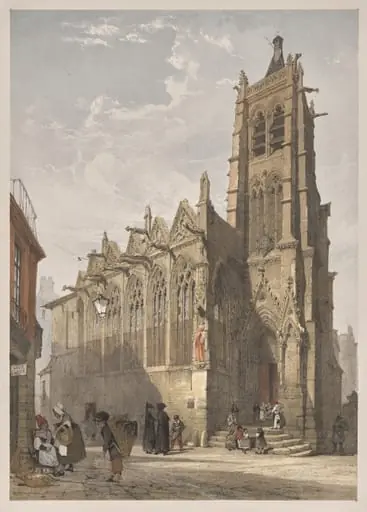 Picturesque Architecture in Paris, Ghent, Antwerp, Rouen: St. Severin, Paris
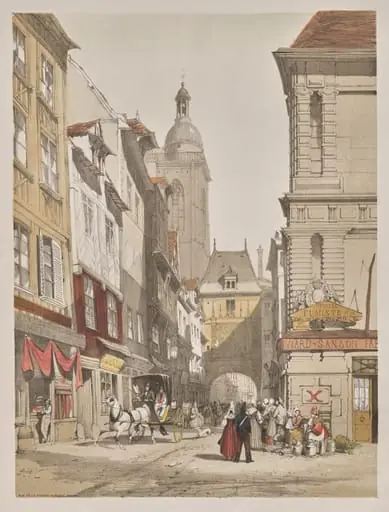 Picturesque Architecture in Paris, Ghent, Antwerp, Rouen: Rue de la Crosse Horlogue, Rouen, France
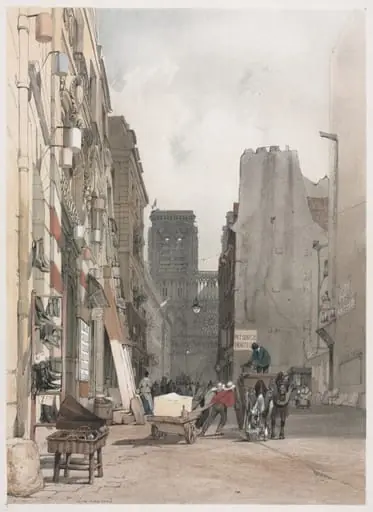 Picturesque Architecture in Paris, Ghent, Antwerp, Rouen: Nôtre Dame, Paris
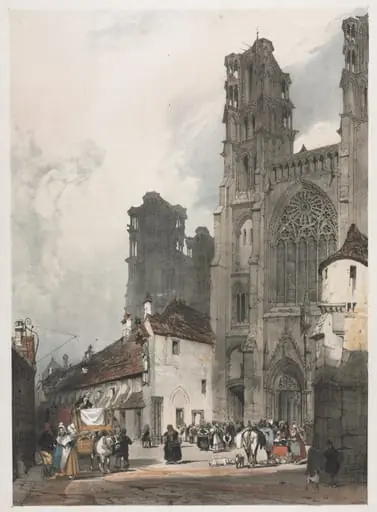 Picturesque Architecture in Paris, Ghent, Antwerp, Rouen: Laon, France
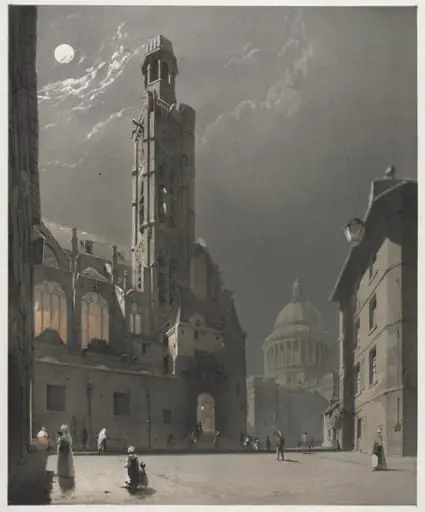 Picturesque Architecture in Paris, Ghent, Antwerp, Rouen: St. Etienne du Mont and the Pantheon, Paris
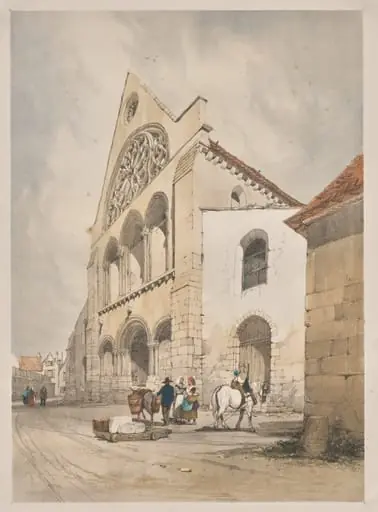 Picturesque Architecture in Paris, Ghent, Antwerp, Rouen: St. Andre, Chartres, France
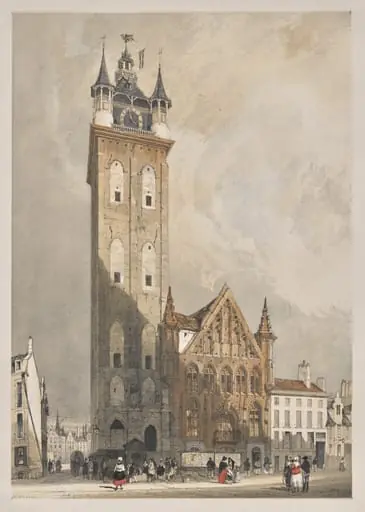 Picturesque Architecture in Paris, Ghent, Antwerp, Rouen: Belfrey, Ghent, Belgium
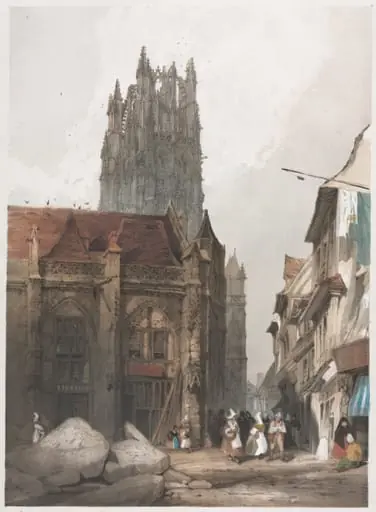 Picturesque Architecture in Paris, Ghent, Antwerp, Rouen: St. Laurent, Rouen, France
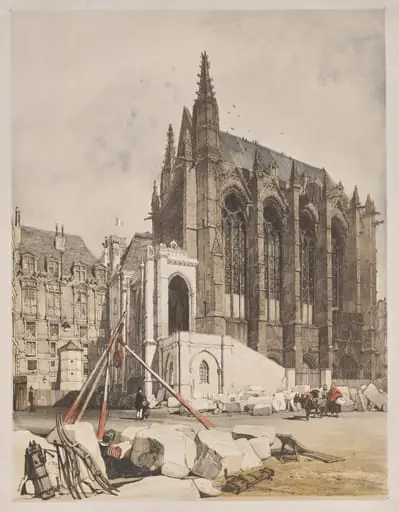 Picturesque Architecture in Paris, Ghent, Antwerp, Rouen: La. Ste Chapelle, Paris
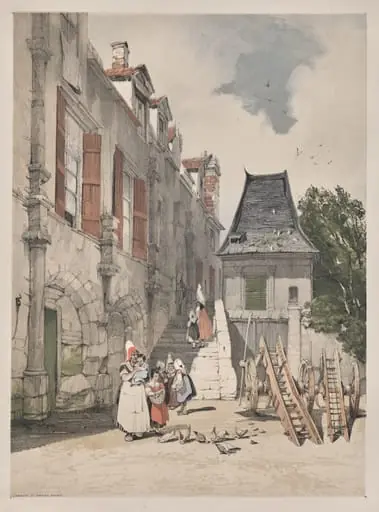 Picturesque Architecture in Paris, Ghent, Antwerp, Rouen: L'Abbaye St. Amand, Rouen, France
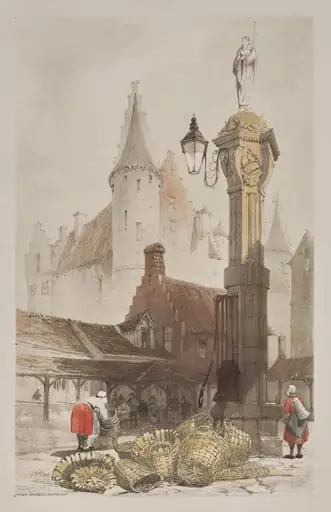 Picturesque Architecture in Paris, Ghent, Antwerp, Rouen: Fish Market, Antwerp, Belgium
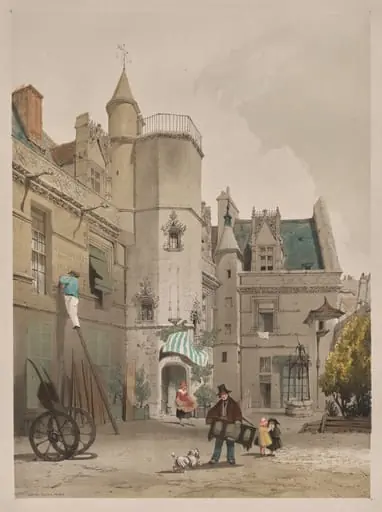 Picturesque Architecture in Paris, Ghent, Antwerp, Rouen: Hôtel Cluny, Paris