Artwork
The Vaccine
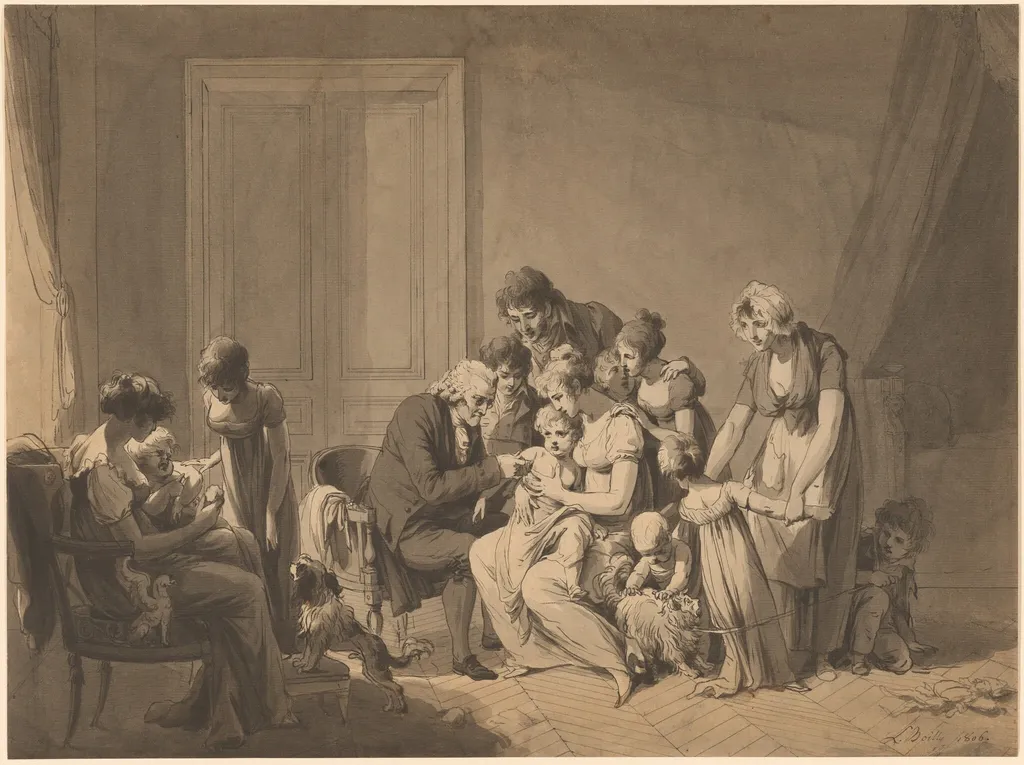
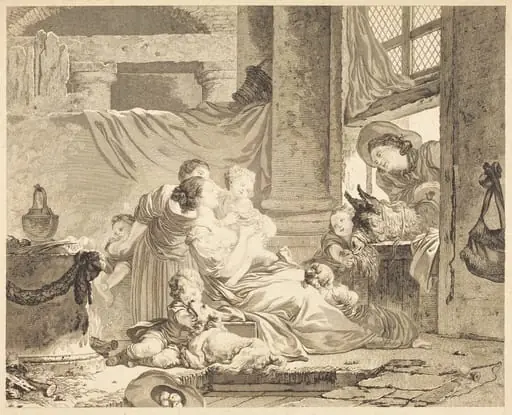
The Vaccine is an ink drawing by the Romanticist artist Louis-Léopold Boilly. It dates from 1806 and is held in the collection of the National Gallery of Art.
About this work
Overview
Louis-Léopold Boilly’s drawing entitled The Vaccine, executed in 1806, is a pen and black‑ink composition with wash on laid paper. The work presents a modest interior scene in which several figures are gathered, centered on a man cradling a child while holding a small object, presumed to be a syringe or inoculation instrument.
Subject & Meaning
The tableau captures a moment of domestic medical practice, likely illustrating the early adoption of vaccination within a private household. The attentive arrangement of the participants, the child's presence, and the focal instrument suggest a quiet, communal response to emerging public‑health measures, emphasizing the personal dimension of scientific progress.
Technique & Style
Boilly employs fine pen lines to delineate forms, complemented by subtle ink washes that render the textures of furniture, drapery, and flesh. The laid paper surface contributes a warm, earthy tone, while the restrained chiaroscuro enhances depth without dramatic contrast, aligning the piece with the softer, observational tendencies of early 19th‑century Romantic drawing.
History & Provenance
Created in 1806, The Vaccine belongs to Boilly’s extensive series of genre drawings that document everyday French life. Although specific ownership records are limited, the work is catalogued among his early drawings and reflects his interest in contemporary social scenes during the post‑Revolutionary period.
Artist & collection


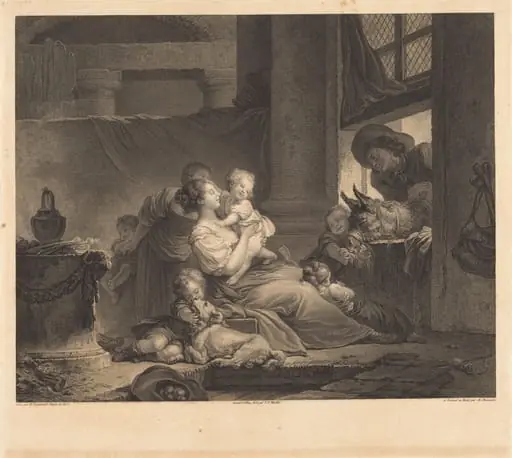 La famille du fermier
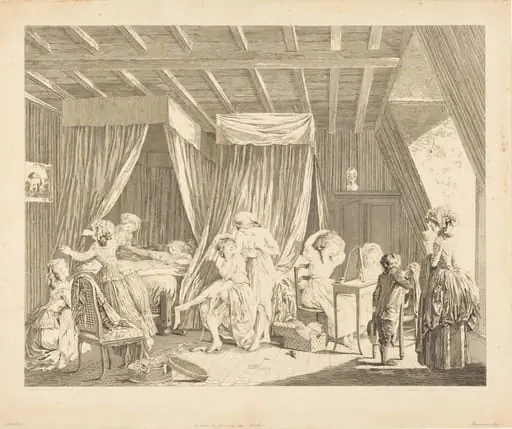 Le lever des ouvrieres en modes
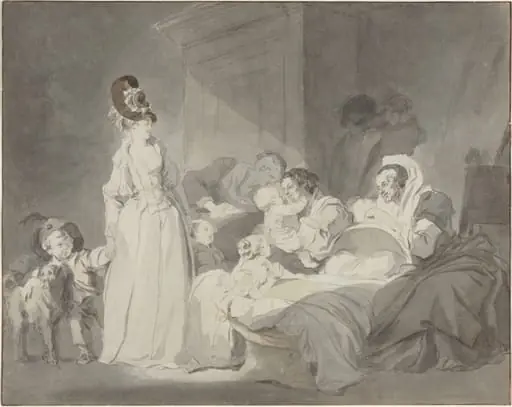 Visit to the Nurse
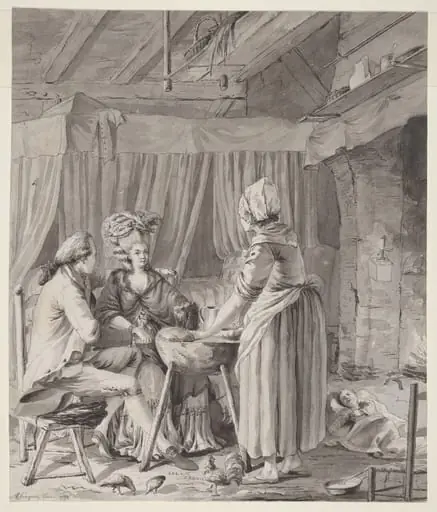 Elegant Couple Lunching in a Country Cottage
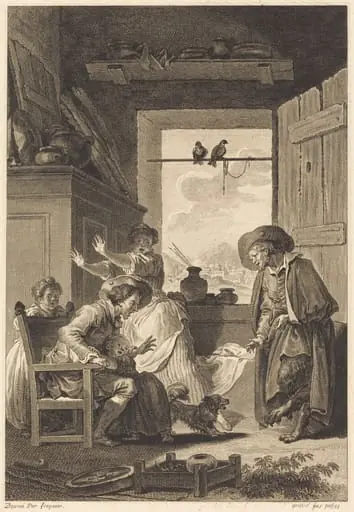 Belphegor
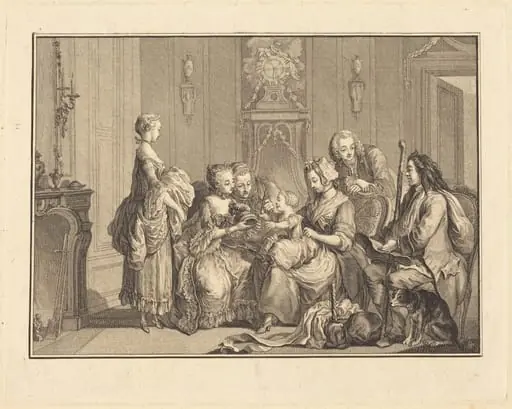 Le belle nourrice
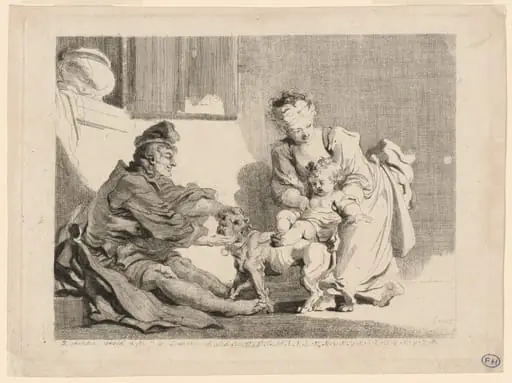 The Child and the Bulldog
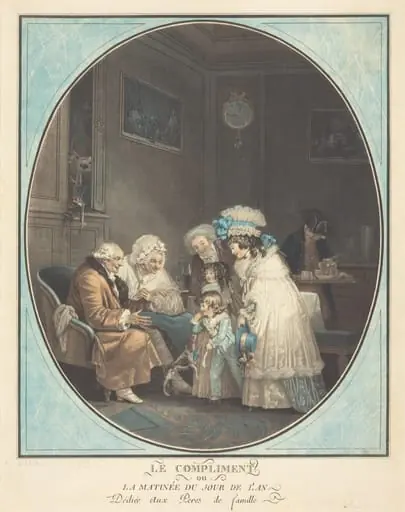 Le Compliment ou La Matinée du jour de l'an (The Compliment or New Year's Morning)
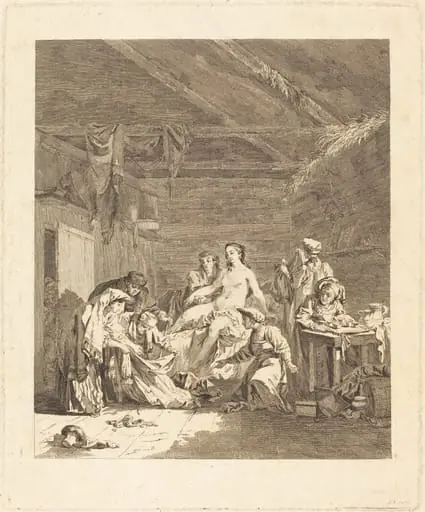 Le lever de la mariée russe (Custom of the Russians after the Marriage Ceremony and before the Wedding Feast)
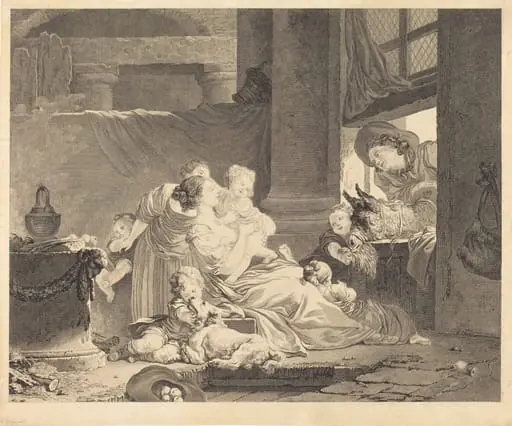 La famille du fermier
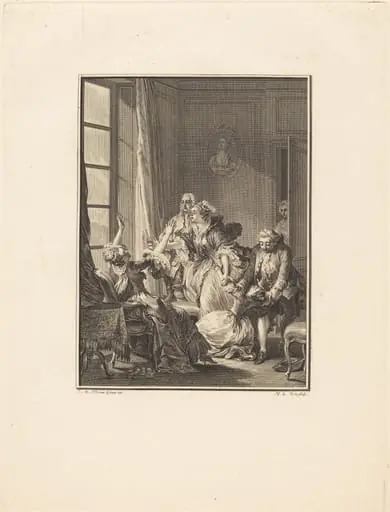 Julie s'évanouit dans un fauteuil
 La famille du fermier