Artwork
Thirteen Studies of Heads
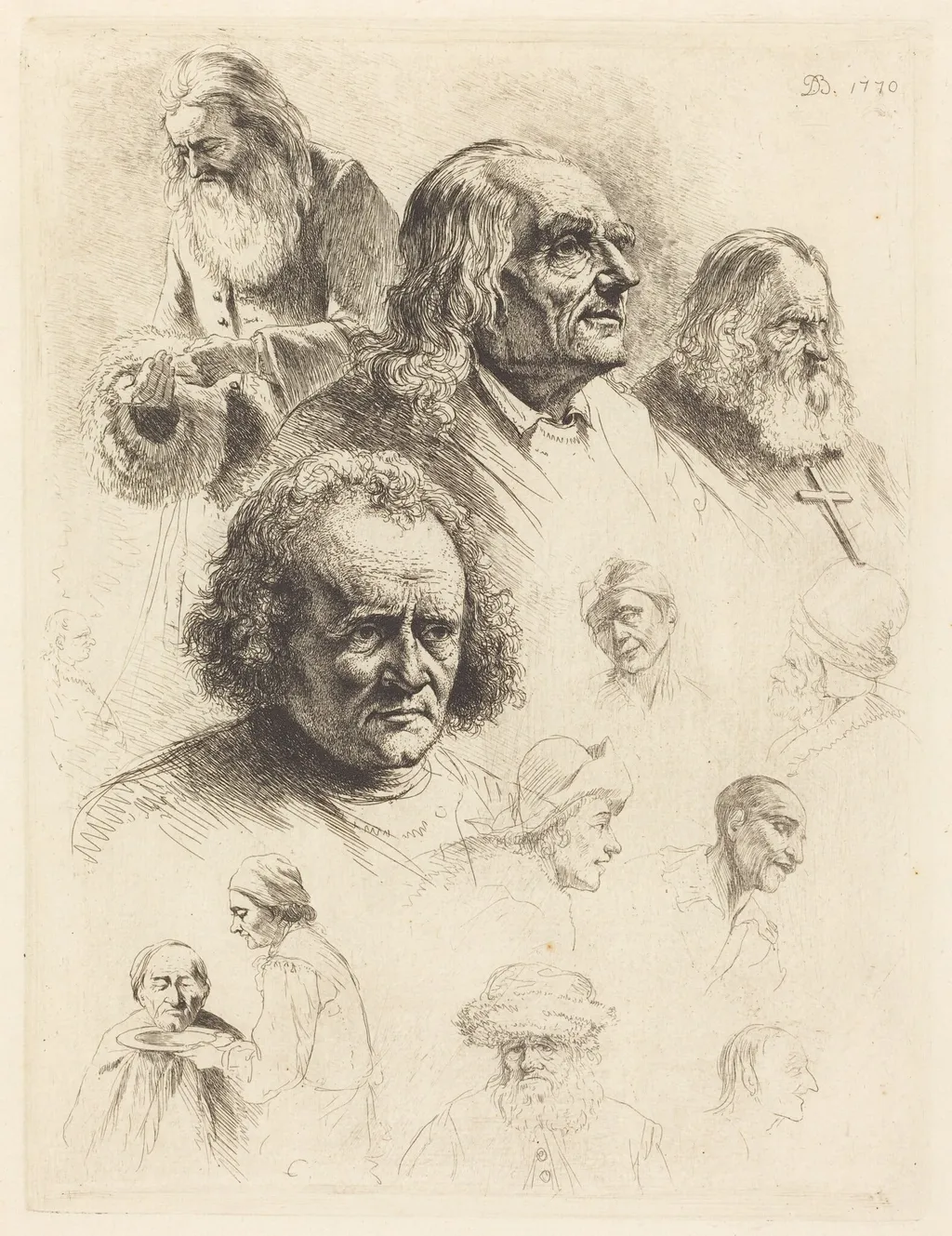
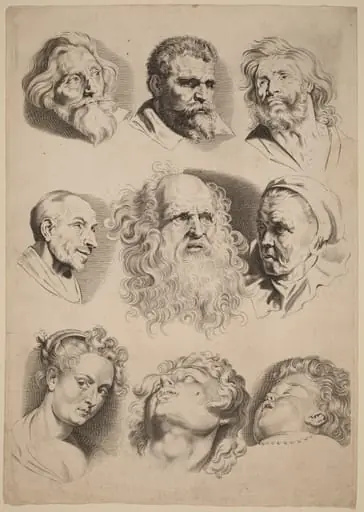
Thirteen Studies of Heads is an ink print by the Romanticist artist Jean-Jacques de Boissieu. It dates from 1770 and is held in the collection of the National Gallery of Art.
About this work
Next, check out etching to see how artists use acid and needles to create these kinds of prints.
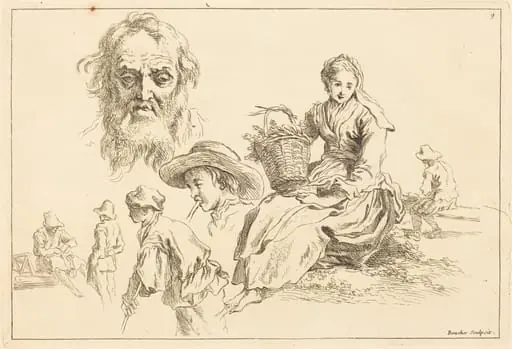
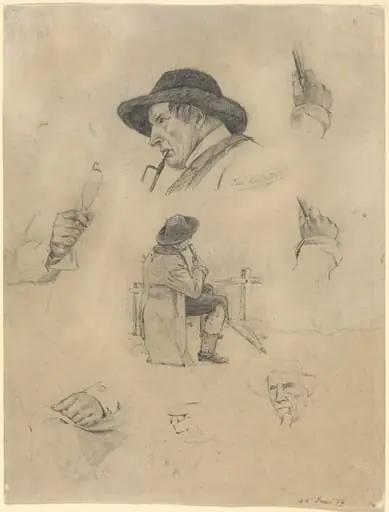
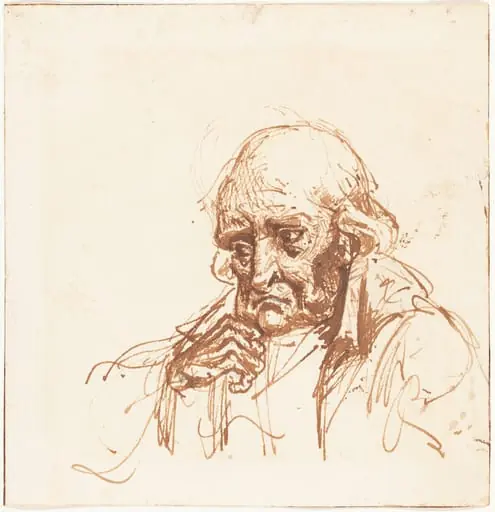
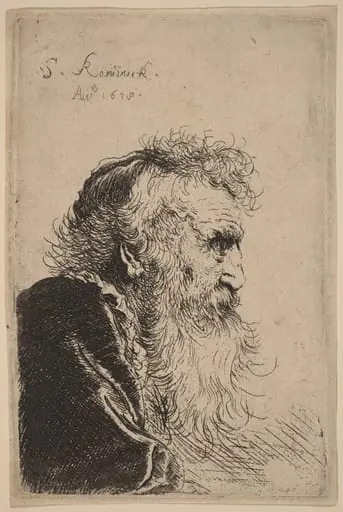
This sketch shows a group of quick, rough portraits of older people. Their faces are drawn with loose lines, some looking serious, others half-turned or blurred. One person holds a cross, and another rests their chin on their hand. The paper looks thin, with faint marks showing through.
The artist focused on capturing expressions in a fast, sketchy style. The small "D. 1770" in the corner might mean it was made that year.
Next, check out etching to see how artists use acid and needles to create these kinds of prints.
Overview
Jean‑Jacques de Boissieu’s Thirteen Studies of Heads is a small black‑ink etching executed on thin wove paper in 1770. The work consists of a series of thirteen quick, sketch‑like portrait studies that capture the varied expressions of elderly figures. Each study is rendered with loose, gestural lines, emphasizing immediacy over detail.
Subject & Meaning
The heads depict older individuals, some appearing solemn, others caught in half‑turned or blurred poses. One figure holds a cross, suggesting a religious or devotional element, while another rests a chin on a hand, conveying contemplation. The collection functions as a study of human expression rather than a narrative scene.
Technique & Style
Created through traditional etching, de Boissieu incised the images onto a metal plate, applied ink, and pressed the plate onto thin wove paper. The resulting marks are deliberately rough and spontaneous, with visible line work that conveys the artist’s swift hand. The faint paper texture and occasional substrate marks add to the work’s sketch‑like quality.
History & Provenance
The piece bears the inscription “D. 1770” in the lower corner, confirming its date of execution. It is known from the artist’s own oeuvre of late‑18th‑century French prints, though specific ownership records prior to modern collections are not documented.
Context
De Boissieu was active during a period when French printmakers often produced studies of facial types for teaching or preparatory purposes. The emphasis on rapid, expressive drawing aligns with contemporary interests in capturing the fleeting qualities of human demeanor, a concern shared by both academic and Enlightenment‑influenced artists.
Artist & collection
Artist
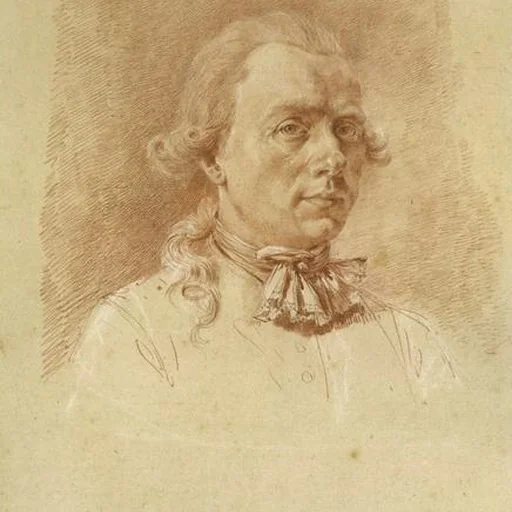
Jean-Jacques de Boissieu (1736–1810) was a French artist, born in Lyon.