Artwork
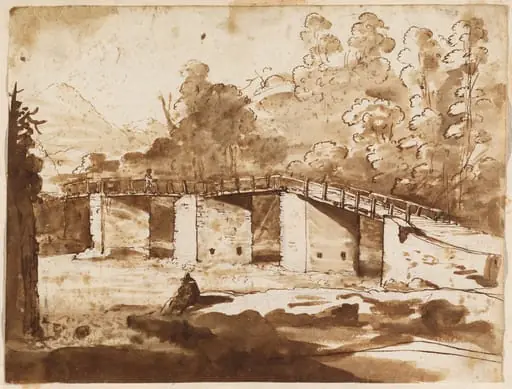
A Country Road across an Ancient Bridge
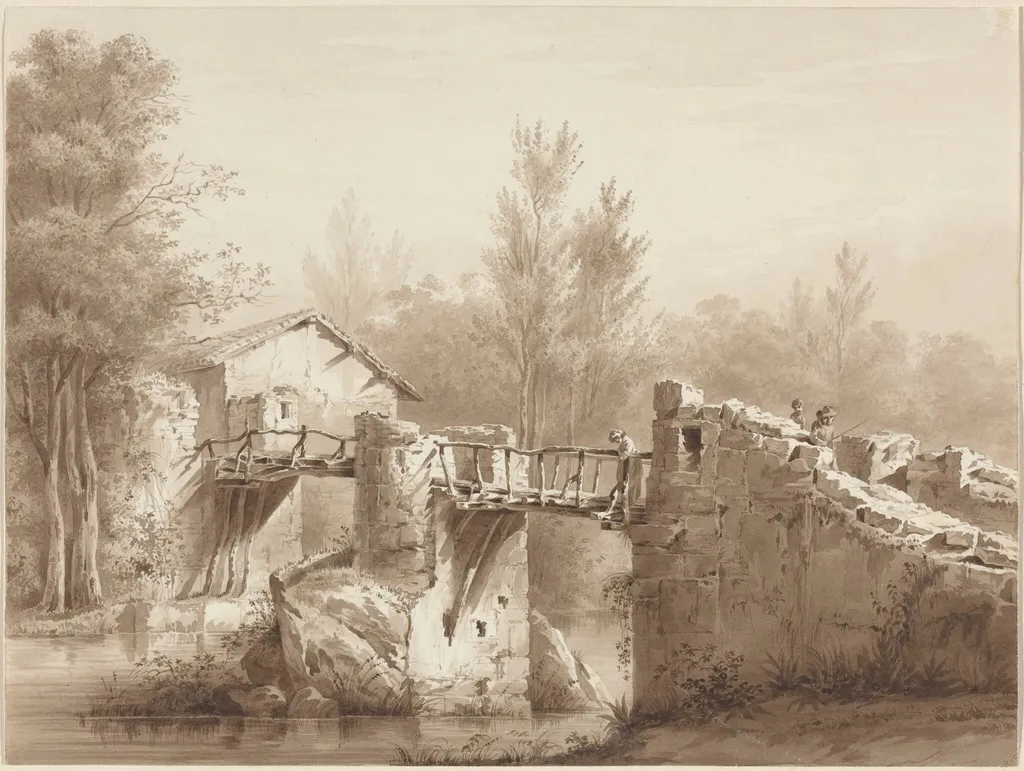
A Country Road across an Ancient Bridge is a graphite drawing by the Baroque artist Jean-Jacques de Boissieu. It dates from 1773 and is held in the collection of the National Gallery of Art.
About this work
Overview
Jean‑Jacques de Boissieu’s 1773 drawing titled *A Country Road across an Ancient Bridge* presents a tranquil rural landscape rendered in brown wash over graphite on wove paper. The composition centers on a modest wooden bridge spanning a rocky stream, flanked by a simple dwelling and a few leaf‑less trees, all depicted in a muted palette that emphasizes atmosphere over detail.
Subject & Meaning
The scene captures everyday travel along a country road, with two figures—one supporting a long staff—pausing on the bridge. The modest architecture and barren foliage suggest a quiet, perhaps transitional moment in the countryside, inviting contemplation of the relationship between human passage and the enduring natural environment.
Technique & Style
De Boissieu employs a delicate combination of graphite sketching and a light brown wash, allowing tonal gradations to suggest depth and mist. The soft, hazy effect achieved through subtle blending creates a sense of calm and slight ambiguity, characteristic of the artist’s restrained approach to landscape drawing in the late eighteenth century.
History & Provenance
Created in 1773, the work belongs to de Boissieu’s mature period, during which he produced numerous topographical studies of French scenery. The drawing is documented as a paper work on wove paper, a common support for preparatory studies and finished drawings of the era, and it has been recorded in several European collections of 18th‑century graphic art.
Own this work as a print
Artist & collection

Artist
Jean-Jacques de Boissieu (1736–1810) was a French artist, born in Lyon.



 Landscape with Watermill
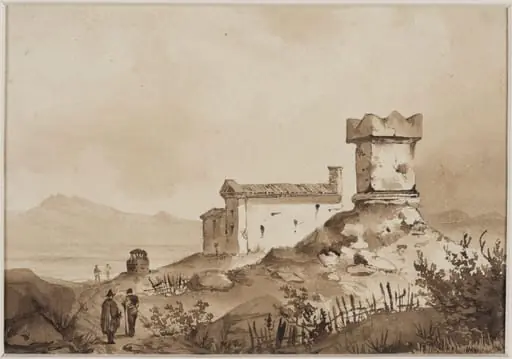 Italian landscape, with an ancient Roman sarcophagus
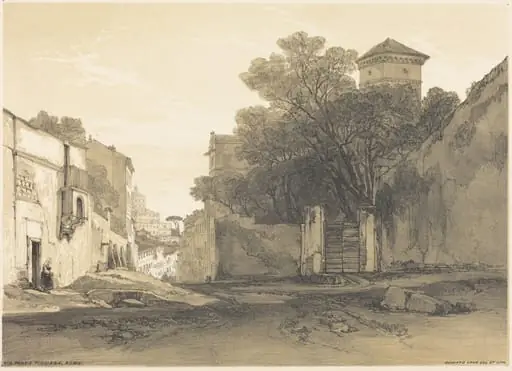 Via Porta Pinciana, Rome
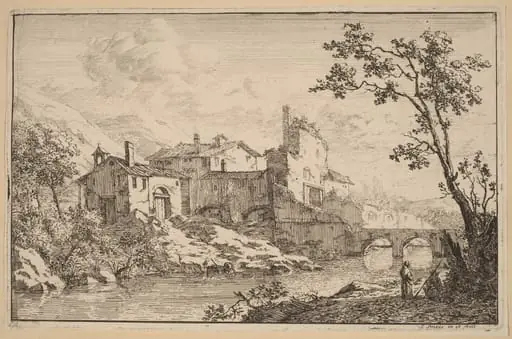 Houses at the Side of a River
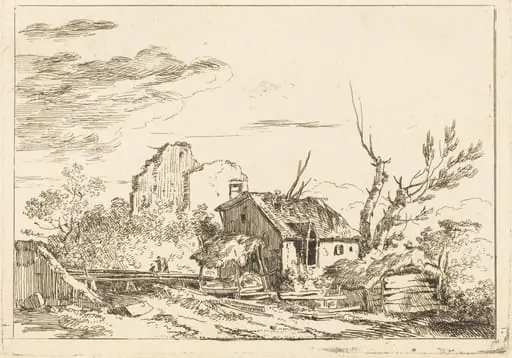 Hovel at the Bridge
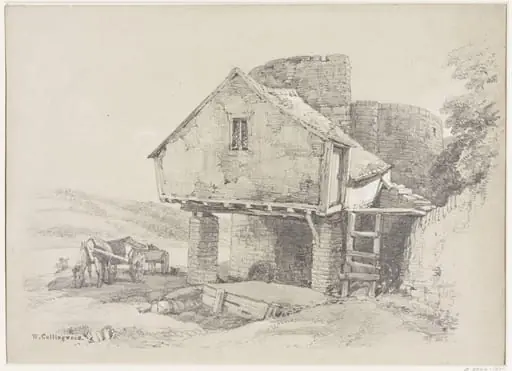 Bideford
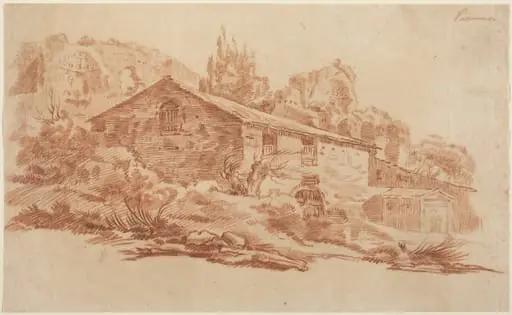 Rustic Building among Roman Ruins
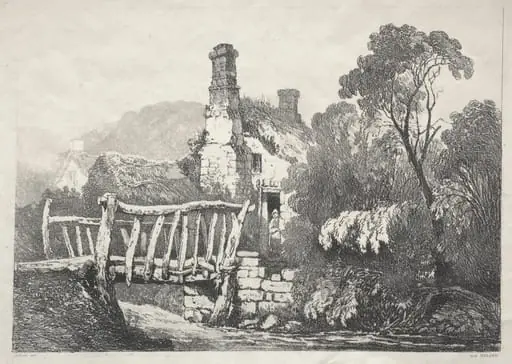 A Series of Ancient Buildings and Rural Cottages in the North of England: Near Byland
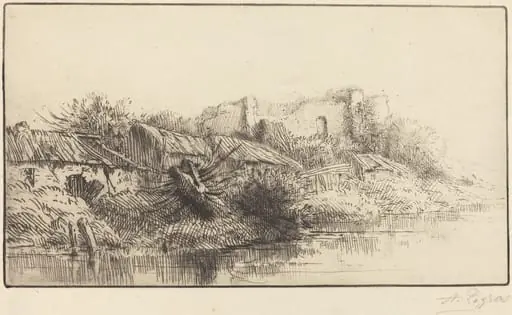 Abandoned Village (Le village abondonne)
 Landscape with a Bridge