Artwork
Self-Portrait
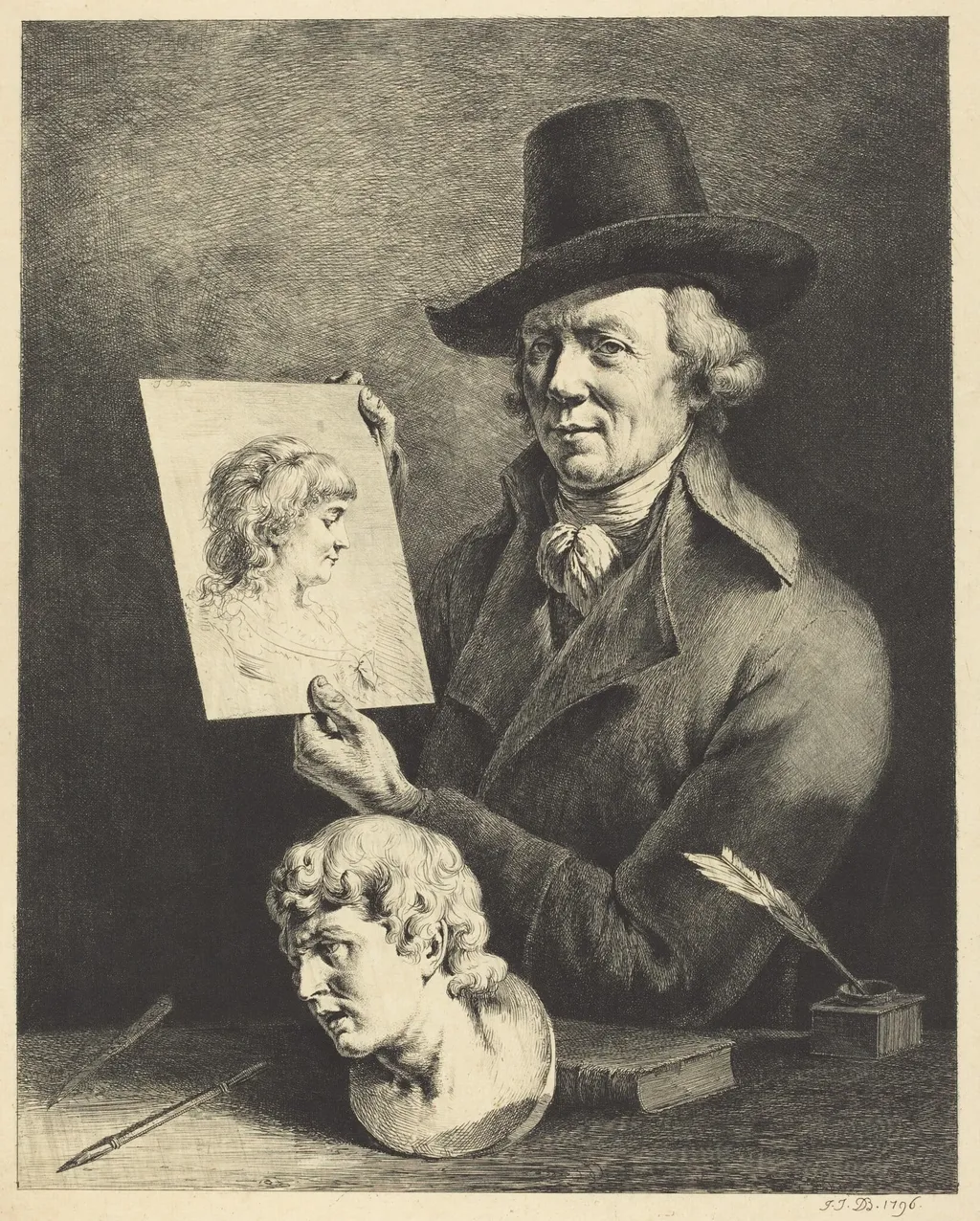
Self-Portrait is an ink print by the Romanticist artist Jean-Jacques de Boissieu. It dates from 1796 and is held in the collection of the National Gallery of Art.
About this work
Overview
Jean‑Jacques de Boissieu’s 1796 print, titled Self‑Portrait, is executed on laid paper using a combination of etching, drypoint, and roulette. The monochrome image presents a seated figure in a dark coat and hat, surrounded by drawing implements and a sculptural bust, offering a compact study of the artist’s working environment.
Subject & Meaning
The central figure holds a small sketch that reproduces the artist’s own likeness, creating a visual echo that suggests self‑reflection. Adjacent to him, a marble‑like bust of a youthful head rests on a pedestal, perhaps alluding to classical ideals or the artist’s engagement with portraiture as a scholarly pursuit.
Technique & Style
De Boissieu employed traditional etching to outline forms, while drypoint added delicate, burr‑rich lines that convey texture, particularly in the facial features and clothing folds. The roulette tool produced stippled tonal areas, enriching the background and lending depth to the composition without the use of color.
History & Provenance
Created in the late eighteenth century, the print reflects de Boissieu’s mature period as a French draughtsman and printmaker. While specific ownership records are scarce, the work has been documented in catalogues of his oeuvre and appears in collections focusing on French printmaking of the Revolutionary era.
Artist & collection
Artist
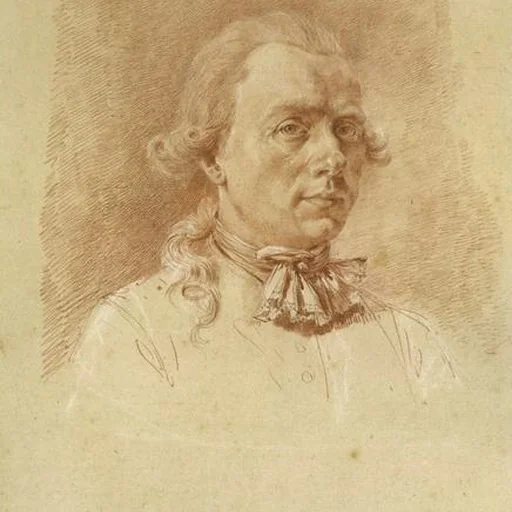
Jean-Jacques de Boissieu (1736–1810) was a French artist, born in Lyon.

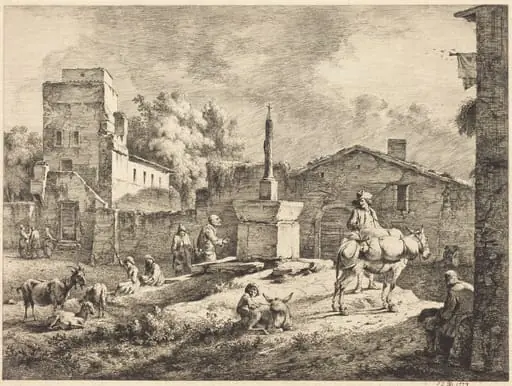
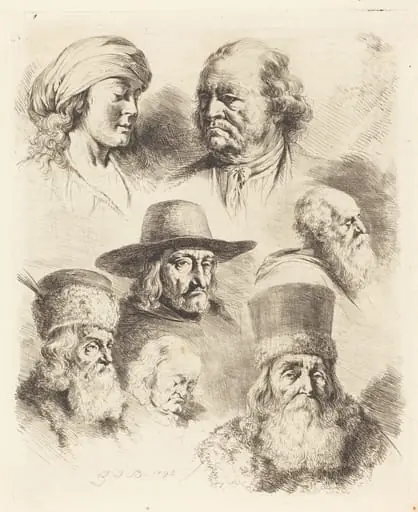
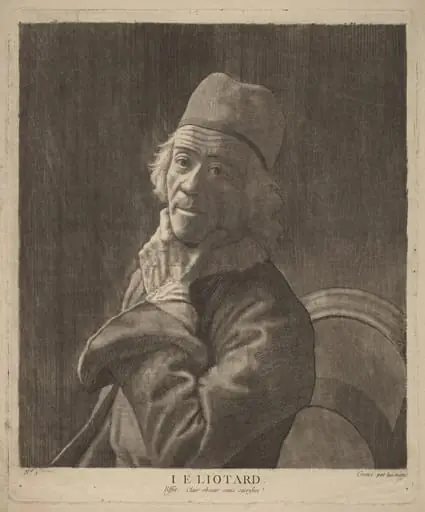 Self-Portrait
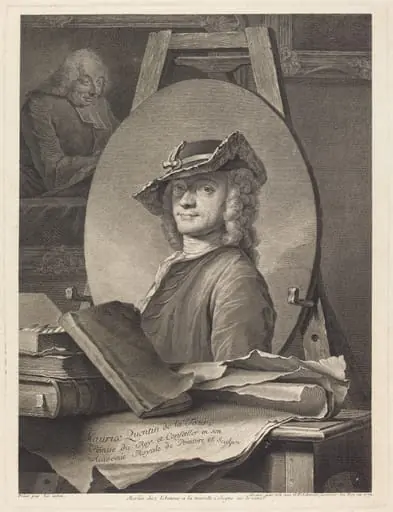 Maurice Quentin de la Tour
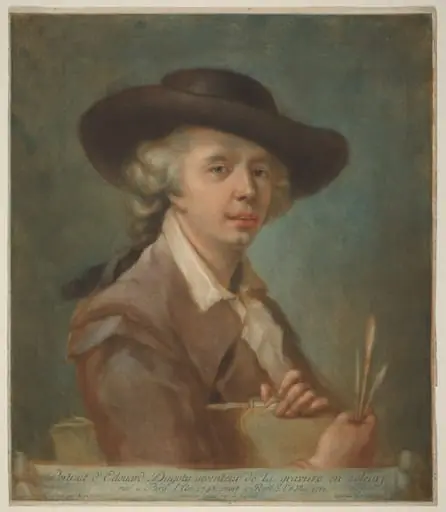 Edouard Gautier d'Agoty
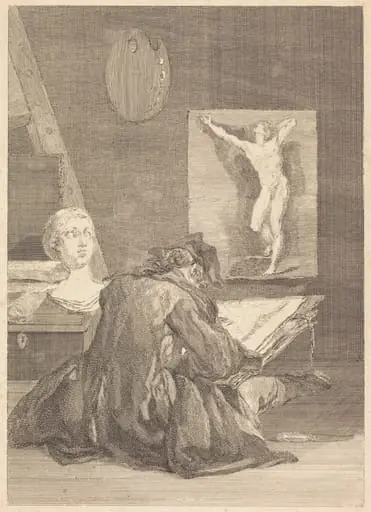 Le Dessinateur (The Draughtsman)
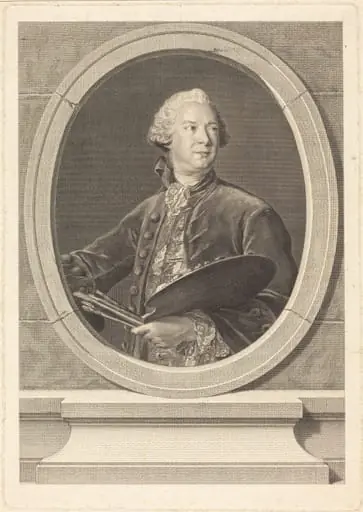 Louis Tocque
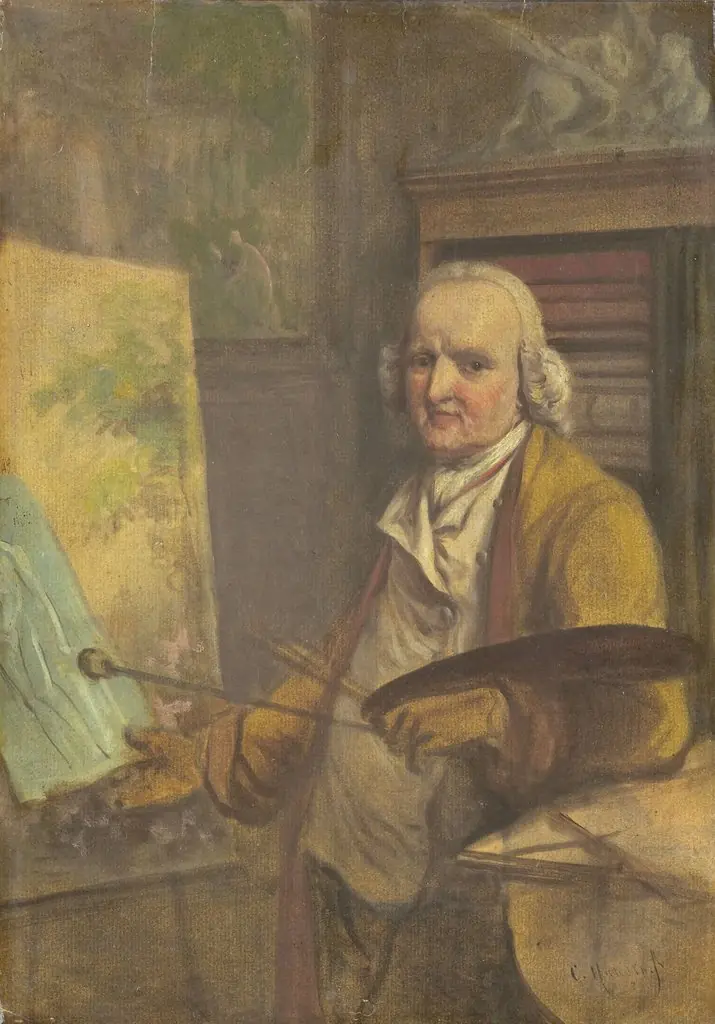 Self-Portrait
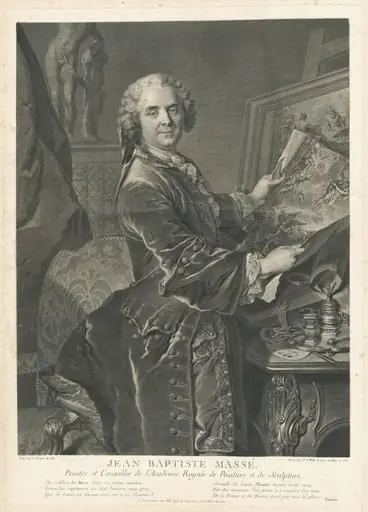 Jean Baptiste Massé
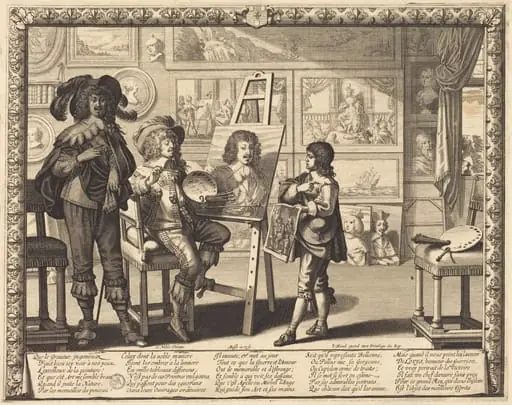 Le noble peintre
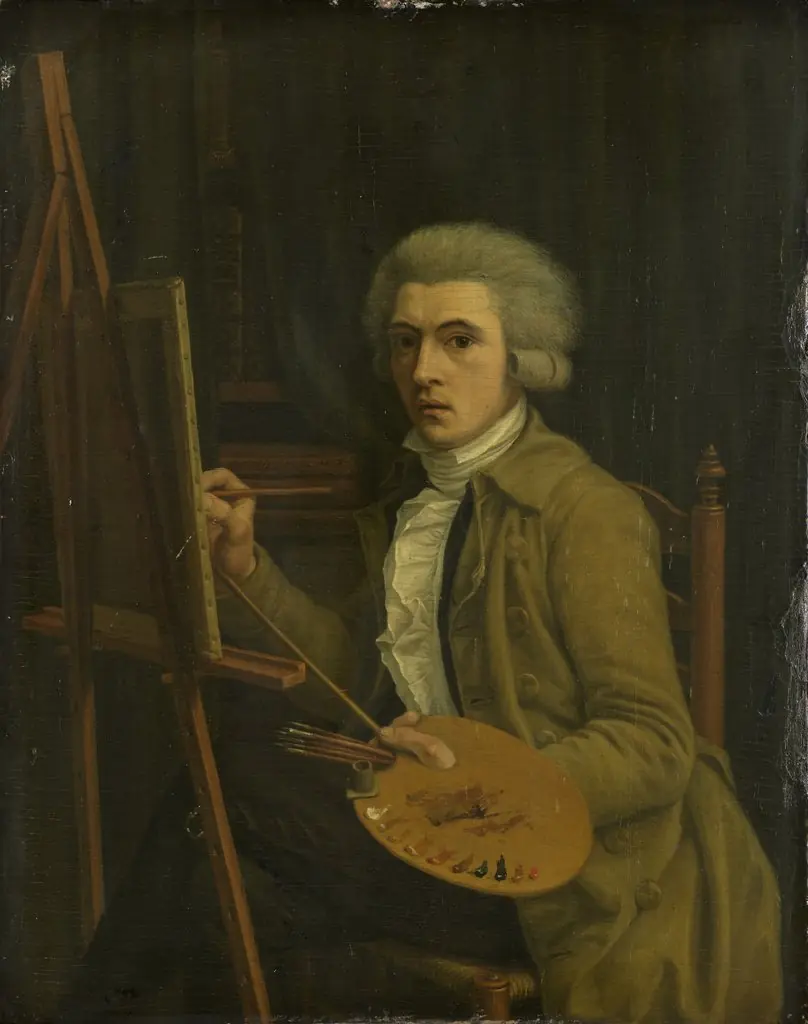 Portrait of a Painter, probably the Artist himself
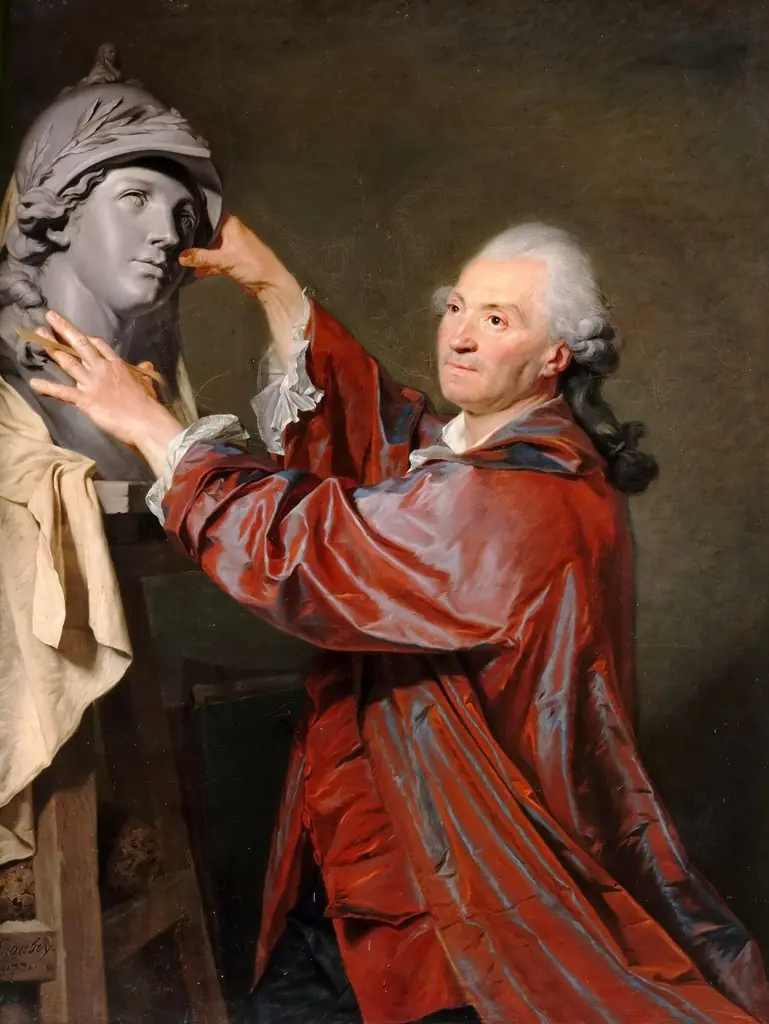 Louis-Claude Vassé, sculptor
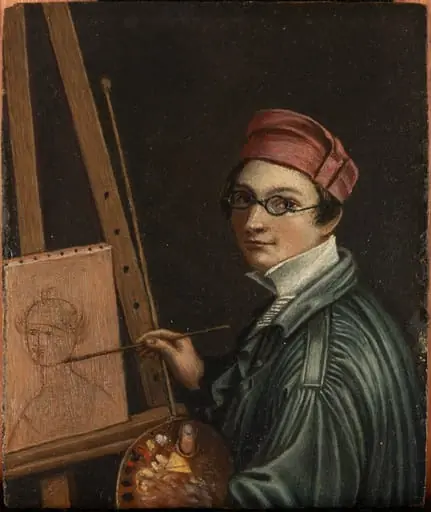 Selbstbildnis des Malers Anton Meier vor der Staffelei
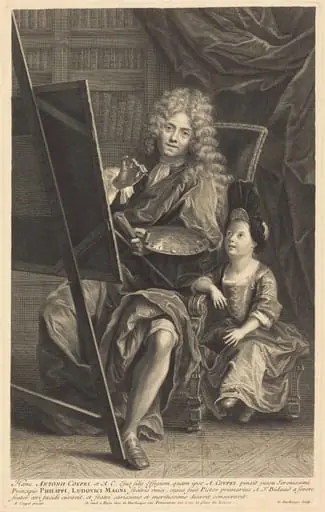 Antoine Coypel and His Son