Artwork
Oboe Player
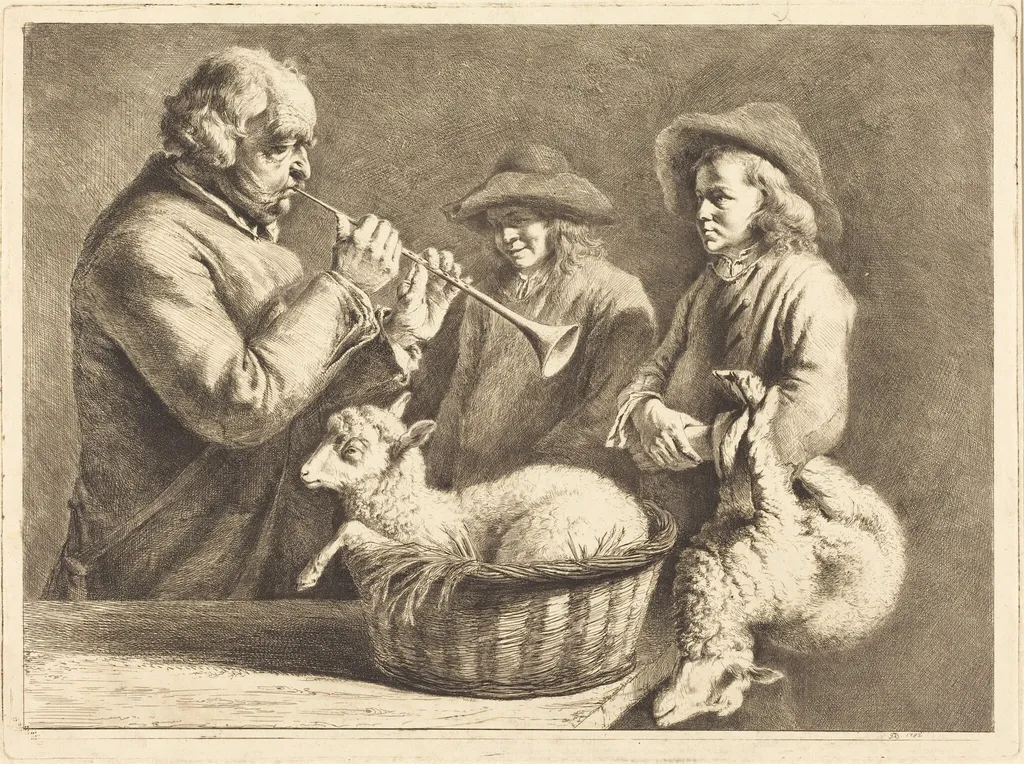
Oboe Player is an ink print by the Romanticist artist Jean-Jacques de Boissieu. It dates from 1782 and is held in the collection of the National Gallery of Art.
About this work
Overview
Created in 1782 by Jean-Jacques de Boissieu, this print combines etching, drypoint, and roulette techniques with a subtle gray wash. Executed on laid paper, it captures a quiet rural moment with layered textures and delicate tonal gradations. The work is a proof, indicating it was pulled before the final edition, offering insight into the artist’s process and revisions.
Subject & Meaning
The scene depicts three figures in a pastoral setting: an elderly man holding an oboe, two younger individuals nearby, one with a walking stick and hat, the other handling wool. A sheep rests calmly beside a basket of fibers. The composition suggests a moment of pause in labor, where music and craft coexist, evoking rural life without overt narrative or symbolism.
Technique & Style
The hand-drawn quality emerges through subtle inconsistencies in line weight, avoiding mechanical precision in favor of organic expression.
Boissieu employed precise etched lines alongside the rougher, more tactile marks of drypoint and roulette to render textures—especially in the wool, fur collar, and fabric folds. A soft gray wash unifies the tonal range, enhancing depth without obscuring detail. The hand-drawn quality emerges through subtle inconsistencies in line weight, avoiding mechanical precision in favor of organic expression.
History & Provenance
As a proof impression, this version predates the published edition and likely served as a working state for the artist’s adjustments. It remained within Boissieu’s circle, possibly retained for personal reference or demonstration. No public record of early ownership exists beyond its association with the artist’s printmaking practice in late 18th-century France.
Context
Produced during a period when French artists increasingly turned to intimate, everyday subjects, this print reflects a broader shift away from grand historical themes. Boissieu, influenced by the Enlightenment’s interest in naturalism and rural life, aligned his work with contemporaries who valued quiet observation over dramatic storytelling.
Legacy
Though not widely exhibited in his time, Boissieu’s prints, including this one, are recognized for their technical nuance and sensitivity to texture. The work contributes to the understanding of printmaking as a medium for lyrical, non-heroic representation, influencing later generations interested in the expressive potential of etched line and tone.
Artist & collection
Artist
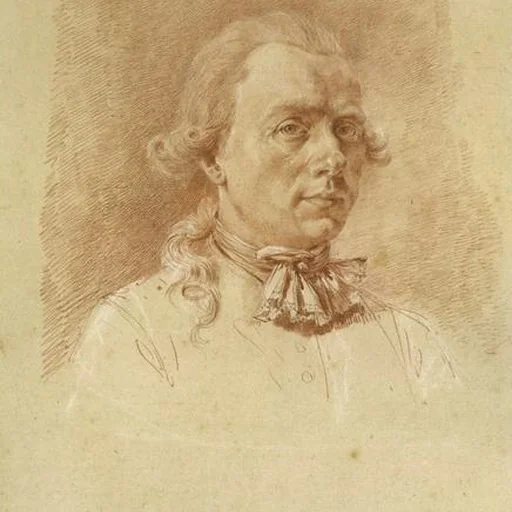
Jean-Jacques de Boissieu (1736–1810) was a French artist, born in Lyon.

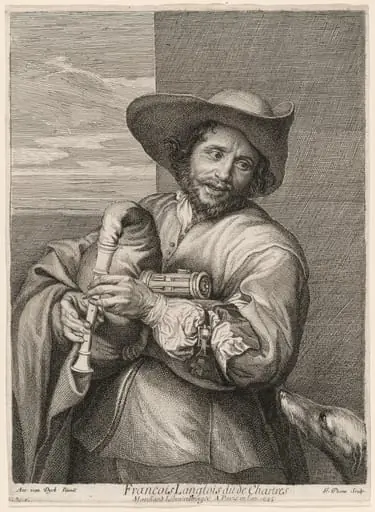 François Langlois
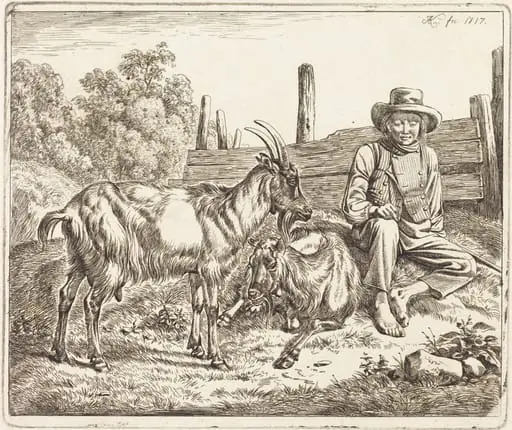 Shepherd Boy with Two Goats
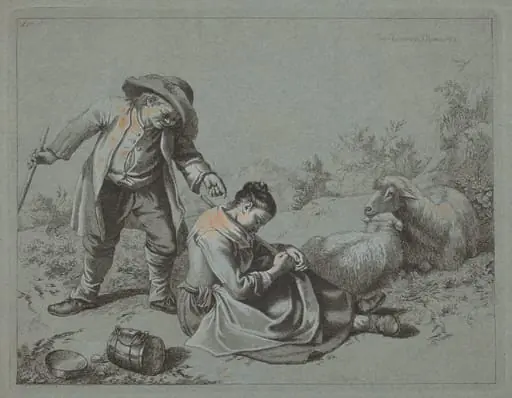 Peasant Teasing a Sleeping Girl with a Twig
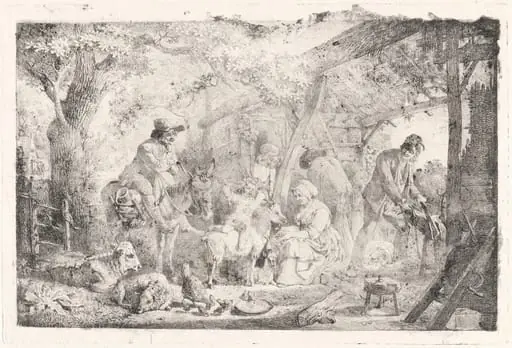 The Little Cavalier (Le Petit Cavalier)
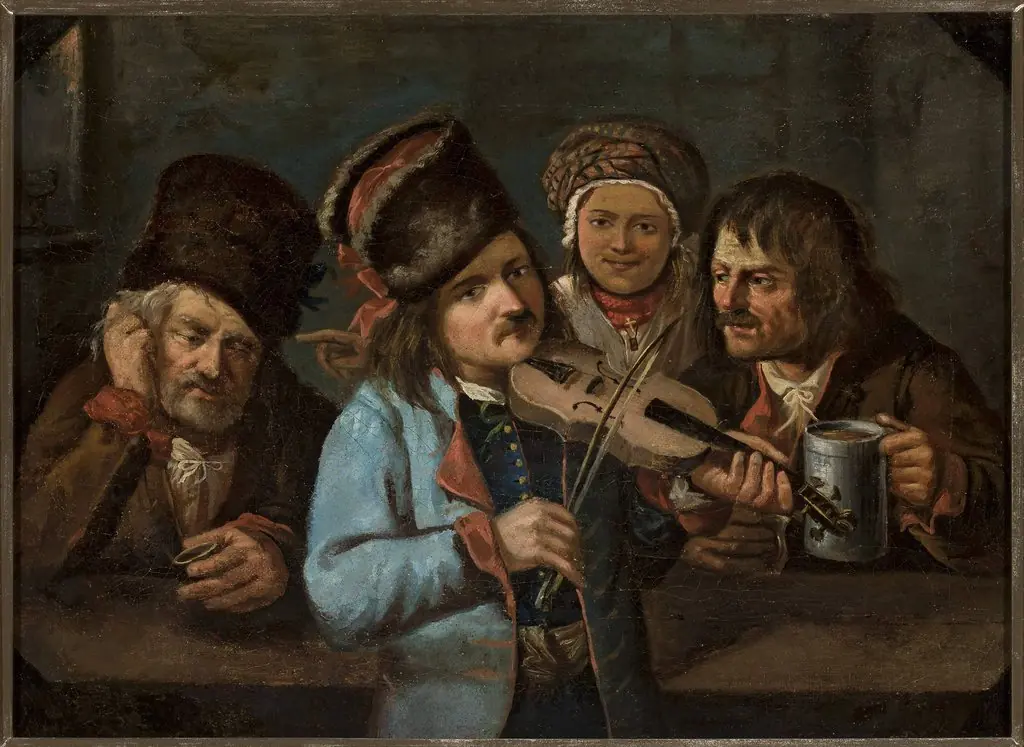 In a tavern
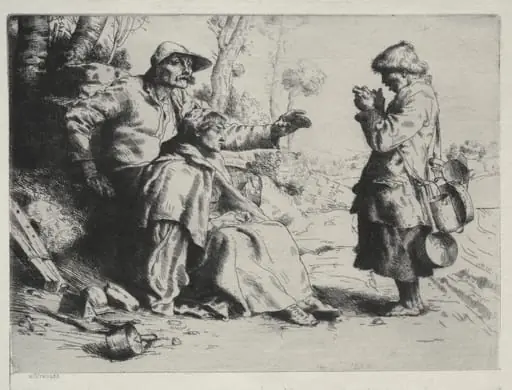 Tinkers
 Shepherd with his Flock
 Seated Old Man about to Drink from a Gourd
 Self-Portrait with Country Folk from Appenzell
 The Horse and the Stag
 The Ram Blesses Reynard
 Shepherd Boy with Sheep