Artwork
Untitled
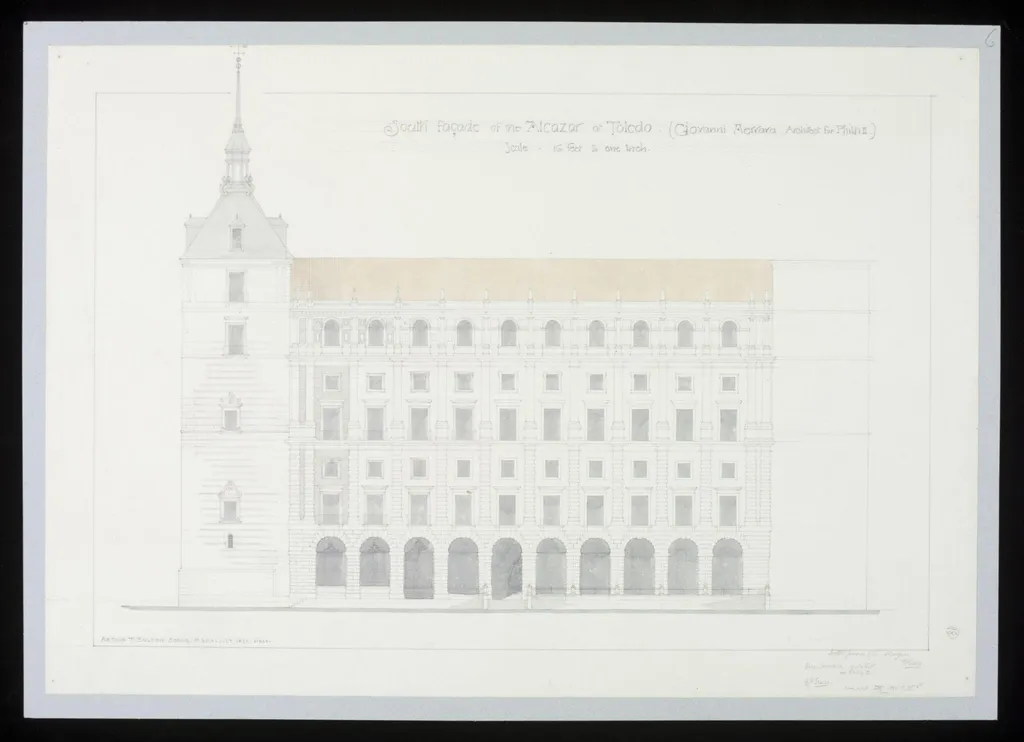
Untitled is a drawing by the Impressionist artist Arthur T. Bolton. It dates from 1893 and is held in the collection of the Victoria and Albert Museum. Arthur T.
About this work
The front shows rows of evenly spaced windows and arches, with a tall central tower topped by a spire.
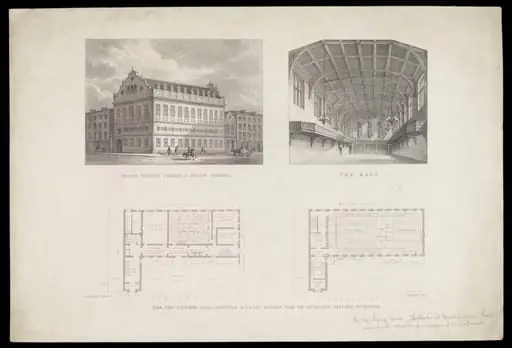
This is a precise black-and-white drawing of a large, symmetrical building. The front shows rows of evenly spaced windows and arches, with a tall central tower topped by a spire. The lines are clean and measured, with some shading to show depth.
The title says it’s a sketch of the Alcázar of Toledo, a palace in Spain. Bolton drew it in 1893, using careful lines to capture the structure’s details.
Next, check out the Victoria and Albert Museum to see more of Bolton’s work.
Overview
Arthur T. Bolton’s 1893 drawing presents a measured elevation of the south façade of the Alcázar of Toledo. Rendered in black and white, the composition emphasizes the building’s symmetry, with a central tower crowned by a spire and a regular rhythm of windows and arches across the façade.
Subject & Meaning
The work records the architectural details of the historic Spanish palace, focusing on its structural articulation rather than decorative embellishment. By isolating the façade, Bolton highlights the formal balance and monumental presence that characterize the Alcázar’s design.
Technique & Style
Executed with precise, clean lines, the drawing employs controlled shading to suggest depth while maintaining a strictly graphic quality. Bolton’s approach reflects a 19th‑century architectural drafting tradition, prioritizing accuracy and proportion over expressive rendering.
History & Provenance
Created in 1893, the drawing is part of Bolton’s broader documentation of historic architecture. It now resides in the collection of the Victoria and Albert Museum, where it is catalogued among other works by the artist that illustrate his interest in European monumental structures.
Artist & collection
Artist
Arthur Bolton spent his days sketching London’s overlooked corners—gas-lamp alleys, backstage theatre nooks—where most people never looked.

 Presentation Drawing of the Hôtel de Camondo
 Four of the 'factories' (trading bases) at Canton (Guangzhou)
 Untitled
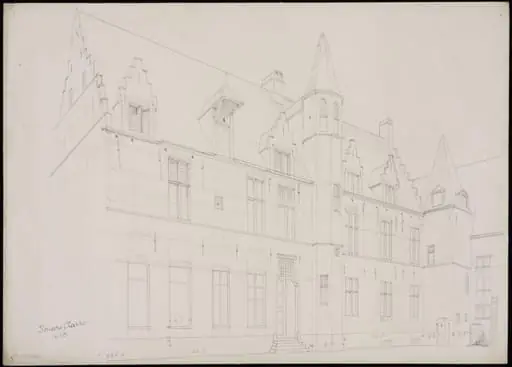 House at Mechlin, formerly a convent
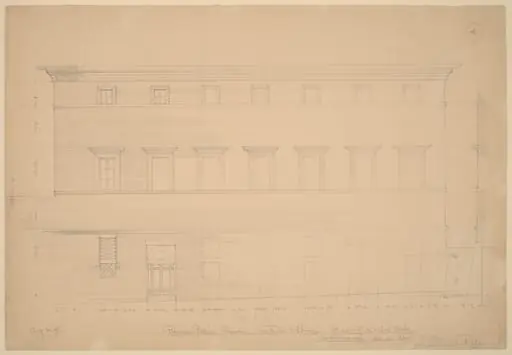 Palazzo Pollini, Siena, Attributed to Peruzzi
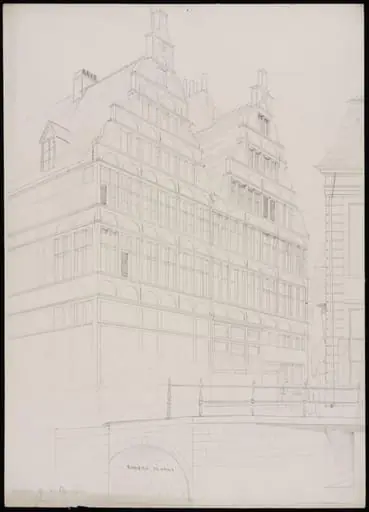 Maison des Ferblantiers, Ghent
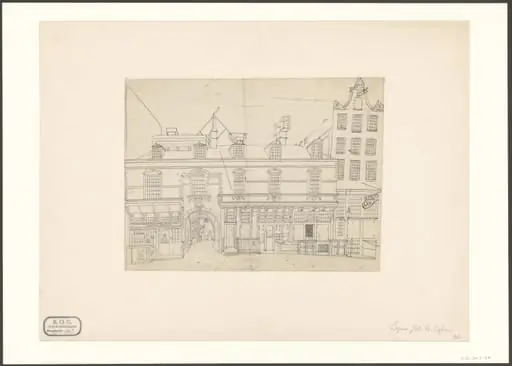 Untitled
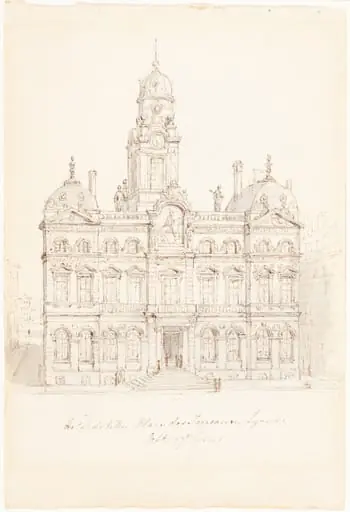 Hôtel de Ville, Place des Terreaux, Lyons
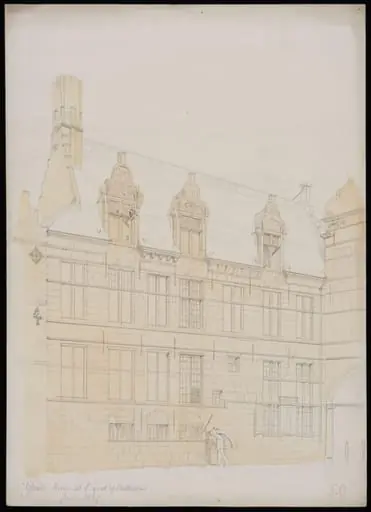 House at the E. end of the Cathedral, Ypres.
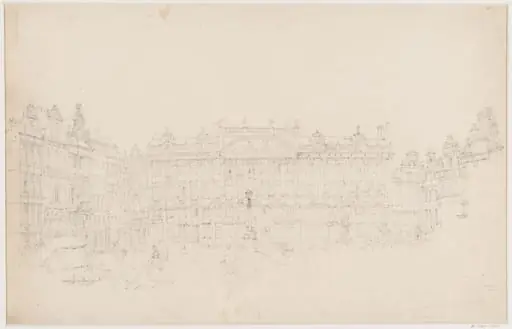 Grande Place, Brussels
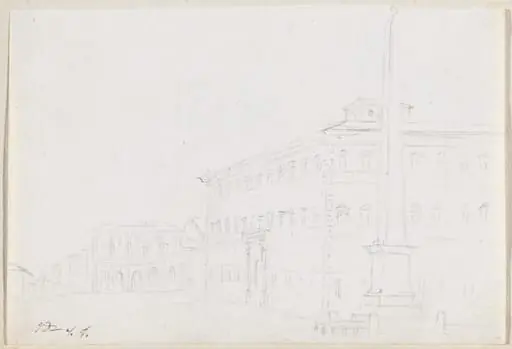 A Piazza with an Obelisk
 H Beard Print Collection