Artwork
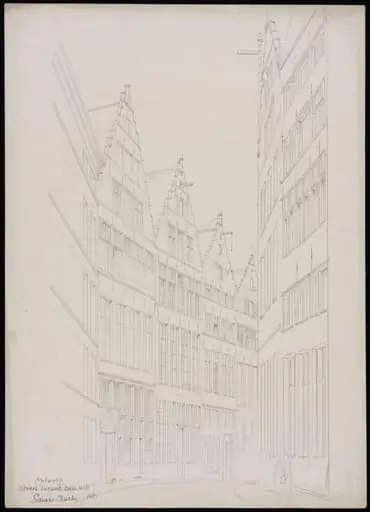
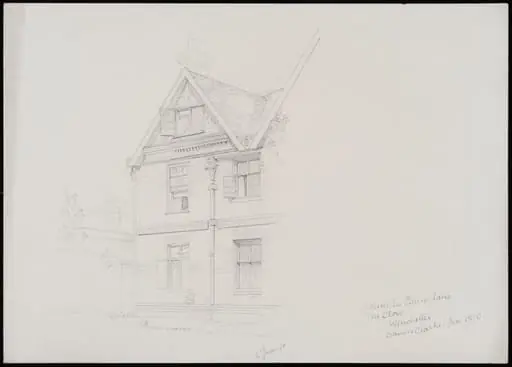
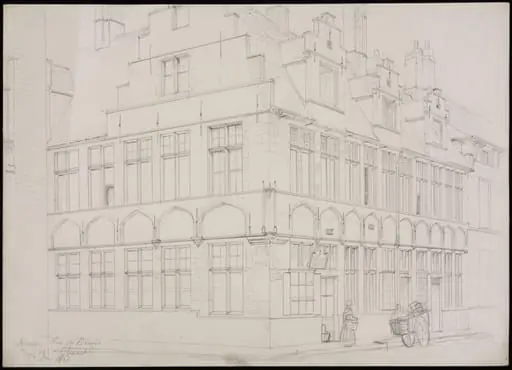
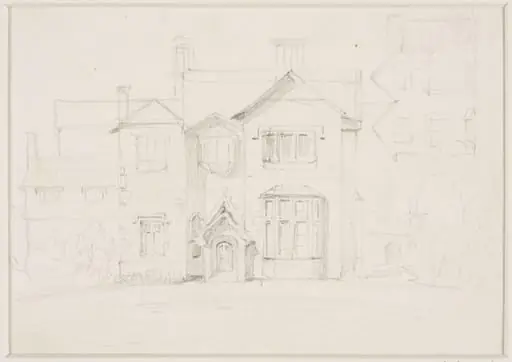
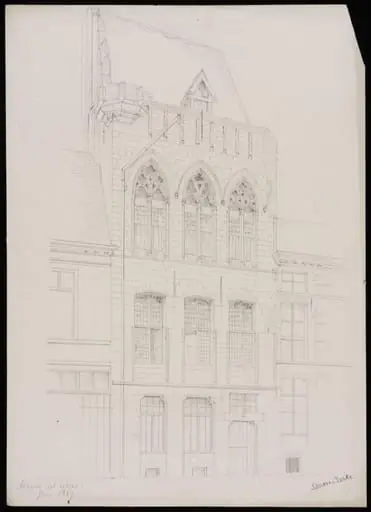
House at the E. end of the Cathedral, Ypres.
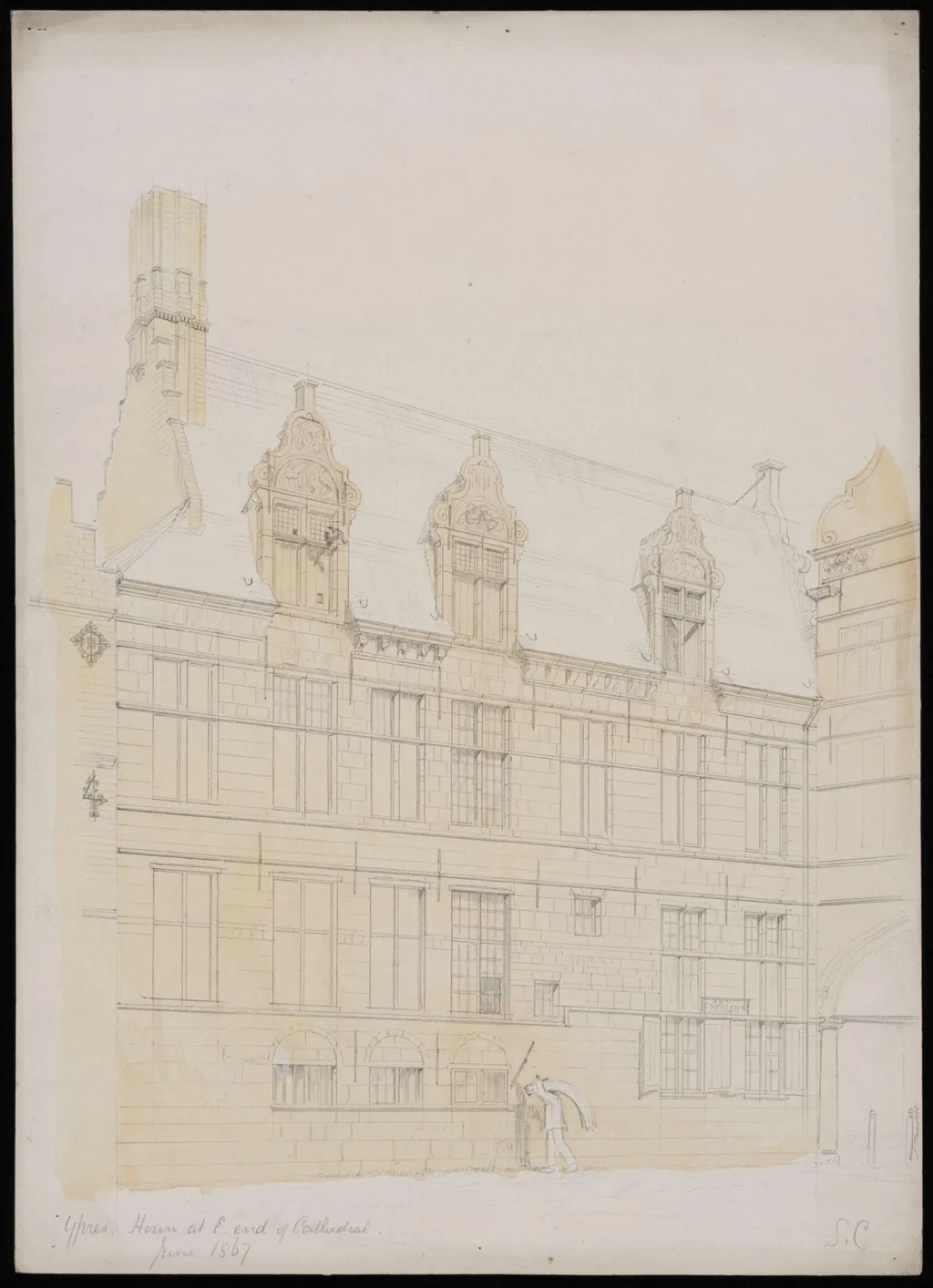
House at the E. end of the Cathedral, Ypres. is a drawing by the Impressionist artist Somers Clarke. It dates from 1867 and is held in the collection of the Victoria and Albert Museum.
About this work
Overview
This drawing captures a specific architectural scene: a tall, narrow house located at the eastern end of a cathedral in Ypres, characterized by its light brown brick walls, three small roof-top towers, and distinctive window and doorway details.
Subject & Meaning
The subject is a house adjacent to a cathedral in Ypres, emphasizing architectural detail. The inclusion of a person sweeping in the foreground adds a touch of everyday life, contrasting the grandeur of the religious and residential structures.
Technique & Style
Executed with loose lines and light shading, the drawing suggests a quick capture. The artist prioritized the building's form and architectural specifics, such as arched doorways and tower decorations, over meticulous detail, indicating a possibly observational or sketchbook piece.
Context
Given its location in Ypres, the drawing may reflect the city's architectural landscape, potentially pre-dating significant changes or damages, especially considering Ypres' history of destruction in conflicts.
Legacy
The drawing's legacy is not prominently marked by widespread recognition or influence on later artists, suggesting it may be more valued for its documentary or historical insight into Ypres' architecture rather than artistic innovation.
Artist & collection

Artist
George Somers Clarke was an architect and English Egyptologist who worked on the restoration and design of churches and at a number of sites throughout Egypt, notably in El Kab, where he built a mud brick house.