Artwork
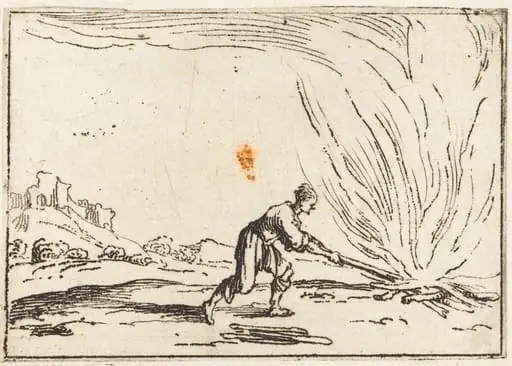
Study for Man Making an Explosion
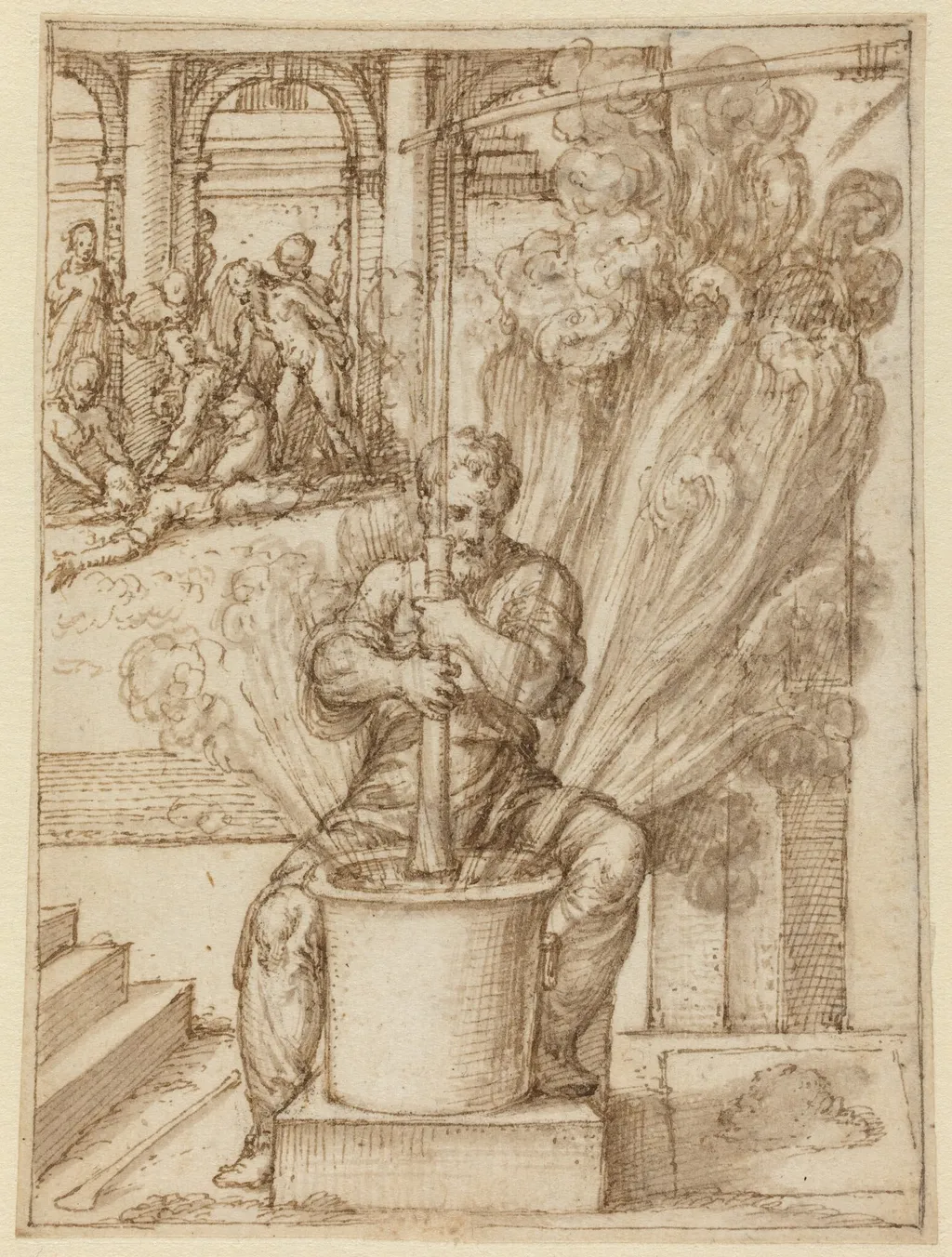
Study for Man Making an Explosion is an ink drawing by the Renaissance artist Giulio Bonasone. It dates from 1539 and is held in the collection of the National Gallery of Art.
About this work
Overview
Created in 1539, this drawing by Giulio Bonasone is a preparatory study executed in pen and brown ink with gray wash. Though primarily known for his engravings, Bonasone produced few surviving drawings, making this work a rare glimpse into his process. The composition captures a moment of violent action, likely intended as a study for a larger print or painting that was never completed.
Subject & Meaning
The imagery suggests chaos or deliberate destruction, possibly referencing mythological, historical, or allegorical narratives involving fire and retribution.
The scene portrays a man in a basket, extending a flaming pole toward an object, seemingly preparing an explosion. Below, a figure looks upward in alarm, while others observe from a doorway. Behind them, a structure burns, and smoke billows upward. The imagery suggests chaos or deliberate destruction, possibly referencing mythological, historical, or allegorical narratives involving fire and retribution.
Technique & Style
Bonasone employed swift, fluid pen strokes and layered gray wash to convey motion and atmosphere. The sketchy lines emphasize the figure’s dynamic posture and the turbulence of smoke, while subtle tonal gradations define volume without heavy detail. The lack of finish underscores its function as a study, prioritizing energy and composition over polish, characteristic of preparatory work in Renaissance practice.
History & Provenance
Giulio Bonasone, active in Bologna, Mantua, Rome, and Venice, left behind few drawings; most of his painted works are lost. This study survives as one of the rare physical remnants of his non-engraved output. Its provenance is undocumented prior to modern collections, but its style aligns with mid-16th-century Italian draftsmanship, suggesting it was kept within the artist’s circle or workshop.
Context
In the 1530s, Italian artists increasingly turned to dramatic, emotionally charged subjects influenced by Mannerism and classical antiquity. Bonasone, trained under Marcantonio Raimondi, often translated compositions by Raphael and Michelangelo into prints. This drawing reflects a broader interest in depicting violent or theatrical moments, possibly inspired by contemporary narratives of destruction or divine punishment.
Legacy
Though Bonasone’s drawings are scarce, this study illustrates his ability to translate complex narratives into concise visual forms. It contributes to understanding how engravers used preparatory sketches to explore composition before committing to print. As a surviving fragment of a lost larger project, it offers insight into the working methods of Renaissance artists beyond their finished prints.
Artist & collection

Artist
Giulio Bonasone (c. 1498 – after 1574) (or Giulio de Antonio Buonasone or Julio Bonoso) was an Italian painter and engraver born in Bologna. He possibly studied painting under Lorenzo Sabbatini, and painted a Purgatory…

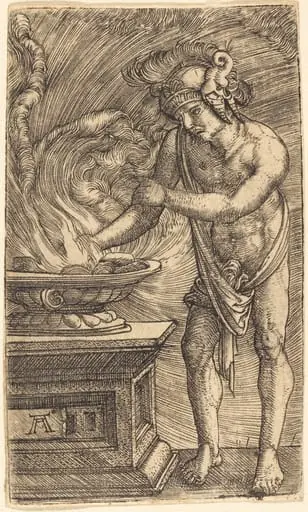 Mucius Scaevola Burning His Hand
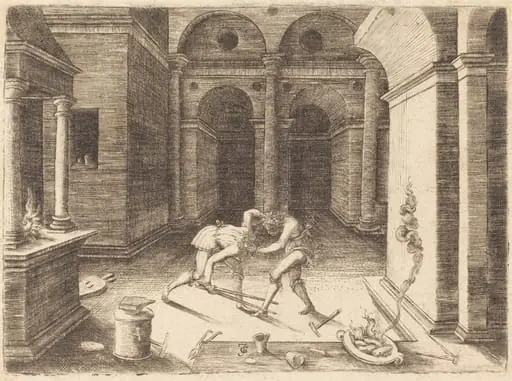 Two Apprentices Fighting
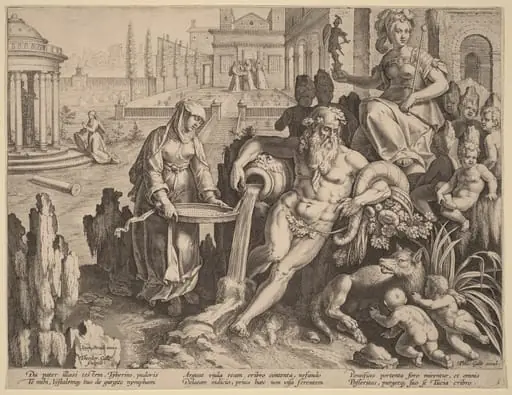 The Vestal Virgin Tuccia
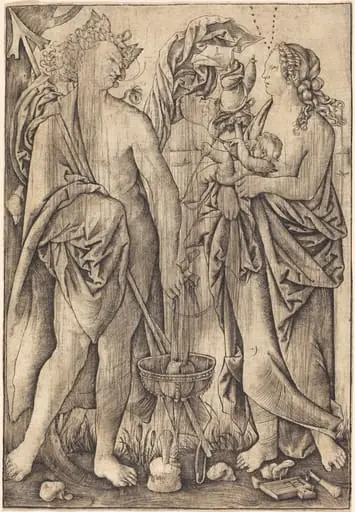 Mars and Venus (Mercury and Venus?)
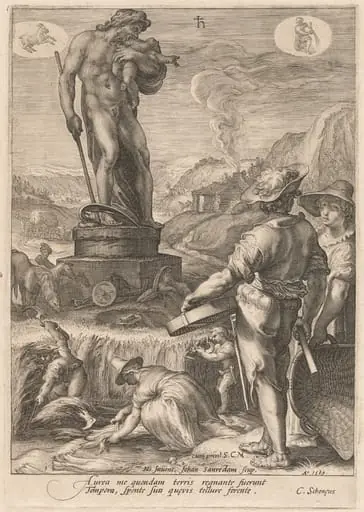 Saturn Presiding Over Agriculture
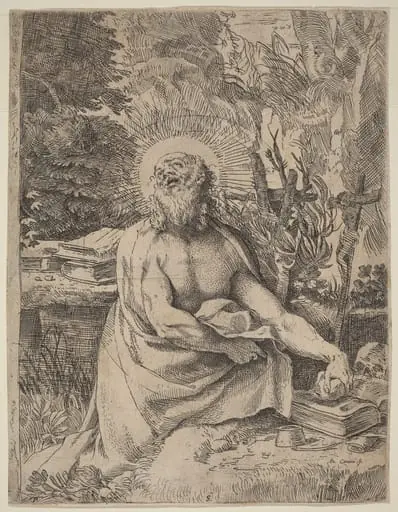 Saint Jerome in the Wilderness
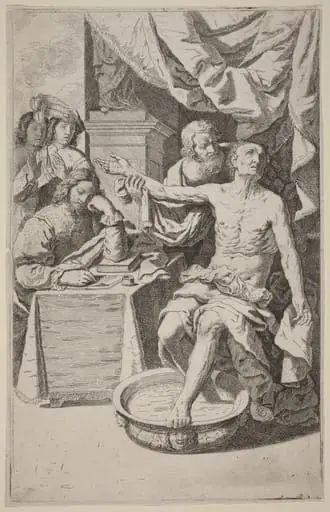 Death of Seneca
 Abraham's Sacrifice
 Mucius Scaevola Holding His Hand in the Fire
 Democritus Meditating
 Old Man Warming His Hands
 Man Attending a Fire