Artwork
The Vision of St. Jerome
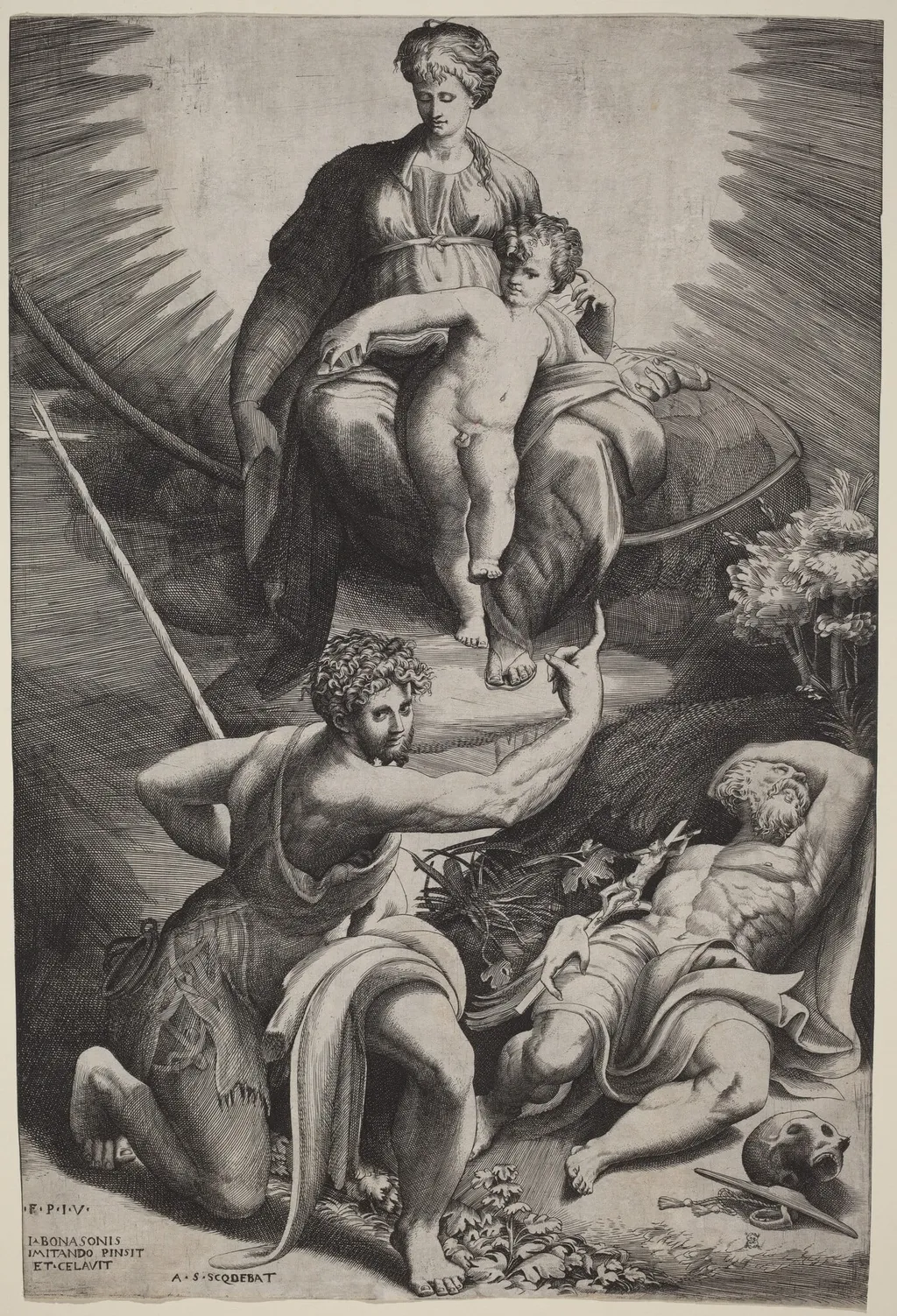
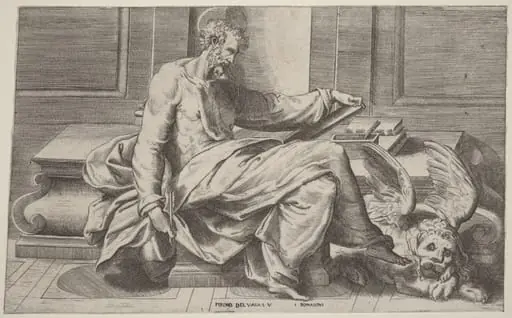
The Vision of St. Jerome is an ink print by the Renaissance artist Giulio Bonasone. It dates from 1539 and is held in the collection of the National Gallery of Art.
About this work
Overview
Giulio Bonasone, a Bolognese artist active in the early sixteenth century, produced the engraving *The Vision of St. Jerome* in 1539. The work exemplifies his reputation as a skilled printmaker, employing the fine line work typical of his mature period.
Subject & Meaning
The composition presents a dramatic revelation involving Saint Jerome. Central to the scene is a robed woman cradling an infant on a rocky ledge, while a wounded, muscular man lies below clutching a spear. A kneeling figure attends the wounded man, and a bearded figure in the corner appears either asleep or dead, suggesting a narrative of suffering and divine intervention.
Technique & Style
Bonasone achieves depth through dense cross‑hatching, using tightly spaced parallel lines to model shadows and textures. The interplay of light and dark across the figures and the cloudy sky creates a three‑dimensional effect, characteristic of his engraving practice.
History & Provenance
Trained under Marcantonio Raimondi, Bonasone worked in Mantua, Rome, and Venice, where his prints after older masters and his own designs gained circulation. *The Vision of St. Jerome* reflects his mature period and was likely disseminated among collectors of the Italian print market of the 1530s.
Context
The engraving belongs to a broader tradition of religious visions rendered in print, a medium that allowed devotional images to reach a wider audience. Bonasone’s choice of a Saint Jerome episode aligns with contemporary interest in the saint’s scholarly and ascetic reputation.
Artist & collection

Artist
Giulio Bonasone (c. 1498 – after 1574) (or Giulio de Antonio Buonasone or Julio Bonoso) was an Italian painter and engraver born in Bologna. He possibly studied painting under Lorenzo Sabbatini, and painted a Purgatory…

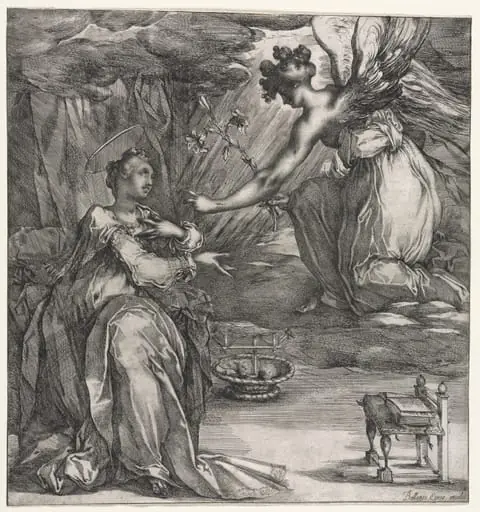 The Annunciation
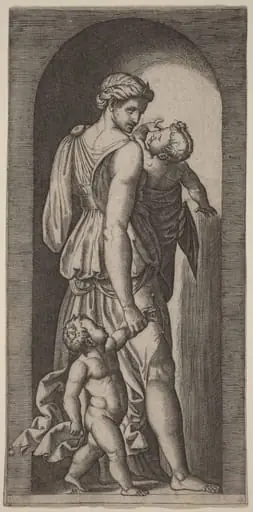 Charity
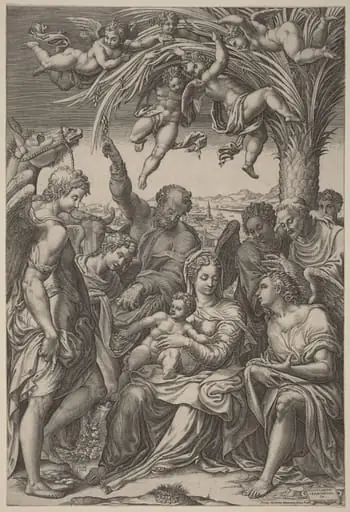 The Rest on the Flight into Egypt
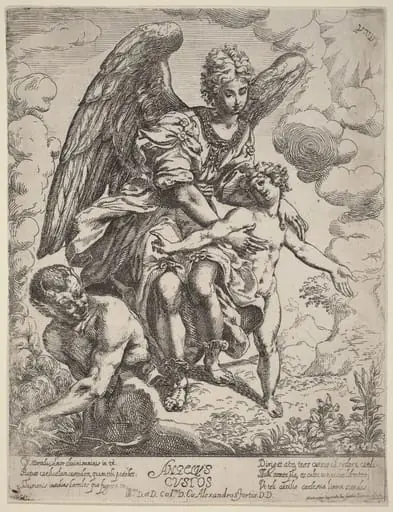 Guardian Angel
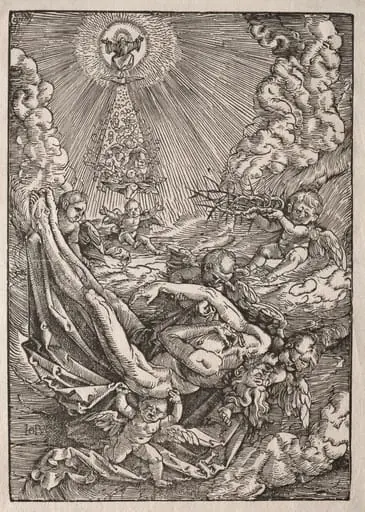 Christ Carried to Heaven by Angels
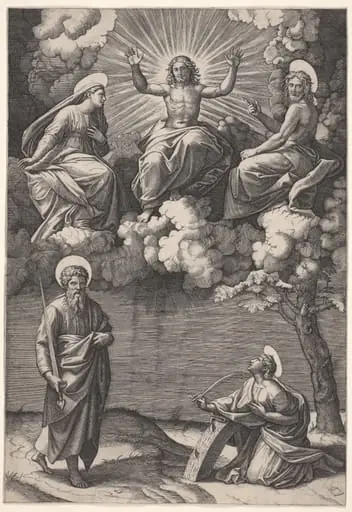 Christ, the Virgin, and St. John the Baptist with Saints Paul and Catherine
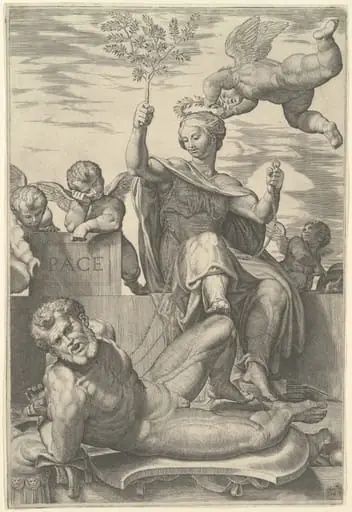 Allegory of Peace
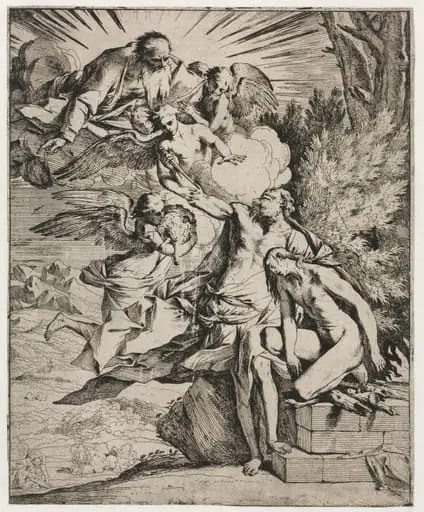 The Sacrifice of Abraham
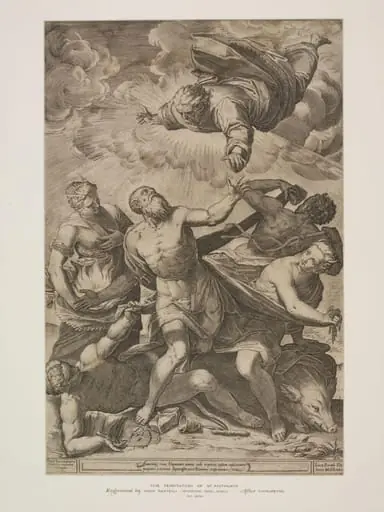 Temptation of Saint Anthony
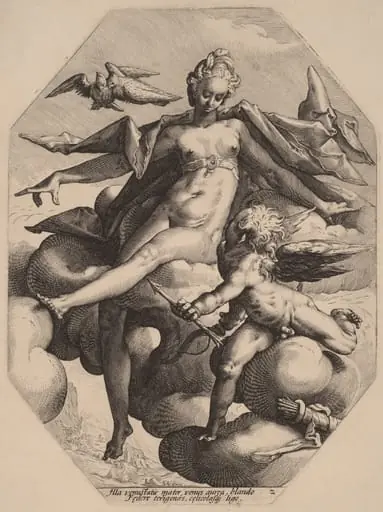 Venus and Cupid
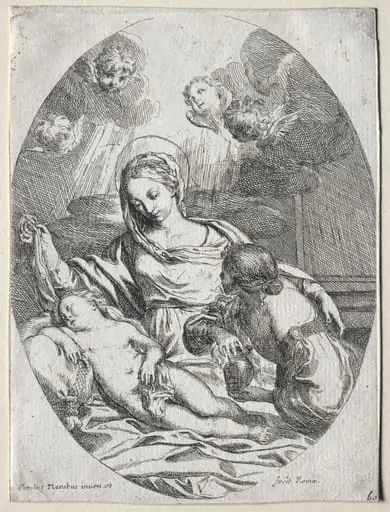 Madonna and Child with the Magdalen
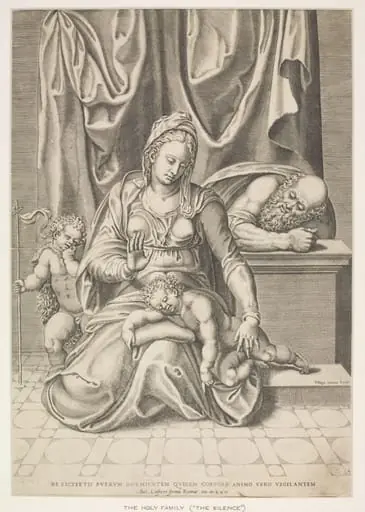 The Silence